
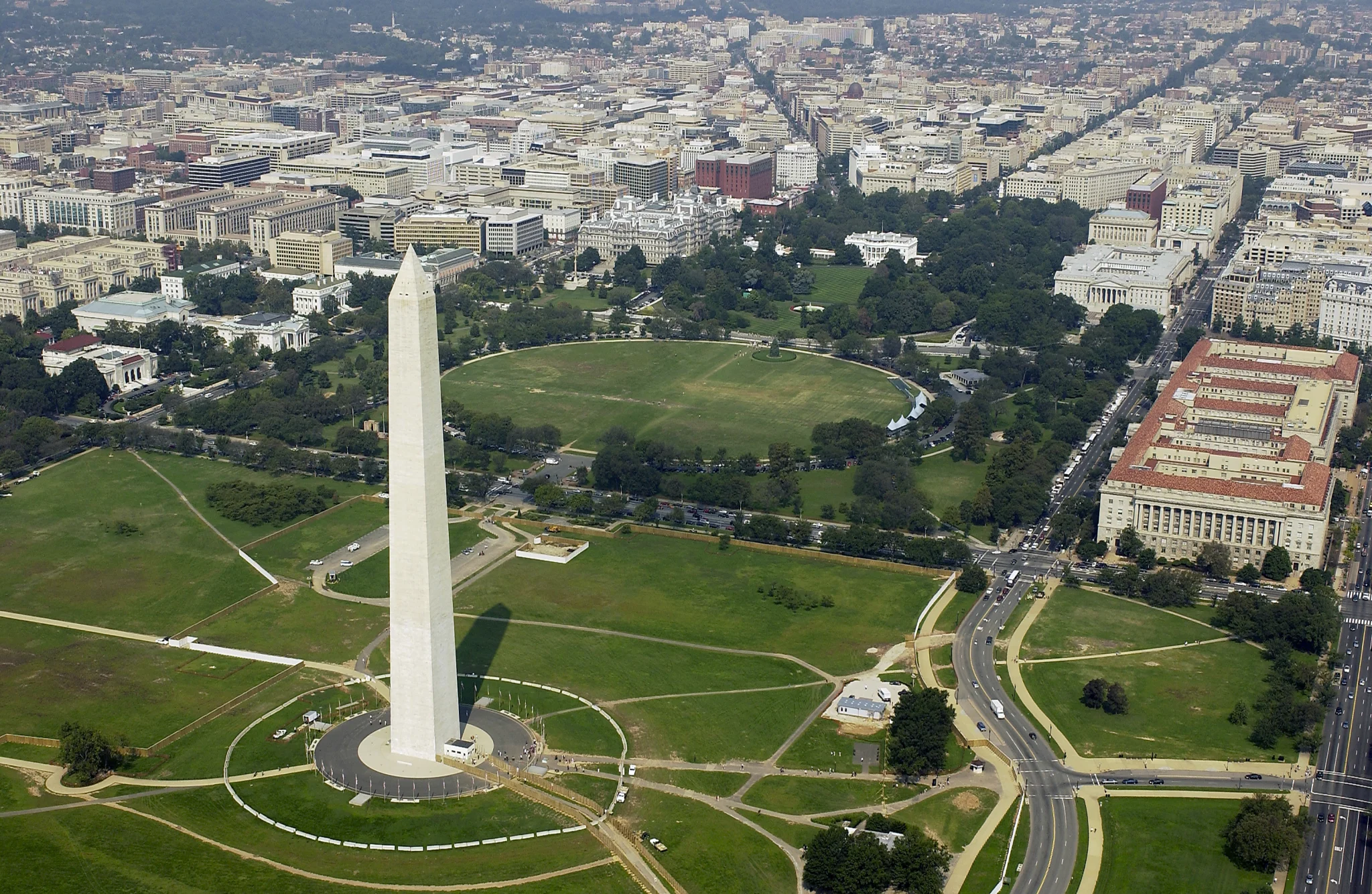
A first weekend in Washington DC calls for focus. Give the National Mall most of Saturday, choose one or two museums, and save the memorials for evening. On Sunday, shift toward Capitol Hill and one additional museum or neighborhood. This structure captures the capital’s defining sights without turning two days into a race between security lines, Metro stations, and distant landmarks.
- Stay near a Metro station and skip the rental car for an in-city weekend.
- Treat a Washington Monument reservation as a fixed anchor in the schedule.
- Choose one or two museums for Saturday rather than attempting several in depth.
- Expect substantial walking across the National Mall and use Metro for longer gaps.
- Visit the major memorials in the evening, when the setting takes on a different character.
This plan favors a Mall-plus-neighborhoods balance. Museum enthusiasts can easily convert Sunday into a second museum day. Travelers with limited mobility can keep the same outline while clustering sights into smaller zones. The goal is not to collect every landmark. It is to leave enough time to look closely, rest between stops, and reach reserved attractions without watching the clock every minute.

Washington DC Monuments by Moonlight Tour by Trolley
You haven't seen Washington DC until you've seen it at night! On this evening 100% live narrated tour, you'll enjoy the sights and sounds of Washingto...

DC Monuments by Night: 10+ Landmarks | Open-Top Upgrade Available
See a different side of Washington DC after dark on a guided night tour of the city's floodlit monuments. This tour...

DC: US Capitol & Library of Congress / Supreme Court Guided Tour
Explore the heart of American democracy on Capitol Hill with reserved timed-entry tickets and a guide who knows thes...

No-Wait Washington Monument Direct Entry Tickets & Guidebook
This is a direct ticket emailed to you to go to the top of the Washington Monument in DC without waiting in hours-lo...
Your Washington DC weekend at a glance
| When | Main plan | Pacing priority |
|---|---|---|
| Friday evening | Check into a hotel near Metro and have an easy evening nearby | Save energy for Saturday’s walking |
| Saturday morning | National Mall and reserved Washington Monument visit, if booked | Let the timed ticket determine the order |
| Saturday afternoon | One primary museum, with a second only if time and energy allow | Choose depth over a checklist |
| Saturday evening | Dinner or a rest, followed by major memorials | Allow extra time for walking between sites |
| Sunday | Capitol Hill, then one museum or one neighborhood | Finish with a single clear priority |
The sequence is flexible except for reserved entry times. If your Washington Monument slot falls in the afternoon, visit a museum first and return to the outdoor landmarks later. Keep one unscheduled pocket in each day. Weather, major events, traffic, road closures, and longer-than-expected visits can all affect the pace.
Make these decisions before the weekend
Choose a hotel near a useful Metro station
For a short, city-centered trip, a hotel near Metro is usually more useful than a rental car. Metro is often the simplest way to cover longer distances, while parking and traffic can add expense and frustration. Walking works well within the National Mall and individual neighborhoods. The guide to where to stay in Washington DC for first timers can help you narrow the hotel search around this strategy.
Pay-per-ride Metrorail users can tap a credit card, debit card, or mobile wallet at the faregates. Unlimited one-, three-, and seven-day passes require a SmarTrip card from a fare machine. Products and fares can change, so review current Metro information before deciding between individual rides and a pass. The guide to getting around Washington DC without a car provides more help with station-based planning.
Reserve the Washington Monument first
Timed-entry tickets are required for the Washington Monument observation level. Advance tickets are typically released 30 days ahead, while same-day tickets begin at 8:45 a.m. Visitors should arrive for screening at least 15 minutes before their scheduled time. If this experience matters to you, reserve it before arranging the rest of Saturday. The Washington Monument tickets and visitor guide covers the visit in greater detail.
Check the Monument’s current status shortly before departure. Hours and elevator-ticket availability can vary with the season, maintenance, and weather. Screening is required, and food, beverages, and large backpacks are not permitted inside. Holidays and major events on the Mall can also slow local travel, so avoid placing another firm reservation immediately afterward.
Friday evening: arrive without overloading the schedule
Use Friday evening to settle in, learn the nearest Metro entrance, and confirm Saturday’s reservation details. A relaxed dinner near the hotel is usually more valuable than forcing in a distant attraction after travel. Traffic, rush hour, events, and road closures can make arrival times unpredictable, particularly for visitors coming by car, taxi, rideshare, or private transfer.
Before sleeping, place your timed-entry confirmation where it is easy to retrieve and check the route to your first stop. Charge your phone, prepare comfortable shoes, and keep the next morning’s bag small. This little preparation protects the part of the weekend that is hardest to replace: the first full morning.
Saturday: National Mall, a museum, and memorials after dark
Morning: begin in the central National Mall area
Start near Smithsonian or Federal Triangle Metro and orient the day around the Washington Monument. If you hold an early ticket, go directly to screening. Otherwise, use the first part of the morning for an outdoor walk and return when your reservation approaches. A National Mall guide for first timers is useful for understanding the broader layout before choosing your exact stops.

The Washington Monument observation level is reached by elevator and is accessible to wheelchair users. It offers a high-level city view without requiring a stair climb, although the standard timed-ticket and screening rules still apply. Build a buffer around the reservation rather than scheduling the next activity at the earliest possible minute.

Washington DC Monuments and Memorials Night Tour
See Washington, DC in ways large bus tours can’t—especially after dark. This small‑group night tour (12 guests...
Washington DC Monuments by Moonlight Tour by Trolley
You haven't seen Washington DC until you've seen it at night! On this evening 100% live narrated tour, you'll enjoy...
DC Monuments by Night: 10+ Landmarks | Open-Top Upgrade Available
See a different side of Washington DC after dark on a guided night tour of the city's floodlit monuments. This tour...
Late morning and afternoon: choose one primary museum
Pick the museum that best matches your strongest interest and make it the center of the afternoon. The Smithsonian National Museum of American History guide is a useful planning companion for visitors who want that subject. Confirm the selected museum’s current entry procedures directly before the trip, then decide whether a second museum is realistic only after completing the first.
Trying to cover several large museums deeply in one afternoon leaves little room for lunch, security, rest, or unexpected discoveries. One focused visit creates a calmer rhythm and preserves energy for the evening memorial walk. If you finish earlier than expected, add a short nearby stop rather than crossing the city for another major attraction.
Schedule a proper break before evening. Return to the hotel if it is convenient, or sit down for a meal near your route. The Mall covers a large area, and walking distances accumulate quickly. A pause now is more effective than discovering halfway through the memorials that everyone has run out of patience and comfortable feet.
Evening: follow the memorials at a slower pace
After dinner or a rest, return for the major memorials. A practical western route can connect the Washington Monument area with the World War II Memorial and Lincoln Memorial. Keep the number of stops modest so you have time to absorb each setting. The Washington DC monuments by night guide can help you refine the route and decide between a self-guided walk and an organized tour.
The major National Mall memorial sites are generally accessible 24 hours a day, and ranger staffing is listed from 9:30 a.m. to 10 p.m. daily. The Washington Monument observation level is the main exception because it follows separate hours and entry rules. Visiting after sunset provides a distinct perspective while also keeping museum hours and outdoor sightseeing in separate parts of the day.
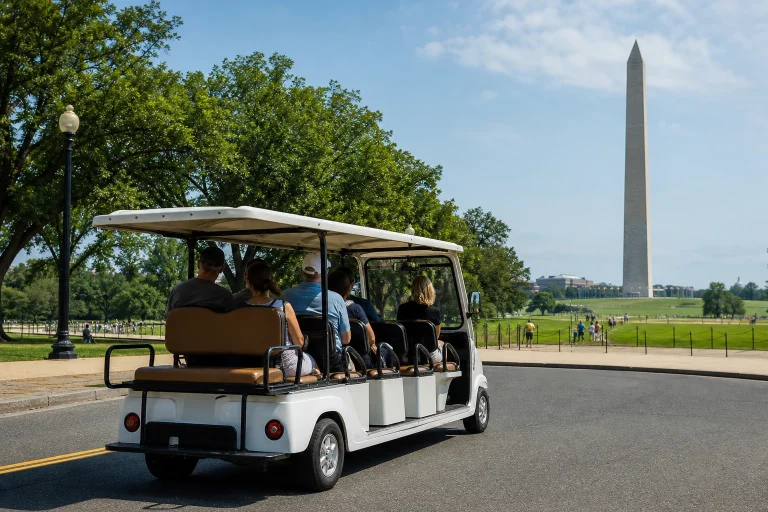
Travelers who prefer narration can substitute a guided monument tour for the self-guided route. Compare the tour’s duration, meeting point, end point, transportation format, and cancellation terms before booking. A vehicle-based option can reduce some walking, but the exact amount still depends on where passengers are dropped and how each stop is handled.
Sunday: pair Capitol Hill with one final priority
Use Sunday to change the scenery and pace. Begin around Capitol Hill, then choose either one more museum or one neighborhood. A broader Washington itinerary normally needs three days to combine the Mall, Capitol Hill, multiple museums, and neighborhoods, so a two-day visitor should deliberately remove at least one of those elements.

Treat any building tour or timed admission as the day’s anchor and confirm its current entry instructions before traveling. If you have no reservation, keep the morning flexible and enjoy the district at your own pace. Avoid stacking several appointments. Security, local events, road closures, and transit disruptions can turn a tidy schedule into a stressful one.
Option A: make Sunday your second museum day
This version suits visitors whose strongest interests are history, art, science, or culture. Select one museum as the main event and allow a generous block rather than planning several short visits. If Saturday’s museum ran long, Sunday also gives you a second chance without sacrificing the evening memorial experience.
Option B: balance landmarks with a neighborhood
After Capitol Hill, choose one neighborhood and keep the visit simple: a meal, a walk, and time to notice the city beyond its monumental core. Do not add multiple distant districts just because the afternoon looks open on paper. Metro can bridge the longer gap, while walking is better reserved for exploring within the selected area.
If Sunday is also your departure day, finish near a Metro station that provides a practical return to the hotel. Leave ample slack before collecting luggage or starting an airport transfer. Fixed journey times are risky because traffic, major events, rush hour, and road closures can affect several forms of transportation.

DC Monuments Night Tour with 10+ Stops, National Mall, Tickets
Experience Washington DC lit up at night during this 3-Hour Guided Night Tour of the National Mall and Monuments. Ma...

DC Night Tour: 10+ National Mall Monuments, Entry Ticket Upgrades
Experience Washington DC lit up at night during this 3-Hour Washington DC Guided Moonlit Tour of the National Mall a...
DC Monuments by Night: 10+ Landmarks | Open-Top Upgrade Available
See a different side of Washington DC after dark on a guided night tour of the city's floodlit monuments. This tour...
Choose the route variation that matches your travel style
| Travel style | Saturday | Sunday | Main tradeoff |
|---|---|---|---|
| Museum-focused | National Mall, one museum, evening memorials | Capitol Hill and a second museum | Less neighborhood time |
| Balanced first visit | National Mall, one museum, evening memorials | Capitol Hill and one neighborhood | Fewer museum hours |
| Reduced-walking plan | Cluster central Mall sights and use Metro for longer gaps | Choose one compact area and schedule rest | Fewer total landmarks |
| Washington Monument priority | Build Saturday around the timed ticket | Keep Sunday flexible | Other stops must adapt to the reservation |
Families and mixed-interest groups should agree on the main version before arrival. A shared plan prevents one traveler from expecting an intensive museum weekend while another imagines long neighborhood meals. Give each person one must-see choice, then remove anything that would require repeated cross-city transfers.
Plan the budget around free core sights and variable extras
Entry to National Mall and Memorial Parks is free, which makes the outdoor core especially useful for budget planning. Timed entry is still required for the Washington Monument, and reservation conditions or advance-ticket service fees can apply. Check the attraction’s current booking information rather than building the budget around an old quoted amount.
Separate the weekend budget into lodging, local transportation, meals, paid attractions or tours, and reservation fees. Do not assume an unlimited Metro pass is automatically the best value. Compare your expected number of rides with current fare and pass information, remembering that pay-per-ride users can tap an eligible bank card or mobile wallet at the faregates.
A central hotel can cost more than an outlying option, but location should be judged against the time and transportation needed for a short stay. For this itinerary, proximity to Metro is the key feature. A hotel does not need to sit directly beside the Mall if the station connection is straightforward for your chosen stops.
Accessibility and lower-step planning
All major monuments and memorials are wheelchair accessible. Free braille brochures are available onsite, and films at the Lincoln Memorial, Jefferson Memorial, and Washington Monument include closed captions. No-cost American Sign Language interpretation can be requested at least three weeks ahead. Historic facilities are not uniformly ideal, so review the access details for each priority site before visiting.

The Washington Monument is accessible to wheelchair users and uses an elevator to reach the observation level. Timed entry and screening still apply. Because elevator availability can be affected by maintenance, weather, and seasonal operations, check the Monument’s status close to the visit.
For a lower-step version, divide the Mall into small clusters instead of walking its full length in one sweep. Use Metro or a rideshare for longer transfers, place seated breaks between major stops, and remove the optional second museum. The best reduced-walking itinerary contains fewer places but gives each one enough time.
What to carry for two full sightseeing days
- Comfortable walking shoes that have already been broken in
- A compact day bag rather than a large backpack
- Weather-appropriate layers for outdoor memorial time
- A charged phone and portable battery
- Saved copies of timed-entry confirmations
- A simple list of Metro stops and one backup meeting place for your group
Keep the Washington Monument screening rules in mind when packing. Food, beverages, and large backpacks are not permitted inside. If your day bag contains items needed elsewhere, allow time to reorganize before reaching the screening area rather than arriving at the last minute.
Five mistakes that can derail a first weekend
- Trying to explore several museums deeply on the same day.
- Treating the National Mall as a short walk rather than a large area.
- Renting a car for a sightseeing plan centered on Metro and the Mall.
- Booking the Washington Monument without arranging the day around its entry time.
- Leaving no buffer before reservations, departure plans, or cross-city transfers.
Another common problem is replacing priorities with a growing list of optional stops. Keep a short backup list, but do not treat it as a second itinerary. If energy, weather, and transit cooperate, add one nearby place. If they do not, protect the reservations and experiences that brought you to Washington in the first place.
If you can add a third day
A third full day makes it easier to combine the Mall, Capitol Hill, museums, and neighborhoods without sacrificing depth. Move one Sunday priority onto the extra day, then give the newly opened space to a longer museum visit or neighborhood meal. The 3 Days in Washington DC Itinerary provides a natural next step for travelers who can extend the trip.
Make the first weekend memorable by keeping it selective
The strongest first-time weekend combines one concentrated Mall day with a more flexible Sunday. Reserve the Washington Monument early if it matters, pick museums according to genuine interest, and accept that walking distances will shape the pace. With Metro handling the longer gaps and evening reserved for memorials, two days can feel substantial without becoming exhausting. The main limitation is simple: Washington deserves more time, so leave a reason to return.
Frequently asked questions
Is two days enough for a first trip to Washington DC?
Two days are enough for a selective introduction to Washington DC. Focus on the National Mall, one or two museums, evening memorials, and one Sunday priority rather than trying to cover every landmark, Capitol Hill, museum, and neighborhood.
Do I need a car for a Washington DC weekend?
No, most first-time visitors following an in-city itinerary do not need a car. Metro is generally the simplest option for longer trips, walking works well within the Mall and neighborhoods, and parking or traffic can make driving inconvenient.
How do visitors pay for the Washington DC Metro?
Pay-per-ride passengers can tap a credit card, debit card, or mobile wallet at Metrorail faregates. Unlimited one-, three-, and seven-day passes require a SmarTrip card obtained from a fare machine, and current fares should be checked before travel.
Do I need tickets for the Washington Monument?
Yes, timed-entry tickets are required for the Washington Monument observation level. Advance tickets are typically released 30 days ahead, same-day tickets begin at 8:45 a.m., and visitors should reach screening at least 15 minutes before the reserved time.
Are the National Mall memorials open at night?
The major National Mall memorial sites are generally accessible 24 hours a day. Ranger staffing is listed from 9:30 a.m. to 10 p.m., while the Washington Monument observation level follows separate hours and entry rules.
Is sightseeing on the National Mall free?
Entry to National Mall and Memorial Parks is free. Timed entry is still required at the Washington Monument, and reservation conditions or service fees can apply to advance tickets.
Is the National Mall accessible to wheelchair users?
Yes, all major monuments and memorials are wheelchair accessible. Site-specific conditions vary in historic facilities, and the National Park Service also provides features including braille brochures, captions at selected sites, and advance-request ASL interpretation.
Washington DC Monuments by Moonlight Tour by Trolley
You haven't seen Washington DC until you've seen it at night! On this evening 100% live narrated tour, you'll enjoy the sights and sounds of Washingto...
DC: US Capitol & Library of Congress / Supreme Court Guided Tour
Explore the heart of American democracy on Capitol Hill with reserved timed-entry tickets and a guide who knows thes...
No-Wait Washington Monument Direct Entry Tickets & Guidebook
This is a direct ticket emailed to you to go to the top of the Washington Monument in DC without waiting in hours-lo...

Smithsonian "Big 3" Highlights Tour (Air & Space Entry Included)
See the best of the Smithsonian Museums on a 3-hour guided tour of the highlights of the American History, Natural H...
Still comparing Washington DC First Time Weekend Itinerary?
Ask for tour ideas, hotel suggestions, or a simple trip plan that combines both.
Trip Helper
Experiences to explore
 Explore experience ↗
Washington DC "See the City" Guided Sightseeing Segway Tour
◷ 2 hr 30 min
Experience Washington DC on a 2-Hour Guided Sightseeing Segway Tour through the nation's capital and experience all of the great sights
From $70.00 USD
View dates Explore experience ↗
Washington DC in One Day: Guided Sightseeing Tour + Boat Cruise
◷ 6 hr
Board your glamourous, climate-controlled panoramic bus at the U.S. Navy Memorial for one of the best bus tours in Washington DC! Expan
From $89.00 USD
View dates Explore experience ↗
Washington DC Museums self-guided walking tour & scavenger hunt
◷ 3 hr
This Tourist Scavenger Hunt takes you through the Eastern part of the National Mall where Washington's Museums are located. There are a
From $14.25 CAD
View dates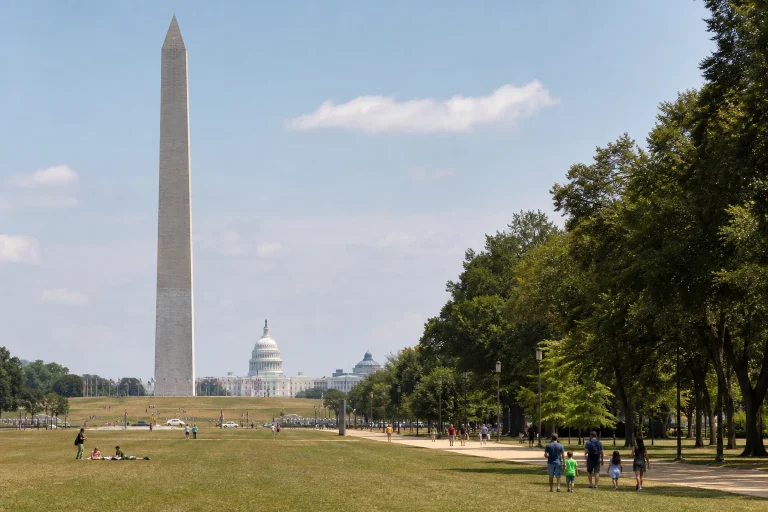

7 Comments
[…] this as an exterior monument experience rather than a path into every landmark. The Washington Monument’s indoor visiting hours are listed during the day, so a nighttime outing does not include an […]
[…] Washington Monument observation level requires timed entry. Advance tickets are generally released 30 days ahead, and same-day […]
[…] timed-entry stops, including the Washington Monument or Ford’s Theatre National Historic Site, at the start of the […]
[…] core outdoor memorial landscape is generally open 24 hours a day, with the Washington Monument interior treated separately. Sunrise visitors can therefore build an exterior walking route without […]
[…] the Washington Monument without securing the required […]
[…] Washington Monument can fit into the day only when you already have entry tickets and the weather gives you a workable […]
[…] length remain operational decisions. Because this stop can fall outside the central sequence of National Mall memorials, it is especially important not to assume it will be included unless the selected tour names […]