
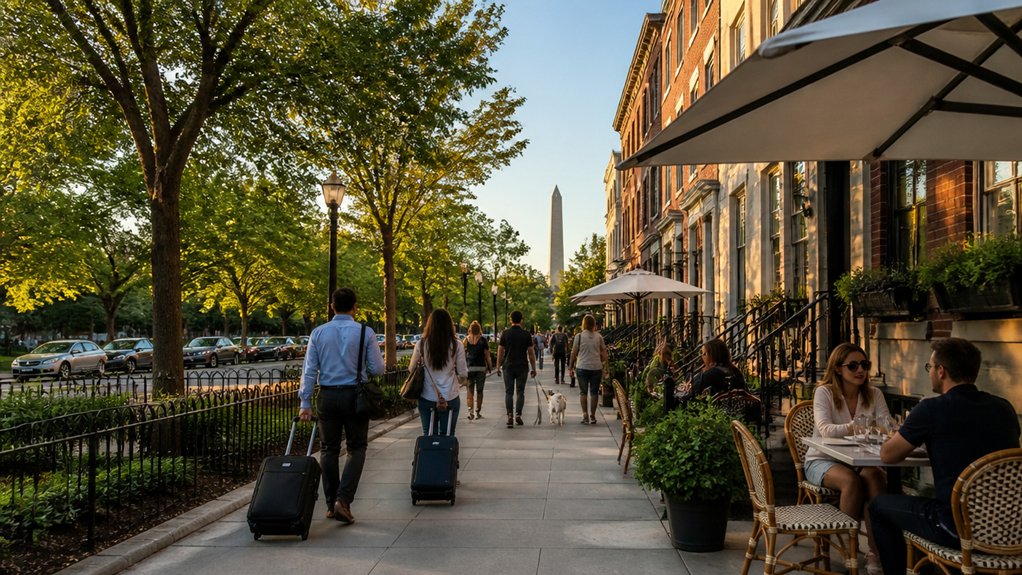
Like a scene from Mr. Smith Goes to Washington, your first stay in DC feels best when you wake up close to the Mall, where marble memorials glow at dusk and the Metro hums below your feet. You’ll save time, skip cab drama, and slip back for a quick rest between museum stops. But that classic choice isn’t always the smartest one, and that’s where things get interesting.
Key Takeaways
- Stay near the National Mall or Penn Quarter for the easiest first-time access to monuments, Smithsonian museums, and classic sightseeing on foot.
- Choose hotels near Smithsonian, Federal Triangle, or Metro Center to simplify museum timing, monument visits, and quick returns for breaks.
- Penn Quarter and Chinatown suit travelers wanting restaurants, nightlife, and strong Metro links while staying close to major attractions.
- The Wharf or Navy Yard offer modern waterfront hotels, dining, and often better value, with easy Metro or water taxi access.
- Dupont Circle, Georgetown, and Capitol Hill fit visitors seeking neighborhood character, but Georgetown has limited Metro access compared with the others.

Washington DC Hop-On Hop-off Trolley Tour with 15 Stops
Enjoy a 90-minute Hop-on Hop-off panoramic trolley tour of Washington, DC. The tour route will maximize your time and provide you with a great introdu...

DC Monuments & Capitol Hill Highlights Tour by Electric Cart
Experience a whole different side of Washington, DC during our Monuments by day tour! Climb into our all-electric Red Roadsters and tour the National...
Best Areas to Stay in Washington DC
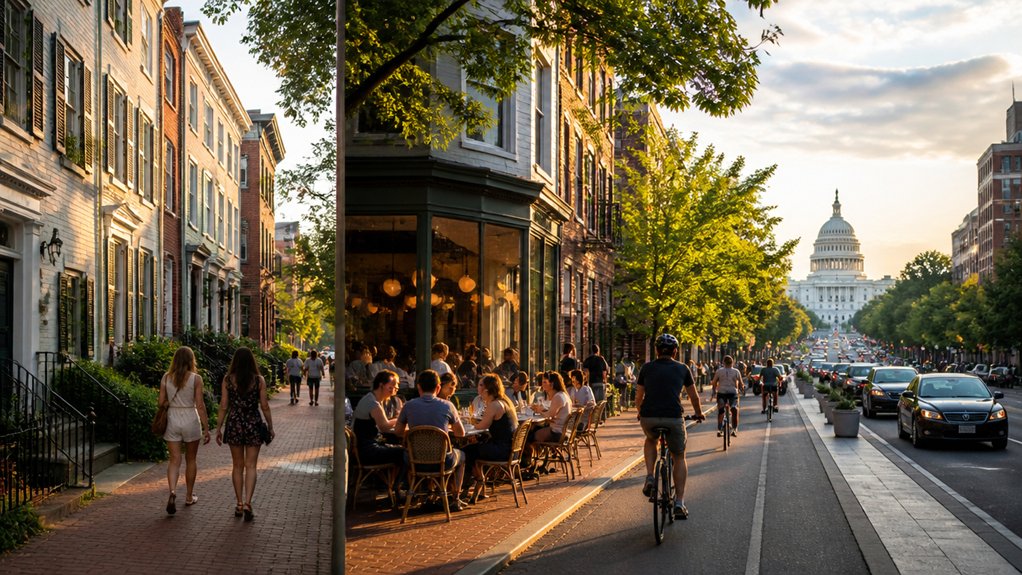
If it’s your first time in Washington DC, start near the National Mall in Penn Quarter or the Smithsonian area, where the city’s biggest sights sit within an easy walk of each other. You can roll out early for the White House, Lincoln Memorial, and museum hops without wasting time on transit. A stay here also makes it simple to explore the National Mall without backtracking, which is ideal for first-time visitors.
If you want options, look at Georgetown for brick sidewalks, rowhouses, and polished dinners after a long day. Waterfront and Navy Yard suit you if you want better value, river breezes, music venues, and a night scene near the ballpark. Wherever you book, stay within a block or two of Metro. Your feet will thank you, and trips across town stay fast, cheap, and easy, even if Dupont Circle beckons too later.
Dupont Circle for First-Time Visitors
Settle into Dupont Circle and Washington starts to feel easy. You can walk around leafy blocks of rowhouses, dip into boutiques, and claim a cafe table before heading out. The neighborhood feels lived in, not staged, and that helps on a first trip. The area’s Sunday market adds an easy local ritual, especially if you want a relaxed start before sightseeing.
| What you notice | Why it works |
|---|---|
| Tree lined streets | Easy walks |
| Connecticut hotels | Handy base |
| Indie shops | Local character |
| Sunday market | Good breakfast |
| Metro and buses | Fast connections |
You get strong transit from Dupont Circle station and frequent buses, plus plenty of restaurants and nightlife. For a three day stay, it’s a smart balance of charm and convenience, even if some headline sights sit 15 to 30 minutes away by Metro or bike, which feels fair after all that neighborhood charm anyway.
National Mall for Classic Sightseeing
If you want Washington’s greatest hits at your doorstep, the National Mall puts you within an easy walk of the Lincoln Memorial, the Washington Monument, the Capitol, and a whole run of Smithsonian museums. You can pop back to your hotel for a snack, a stroller break, or a quick reset, then head out again without turning the day into a transit puzzle. It’s made for classic sightseeing, especially if you stay near a Metro stop and want more monuments than midnight noise. The National Mall stretches from the Capitol to the Potomac River and includes over 1,000 acres of greenspace alongside its iconic memorials and monuments.
Monument Access
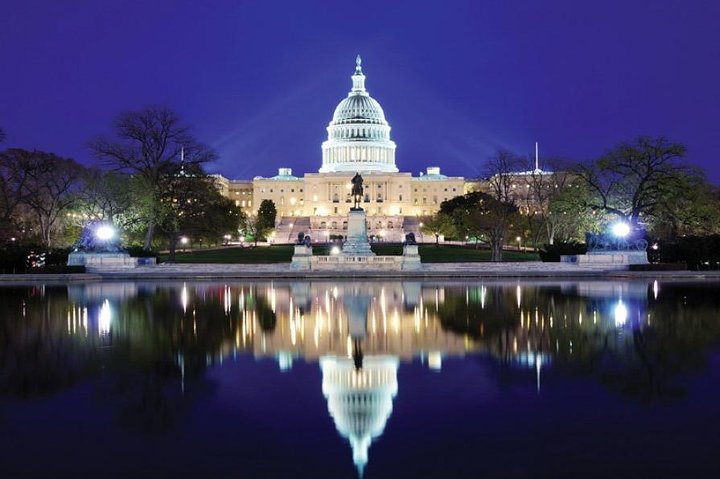
For classic Washington sightseeing, staying near the National Mall makes the city feel wonderfully easy. In Penn Quarter or a Mall-adjacent hotel, you can walk straight to the Lincoln Memorial, Washington Monument, and Smithsonian museums without turning transit into a daily project. By day, the big sights cluster together, so your shoes do most of the work. After dark, a room within a 10 to 20 minute walk lets you catch the monuments glowing white against the sky, which feels very DC. Many of the city’s best hotels near the National Mall also put first-time visitors close to both classic landmarks and easy transit connections.
- Walk to headline sights in minutes
- Use Smithsonian or Federal Triangle for easier returns
- Save energy after long museum days
- Enjoy evening monument walks without extra transit
- Choose waterfront stays if you want cheaper rooms and quick Metro access
The area stays busy by day and quieter at night, which can feel surprisingly peaceful.

Washington DC's Monuments & US History Guided E-Cart Tour
This tour offers a detailed introduction to U.S. history and Washington D.C.’s famous monuments, guided by expert...
Washington DC Hop-On Hop-off Trolley Tour with 15 Stops
Enjoy a 90-minute Hop-on Hop-off panoramic trolley tour of Washington, DC. The tour route will maximize your time an...
DC Monuments & Capitol Hill Highlights Tour by Electric Cart
Experience a whole different side of Washington, DC during our Monuments by day tour! Climb into our all-electric Re...
Family-Friendly Convenience
That same easy geography also makes the National Mall the smartest base for families on a first DC trip. You can walk to the Air and Space Museum or Natural History, then head back to your hotel for naps, snacks, or a quick reset. That family-friendly rhythm matters when little legs get tired. Nights stay quieter here than in nightlife districts, so bedtime comes easier. By day, you’re close to the Lincoln Memorial, Washington Monument, and the Capitol. The Mall also puts you near several essential experiences for first-time visitors, making it easier to cover DC’s classic highlights without long cross-town trips. Because the National Mall clusters so many sights, you can skip the rental car and use Metro, the Circulator, or short rideshares. For dinner, slip to Penn Quarter or the Waterfront, then return before the museum feet start marching again tomorrow morning with fresh kid energy.
Downtown DC for Museums and Monuments
If you want Washington’s greatest hits right outside your door, Downtown DC puts you within easy reach of the National Mall and its museum-packed core. You can walk to the Washington Monument, the Lincoln Memorial, the National Gallery, and Air and Space, then slip back to your hotel without turning the day into a forced march. Stay near a Metro stop like Smithsonian or Metro Center, and you’ll keep timed museum visits simple while saving your feet for one more monument at sunset. The National Mall is often called America’s Front Yard and includes more than 100 monuments and memorials, making Downtown DC an especially convenient base for first-time visitors.
National Mall Access
Proximity is the real luxury near the National Mall, where you can step outside and walk to the Lincoln Memorial, the Washington Monument, the Capitol, and a long run of Smithsonian museums without needing a plan more complicated than comfortable shoes. For first timers, that means less transit math and more time for big views, flags snapping, and kid-friendly free stops within walking distance. If you only have limited time, this area also makes it easy to follow a one day itinerary without wasting hours in transit.
- Pick a hotel near Metro Center, Smithsonian, or Federal Triangle stations nearby.
- Daytime crowds swell, especially during cherry blossom season and other peak months.
- Reserve timed museum entries early when required, then keep your schedule loose.
- Nights feel quiet here, so late drinks and buzz take planning ahead.
- Want more dining? Stay in Penn Quarter or Waterfront, then return quickly.
Walkable Museum Core
Often, the easiest way to see Washington’s biggest sights is to stay right in the downtown museum core, where you can walk from the Smithsonian museums to the Washington Monument, the Lincoln Memorial, and the Capitol without turning the day into a transit puzzle.
Choose a hotel near Metro Center, Federal Triangle, or L’Enfant Plaza, and you’ll pair the National Mall with easy rides elsewhere. Museum entrances cluster between 3rd and 17th Streets NW, but the distances still sneak up on you after hours of gallery hopping. Stay within a block or two of a station. You’ll find luxury at the Hay-Adams, plus mid-range picks like Marriott Marquis. Nights feel calmer here, so head to Penn Quarter for dinner and a little neighborhood buzz. From here, it’s also easy to add the Hirshhorn to your day, especially if modern and contemporary art is high on your list at the Hirshhorn Museum.
Still comparing Washington DC First Time Visitor Neighborhood Guide?
Ask for tour ideas, hotel suggestions, or a simple trip plan that combines both.
Trip Helper
Penn Quarter for Food and Nightlife
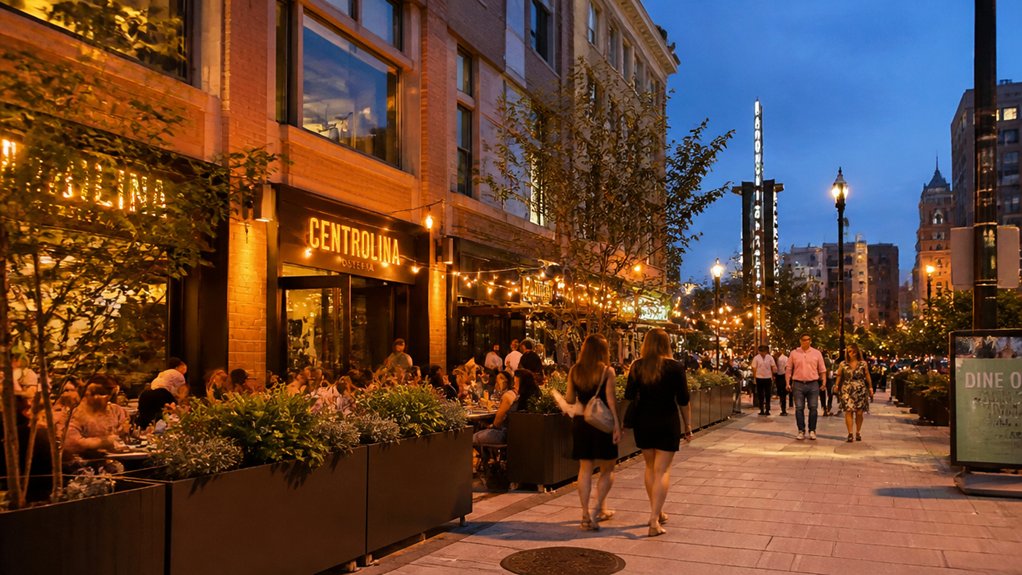
For travelers who want dinner, drinks, and easy sightseeing in one compact slice of DC, Penn Quarter makes a very smart base. You can walk from your hotel to the National Portrait Gallery, Ford’s Theatre, and several Smithsonian stops, then slide into Chinatown for noodles, cocktails, or a quick pregame bite before Capital One Arena. The neighborhood feels polished but busy, and Metro access keeps monument-hopping simple, even if the Potomac River isn’t your main view. Named in the 1990s, it feels fresh, social, and convenient for first timers. The area is especially appealing if you want a local’s guide to a central neighborhood that balances culture, dining, and nightlife.
- Walk to museums after breakfast
- Eat across Penn Quarter and Chinatown
- Catch a game or concert nearby
- Use Metro to skip long monument treks
- Stay central with lively bars after dark
Georgetown for Historic Charm
Georgetown feels like DC in a softer, older key, with brick rowhouses, cobblestone streets, and leafy corners that make even a short walk feel cinematic. If you want Georgetown and its historic charm, you’ll spend happy hours browsing M Street and Wisconsin Avenue, ducking into boutiques, and peeking at manicured gardens. The neighborhood feels polished but lived in, with Georgetown University nearby, smart restaurants, and a waterfront promenade where you might spot a senator jogging before brunch. For classic sights, Georgetown University and the waterfront are among the area’s must-sees. Hotels skew boutique and upscale, so it suits romantic trips and easy family stays. Getting around takes a little planning, since Metro access is limited. You’ll usually walk, catch a bus, or call a rideshare, especially for museums and the National Mall. That’s the tradeoff for atmosphere.
Capitol Hill for a Local Feel
If you want Washington to feel less like a checklist and more like a neighborhood, Capitol Hill is a strong pick. You stay near the Capitol, the Supreme Court, and the Library of Congress, but the streets feel lived in, not staged.
- Browse Eastern Market for produce, snacks, and local crafts
- Walk to the Mall, museums, and big civic sights
- Book townhouse style stays with roomy suites and breakfast
- Use Eastern Market or Capitol South Metro for easy hops
- Enjoy quieter nights when downtown’s still buzzing
Capitol Hill suits you if you love history by day and calm evenings after. It works especially well for families, longer stays, and anyone who wants Washington with actual front porches. You’ll hear birds before sirens some mornings. For a deeper sense of the area, exploring Capitol Hill reveals why locals love its mix of historic landmarks and everyday neighborhood life.
The Wharf for Views and Value
At The Wharf, you get river views, breezy promenades, and easy water taxi or Metro access that makes sightseeing feel simple. You can often stay here for less than in the city center, which gives you solid value without giving up style or convenience. When evening hits, you’ve got restaurants, bars, and live music right outside your door, so your plans don’t need much more than a short walk and a little curiosity. The area’s waterfront scene adds extra appeal for first-time visitors who want a lively base with memorable views.
DC Monuments Night Tour with 10+ Stops, National Mall, Tickets
Experience Washington DC lit up at night during this 3-Hour Guided Night Tour of the National Mall and Monuments. Ma...
DC Monuments & Capitol Hill Highlights Tour by Electric Cart
Experience a whole different side of Washington, DC during our Monuments by day tour! Climb into our all-electric Re...
Washington DC Hop-On Hop-off Trolley Tour with 15 Stops
Enjoy a 90-minute Hop-on Hop-off panoramic trolley tour of Washington, DC. The tour route will maximize your time an...
River Views And Access
Waterfront energy makes The Wharf one of DC’s easiest picks for river views without the usual downtown price tag. You stay close to the Potomac, open promenades, and breezy patios where boats slide by and sunset does the heavy lifting.
- Book a room facing the channel for steady river scenes.
- Walk to the Municipal Fish Market, serving seafood since 1805.
- Ride the water taxi for scenic hops to Georgetown.
- Catch live music after dinner without trekking back downtown.
- Check recent reviews because nearby construction can affect noise.
You’ll get modern restaurants, easy evening action, and a setting that feels fresh, polished, and distinctly on the water. Metro takes a short walk or quick rideshare. River-view dining keeps the mood easy, even on humid nights. If you want another waterfront area to explore, Capitol Riverfront offers a different DC riverfront feel with easy access to the water.
Budget-Friendly Stay Options
Because downtown rates can climb fast, The Wharf stands out as one of DC’s smartest budget-friendly bases. You get modern hotels on the Waterfront with river views, and nightly rates often land below downtown. That means you save money without giving up easy access to the National Mall, monuments, and museums. Hop on the Metro or a water taxi and you’ll reach major sights cheaply and fast. Families do especially well here because casual food, grocery stops, and the historic Municipal Fish Market keep costs down. Just check your hotel’s distance to a Metro station, and watch for occasional construction after long touring days. Your wallet and your view may both thank you here. If you want another nearby area to explore, Navy Yard offers a local feel with dining and waterfront energy that pairs well with a stay at The Wharf.
Dining And Nightlife
Step into The Wharf after sunset and DC suddenly feels looser, brighter, and a lot more delicious. You can graze from food stalls, settle into mid-priced restaurants, or pick up seafood near the historic Municipal Fish Market. The Potomac glints beside breezy patios, and the promenade gives you easy people-watching without downtown prices. If you want to pair your waterfront evening with another classic arrival point, Union Station is one of DC’s best-known landmarks and an easy stop to fold into a first visit.
- Casual seafood and modern eateries
- Riverside bars with strong nightlife
- Live music and late clubs nearby
- Water taxis to other evening hubs
- Metro and bike-share close at hand
The Wharf works especially well for first timers. You get views, value, and smooth transport in one compact waterfront strip with modern public spaces and a polished easygoing mood. If you’re curious, book dinner early, then let the river decide your next stop.
Navy Yard for Newer Hotels
For travelers who like their hotels fresh and their evenings lively, Navy Yard is one of DC’s easiest wins. You’ll find newer stays with clean lines, rooftop views, and rates that often beat downtown. Some, like Thompson Hotel DC, lean stylish without feeling stiff. Others give you river light, easy waterfront dining, and music nearby. You can walk about 10 to 15 minutes to the U.S. Capitol or Nationals Park, which makes sightseeing and game nights simple. The Navy Yard-Ballpark Metro on the Green Line gets you to the Mall fast, and water taxis add an easy hop toward Georgetown and The Wharf. If you want modern comfort, solid value, and a polished base close to the action, Navy Yard fits nicely right away. It also makes a smart base for exploring offbeat attractions beyond the usual monuments when you want to see another side of Washington DC.
Adams Morgan for Bars and Buzz
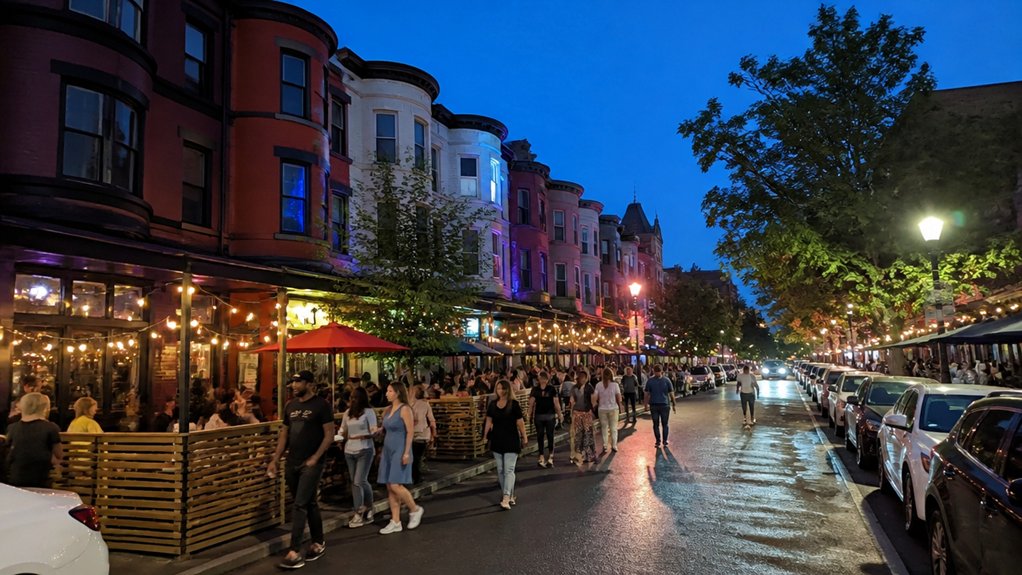
Head up to Adams Morgan and the city’s polished museum mood gives way to rowhouses, indie shops, and a bar scene that stays busy well past dinner. You come here for local energy, not marquee sights. Nights spill from eclectic restaurants into packed bars, and the sidewalks keep humming. Adams Morgan earns its reputation in the nightlife guide world with late-night energy that keeps the neighborhood lively after dark.
- Stay at The LINE Hotel in a converted church
- Expect indie boutiques and handsome old rowhouses
- Plan for bar crawls and Gen Z heavy crowds
- Use nearby Metro or buses to reach central DC
- Pick Adams Morgan if evenings matter most
If you want Washington after dark, Adams Morgan fits. You can chase rooftop drinks, hear music drift down 18th Street, then ride back to quieter corners for some sleep when the night finally blinks.
Best Budget Areas in Washington DC
If you want to save money in Washington DC, you’ve got smart options that still keep you close to the action. You can look at the Waterfront for modern value stays and river views, head to Bethesda for a walkable budget base with good food, or book in Metro-connected spots like Arlington, Crystal City, or near Navy Yard so the Mall doesn’t feel a world away. Stay near a Metro station and you’ll spend less time sweating the map and more time actually seeing the city. If you stay near the Waterfront, a Potomac River cruise can be an easy and scenic budget-friendly add-on to your DC itinerary.
Waterfront Value Stays
Settle into the Waterfront and you’ll often pay less than you would downtown while still getting river views, sleek budget-friendly hotels, and a lineup of modern eateries right outside the lobby. If you like nightlife, this area works hard for your budget. You’re near live music, bars, and the historic Municipal Fish Market. Easy metro access, Circulator buses, Bikeshare, and the water taxi keep sightseeing simple. For an easy food-focused outing, Union Market is another popular D.C. destination worth visiting for its wide range of local vendors and dining options.
- Lower rates than downtown
- Riverfront restaurants and bars
- Live music close by
- Fish Market since 1805
- Quick rides to the Mall
You’ll trade immediate monument proximity for savings, but not much convenience. Some blocks still hum with construction, so pack patience along with your walking shoes. Capitol is only a short hop away when you’re ready to explore.
Bethesda On A Budget
Look beyond downtown and Bethesda starts to make a lot of sense for budget travelers. You’ll usually pay less here than you’d in central DC, yet your stay still feels easy and lively. Bethesda gives you walkable blocks, busy sidewalks, and plenty of restaurants for an unfussy dinner after museum hours. You can browse shops, grab coffee, and stroll around without feeling rushed. Hotels often deliver better value than similar places closer to the National Mall. When you’re ready to head into Washington, the Red Line gets you there in about 20 to 25 minutes. That quick ride keeps the monuments, Penn Quarter, museums, and even Union Station within reach. If you want lower rates without a sleepy setting, Bethesda hits a sweet spot nicely. Another easy option for exploring the city is heading toward Foggy Bottom, a central neighborhood with quick access to major DC sights.

VIP Best of DC with US Capitol + National Archives Reserved Entry
Get the presidential treatment with the most comprehensive Washington DC day tour! The tour includes reserved access...

Private Washington DC City Tour
Make this spring unforgettable with a private Washington DC tour designed just for your family, perfectly timed for...
Washington DC Hop-On Hop-off Trolley Tour with 15 Stops
Enjoy a 90-minute Hop-on Hop-off panoramic trolley tour of Washington, DC. The tour route will maximize your time an...
Metro-Connected Cheap Areas
Bethesda proves that a lower nightly rate doesn’t have to mean a harder trip, and the same idea plays out in a handful of Metro-connected areas around DC. If you want to Stay in Washington D.C without paying downtown prices, focus on spots close to stations, so museums and monuments stay easy.
- Waterfront gives you newer hotels, river breezes, nightlife, and quick access from Waterfront or L’Enfant Plaza.
- Crystal City cuts costs and keeps the Mall close on Blue and Yellow trains.
- Old Town Alexandria adds cobblestones, dining, and simple Metro rides.
- Hotels near Metro Center save tired feet after long sightseeing days.
- Station-adjacent stays, including Chevy Chase-style options, trim transit time and post-tour grumbling.
You’ll spend less and save energy for dinner later.
Where to Stay in DC Without a Car
Getting around DC without a car is easy if you stay a block or two from a Metro station, especially on the Red, Blue, Orange, Silver, or Green lines. In Washington, the best areas include Dupont Circle, Penn Quarter, Foggy Bottom, and the Waterfront, where you can hop off the train and skip a long late-night walk.
If you want easy sightseeing, choose the National Mall or Penn Quarter. You can walk to Smithsonian museums, monuments, and broad green spaces without fuss. Dupont Circle feels lively and polished, with cafes, bookstores, and bars close together. Georgetown is charming too, though you’ll likely add a short bus ride. For cheaper stays, try Waterfront or Navy Yard for river views and nightlife, or look at Arlington, Crystal City, and Bethesda for simple Metro commutes into town daily.
How Trip Length Affects Where to Stay
The length of your trip changes the smartest place to stay in DC. If you’ve got just 1 to 3 days, sleep near the National Mall or Penn Quarter so you can walk to monuments, Smithsonian museums, and the Archives before your coffee cools.
- Staying 3 to 5 days? Pick Dupont Circle or Penn Quarter for easy sightseeing, lively dinners, and quick Metro hops.
- Visiting a week or more? Try Waterfront, Georgetown, or Arlington/Crystal City for calmer streets and better value.
- Planning late nights? Base yourself in Penn Quarter or Dupont Circle to skip a long ride home.
- Watching your budget on a longer stay? Waterfront or Bethesda often stretch your dollars further.
- Want variety? Longer trips reward meals, wandering, and trips beyond downtown.
How to Choose the Right DC Area
Whether you’re in DC for monuments, dinners, or a bit of both, the right neighborhood can make your whole trip feel easier. For easy sightseeing, stay near the National Mall in Penn Quarter or the East End. You’ll walk to the Washington Monument, Lincoln Memorial, and Smithsonian museums with less backtracking.
| Area | Best for | Watch for |
|---|---|---|
| Dupont Circle | Dining, nightlife, Metro | Farther from Mall |
| Georgetown | Charm, shops, strolls | Limited Metro access |
If you want waterfront views and better value, try Navy Yard. Its bars buzz at night, and water taxis add fun. Wherever you stay, book near Metro. Your feet will thank you. Chevy Chase Pavilion even has a station-connected hotel, handy after long museum days when your legs start negotiating.
Frequently Asked Questions
Which DC Airport Is Easiest for First-Time Visitors?
Choose Reagan National if you’re visiting DC for the first time; you’ll reach downtown fastest. It’s on Metro and close to the Mall. Dulles Transit takes longer, though it sometimes offers flights and cheaper fares.
Do DC Hotels Usually Charge Nightly Parking Fees?
Yes—like feeding a meter that never sleeps, you’ll usually pay nightly parking fees at DC hotels, often $40–$70+. You should expect higher Valet costs downtown, while Street parking stays scarce, regulated, and unreliable for visitors.
When Should I Book DC Hotels for Cherry Blossom Season?
Book DC hotels 3–6 months ahead for cherry blossom season, especially by January or February. You’ll want early booking near the Mall, choose flexible cancellation first, then switch to nonrefundable rates once bloom forecasts sharpen.
Are Hotel Resort Fees Common in Washington DC?
Not usually—you’ll see resort fees less often in Washington, DC than in resort cities, though some luxury or downtown hotels add them. Check total prices and mandatory disclosures before booking, so you don’t get surprised.
Do DC Hotels Include Free Breakfast for Families?
Yes, DC hotels do, especially budget and mid-range family stays. You’ll often find family friendly breakfasts at Embassy Suites, Capitol Hill, and Waterfront properties, while upscale hotels don’t unless you book packages or complimentary cribs.
Conclusion
Pick the DC base that matches your pace, then let the city unfold. If you want postcard classics, stay near the Mall or Penn Quarter and walk from marble memorials to free museums before retreating for a quick reset. Choose Dupont for leafy blocks and easy dinners. Go farther out for better value and a calmer night. By dusk, when the monuments glow like a neon mixtape, you’ll know you chose well for yourself there.
Washington DC Hop-On Hop-off Trolley Tour with 15 Stops
Enjoy a 90-minute Hop-on Hop-off panoramic trolley tour of Washington, DC. The tour route will maximize your time and provide you with a great introdu...
DC Monuments & Capitol Hill Highlights Tour by Electric Cart
Experience a whole different side of Washington, DC during our Monuments by day tour! Climb into our all-electric Re...



2 Comments
[…] neighborhood name is only the first filter. Two hotels in the same district can produce different walks, transfers, and evening environments. Compare the exact address with […]
[…] a short, city-centered trip, a hotel near Metro is usually more useful than a rental car. Metro is often the simplest way to cover longer […]