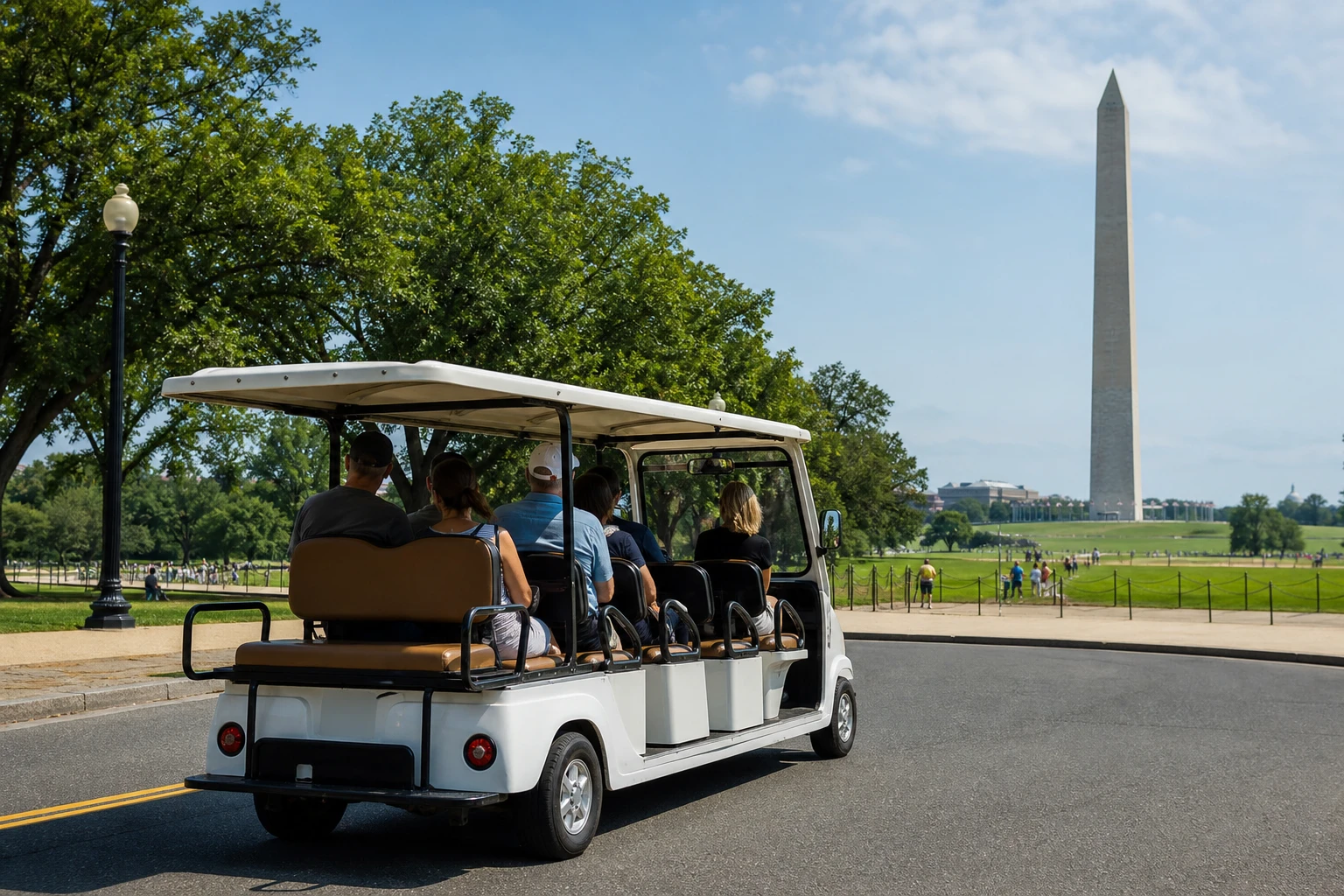
Washington DC electric cart tours are built for travelers who want a narrated introduction to the monumental core without turning the day into a long walk. A listed local option, Capitol Express Tours, describes a slow-moving electric-vehicle sightseeing circuit of roughly 10 miles through the downtown and National Mall area. The appeal is simple: settle in, watch the city unfold, and save your steps for the places where you want to linger.
Washington DC electric cart tours at a glance
- Expect a narrated, road-based overview rather than a fully self-directed day.
- A listed electric-vehicle tour covers roughly 10 miles around downtown and the National Mall area.
- Limited walking is a real advantage, but it does not automatically mean wheelchair-accessible service.
- Routes and stop opportunities depend on traffic, legal loading areas, and special events.
- Ask for the current meeting point, timing, route, price, and cancellation terms before booking.
This tour style works best as an orientation experience. It can help first-time visitors see how the Mall, memorials, museums, government buildings, and downtown streets relate to one another before choosing where to return on foot. Its central tradeoff is breadth over spontaneity: you gain wide-area context with limited walking, while the road route determines where the vehicle can travel and pause.
What the electric-cart experience is designed to deliver
An electric cart tour is a useful answer to a classic Washington problem: the sights look close together on a map, yet a day around the National Mall can involve far more walking than expected. The local electric-vehicle format is slow-moving and narrated, with broad downtown and National Mall coverage. It is best approached as a moving introduction to the cityscape, not as a guarantee of a long stop at every landmark.
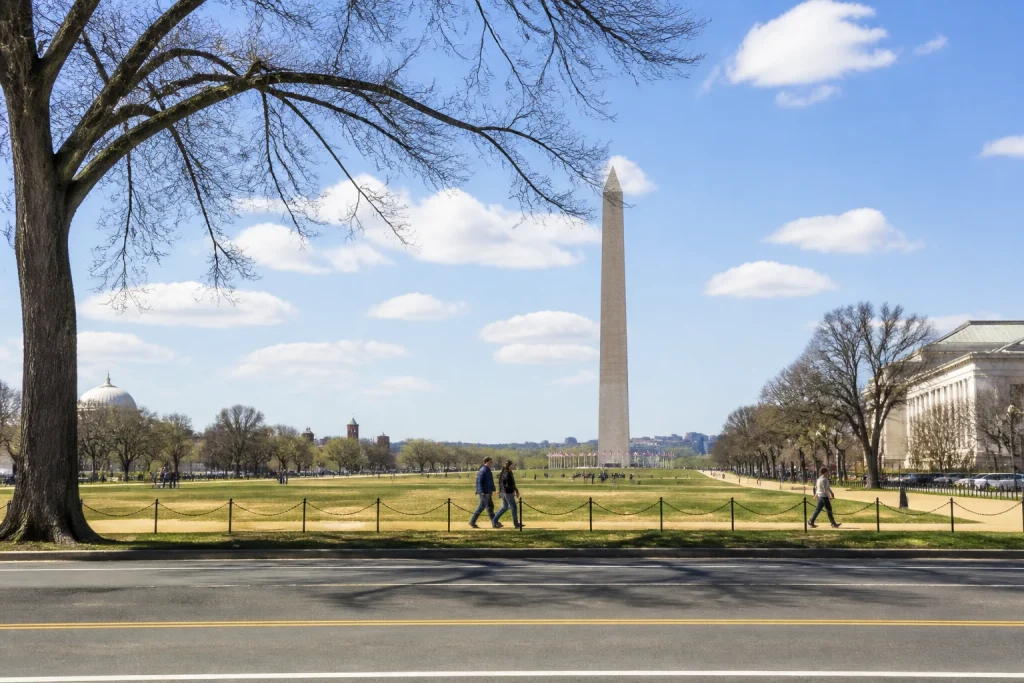
Use the ride to notice the changing scale of Washington, from sweeping lawns and memorial vistas to dense blocks of civic architecture. Then give your favorite places their own time later in the trip. For a self-led follow-up, the National Mall Guide for First Timers is a helpful companion for turning a broad first look into a more deliberate visit.
A road-based tour, not a fixed landmark checklist
Before you reserve, ask the seller which areas are planned for your departure and whether any particular stops are included that day. The published description supports a downtown and National Mall-area circuit, but the precise route, meeting location, drop-off point, and duration should come from the booking details. That small check prevents a common planning mistake: building a tightly timed museum or restaurant reservation around an unconfirmed return time.
Treat panoramic viewing and narration as the dependable core of the experience. A particular photo stop is less certain because commercial vehicles must load and unload passengers only in legal parking spaces or authorized designated areas, and parking is not guaranteed. That rule helps explain why a good tour can still need to adjust its pacing on a busy day.
The tradeoff: broad coverage with less flexibility
Choose a Washington DC electric cart tour when coverage and comfort matter more than total control of the route. The vehicle can connect a broad swath of the central city with limited walking, while the guide’s narration gives the passing views context. In exchange, traffic, legal stopping locations, and crowd-control measures shape the experience. This is a city tour that works with the street network, not around it.
- Choose an electric cart for a narrated first look at the downtown and National Mall area.
- Choose it when you want to conserve energy for a museum, memorial, or meal later in the day.
- Choose another format if a guaranteed, extended stop at one specific landmark is your priority.
- Leave room in the schedule if demonstrations, security operations, construction, or special events are possible.
The limitation is not a flaw so much as the nature of touring Washington by road. The city’s most visited ceremonial spaces must also accommodate daily traffic, public events, security needs, and park rules. A cart tour provides a practical overview, but a later walk is still the better way to absorb the details of a memorial, read exhibit panels, or linger over a particular view.
What to confirm before booking an electric cart tour
Get the practical details in one pass before you commit. Current fare information, child rates, private-tour terms, inclusions, mandatory fees, exact departures, and cancellation policies vary by seller and were not fixed in the available destination listing. Ask for a dated quote and review the booking confirmation before arranging transportation, timed entry, or dinner plans around the tour.
Still comparing Walking Tours?
Ask for tour ideas, hotel suggestions, or a simple trip plan that combines both.
Trip Helper
Six useful booking questions
- Where is the exact meeting point, and where does the tour finish?
- What departure and return times apply to my selected date?
- What route or neighborhood coverage is planned that day?
- Which stops, if any, allow passengers to get out of the vehicle?
- What does the quoted price include, and are there any required fees?
- What is the weather, cancellation, and rebooking policy?
This is also the moment to ask about seating, boarding, luggage, strollers, service animals, and restroom timing if any of those details affect your group. Keep the confirmation handy on the day, since it should be your reference for the meeting instructions and selected departure. Avoid relying on an old itinerary screenshot or a third-party description for time-sensitive logistics.
Limited walking and accessibility considerations
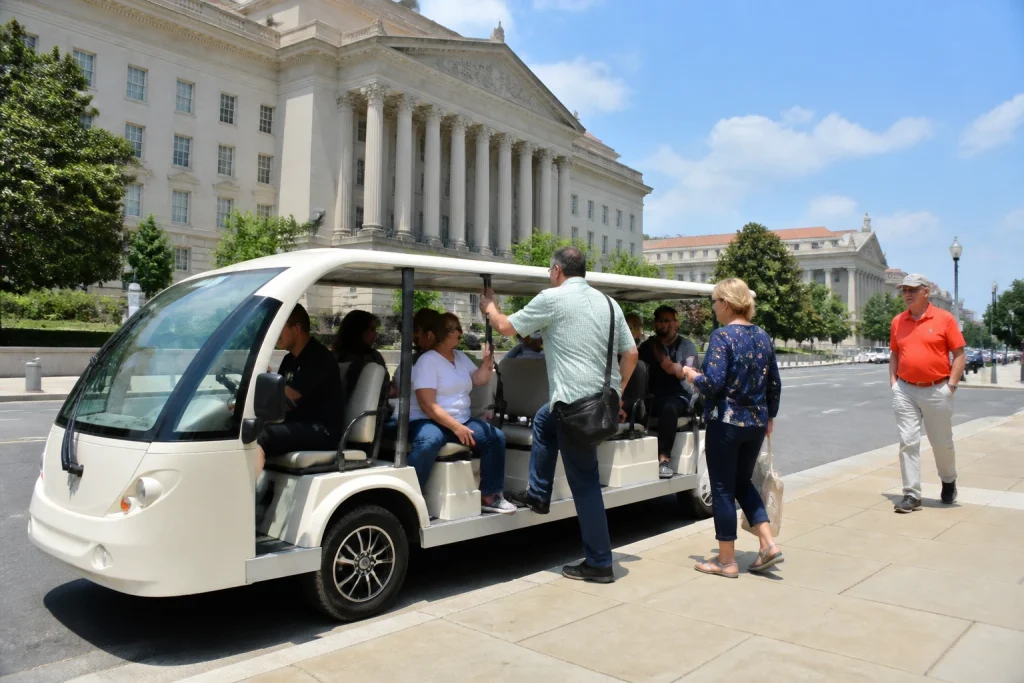
The main comfort benefit is limited walking. That can make an electric-cart overview appealing for travelers who do not want to cover the Mall’s long distances on foot, especially at the beginning of a packed sightseeing day. Still, limited walking is not the same as verified wheelchair accessibility. Do not assume step-free boarding, wheelchair securement, transfer help, accessible rest stops, or service-animal arrangements without asking the operator directly.
This format is often a good fit for
- First-time visitors who want a narrated geographic overview before exploring independently.
- Travelers who want to limit walking between central Washington sights.
- Visitors who prefer a road-based sightseeing experience over a fully self-paced route.
- Groups that value shared context and a simpler first pass through the downtown core.
Plan a different option when you need
- Confirmed wheelchair accommodations or specific boarding support.
- A guaranteed stop at a named monument or museum.
- A timetable that cannot absorb a traffic or event-related detour.
- Full control over how long you spend at each sight.
Accessibility questions are worth handling before purchase rather than at the curb. Be specific about the accommodation you need and ask whether it is available on the exact departure you are considering. A clear answer on boarding and seating is more useful than a general assurance that the tour involves little walking.
How events, traffic, and park rules can change the route
Washington’s public calendar can reshape a sightseeing route quickly. National Mall operations are particularly affected during large occasions such as Independence Day celebrations, the Cherry Blossom Festival, presidential inaugurations, and other permitted events. Demonstrations, security operations, construction, and street restrictions can also alter a normal circuit. When an early departure is offered, it is often the wisest choice for visitors seeking the most straightforward day.
Check the operator’s itinerary shortly before departure and look at same-week National Park Service and District notices when a major event is expected. Build some breathing room around the tour instead of scheduling a nonrefundable activity immediately afterward. A route adjustment does not erase the value of the ride, but it can change which views and stops fit into the day.
Why photo stops cannot be promised
National Mall rules matter even when the vehicle is small. Unauthorized vehicles, including carts, cannot drive or park on turf. Commercial vehicles also need a legal parking space or an authorized designated area for passenger loading and unloading. In practice, that means the tour should be valued for its moving views and commentary, with any stop treated as dependent on lawful access and conditions that day.
Electric cart tours compared with walking and bike tours
| Tour style | Best reason to choose it | Main planning consideration |
|---|---|---|
| Electric cart | Narrated, broad-area orientation with limited walking | Road conditions, legal stop locations, and events can affect the route. |
| Walking tour | Close, self-paced attention to a smaller area | Expect to cover more distance on foot. |
| Bike tour | Active sightseeing with a faster rhythm than walking | Choose it when cycling is part of the experience you want. |
| Independent exploration | Freedom to linger at a favorite place | You provide the route, context, and pacing. |
A cart ride and a walk can work especially well together. Use the vehicle tour for an initial sweep, then return to the places that caught your attention. The Washington DC Walking Tours Guide suits travelers who want a closer look at a single area, while the Washington DC Bike Tours Guide is a better match for visitors who want active sightseeing to shape the day.
How to fit an electric cart tour into a first Washington trip
Make the cart tour an early orientation piece, then leave the rest of the day flexible. Once you understand the broad layout of the downtown and National Mall area, it becomes easier to decide where to spend meaningful time on foot. Avoid placing tightly timed commitments directly after an unconfirmed return. A little schedule space is especially valuable when an event, traffic pattern, or legal stopping restriction changes the route.
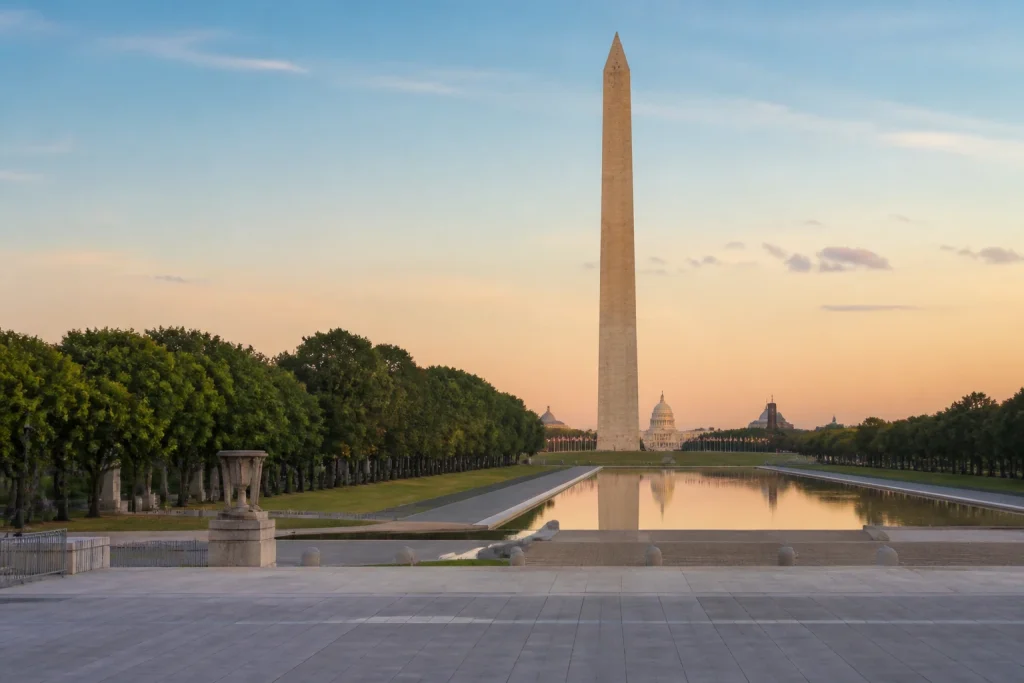
For a longer stay, an electric-cart overview can be the opening chapter rather than the whole plan. The 4 Days in Washington DC Itinerary is useful for spreading major sights across several days, so a single sightseeing ride does not have to carry the weight of seeing everything at once. Save an unhurried block for the places that deserve a deeper visit.
Is a Washington DC electric cart tour worth it?
A Washington DC electric cart tour is worth considering for visitors who want a narrated overview of the downtown and National Mall area with limited walking. It is particularly helpful at the start of a trip, when the city’s geography is still unfamiliar. Its main limitation is flexibility: routes and stop opportunities depend on street conditions, legal access, and major events. Confirm the day’s logistics, then let the ride guide your later exploration.
Frequently asked questions
How long are Washington DC electric cart tours?
The exact duration depends on the selected booking, so use the departure and return time in your confirmation. The available destination listing describes coverage of roughly 10 miles but does not set a standard tour length.
What do electric cart tours in Washington DC cover?
A listed electric-vehicle tour covers the downtown and National Mall area with narration over a route of roughly 10 miles. Confirm the precise route and any planned stops for your selected departure, since road conditions and events can require adjustments.
Are Washington DC electric cart tours wheelchair accessible?
Limited walking is part of the tour format, but wheelchair accessibility is not established by that description. Confirm step-free boarding, wheelchair securement, transfer support, service-animal arrangements, and accessible stops directly with the operator before booking.
How much do Washington DC electric cart tours cost?
Get a dated quote from the seller before booking. Current fares, child rates, private-tour pricing, inclusions, and mandatory fees are not fixed in the available listing.
Can an electric cart tour stop at every National Mall landmark?
No tour should promise a stop at every landmark. Road-based operators can load and unload only in legal parking spaces or authorized areas, and parking is not guaranteed; routes are also subject to traffic and event restrictions.
What happens to electric cart tours during major Washington events?
Major events can displace road-based guided tours around the National Mall. Check the operator’s itinerary close to departure, leave extra time in your day, and choose an early tour when one is offered.

Washington DC's Monuments & US History Guided E-Cart Tour
This tour offers a detailed introduction to U.S. history and Washington D.C.’s famous monuments, guided by expert Washingtonian storytellers. We lov...

Washington DC: Easy Sightseeing Guided Monuments Tour by E-Cart
Explore Washington, DC’s iconic monuments and memorials on a relaxed, open-air electric cart tour. Enjoy a small-g...

Washington DC Monuments Up Close: Day or Night Electric Cart Tour
See Washington, DC’s most famous monuments up close without spending hours walking between them. Hop aboard an ope...

Washington DC Monuments & US History Moonlight Guided E-Cart Tour
Explore the nation’s capital after dark on a Moonlight E-Cart Tour through Washington, DC. Ride in comfort as your...
Experiences to explore
 Explore experience ↗
Washington DC Monuments Up Close: Day or Night Electric Cart Tour
◷ 2 hr
See Washington, DC’s most famous monuments up close without spending hours walking between them. Hop aboard an open-air electric cart f
From $55.00 USD
View dates Explore experience ↗
Airport Transfer DCA to/from Washington DC Downtown Area only
◷ 30 min
This is a personalized service of transportation without the discomfort of taxi lines and the inconvenience stops of a ride sharing shu
See dates for Current pricing
View dates Explore experience ↗
Washington DC Monuments Tour by Electric Cart Day and Night
◷ 2 hr
Experience a whole different side of Washington, DC during our Monuments tour! Climb into our all-electric Red Roadsters and tour the N
See dates for Current pricing
View dates