
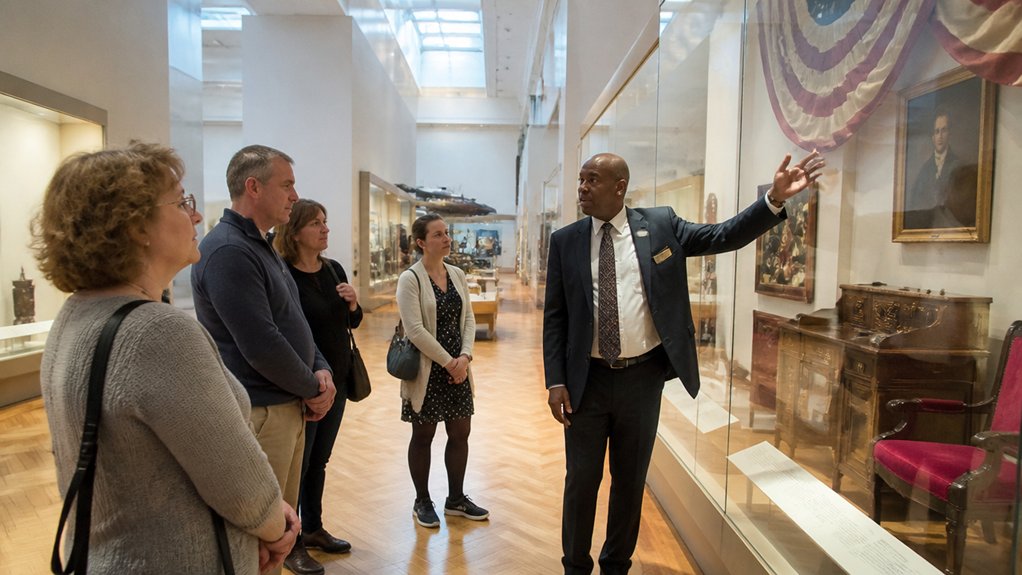
You could spend a hundred years in the Smithsonian National Museum of American History and still find one more thing that changed the country. You walk in for free, step past crowds and quiet cases, and suddenly face the Star-Spangled Banner, Julia Child’s bright kitchen, and pop culture treasures that feel oddly close. Add easy Metro access and kid-friendly stops like Spark!Lab, and you’ve got a visit worth planning well.
Key Takeaways
- Admission is free daily, no advance reservation is required, and the museum is open every day except December 25.
- Typical hours are 10:00 a.m. to 5:30 p.m., but daily schedules can change, so confirm current hours before visiting.
- The museum sits on the National Mall at 1300 Constitution Ave. NW, with entrances on Constitution Avenue and Madison Drive.
- The easiest transit option is Smithsonian Metro station; parking is limited, and nearby museums are easy to reach on foot.
- Must-see highlights include the Star-Spangled Banner, Lincoln’s stovepipe hat, Dorothy’s ruby slippers, and Muhammad Ali’s gloves.

250th: National Archives & American History Museum Guided Tour
Experience 250 years of American history on this 3-hour guided walking tour led by a local historian & professional tour guide.Visit the Smithsonia...

The Best of Washington DC: Private Full-Day Walking Tour
Explore the Presidential city of Washington D.C. on a private full-day walking tour.You'll see the city's iconic...

Smithsonian "Big 3" Highlights Tour (Air & Space Entry Included)
See the best of the Smithsonian Museums on a 3-hour guided tour of the highlights of the American History, Natural H...

Private Smithsonian Guided Tour with Private Transportation
Welcome to an exciting private walking guided experience through Washington, DC’s most iconic Smithsonian museums!...
Is the National Museum of American History Free?
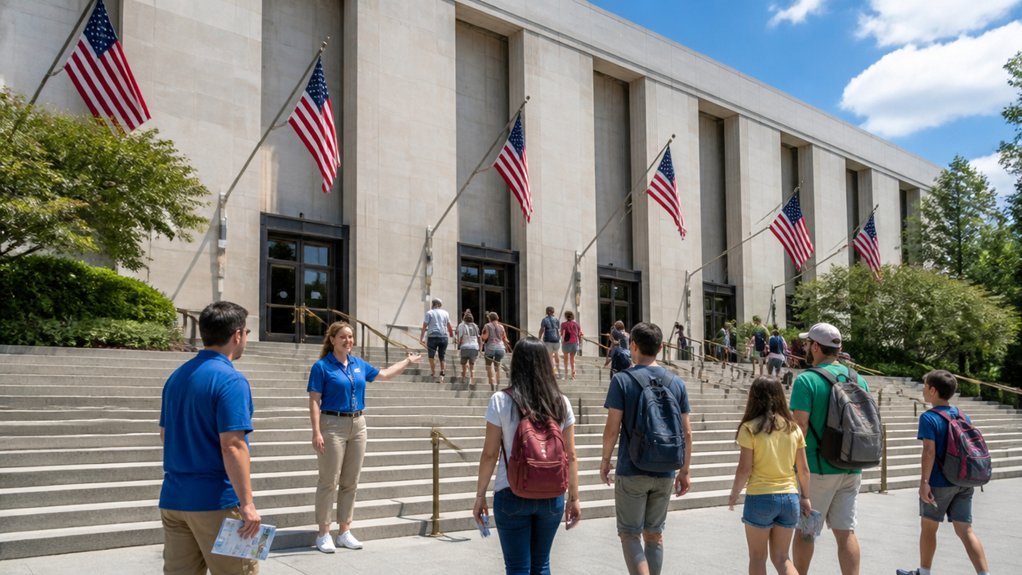
At the Smithsonian National Museum of American History, the best surprise is simple: admission is free every day. You can walk in without buying a ticket, which feels almost old-fashioned in the best way. Like other museums in the Smithsonian Institution, this one welcomes you without an entry fee. It’s open daily except December 25, usually from 10:00 a.m. to 5:30 p.m., and you don’t need advance reservations. If you’re traveling with a group of 10 or more, you can still arrive during public hours. Kid-friendly spots like Wegmans Wonderplace and Draper Spark!Lab keep shorter weekly hours, but they stay free too. Just budget for extras like snacks, gifts, or occasional special programs. Your wallet gets a rare museum day off, and that’s worth savoring slowly there. As a bonus, some events may require free registration even though admission is free every day.
Where Is the National Museum of American History?
You’ll find the Smithsonian National Museum of American History right on the National Mall in Washington, D.C., along Constitution Avenue NW between 12th and 14th Streets, with doors at 650 Jefferson Drive SW. You can hop off at Smithsonian station on the Blue, Orange, or Silver lines, or drive in and look for dedicated parking on Madison Drive NW. Once you arrive, you’re steps from other Smithsonian museums, nearby monuments, and even Stop 11 on the Old Town Trolley route, which makes the whole area feel easy to explore. For first-time visitors, the National Mall is especially convenient because so many major sights are clustered within easy walking distance.
National Mall Location
On the National Mall, the National Museum of American History sits between 12th and 14th Streets at Constitution Avenue NW in Washington, D.C., with the Washington Monument rising nearby and other Smithsonian museums just a short walk away.
From here, you can orient yourself fast. The museum stretches along a National Mall block, and its entrances meet you on Constitution Avenue and on the Mall side at Madison Drive. You’re close to the National Museum of Natural History and the National Museum of African American History and Culture, so the area feels like one gallery. Keep the address 650 Jefferson Drive SW in mind, but trust your eyes too. Broad lawns, busy paths, and that obelisk make finding the building hard to mess up. The surrounding parkland is part of National Mall and Memorial Parks, which spans from the U.S. Capitol to the Potomac River.
Metro And Parking
How do you get there without turning the National Mall into a scavenger hunt? Start with the Metro. The closest stop is Smithsonian on the Blue, Orange, and Silver lines, and you’ll step out near the museum on the Mall. If you prefer the street-level view, several Metrobus routes run along Constitution Avenue and make arrivals easy.
Located on Constitution Avenue, the museum sits at 1300 Constitution Ave. NW, between 12th and 14th Streets, with entrances on Constitution Avenue and Madison Drive. You can drive, but parking is slim. A few visitor spaces sit on Madison Drive NW, while street parking stays tight and restricted. For a sightseeing shortcut, hop on the Old Town Trolley and use Stop 11, right by the door there. As with other Smithsonian destinations along the Mall, the Smithsonian museums area is easiest to explore on foot once you arrive.
DC Monuments Night Tour with 10+ Stops, National Mall, Tickets
Experience Washington DC lit up at night during this 3-Hour Guided Night Tour of the National Mall and Monuments. Ma...

DC Night Tour: 10+ National Mall Monuments, Entry Ticket Upgrades
Experience Washington DC lit up at night during this 3-Hour Washington DC Guided Moonlit Tour of the National Mall a...

Washington DC Night Tour: ICONIC Landmarks, Monuments SMALL GROUP
Experience Washington DC at its most striking; after dark! This guided night tour showcases the city’s most iconic...
How Do You Get to the American History Museum?

You’ll find the National Museum of American History right on the National Mall, so getting there feels simple once you’re in the center of Washington. You can hop off at Smithsonian Station on the Blue, Orange, or Silver lines, catch a Metrobus near the Mall, or use Old Town Trolley Stop 11 right by the museum. If you’re driving, you’ll want to aim for limited accessible parking on Madison Drive NW, and if you’re already out exploring, you can walk over easily from nearby landmarks like the Washington Monument. If you’re coming in through Union Station, it can be a convenient starting point for reaching the National Mall before heading to the museum.
National Mall Location
Set right on the National Mall, the National Museum of American History sits between 12th and 14th Streets with entrances on Constitution Avenue NW and Madison Drive, and the address you’ll usually see is 650 Jefferson Dr. Located on the National Mall, you can spot it fast from broad lawns and busy paths. If you are planning multiple stops, a visitor guide can help you compare entrances, timing, and nearby landmarks across major Washington museums.
| Side | Street | Note |
|---|---|---|
| North | Constitution Avenue NW | Main approach |
| South | Madison Drive | Easier landmarking |
| West | 14th Street | Near Monument views |
| East | 12th Street | Simple walking link |
Afterward, you can stroll to the Washington Monument, Natural History, or African American History and Culture. If you drive, accessibility spaces sit on Madison Drive. The setting feels central, so your map work stays easy and your shoes do the rest, which is a fine trade.
Metro And Bus Access
For the easiest trip, take Metrorail and let the Mall do the rest. The museum sits on Constitution Avenue NW between 12th and 14th Streets, and Smithsonian station on the Blue, Orange, and Silver lines puts you close fast. You step out toward the National Mall, catch the open sky, and you’re nearly there. Before you go, check System Status for any service changes that could affect your trip.
- Ride to Smithsonian station for the shortest rail connection.
- Use Metrobus if you’re coming from another part of the city and want a street-level view.
- Look for National Mall corridor stops near the museum for quick access.
- Try Old Town Trolley Tours stop #11 beside the museum if you’d like hop-on, hop-off sightseeing with a side of convenience.
It’s simple, scenic, and blessedly free of route-guessing on a busy travel day.
Parking And Walking Routes
On foot or by car, the last stretch to the National Museum of American History feels easy once the Mall opens up around you. Located on Constitution Avenue NW between 12th and 14th Streets, the museum welcomes you from Constitution on the first floor and from Madison Drive on the Mall side above. If you drive, you’ll find limited parking on Madison Drive NW, so arriving early helps. Nearby street and paid parking stay scarce, which is why transit often wins. From Smithsonian Station, the walk is short and open, with lawn views and the Washington Monument pulling your eyes west. Visitors staying at National Mall hotels can often walk to the museum in minutes without needing a car. Bus riders and trolley users can step off near the museum with little walking. Afterward, you can stroll to Natural History without checking a map.
When Is the National Museum of American History Open?
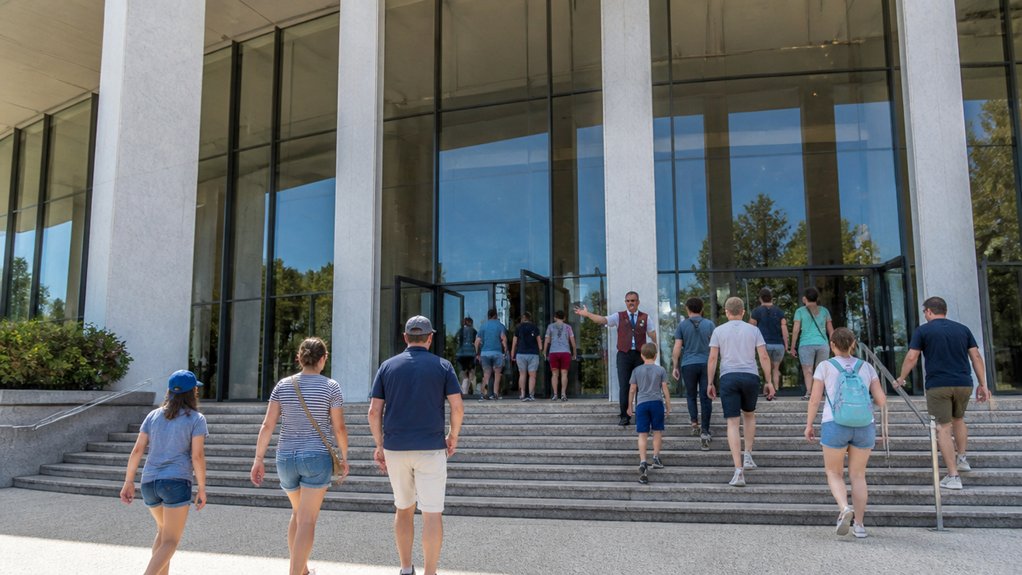
Usually, you can walk into the National Museum of American History any day from 10:00 a.m. to 5:30 p.m., with free admission and no ticket needed during regular hours. The museum is open daily, except December 25. Still, hours can change, and some listings have shown evening times, so it’s smart to confirm the day’s schedule before you set out from your hotel. By contrast, the Library of Congress requires timed-entry tickets for visitor access, with last entry 30 minutes before closing.
- You can plan around standard hours and skip ticket stress.
- Wegmans Wonderplace and Draper Spark!Lab run Wednesday through Sunday, 10:00 a.m. to 4:00 p.m.
- Those two family spaces close Monday and Tuesday, so don’t arrive early and grumpy.
- Federal holidays usually keep the same 10:00 a.m. opening, but special notices or seasonal shifts happen, so check current hours before you go.

Washington DC Monuments Tour by Electric Cart – Day & Night
Experience a whole different side of Washington, DC during our Monuments tour! Climb into our all-electric Red Roads...

Smithsonian Museum of American History Semi-Private 8ppl Max
Join this 2.5 hour semi-private (8 Guest Maximum) guided tour of the National Museum of American History to learn ab...

National Mall Tour: 10+ Monuments & Optional Museum Tickets
See the very best of Washington DC in a single morning on this guided 3-hour National Mall bus tour. Travel comforta...
Why Visit the National Museum of American History?
You come here to stand inches from the original Star-Spangled Banner and Abraham Lincoln’s stovepipe hat, the kind of objects that make American history feel suddenly real. You can then move through exhibits on presidents, first ladies, food, and entertainment, with enough variety to keep both history buffs and restless kids happily occupied. And because admission’s free and the museum sits right on the National Mall, you can easily make it part of a bigger day without wearing out your patience or your wallet. It also earns a spot among Washington’s best museums, making it an easy addition to any National Mall itinerary.
Iconic American Artifacts
History feels startlingly close at the National Museum of American History, where a few rooms can take you from a battlefield to a movie set to a home kitchen. You don’t just look at artifacts here. You meet American memory face to face.
- Gaze at the original Star-Spangled Banner, resting in a carefully controlled chamber.
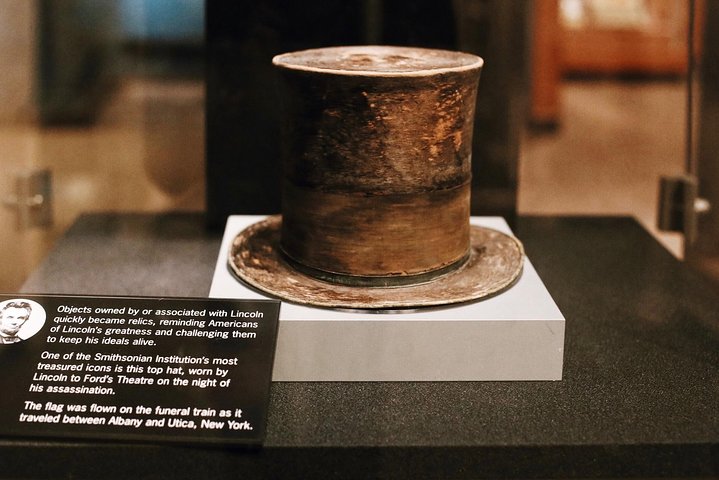
- See Lincoln’s bloodstained top hat, a quiet relic from a shocking night.
- Spot Dorothy’s ruby slippers, Muhammad Ali’s gloves, and Prince’s Yellow Cloud guitar.
- Peek into Julia Child’s preserved kitchen, then catch Jupiter and a stretch of Route 66 nearby.
These objects make the museum unforgettable. Each one pulls you into a different American story. You’ll leave with images that linger like snapshots, bright, strange, and surprisingly personal for days. Nearby Smithsonian offerings also highlight American bison through a new exhibit tracing their legacy from ancient times to the present.
Engaging Exhibits For All
Step inside and the museum opens up like a time machine with better lighting. At the National Museum of American History, engaging exhibits pull you from the Star-Spangled Banner, glowing softly in its controlled chamber, to Julia Child’s sunny kitchen, where copper pots and counters make dinner feel almost within reach. You can trace power and personality in The American Presidency, then pivot to Entertainment Nation for Dorothy’s ruby slippers, Ali’s gloves, and C-3PO’s metallic stare. If you’re traveling with kids, head to Spark!Lab or Wegmans Wonderplace, open Wednesday through Sunday from 10 a.m. to 4 p.m. There, young visitors tinker, build, and test ideas while you catch your breath. With more than 1.7 million artifacts, you’ll never run out of stories to follow. If you want to deepen your Smithsonian experience beyond the galleries, a museum membership includes Air & Space Quarterly magazine and helps support exhibitions, public programs, and collection care.
What Are the Top Things to See Here?
If time is short, start with the museum’s true heavy hitters: the original Star-Spangled Banner on the second floor, preserved in a dim, climate-controlled chamber, and Abraham Lincoln’s black top hat on the third floor in The American Presidency galleries, still carrying the shock of April 14, 1865.
Then keep going at the National Museum of American History:
- Peek into Julia Child’s kitchen. Copper pans and homey counters feel wonderfully lived-in.
- Browse FOOD and trace how postwar meals, gadgets, and habits reshaped daily life.
- Spot Dorothy’s ruby slippers, Ali’s gloves, and Prince’s guitar. Pop culture gets real fast.
- Cruise through America on the Move, where vehicles and a Route 66 stretch bring motion alive.
If you’ve got extra time, dip into First Ladies displays, too. For a different Smithsonian experience, the National Museum of Asian Art also rewards a visit with Pahari paintings, Japanese woodblock prints, and contemporary works by Hiroshi Senju and Bingyi.
Where Can You See the Star-Spangled Banner?
For many visitors, the original Star-Spangled Banner is the reason to head upstairs first. You can see the flag on permanent display in the Smithsonian National Museum of American History on the second floor. It rests inside an environmentally controlled chamber in the Star-Spangled Banner gallery, where low light and careful climate controls protect the fragile silk. Recovered from Fort McHenry after the War of 1812, this 30-by-34-foot flag inspired Francis Scott Key’s poem. Enter from Constitution Avenue and follow signs upstairs. Nearby, you can also browse related documents in the Albert Small Documents Gallery. The exhibition opened on November 21, 2008, and it’s still one of the museum’s most stirring sights today. You’ll notice the hush in the room before you see it. If you’re planning a broader Washington museum visit, note that the United States Holocaust Memorial Museum is free and open every day except Yom Kippur and Christmas Day.
Where Is Abraham Lincoln’s Top Hat Displayed?
A stovepipe hat with a dark, familiar silhouette waits upstairs in one of the museum’s most memorable corners. You’ll find Abraham Lincoln’s top hat in the American Presidency gallery at the Smithsonian National Museum of American History in Washington, D.C. It sits on the third floor near presidential and First Ladies displays, surrounded by presidential relics and iconic objects. The broader Smithsonian family also includes the National Museum of Natural History, another major museum on the National Mall.
Lincoln’s top hat waits upstairs, solemn and iconic, in the American Presidency gallery at the Smithsonian’s National Museum of American History.
- Head to Constitution Avenue NW on the National Mall.
- Enter free of charge and plan for 10 a.m. to 5:30 p.m.
- Ride upstairs to the third floor for the American Presidency gallery.
- Look for the hat Lincoln wore on April 14, 1865.
Seeing it in person feels oddly intimate. The silk surface is elegant, solemn, and a little haunting, even now.
What Are the Best Permanent Exhibits?
Start with the museum’s heavy hitters, because its best permanent exhibits don’t just fill rooms, they anchor the whole visit. At the National Museum of American History, you’ll want the Star-Spangled Banner first. The original 1814 flag rests in a dim, climate controlled chamber, and the hush feels earned.
Then head to The American Presidency: A Glorious Burden, where Lincoln’s top hat still gives you chills. America on the Move adds motion and scale with about 340 objects, the Jupiter locomotive, and even a 40-foot strip of Route 66. Finish with the First Ladies gallery. More than two dozen gowns, china, and furnishings show how public style and political duty changed over time. You’ll leave with your feet tired and your curiosity wide awake. If you enjoy artist interpretation beyond historical objects, the Smithsonian world also includes artist-focused talks through the Hirshhorn Museum and Sculpture Garden.
Which Exhibits Cover Food, Business, and Pop Culture?
Where should you go when you want the museum to feel a little more like real life? Head for exhibits that track what Americans ate, bought, watched, and admired. You can stand before Julia Child’s preserved kitchen and almost hear the clatter of pans. Like the Smithsonian’s broader mission seen at the Zoo, conservation science and public storytelling often work together to connect visitors with everyday life and national priorities.
For the museum at its most lived-in, follow what Americans ate, bought, watched, and cherished.
- Food: Transforming the American Table 1950–2000 shows how eating changed after 1950.
- American Enterprise follows 300 years of U.S. business growth.
- Entertainment Nation brings pop culture close with Miss Piggy, C-3PO, and more.
- The First Ladies gallery links dining, style, china, and furnishings to public life.
If you want extra context, America on the Move adds 340 transportation objects and a strong consumer-life thread. It’s a quick way to read the nation through menus, money, movie props, and polished silver.
Smithsonian Museum of American History Exclusive Guided Tour
Join this 2.5 hour exclusive guided tour of the National Museum of American History to learn about the relatively sh...
Washington DC Mall Self Guided Audio Walking Tour
On our location aware smart phone guided walking tour you will see D.C.’s best-known monuments and museums with a...

Two Smithsonian Museums Private Tour: American & Natural History
Explore two of the famed Smithsonian Museums in Washington DC's National Mall, the fascinating National Museum of Am...
Is the American History Museum Good for Families?
Often, this museum feels unusually easy to love as a family because it gives different ages something real to grab onto.
You’ll find famous objects that spark instant recognition, from Dorothy’s ruby slippers to Julia Child’s preserved kitchen and Muhammad Ali’s gloves. Ride simulators add a little noise and motion, while America on the Move pulls in vehicle lovers with a first automobile and a 40-foot stretch of Route 66. Practical details help, too: free admission, accessible spaces, stroller-friendly entrances, and America’s Table when energy drops. If you’re visiting with younger children, Wegmans Wonderplace and Draper Spark!Lab are additional options. Plus, tours, demonstrations, and the nearby National Mall make your day feel flexible and pleasantly full without turning the day into a slog somehow.
For families also planning other stops on the Mall, the National Gallery of Art adds kid-friendly extras like the Sculpture Garden and free talks, tours, and hands-on activities.
What Can Kids Do at Spark!Lab and Wonderplace?
Exploring here feels less like escorting kids through a museum and more like turning them loose in two small worlds built for doing. At Spark!Lab, kids 6 to 12 can design, build, and test inventions with real tools, bright materials, and facilitator-led challenges that sneak in engineering thinking.
- In Spark!Lab, you’ll hear tinkering, see prototypes, and watch ideas change fast.
- In Wegmans Wonderplace, under-6 explorers can dress up, touch sensory stations, and join guided play.
- Storytelling and play-based learning keep little ones moving, noticing, and asking questions.
- Both spaces are free, hands-on, open Wednesday through Sunday, 10 to 4, and sometimes fill up.
You won’t find don’t-touch signs here. Instead, kids get age-right freedom, soft textures, simple prompts, and room to make a mess. Families exploring nearby Smithsonian museums may also want to compare how the National Museum of African American History and Culture uses immersive storytelling to engage visitors of all ages.
How Should You Plan Your Museum Visit?
After the hands-on buzz of Spark!Lab and Wonderplace, it helps to map out the rest of your day so the museum feels roomy instead of rushed. The museum opens daily from 10:00 a.m. to 5:30 p.m., except Dec. 25, and it’s free, so you can focus on timing rather than tickets. Use My Visit to tap the heart on exhibits, then email your list to yourself. Start with must-sees: the Star-Spangled Banner on the second floor, Julia Child’s kitchen on the first floor, the presidency galleries upstairs, and America on the Move. If you’re bringing kids, reserve Wonderplace or Spark!Lab for Wednesday through Sunday, 10 to 4. Arrive by Metro, bus, or trolley, and pick the Constitution Avenue or Madison Drive entrance for easy access. If you have extra time in Washington, the National Archives also offers daily access to the Charters of Freedom from 10 a.m. to 5:30 p.m.
Frequently Asked Questions
Are Guided Tours Available at the Museum?
Yes, you can join guided tours at the museum through scheduled programs, including guided walkthroughs and curator talks. You should check the Events or Visit pages, and groups should email ahead so staff can prepare.
Can Visitors Take Photographs Inside the Exhibits?
Yes—you can photograph most exhibits, like catching sparks of history in your hands, but you can’t use flash photography or gear. Watch for restricted signs, respect artifact handling rules, and don’t disturb other visitors’ moments.
Is There a Museum Shop With Exclusive Books and Gifts?
Yes, you’ll find a Main Museum Store on the first floor with exclusive books, gifts, and exclusive merchandise. You can browse Smithsonian titles, themed souvenirs, and ask staff about hours, inventory, and occasional curator signings.
Are Educational Programs Offered for Students and Teachers?
Yes, you’ll find educational programs for students and teachers, including Spark!Lab, Wonderplace, docent-led tours, Curriculum partnerships, and Professional development opportunities with lectures, demonstrations, and classroom-ready resources that support history and STEM learning during your visits.
How Can I Access Smithsonian Magazine Resources Related to the Museum?
Open Smithsonian Magazine online, and you’ll unseal a treasure chest: search the museum name or artifact titles, browse Smithsonian articles, explore magazine archives, follow related tags, and sign up for newsletters to catch fresh updates.
Conclusion
You can walk in for free, step from the Smithsonian Metro, and stand inches from the Star-Spangled Banner that inspired a national anthem. The museum holds more than 1.8 million objects, so even a short visit feels like opening a giant attic of American memory. You’ll hear kids tinkering in Spark!Lab, spot Julia Child’s bright kitchen, and likely leave planning a return. Wear comfortable shoes. History here is big, vivid, and surprisingly fun.
250th: National Archives & American History Museum Guided Tour
Experience 250 years of American history on this 3-hour guided walking tour led by a local historian & professional tour guide.Visit the Smithsonia...
The Best of Washington DC: Private Full-Day Walking Tour
Explore the Presidential city of Washington D.C. on a private full-day walking tour.You'll see the city's iconic...
Smithsonian Museum of American History Semi-Private 8ppl Max
Join this 2.5 hour semi-private (8 Guest Maximum) guided tour of the National Museum of American History to learn ab...
Smithsonian Museum of American History Exclusive Guided Tour
Join this 2.5 hour exclusive guided tour of the National Museum of American History to learn about the relatively sh...
Still comparing Smithsonian National Museum Of American History?
Ask for tour ideas, hotel suggestions, or a simple trip plan that combines both.
Trip Helper
Experiences to explore
 Explore experience ↗
Smithsonian Museum of American History Exclusive Guided Tour
◷ 2 hr 30 min
Join this 2.5 hour exclusive guided tour of the National Museum of American History to learn about the relatively short but immensely r
From $105.00 USD
View dates Explore experience ↗
Smithsonian Museum of American History Semi-Private 8ppl Max
◷ 2 hr 30 min
Join this 2.5 hour semi-private (8 Guest Maximum) guided tour of the National Museum of American History to learn about the relatively
From $105.00 USD
View dates Explore experience ↗
Smithsonian Natural History + Museum of American History 8ppl Max
◷ 5 hr 30 min
This 5.5 hour small group (8 Guest Max.) guided combo tour welcomes guests to experience the Smithsonian’s two most iconic museums in W
From $215.00 USD
View dates

3 Comments
[…] the museum that best matches your strongest interest and make it the center of the afternoon. The Smithsonian National Museum of American History guide is a useful planning companion for visitors who want that subject. Confirm the […]
[…] where big buildings and many rooms keep you busy for hours. At the American History museum, the Smithsonian guide can help you focus on standout exhibits without wasting a minute indoors. Cross to the National […]
[…] each traveler one museum choice, then protect a proper lunch break. The Smithsonian National Air and Space Museum can be an appealing option for aviation- and space-minded visitors, while an […]