

Washington feels both grand and surprisingly human. You can stand beneath marble columns at noon, then hear buskers by the Georgetown waterfront before dinner. If it’s your first trip, timing matters as much as your list. Start early on the Mall, book key tours ahead, and let the Metro do the heavy lifting. With a few smart moves, you’ll skip the stress and catch the city at its best, from cherry blossoms to glowing monuments after dark.
Key Takeaways
- Visit in spring or fall for mild weather and manageable crowds; reserve timed-entry passes early for popular weekends and major attractions.
- Start day one with a guided highlights tour, then walk the National Mall one-way from Capitol to Lincoln Memorial.
- Prioritize iconic sights: Capitol, Washington Monument, White House exterior, WWII Memorial, Lincoln Memorial, Jefferson Memorial, and Arlington National Cemetery.
- Plan free museum stops strategically, especially Natural History, Air and Space, National Gallery, Portrait Gallery, and the National Archives.
- Wear comfortable shoes, carry water, use Metro efficiently, and return after dark to see the monuments beautifully illuminated.

Washington DC in One Day: Guided Sightseeing Tour + boat cruise
Board your glamourous, climate-controlled panoramic bus at the U.S. Navy Memorial for one of the best bus tours in Washington DC!Expanding on our p...

White House and National Mall Highlights with Lincoln Memorial
See a collection of Washington DC's most famous sights on this fully guided informative walking tour that includes t...

DC in a Day: 10+ Monuments, Boat Cruise, National Mall, Tickets
Explore Washington DC’s top landmarks and monuments on a 6-hour tour by deluxe touring coach with full narration f...
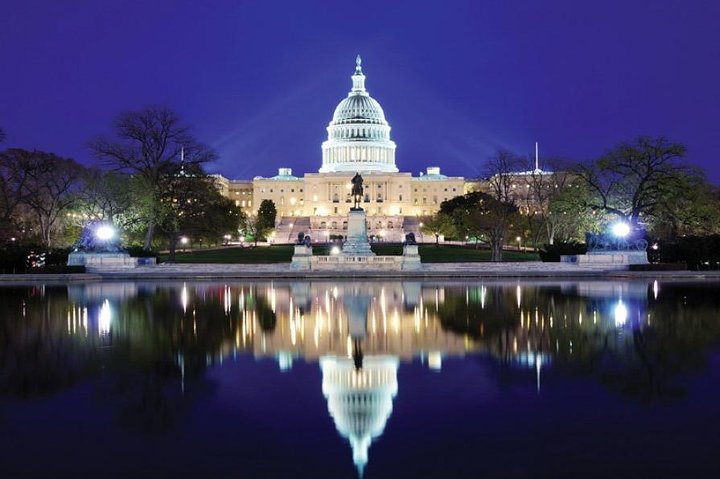
DC Monuments Night Tour with 10+ Stops, National Mall, Tickets
Experience Washington DC lit up at night during this 3-Hour Guided Night Tour of the National Mall and Monuments. Ma...
Pick the Best Time to Visit Washington DC

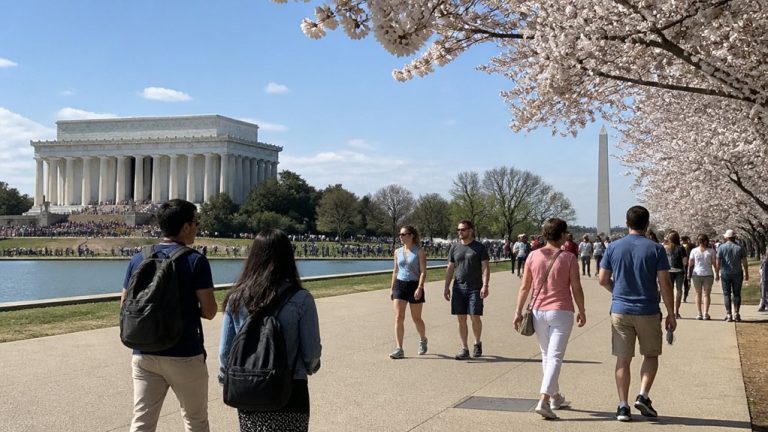
If you want Washington, DC at its easiest and most inviting, aim for spring or fall. These are the best seasons for a first visit in Washington, with mild air, bright leaves or blossoms, and crowds that feel manageable. In spring, you can catch the National Cherry Blossom Festival, when the Tidal Basin looks soft pink and the city seems freshly polished. Fall brings crisp mornings and golden light that flatters every monument.
Summer is peak tourist season, so you’ll face sticky heat, bigger crowds, and pricier hotels. If you go then, sightsee early or after sunset, when marble glows and the air finally loosens its grip. Winter is quieter and cheaper. For busy spring and fall weekends, reserve timed-entry passes well ahead where needed for popular spots. If you’re planning a longer stay, a 7 Days in Washington DC itinerary works especially well in spring or fall, when full sightseeing days feel more comfortable.
Book White House and Capitol Tours Early
For two of DC’s most wanted tours, early planning makes the day run much more smoothly. To enter the White House, you’ll request access through your Member of Congress, or your embassy, 21 to 90 days ahead. Tours are free, and public rooms on the State Floor include the Blue Room, Red Room, Green Room, State Dining Room, Cross Hall, and Entrance Hall. Spots are limited, so reserve in advance and expect security screening at the gate.
| Tour | What to know |
|---|---|
| White House | First come, first served. |
| Capitol tours | Book via the Visitor Center. |
Capitol tours are free, but booking through the Visitor Center helps lock in your time. On Capitol Hill, timed entry passes can shape your whole morning, especially if you also want the Library of Congress. If the White House doesn’t work out, swap in Peoples House or a nearby walking tour for history without interior access.
Choose Your Washington DC Must-Sees
You’ll want to start with the National Mall, where you can walk from the U.S. Capitol to the Lincoln Memorial and pass the Washington Monument, the WWII Memorial, and the Vietnam Veterans Memorial in one clean sweep. Then pick at least one Smithsonian museum, since they’re free, and aim for a first-timer favorite like Natural History for the Hope Diamond and dinosaurs or Air and Space for legendary aircraft and the Apollo capsule. If you want your list to feel extra sharp, book timed entry where you can and save one monument stop for after dark, when the stone glows, the air cools off, and the crowds finally hush. For a smart first visit, use a National Mall guide to map your stops and avoid backtracking between landmarks.
Iconic First-Visit Landmarks
Start with the National Mall, because it lays out Washington’s greatest hits in one long, walkable sweep from the U.S. Capitol to the Lincoln Memorial. You’ll spot the Washington Monument rising 555 feet above the lawns, and you should book ahead if you want to ride up. Pause at the World War II Memorial, then return after dark when the Lincoln Memorial glows over the Reflecting Pool. Peek at the White House from Lafayette Square, or plan far ahead for an interior tour. Circle the Tidal Basin for the Thomas Jefferson Memorial and spring cherry blossoms. Then cross the Potomac to Arlington Cemetery for the Tomb of the Unknown Soldier and JFK’s gravesite. Travel light. Security is strict, and there’s no café for lunch. The National Park Service calls this stretch America’s Front Yard, with more than 100 unique monuments and memorials across the National Mall and Memorial Parks.

Washington DC's Monuments & US History Guided E-Cart Tour
This tour offers a detailed introduction to U.S. history and Washington D.C.’s famous monuments, guided by expert...
White House and National Mall Highlights with Lincoln Memorial
See a collection of Washington DC's most famous sights on this fully guided informative walking tour that includes t...
Washington DC in One Day: Guided Sightseeing Tour + boat cruise
Board your glamourous, climate-controlled panoramic bus at the U.S. Navy Memorial for one of the best bus tours in W...
Free Museums Worth Prioritizing
Once you’ve walked the monuments, the National Mall keeps paying off with some of the best free museums in the country. Start with Smithsonian museums like the National Museum of Natural History and National Air and Space Museum, then budget two to three hours each. For a balanced shortlist, focus on top museums first, then leave room for a few lesser-known stops if time allows.
| Pick | Why go |
|---|---|
| National Gallery of Art | West and East Buildings reward you with masters and modern surprises. |
| National Portrait Gallery | Presidents, justice stories, and a compact stop near Chinatown. |
| National Archives Museum | See the Charters of Freedom, then mind the photo rules. |
If you want fresh air, ride the Metro to Smithsonian’s National Zoo. It’s free, quieter, and a nice reset after marble halls. The hush, the crowds, and the giant bones make the city feel wonderfully alive today.
Start Your First Day With a DC Tour
Start your first day with a guided DC Highlights tour so you can get your bearings fast across the two-mile National Mall, the Lincoln Memorial, the Washington Monument, the U.S. Capitol, and the city’s key neighborhoods. You’ll have solid options, from walking tours and flexible hop-on hop-off buses to combo tours and monuments-by-night rides, and a morning start helps you beat the heat, the crowds, and that slow security line shuffle. Wear comfortable shoes, bring a refillable water bottle, give yourself extra Metro time, and use the guide’s commentary to map out which free Smithsonian museums you’ll come back to later. If you only have one day in Washington DC, this kind of overview tour is one of the smartest ways to see the city efficiently.
Why Tour First
Before you map out museums and monument stops on your own, book a guided DC Highlights tour for your first morning.
It gives you a fast read on the National Mall’s scale, from the Capitol to Lincoln Memorial, so you’re not zigzagging later. Guided tours point out White House views, monument entrances, and practical rules like timed-entry passes and security checks. You’ll learn how to ride the Metro, load a SmarTrip, and judge when a “short walk” really means miles. That early overview can skip the line at your planning stage, which is half the battle in DC. For a more active overview, Washington DC bike tours can help you cover major sights efficiently while getting a local’s perspective. If you want flexibility, a hop-on/hop-off format lets you listen, orient yourself, and save deeper stops for later. Use code TOURDC10 to save 10% today.
Best Tour Options
Kick off your trip with a guided DC Highlights tour, and the city will snap into focus fast. Choose a walking or bus version and you‘ll cover the National Mall, Smithsonian museums, and major memorials in two to three hours. If you want flexibility, pick a combo with hop-on/hop-off access for a narrated overview plus solo exploring later. For cooler air and glowing views, try an evening/night monuments tour from the Wharf. Prefer a narrower lens? A Capitol & Library of Congress tour or Arlington National Cemetery tour adds timed-entry focus. During spring and fall, book in advance. A 3 Days itinerary can also help first-timers map tours around museums, neighborhoods, and monument visits efficiently. Wear comfortable shoes and bring water. Use promo code TOURDC10 to save 10% on select tours. You’ll likely walk six to seven miles before dinner, happily.
Still comparing Washington DC First Time Sightseeing Tours?
Ask for tour ideas, hotel suggestions, or a simple trip plan that combines both.
Trip Helper
First-Day Planning Tips
Your first morning in Washington works best when you let a guided DC Highlights tour set the map in your head.
- Choose a walking, bus, or combo route near the National Mall so monuments click into place fast.
- Book guided tours in advance for popular night rides, and use promo code “TOURDC10” when it appears.
- Wear comfortable walking shoes, carry a refillable bottle, and expect a few miles before lunch.
- End near a Smithsonian museum for cool air, free exhibits, and a calm reset.
If you’re building a longer stay, a 5 Days in Washington DC Itinerary can help you pace neighborhoods, museums, and memorials after that first overview. Arrive 15 to 30 minutes early for security checks and timed-entry logistics. Some White House and monument visits need reservations far ahead. By noon, you’ll know where you want to linger, and your feet won’t mutiny yet after all that.
Walk the National Mall Without Backtracking
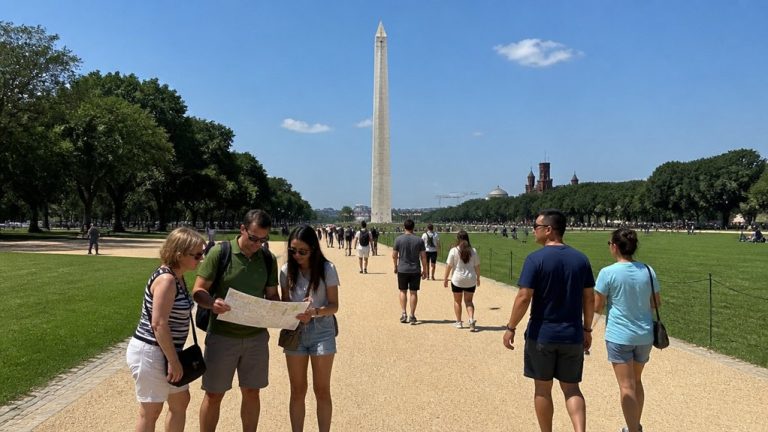
Set out at one end of the National Mall and keep moving in a single direction, either from the U.S. Capitol Building or the Lincoln Memorial. A one-way walk lets you see the big landmarks in order and saves your feet from pointless repeats.
Use easy waypoints like the Capitol Visitor Center, Smithsonian Castle, Washington Monument, WWII Memorial, and Lincoln Memorial. The Washington Monument sits about halfway, so it’s a smart break point. The Reflecting Pool stretches about 2,000 feet, so expect that section to feel longer than it looks.
The National Mall is open 24 hours a day, and early morning or early evening can be the best time to enjoy its tranquil hours between major memorial stops.
Check a simple map and the Metro system stops at Smithsonian, Federal Triangle, L’Enfant Plaza, or Foggy Bottom. Book timed-entry tickets to fit your route. If you’re fading, hop ahead instead of turning back on foot.
See Washington DC Monuments at Night
Often, the best time to see Washington’s monuments is after dark, when the air cools, the crowds ease up, and the marble seems to glow from within.
- Climb the Lincoln Memorial steps and look over the Reflecting Pool to the lit Washington Monument.
- Pause at the Vietnam Veterans Memorial and World War II Memorial, where the lighting makes every detail feel sharper.
- Join a Monuments-by-night bike ride or a trolley night tour if you want stories without guesswork.
- Wear good shoes, expect up to two miles of walking, and plan your ride home before Metro service thins.
Many sites stay open all night, so you can linger, take dramatic photos, and enjoy a quieter Mall. Bring a phone light for late name rubbings there. A night guide can help first-time visitors map out the best monument views after dark.
Visit Free Washington DC Museums
You can fill a full DC day without paying for museum tickets, starting with Smithsonian stars like Natural History, Air and Space, and American History along the National Mall. At the Smithsonian National Museum of Natural History, highlights span natural history exhibits that make it an easy first stop on the Mall. You’ll also find excellent free art at the National Gallery of Art, the Sculpture Garden, and the Hirshhorn, where you can move from quiet galleries to bold modern pieces in one easy stretch. If you want a change of pace, head to the free National Zoo or pair museum stops with Mall walks, then aim for a weekday morning when doors open and the crowds are still half awake.

VIP Best of DC with US Capitol + National Archives Reserved Entry
Get the presidential treatment with the most comprehensive Washington DC day tour! The tour includes reserved access...

Washington DC Hop-On Hop-off Trolley Tour with 15 Stops
Enjoy a 90-minute Hop-on Hop-off panoramic trolley tour of Washington, DC. The tour route will maximize your time an...
DC in a Day: 10+ Monuments, Boat Cruise, National Mall, Tickets
Explore Washington DC’s top landmarks and monuments on a 6-hour tour by deluxe touring coach with full narration f...
Smithsonian Free Highlights
Plunge into DC’s best bargain and you’ll find that every Smithsonian museum offers free general admission year-round, which is a big reason the city claims 100-plus free attractions.
- Start at the Smithsonian Castle for maps, highlights, and easy bearings across the Mall.
- At the National Museum of Natural History, you can stare at the 45.52-carat Hope Diamond, then peek into the butterfly pavilion and insect zoo.
- The National Air and Space Museum feels fresh after its refurbishment, with interactive galleries, famous aircraft, spacecraft, and the first moon capsule.
- For the busiest free museums, book timed-entry when needed or arrive early. Some special exhibits use limited passes.
You’ll save cash, skip ticket stress, and still get a full day of wow without trying too hard. At the National Gallery of Art, admission is always free, and guided tours are also available at no cost.
Best Free Art Museums
Branch out from the blockbuster Smithsonians and DC’s free art scene opens up fast. You can start at the National Gallery of Art for free admission to Vermeer, Rembrandt, Van Gogh, and rotating shows. If you want a smart first stop, the West Building is ideal for European masters and a calmer, classic museum feel.
| Museum | Why go | Don’t miss |
|---|---|---|
| Hirshhorn Museum | Bold modern icons | Sculpture garden |
| National Portrait Gallery | Presidents and fresh shows | American faces |
Then duck into the Smithsonian Freer and Sackler Galleries for the Peacock Room and rich Asian collections. The Renwick Gallery rewards you with inventive craft in a grand old mansion. If you’re choosing one more stop, pick what fits your mood. Quiet masterpieces, edgy installations, or portraits with a little side-eye all work beautifully. You’ll get cool rooms, polished stone, and enough beauty to reset your walking pace nicely.
Zoo And Mall Stops
After those gallery rooms, let the city go bigger. Ride the Metro to the National Mall and map a day that mixes icons, animals, and a lot of pavement.
- Start at the National Museum of Natural History for dinosaur bones and the Hope Diamond.
- Walk the Smithsonian stretch toward Air and Space or American History.
- Book timed-entry where needed, especially for the Washington Monument.
- Hop to the National Zoo via Woodley Park for pandas and 2,700 animals.
The Smithsonian’s National Air and Space Museum is a strong Mall stop if you want to add aviation and space history to the route. You’ll cover serious ground, so wear real shoes and carry a refillable bottle. The Mall can mean six or seven miles if you stack stops. Trains, fountains, school groups, and shady lawns keep the day moving. Free never looked so busy. Check seasonal hours before you go.
Use Metro, Bikes, and Scooters
If you want to move around D.C. with less hassle and more freedom, start with Metro and add bikes or scooters for the last stretch.
Buy a SmarTrip card, or use contactless tap-to-pay on the Washington Metro and buses. Tap in and out at each Metro Station so fares stay correct. Skip rush hours if you can. Trains pack tight, and prices may rise.
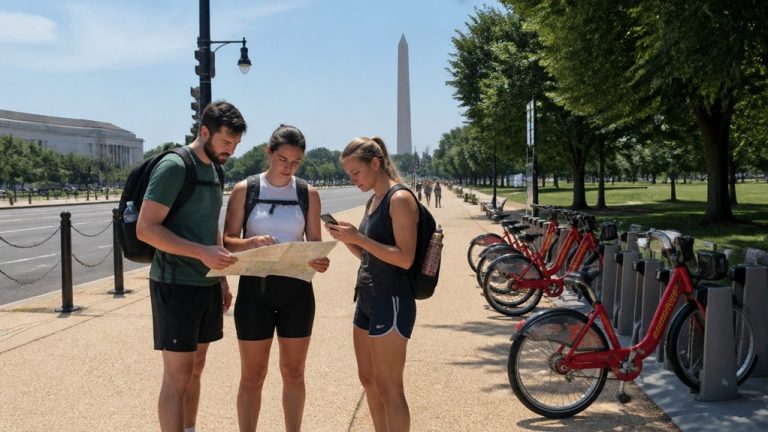
Use WMATA or Citymapper for live alerts, route ideas, and fare estimates. Capitol Bikeshare works well for short hops between museums and lunch spots. Shared scooters cover the final blocks fast. Circulator buses help with gaps, especially toward Georgetown. Walk when streets look inviting, and save rideshares for late nights or direct trips when your feet file a complaint politely. Washington D.C. is especially easy to explore without a car thanks to its public transit options and compact core.
Stay Near Metro and Skip Driving

Base yourself within a 10 to 15 minute walk of a Metro station, and D.C. starts to feel surprisingly easy. Stay near Metro and you’ll cut stress fast.
- Pick Downtown/Smithsonian, Capitol Hill, Farragut, or Rosslyn for quick National Mall access.
- Grab a SmarTrip card, or tap to pay starting 2026, for smoother Getting Around on trains and buses.
- Skip driving because traffic crawls, parking costs a lot, and ParkMobile won’t make circling any prettier.
- Choose hotels near Metro plus Circulator or bus lines, then Walk around after short rides instead of calling cabs.
You’ll cover more with less effort, especially on Mall-heavy days. Rosslyn and nearby hubs often cost less, yet still keep museums, monuments, and lively neighborhoods close for first-timers on tight schedules. Metro also has parking at 51 rail stations, but staying near a stop still makes it easier to rely on the Metro Rail system instead of a car.
Pack Good Shoes and a Water Bottle
Lace up your most comfortable shoes and fill a water bottle before you head out, because D.C. rewards curious walkers. You’ll cover serious ground on the National Mall, often 6 to 7 miles in a day, so bring broken-in supportive walking shoes with cushioning, traction, and enough ankle support for steps and uneven paths. Summer is hot and humid, and sweaty feet get grumpy fast, so breathable shoes matter. A refillable water bottle keeps you going between museums, memorials, and shady benches. You can top off at fountains and through the TapIt program. If you’re planning nightlife monument strolls or long guided tours, pack insoles or a lightweight backup pair. Many visitors find a walking tour helpful for getting oriented while exploring Washington DC on foot. Comfortable walking here isn’t optional. It’s part of the experience for first-time visitors too.
Know Security, Bag, and Entry Rules
Comfortable shoes will carry you far, but getting through the front door takes its own kind of planning. At major sites, expect metal detectors and bag X-rays, plus real bag size limits, so arrive early for security screenings.
- Carry a small daypack only. Large backpacks often won’t pass, so store oversized bags at your hotel or bus.
- Pack light. Food usually stays outside, and the Capitol wants empty water bottles unless you need one for medical reasons.
- Respect the scene. You’ll remove hats and dress neatly, especially near the White House.
- Treat timed-entry tickets as helpful, not magical. Lines still build, and some same-day passes appear at set times.
Even White House tours need advance requests well ahead through Congress or your embassy first. For White House tours, plan far in advance and follow the official visitor guidance closely.
Add Georgetown, the Waterfront, and Nature
If the monuments start to feel all marble and ceremony, head west and let Georgetown and the river loosen the mood. Stroll cobblestones, then follow the C&O Canal.
| Place | What you notice | Best move |
|---|---|---|
| Georgetown | Rowhouses, old brick, canal hush | Walk or bike |
| Georgetown Waterfront Park | Potomac River light, sunset promenade | Kayak, linger |
| Wharf | Music, boats, dinner smells | Water taxi |
| Rock Creek Park | Trails, horses, quick shade | Hike, reset |
At Georgetown Waterfront Park, watch piers glow near Key Bridge. Later, sample the Wharf for live music and a marina scene. You can also plan an easy side trip to Old Town Alexandria for a charming day escape from Washington DC. When you need trees, slip into Rock Creek Park. For quieter marsh and birds, explore Kingman and Heritage Islands. You’ll see a softer DC, with sneakers on.
Frequently Asked Questions
How Much Should First-Time Visitors Budget per Day in Washington DC?
You should budget $100-$250 daily for daily expenses, depending on transport options, meal budgeting, entrance fees, tip expectations, parking costs, and museum donations; you’ll spend less using Metro, free museums, and casual dining there wisely.
Are Washington DC Attractions Accessible for Wheelchairs and Strollers?
Yes—you’ll find ADA access; because apparently stairs needed a nemesis. You can use museum ramps, monument pathways, metro elevators, check sidewalk conditions, request shuttle services, and count on restroom accessibility at most major DC attractions.
Where Can Families Find Affordable Food Near Major Sightseeing Areas?
You’ll find affordable meals near the Mall and museums at Food trucks, Family diners, Grocery chains, and Ethnic markets; grab Kids menus, relax on Casual patios, or stock up for Picnic spots around major sights.
Do I Need Cash, or Are Cards Accepted Almost Everywhere?
You won’t need much cash; cards work nearly everywhere thanks to credit acceptance, though small vendors prefer it. Keep cash for cashless tipping gaps, microtransactions, transit payments, and issues with EMV chips or foreign cards.
What Are the Best Washington DC Souvenirs to Bring Home?
Like a scavenger finding gold, you’ll love Locally made gifts: Museum reproductions, Cherry memorabilia, Political novelties, Local snacks, Boutique jewelry, and Vintage postcards—you can’t go wrong, and you’ll pack DC’s spirit in your suitcase home.
Conclusion
You’ll cover a lot of ground here, and that’s part of the thrill. The National Mall stretches about 2 miles from the Capitol to the Lincoln Memorial, so your good shoes earn their keep fast. Plan ahead, start early, and let Metro do the hard work. By dusk, when marble glows and the city turns quiet except for footsteps and fountain spray, you won’t feel like a first timer anymore. You’ll feel oriented at last.
Washington DC in One Day: Guided Sightseeing Tour + boat cruise
Board your glamourous, climate-controlled panoramic bus at the U.S. Navy Memorial for one of the best bus tours in Washington DC!Expanding on our p...
White House and National Mall Highlights with Lincoln Memorial
See a collection of Washington DC's most famous sights on this fully guided informative walking tour that includes t...
DC in a Day: 10+ Monuments, Boat Cruise, National Mall, Tickets
Explore Washington DC’s top landmarks and monuments on a 6-hour tour by deluxe touring coach with full narration f...
DC Monuments Night Tour with 10+ Stops, National Mall, Tickets
Experience Washington DC lit up at night during this 3-Hour Guided Night Tour of the National Mall and Monuments. Ma...
One Comment
[…] You trade miles of pavement for river perspectives, steady narration, and easy photo angles on the Lincoln Memorial, Washington Monument, and Jefferson Memorial. In about 45 minutes, you can see a lot without the […]