
Embassy Row isn’t exactly a sleepy stretch of pavement. As you walk up Massachusetts Avenue, you pass iron gates, clipped hedges, marble lions, and flags snapping above old mansions that now handle serious global business. You can start near Dupont Circle, wear good shoes, and let the route pull you past Sheridan Circle toward Kalorama. Some doors stay closed, of course, but that only makes the next corner more interesting.
Key Takeaways
- Embassy Row follows Massachusetts Avenue NW from Dupont Circle to Observatory Circle, with the main walking stretch about 1.5 miles.
- Start at Dupont Circle Metro and walk past Sheridan Circle and Kalorama toward the Naval Observatory, allowing 1 to 2 hours.
- Highlights include the British, Brazilian, South African, Indian, and Finnish embassies, plus statues, plaques, and historic mansion facades.
- Many embassies occupy restored Gilded Age mansions from Millionaires’ Row, blending diplomatic function with notable architecture and layered history.
- Visit on weekday mornings in spring or fall, especially April to June or September to October, for milder weather and fewer crowds.
Washington DC "See the City" Guided Sightseeing Segway Tour
Experience Washington DC on a 2-Hour Guided Sightseeing Segway Tour through the nation's capital and experience all of the great sights the city has t...

Private Washington DC City Tour
Make this spring unforgettable with a private Washington DC tour designed just for your family, perfectly timed for...

DC Monuments Tour with 10+ Sites & Washington Monument Ticket
See Washington DC’s iconic monuments in a single morning on a Guided Morning Sightseeing Bus & Walking Tour with a...

Monuments and Memorials Night Tour by Open-top Bus with Guide
Big Bus is the only official bus tour partner of the National Park Service; no one gets you closer to the best memor...
What Is Embassy Row in Washington, DC?

Think of Embassy Row as Washington’s front porch to the world. Along Massachusetts Avenue, you meet a polished parade of diplomacy, architecture, and national identity. Many embassies fill grand Gilded Age mansions once built for millionaires, while others show off custom designs by notable architects. You spot them by flags, plaques, seals, and the occasional security detail that suggests serious business.
As you walk, Embassy Row feels like an open-air museum with a practical purpose. Like nearby Capitol Hill, it offers one of Washington’s most distinctive neighborhood experiences, shaped by history, institutions, and a strong sense of place. You might pass the British Embassy, the Finnish Embassy, or the Nelson Mandela statue at South Africa’s embassy. Most interiors stay private, but some places offer exhibits, and Passport DC opens more doors each May. It’s an easy strolling route with handsome facades, leafy blocks, and plenty to notice.
Where Is Embassy Row in Washington, DC?
You’ll find Embassy Row along Massachusetts Avenue NW in Upper Northwest, where the route runs from Dupont Circle up toward Observatory Circle near the National Cathedral. As you walk, you’ll spot flags, bronze plaques, and a striking mix of old mansions and sleek modern embassy buildings, with Sheridan Circle and Kalorama giving you easy mid-route bearings. If you start at Dupont Circle Metro, you can follow this lively 1.5-mile stretch on foot and feel like your passport’s getting a workout. It’s also an easy addition to a broader day exploring Dupont Circle and its surrounding historic streets.
Massachusetts Avenue Corridor
Embassy Row’s grand boulevard runs along Massachusetts Avenue NW, roughly from Dupont Circle to Observatory Circle, and that’s where you’ll find the densest cluster of Washington’s 175-plus embassies and diplomatic missions. As you walk Massachusetts Avenue, you’ll spot Gilded Age mansions from old Millionaires’ Row beside purpose-built embassies by noted architects. Look for flags, plaques, and polished seals that announce each address. Standouts include the British Embassy and the Embassy of South Africa. Some interiors stay closed, so check for official galleries, Passport DC in May, or embassy websites and Instagram feeds for openings. The avenue also comes alive through cultural events and embassy tours that highlight Washington’s diplomatic character. Listen for traffic, birds, and snippets of many languages. Embassy Row feels formal, but it also rewards slow looking, comfortable shoes, and a little curiosity on every polished block.
Upper Northwest Locations
Beyond the main run on Massachusetts Avenue, Embassy Row spreads into Upper Northwest neighborhoods like Kalorama and the edges of Dupont Circle, where old Millionaires’ Row mansions now fly national flags over polished stone steps. Here, you notice how the diplomatic map widens beyond Mass Ave. On quieter side streets, plaques, seals, and guarded doors reveal chanceries, ambassador residences, and the occasional hidden garden behind brick walls. Because this area is often highlighted among the best neighborhoods for first-time visitors, it also works well as a base for exploring Washington’s diplomatic heart on foot. You can spot standout addresses such as the British Embassy, the Embassy of South Africa, the Embassy of Brazil complex, and the Finnish Embassy near Upper Northwest’s western edge. The whole area feels made for walking, with enough architectural variety to keep you curious block after block. Look up often as iron gates click softly nearby.

Washington DC Monuments Open-Air Sightseeing Guided Tour
Experience D.C. as day turns to night on this intimate sunset, day and moonlight tour, limited to just 12 guests max...

Private and personalized tour of Washington dc
Ah, Washington DC. The capital of the United States always has something exciting to offer. Whether it’s the brigh...

Group/Private Washington D.C Moonlight Tour in Luxury Vintage Car
We've crafted a comprehensive two-hour tour that covers all the must-see attractions of DC. A friendly tour guide wi...
Dupont To Observatory Circle
From Dupont Circle to Observatory Circle, Massachusetts Avenue NW gives Embassy Row its clearest shape and its grandest stretch. You follow Massachusetts Avenue between Dupont and the Naval Observatory, where Washington packs its biggest concentration of diplomatic missions into one handsome route. Old Gilded Age mansions from Millionaires’ Row now serve as chanceries and ambassadorial homes.
Along the way, you pass Sheridan Circle, the British Embassy, and Brazil’s sleek glass-and-steel complex, then reach the Finnish Embassy near Observatory Circle. Like many stops in a Washington DC travel guide, this corridor rewards a slow walk for architecture, flags, and neighborhood context as much as for headline landmarks. Most interiors stay closed, so watch for flags, seals, plaques, and the occasional security booth that looks mildly unimpressed by tourists. If you want to step inside, time your visit for Passport DC in May or check embassy galleries and cultural events across Upper Northwest.
How Do You Get to Embassy Row?
You can reach Embassy Row easiest by Metro, with Dupont Circle on the Red Line as the classic starting point, or Woodley Park if you want to begin farther north and walk south past flags, plaques, and grand old mansions. If you’re driving, you’ll want to plan ahead for limited parking and busy streets, because this stretch of Massachusetts Avenue NW doesn’t exactly roll out a red carpet for cars. Once you arrive, you can lace up for a comfortable 1.5-mile stroll toward Observatory Circle, with easy detours to Sheridan Circle or Kalorama if the neighborhood pulls you onward. If you want to continue exploring afterward, nearby Foggy Bottom offers another classic DC neighborhood experience just a short ride away.
Getting There By Metro
Start with the Red Line and hop off at Dupont Circle Station, the easiest Metro stop for the heart of Embassy Row along Massachusetts Avenue between Dupont Circle and Observatory Circle. Use the north Q exit, then surface by the fountain and orient yourself at the circle. From the Dupont Circle Metro station, you can walk a compact 1.5 to 2 mile stretch past grand facades, flags, and guarded gates. If you want the Finnish or British embassies near Observatory Circle, ride to Woodley Park Metro, then walk or grab a short bus hop. The 42, 43, and Massachusetts Avenue buses also connect you easily from downtown. If you keep going into Kalorama or Sheridan Circle, expect hills, steady footsteps, and elegant detours. If you are pairing your Embassy Row visit with monument sightseeing, it also helps to look at National Mall hotels for a stay with easier access to both areas.
Driving And Parking Tips
Usually, the quickest way to reach Embassy Row by car is to ease up Massachusetts Avenue NW through the Dupont Circle and Connecticut Avenue area, then creep past mansions, flags, and security booths at a very unhurried DC pace. Speeds stay slow, and parking can feel like a diplomatic puzzle.
| Scene | Your move |
|---|---|
| Meters and permit zones | Check signs, bring change, or use PayByPhone |
| Motorcades and event barriers | Leave early, watch alerts, or book a Dupont garage |
For full-day visits, public garages near Dupont Circle usually save time. During Passport DC in May, crowds swell and closures pop up. If traffic looks grim, rideshares or the Red Line often win. You’ll spend less time circling blocks and more time noticing Embassy Row’s stately facades. If you’re arriving from elsewhere in the city, navigating from Union Station can add extra traffic variables depending on event timing and downtown congestion.
Walking Routes Nearby
After the slow crawl of Massachusetts Avenue traffic, Embassy Row makes much more sense on foot. You can start at the Dupont Circle Metro station south entrance, which puts you right by the central stretch and the thickest cluster of grand facades north of Dupont Circle.
From there, you can follow a classic 1.5 mile self guided walk along Embassy Row from the British and Brazilian embassies toward the Finnish Embassy at Observatory Circle. Give yourself about an hour, longer if you pause for gates, gardens, and stone lions that seem slightly too pleased with themselves. For travelers continuing on to the Tidal Basin afterward, a first-time guide to the Jefferson Memorial can help with planning. In Dupont Circle, Kalorama, and around Sheridan Circle, major stops sit just 10 to 20 minutes apart, so the route feels easy. If you want less walking, pair Metro with buses like 32, 33, or L2.

George Washington Mount Vernon Small Group Half Day Historic Tour
Step into the world of America’s first president with a curated half-day tour to George Washington’s Mount Verno...

Washington DC: Easy Sightseeing Guided Monuments Tour by E-Cart
Explore Washington, DC’s iconic monuments and memorials on a relaxed, open-air electric cart tour. Enjoy a small-g...

DC: US Capitol & Library of Congress / Supreme Court Guided Tour
Explore the heart of American democracy on Capitol Hill with reserved timed-entry tickets and a guide who knows thes...
When Is the Best Time to Visit Embassy Row?
When should you go? May is the star month, thanks to Passport DC, when Embassy Row feels especially lively with exhibits, performances, and extra public programs. If you’re planning a walking tour, spring and fall are your easiest seasons. From April through June and again in September and October, you get mild air, greener streets, and less sticky humidity for a 1.5 to 2 hour stroll.
For a calmer visit, aim for weekday mornings on non-holiday dates. You’ll find quieter sidewalks, cleaner photo angles, and less crowd dodging. Daytime works best, roughly 9:00 AM to 5:00 PM, since these are active government buildings, not moonlight attractions. If an event catches your eye, check embassy websites or Instagram first and time your visit around scheduled public programs. If you want to pair your outing with more sightseeing, Washington’s waterfront neighborhood areas are also especially pleasant in these same mild spring and fall months.
Can You Go Inside Embassy Row Embassies?
Yes, you can go inside some Embassy Row embassies, but you’ll usually need to plan ahead with an appointment or catch a public event. A few spots welcome visitors more often, like the Embassy of Canada’s art gallery and the House of Sweden, where you can step into bright exhibit spaces instead of just peeking at flags from the sidewalk. If you time your trip for Passport DC in May, you can tour many embassy interiors, and embassy websites, Instagram pages, Things to Do DC, and the International Club of DC will help you track the details before you show up at the security desk. If you’re building a bigger sightseeing itinerary, a Mount Vernon day trip also makes an easy add-on from Washington DC.
Public Access Options
Step up to Embassy Row with the right expectations, and the experience gets much better. Most embassies are working government buildings, so you usually can’t wander inside on a whim. If you want interior access, plan ahead and check each mission’s website or Instagram.
- Visit year-round public spaces like the Embassy of Canada’s art gallery.
- Try House of Sweden for exhibitions and a sleek waterfront feel.
- Use Passport DC for your best shot at seeing more interiors, then enjoy flags, plaques, and statues on self-guided walks.
Along Massachusetts Avenue, you can study carved stone, snapping banners, and bronze figures while traffic hums past. A few places require reservations or RSVPs, and Things To Do DC can help you find them without detective work easily. If you’re also exploring nearby neighborhoods, a Navy Yard guide can help you compare another very different side of Washington DC.
Events And Open Houses
Look out for open-house days and cultural events, because that’s usually how you get past the front door on Embassy Row. Most embassies are working government buildings, so you can’t count on walk-in tours. Your best bet is Passport DC in May, when dozens of chanceries open their exhibit rooms and welcome curious visitors.
You can also watch for year-round programs. The Embassy of Canada often draws people in with its art gallery, while House of Sweden hosts exhibits and events beside the water. As part of a Washington DC Hidden Gems itinerary, these embassy events can add an offbeat cultural layer to your visit. Follow embassy websites and Instagram feeds, and check Things To Do DC or the International Club of DC for concerts, film screenings, language lessons, and panels. Some events are ticketed or RSVP-only, so bring ID, expect security screening, and arrive a little early.
What Is Passport DC?
What exactly is Passport DC? It’s Washington’s annual May open house, when you can step inside Embassies on Embassy Row and across the city for free exhibits, performances, and tours. Organized by Cultural Tourism DC, Passport DC helps you explore places usually closed to the public, from grand chancery halls to ambassador residences. Expect crowds, security checks, and occasional timed entry.
Passport DC opens Washington’s embassies for a free May open house of culture, tours, and rare access.
- Grab the Passport booklet or map to plan your route.
- Look for art, music, dance, lectures, and tasty bites.
- Check embassy websites before you go, because schedules change.
You’ll see flags snapping, hear languages mingling, and move from polished marble foyers to leafy diplomatic streets. It feels like international travel without leaving D.C. Popular missions often draw long lines by midday, so arrive early. For another meaningful cultural stop while exploring the city, the National Museum of African American History and Culture offers a deeper look at American history and identity.
What Other Embassy Events Can You Attend?
Beyond Passport DC, you can catch embassy events all year if you keep an eye on calendars and social feeds. After Passport DC in May, look for art exhibitions at the Embassy of Canada, film screenings at the Korean Cultural Center, and thoughtful panels at the House of Sweden. You can dress up for seasonal galas at the Mexican Cultural Institute or slip into tango lessons and cultural evenings at the Argentine Embassy. Smaller embassy events pop up too, like fado concerts at the Portuguese Embassy, lectures, temporary exhibits, and community receptions. Check Things to Do DC, embassy websites, Instagram, and the International Club of DC for schedules, tickets, and RSVPs. Some fill fast, so don’t dawdle when something intriguing appears on your feed. If you are exploring more of downtown afterward, Penn Quarter is another lively DC area worth adding to your plans.
How Do You Plan an Embassy Row Walking Tour?
Start at Dupont Circle and give yourself 1.5 to 2 hours to stroll roughly 1.5 miles along Massachusetts Avenue toward Observatory Circle, where Embassy Row packs in its grandest mansions and diplomatic addresses. Check embassy websites and Instagram before you go, then aim for Passport DC in May or public concerts, films, and gallery events if you want a chance to step inside. If you are also exploring downtown, Federal Triangle offers another perspective on Washington’s monumental core and historic architecture.
From Dupont Circle, stroll Massachusetts Avenue to Observatory Circle for Embassy Row’s grand mansions, diplomatic grandeur, and occasional chances to step inside.
- Wear comfortable shoes and carry photo ID.
- Time stops for the Finnish Embassy, the British Embassy, and South Africa’s Nelson Mandela statue.
- Use the Dupont Circle Metro north entrance or finish near Woodley Park, or book a two-hour guided walk with DC by Foot for stories of Gilded Age glamour and diplomatic intrigue that sharpen the facades and flagpoles you pass.
What Will You See Near Dupont Circle?
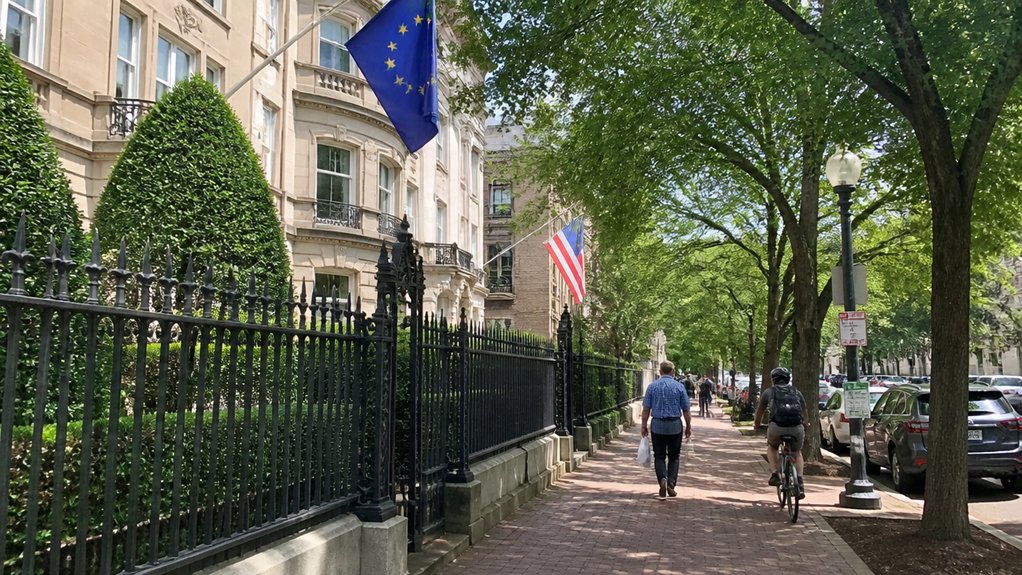
You’ll start at Dupont Circle, where the 1921 fountain splashes at the southern end of Embassy Row and gives you an easy meeting spot before Massachusetts Avenue NW turns into a parade of Gilded Age mansions and embassies. As you walk, you can spot standouts like the Patterson Mansion and the Blaine Mansion, then keep going for Embassy Row highlights such as the Gandhi statue near the Indian Embassy and the rider at Sheridan Circle who still looks ready to charge into traffic. If you want to add a culture stop, you’re also close to the Phillips Collection, the Woodrow Wilson House exterior, and the Dupont Underground. For a change of pace after the avenue’s grand facades, nearby Rock Creek Park offers a quieter look at another side of Washington DC.

Arlington Cemetery Small-Group Tour & Changing of the Guards
Witness the solemn Changing of the Guard ceremony from a prime viewing spot on this guided walking tour of Arlington...

Smithsonian "Big 3" Highlights Tour (Air & Space Entry Included)
See the best of the Smithsonian Museums on a 3-hour guided tour of the highlights of the American History, Natural H...

No-Wait Washington Monument Direct Entry Tickets & Guidebook
This is a direct ticket emailed to you to go to the top of the Washington Monument in DC without waiting in hours-lo...
Dupont Circle Landmarks
Stone benches, clipped grass, and the white Dupont Circle fountain pull your eye to the center of the neighborhood, where Daniel Chester French’s 1921 design replaced an earlier statue of Rear Admiral Samuel Francis Du Pont. From the circle, you can see why the Dupont Circle Fountain anchors the neighborhood.
- Patterson Mansion, from 1903, stands on the east side as the only original mansion still facing Dupont Circle.
- Below your feet, the Dupont Underground turns former trolley tunnels into an art space with select tours and exhibitions.
- A short walk brings you to red brick Blaine Mansion and toward Florida Avenue, once Boundary Road, the city’s northern edge in L’Enfant’s original plan. You’ll feel history under every block, even between coffee stops today there.
- For many first-time visitors, the nearby National Mall offers a useful point of comparison for understanding Washington’s grand public spaces.
Embassy Row Highlights
As Massachusetts Avenue NW pulls you away from Dupont Circle, Embassy Row shifts from neighborhood stroll to a parade of flags, carved seals, and grand old mansions turned into working embassies. You pass Gilded Age showpieces like the Patterson Mansion and the Blaine Mansion, now polished chanceries and ambassador residences. Near Dupont Circle, look for the Embassy of India and Gandhi, then the Embassy of Argentina with its Eva Perón bust. Continue toward Sheridan Circle for the Irish Embassy beside Philip Sheridan on horseback. If you want a detour, slip over to the Spanish Steps, the Woodrow Wilson House, or the Phillips Collection. Many addresses post plaques and fluttering flags, and during Passport DC in May, doors open. Check embassy websites or Instagram for year-round cultural events. If you want to keep exploring beyond Embassy Row, nearby Mount Pleasant offers a more neighborhood-focused DC experience.
Which Embassies on Massachusetts Avenue Stand Out?
Landmarks along Massachusetts Avenue make Embassy Row feel less like a formal district and more like a gallery of national styles. You can spot Britain’s 1931 embassy by its English manor look, Churchill statue, and the nearby Kahlil Gibran memorial.
- Finland’s embassy near Observatory Circle pairs birch-like columns with a wooden sauna, and its green design made history with ENERGY STAR and LEED honors.
- South Africa’s renovated Cape Dutch buildings open into an atrium and courtyard, while a Mandela statue gives the site extra gravity.
- Brazil mixes John Russell Pope classicism with Olavo Redig de Campos modern glass and steel, and Argentina’s Abele-designed mansion near Dupont Circle adds Eva Perón’s bust.
On Embassy Row, these addresses turn a walk into a quick world tour. For travelers planning a broader DC-area itinerary, Old Town Alexandria also makes an appealing day trip from Washington.
Which Hidden Embassy Row Stops Are Worth Finding?

Venture off Massachusetts Avenue for a block or two, and Embassy Row starts to reveal its quieter treasures. Near Dupont Circle, find the Nelson Mandela statue outside South Africa’s embassy. Its open courtyard and protest history give the stop real weight. Farther out on Observatory Circle, the Finnish Embassy rewards a detour with crisp Scandinavian lines, a wooden sauna, and serious green bragging rights. Along Embassy Row, the vacant former Embassy of Iran still feels frozen in time, a stark marker of the 1979 hostage crisis. The British Embassy complex adds another layer with manor-style architecture, a Winston Churchill statue, and the nearby Kahlil Gibran memorial. On side streets, look for flags, plaques, and tucked-away gardens at smaller missions like Luxembourg and Togo. Quietly, they steal the show.

Washington DC Monuments by Moonlight Tour by Trolley
You haven't seen Washington DC until you've seen it at night! On this evening 100% live narrated tour, you'll enjoy...

Washington DC Hop-On Hop-off Trolley Tour with 15 Stops
Enjoy a 90-minute Hop-on Hop-off panoramic trolley tour of Washington, DC. The tour route will maximize your time an...

Washington, DC: Sunset & After-Dark Monuments Tour by E-Cart
Please Note: The 6:00 PM tour may not be fully dark depending on the season. The 8:30 PM tour offers a fully after-d...
Which Historic Mansions Became Embassies?
Look past the flags and security booths, and Embassy Row starts to read like a Gilded Age address book. As you walk Massachusetts Avenue north of Dupont Circle, you’re tracing old Millionaire’s Row, where private palaces became chanceries and ambassadorial homes. You can still sense the social whirl behind the gates.
- Patterson Mansion began in 1903 as a 36,000 square foot showplace and even housed Calvin Coolidge for a time.
- Blaine Mansion and the Walsh McLean house helped shift the avenue from elite residential boulevard to institutional corridor.
- You’ll also spot homes with layered stories, from Latvia’s Alice Pike Barney house to the Turkish ambassador’s 1915 residence.
These places didn’t just survive. They changed jobs, kept their personalities, and gave your stroll a pleasingly nosy quality today.
What Art and Architecture Define Embassy Row?
Architecture is the quickest way to read Embassy Row, because the street flips from Gilded Age mansion to modern national statement in a single block. You’ll spot Beaux-Arts and Georgian Revival architectural mansions once built for Millionaires’ Row, now flying flags along Massachusetts Avenue from Dupont Circle to Observatory Circle. Look for Stanford White details, preserved interiors, and garden courtyards tucked behind grand facades. Then compare them with the Finnish Embassy’s pale birch-like columns, Nordic calm, and even a sauna, or Brazil’s sleek glass-and-steel composition. The British Embassy feels like a manor set in lawns, with Churchill keeping watch. The Japanese Embassy adds formal gardens and a teahouse. Across Embassy Row, plaques, seals, hidden gardens, and sculptures help you notice art woven into streets.
What Etiquette and Security Rules Should You Know?
Those grand facades may feel cinematic, but Embassy Row works best when you remember that these are active government buildings, not museum houses. Respect signs, stay back from each embassy entrance, and only go inside for a public event or scheduled appointment.
- Look for flags, seals, and plaques. You can usually photograph exteriors, but skip guards, checkpoints, and security vehicles.
- Expect security measures like fences, bollards, cameras, and ID checks. Move when asked, don’t block driveways, and keep your hands off gates.
- For Passport DC, arrive early and bring photo ID if requested. Follow bag and photo rules, and contact staff through official channels, not sidewalk debates.
A calm, curious pace gets you the best views and keeps everyone’s morning a less spy-movie awkward.
Which Museums and Detours Fit an Embassy Row Visit?
Branch out from the embassy gates and you can turn the walk into a smart little culture crawl. Duck over to the Phillips Collection on 21st Street NW, where modern art hangs in an intimate house setting and Rothko, O’Keeffe, and Renoir feel close enough to whisper. The Woodrow Wilson House on S Street adds a diplomatic twist. You can admire the preserved exterior anytime, or book an interior tour for Wilson-era stories. If you’re curious, check Dupont Underground for select-date shows in old trolley tunnels. The Society of the Cincinnati offers a quick Revolutionary War angle. Stretch farther and House of Sweden brings sleek design, exhibits, and Potomac air to the day. Nice reset after gate photos and sidewalk diplomacy watching nearby today.
Frequently Asked Questions
Are Pets Allowed on an Embassy Row Walking Tour?
Yes, you can usually bring pets on an Embassy Row walking tour outdoors, but you can’t take them inside embassies. Check tour rules ahead, follow leash laws, practice pet etiquette, and avoid crowded event days.
Where Can You Find Restrooms Near Embassy Row?
Under leafy avenues, you’ll find restrooms at Dupont Circle Metro, the park pavilion, nearby museums, and customer-friendly cafés. Check embassy events for public facilities, and during Passport DC, portable restrooms and interior options sometimes appear.
Is Embassy Row Suitable for Strollers and Wheelchairs?
Yes, you can manage Embassy Row with a stroller or wheelchair, but you’ll face uneven brick, roots, and some missing curb cuts. For better wheelchair accessibility, keep to Massachusetts Avenue and plan stroller navigation carefully.
Are There Good Coffee Shops Near Embassy Row?
Yes, you’ll find plenty near Embassy Row, from Peregrine Espresso and Kramerbooks to Compass Coffee. You can grab quick coffee by Dupont Circle, seek Specialty roasters, or relax with Outdoor seating nearby on warm days.
How Long Does a Full Embassy Row Visit Usually Take?
You’ll usually spend 1 to 2 hours on a full Embassy Row visit, depending on tour pacing. Add 30 to 60 minutes for detours, or 1 to 2 extra hours for embassy entries and events.
Conclusion
Embassy Row lets you walk through Washington and around the world in one easy stretch. You’ll pass fluttering flags, carved stone lions, bronze statues, and gates that gleam after rain. Start near Dupont Circle, wear good shoes, and keep your camera ready. Weekday mornings feel calm, while May brings extra energy with Passport DC. Even if most doors stay closed, the avenue still whispers stories from behind hedges and polished plaques.

Washington DC in One Day: Guided Sightseeing Tour + Boat Cruise
Board your glamourous, climate-controlled panoramic bus at the U.S. Navy Memorial for one of the best bus tours in Washington DC!Expanding on our p...
Private Washington DC City Tour
Make this spring unforgettable with a private Washington DC tour designed just for your family, perfectly timed for...
Still comparing Embassy Row Washington DC Walking And Diplomatic Architecture?
Ask for tour ideas, hotel suggestions, or a simple trip plan that combines both.
Trip Helper
Experiences to explore
 Explore experience ↗
Secrets on Embassy Row: A Self-Guided Audio Tour in Washington DC
◷ 1 hr–1 hr 30 min
Are you looking for a way to see Embassy Row without joining a tour group? Explore at your own pace with this affordable walking tour.
See dates for Current pricing
View dates Explore experience ↗
DC Embassy Row and Georgetown Private Luxury Tour
◷ 3 hr
Discover Washington, D.C. in style on this private luxury tour through Embassy Row and Georgetown. Relax in a chauffeured SUV or Merced
See dates for Current pricing
View dates Explore experience ↗
Washington's Hidden Gems Food Tour with 6+ Tasty Dishes
◷ 3 hr
Wisconsin Avenue is Georgetown's beating heart, and that's where your local guide will start. Your first stop is a neighborhood favorit
See dates for Current pricing
View dates