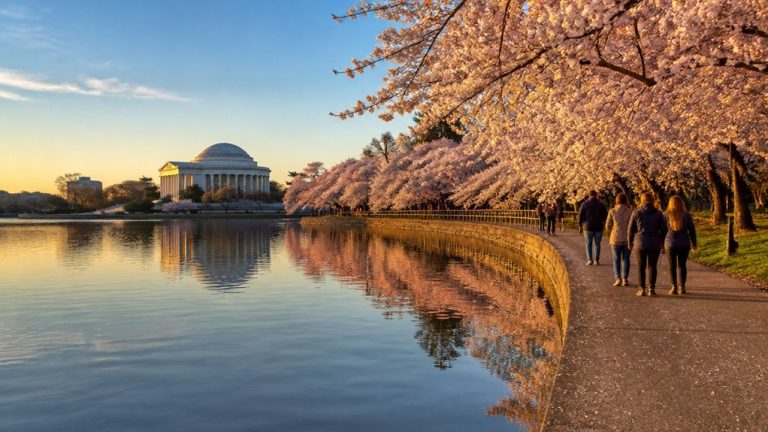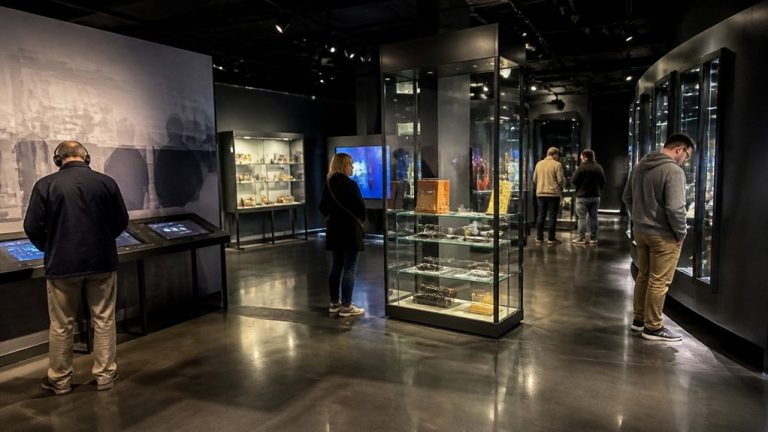
More than 100 sites across Washington, DC, connect you to Black history, from the bronze soldiers at the African American Civil War Memorial to the red-brick calm of Frederick Douglass’s Cedar Hill. You can hear echoes of go-go on U Street, step into the vast galleries of NMAAHC, and reach many stops by Metro with little fuss. Some stories stand in plain sight. Others hide on the next block.
Key Takeaways
- The African American Heritage Trail links 100 sites across 15 neighborhoods with maps, plaques, walking tours, and nearby Metro stops.
- The National Museum of African American History and Culture showcases over 36,000 artifacts and is a cornerstone Black history site near the Mall.
- The Martin Luther King, Jr. Memorial honors King with the Stone of Hope statue and an inscription wall on the National Mall.
- The African American Civil War Memorial in Shaw commemorates 209,145 U.S. Colored Troops, with a museum next door on Black military service.
- U Street and Anacostia feature major sites like Howard Theatre, Ben’s Chili Bowl, Frederick Douglass’s Cedar Hill, and the Anacostia Community Museum.

African American History Tour with Museum of African American History Ticket
KB Tours is a one of a kind African American Heritage tour operator in Washington DC that takes visitors to explore the historic African American neig...

DC in a Day: 10+ Monuments, Boat Cruise, National Mall, Tickets
Explore Washington DC’s top landmarks and monuments on a 6-hour tour by deluxe touring coach with full narration f...

Washington DC Hop-On Hop-off Trolley Tour with 15 Stops
Enjoy a 90-minute Hop-on Hop-off panoramic trolley tour of Washington, DC. The tour route will maximize your time an...
Black History Sites in Washington, DC

Washington, DC, reads like a living map of Black history, and you can trace it one neighborhood at a time. Pick up the African American Heritage Trail brochure and you’ll get 100 sites across 15 neighborhoods, plus Metro stops, maps, and plaques that turn a walk into a story hunt.
You can start in U Street, where Black Broadway still hums with theater lights, music lore, and the scent of chili in the air. Then head east to Anacostia or Shaw and notice how each block shifts the story. At the Smithsonian National Museum, the scale gets bigger fast. The National Museum of African American History and Culture offers one of the city’s most powerful ways to explore this history in depth. More than 36,000 artifacts fill the collection, and seeing everything takes about 22 hours. If you like in-depth explorations, DC gladly rewards your walking shoes and your curiosity, block after block, every day.
Must-See Black History Landmarks in DC
Start with the landmarks that pull DC’s Black history into sharp focus. You can stand before King’s 30-foot Stone of Hope, tour Frederick Douglass’s Cedar Hill, and walk U Street, where Black Broadway still hums. Near the Mall, the African American Civil War Memorial honors 209,145 troops with a bronze figure and names etched in tribute. At the nearby National Museum of African American History and Culture, Memorial Day stories come alive through objects like the 92nd Infantry Division shoulder patch and the burial flag of Lt. Louise Lomax.
| Landmark | Why go |
|---|---|
| Martin Luther King, Jr. Memorial | Monumental sculpture, stirring quotes |
| Frederick Douglass National Historic Site | Historic home, ranger-led tours |
| U Street Corridor | Theaters, music history, Ben’s Chili Bowl |
| African American Civil War Memorial | Names, bronze sculpture, solemn reflection |
You’ll also spot the National Museum of African American History and Culture nearby, though it deserves its own stop later. Wear good shoes. DC rewards curious walkers.
National Museum of African American History and Culture
Just off the National Mall, the National Museum of African American History and Culture gives you the wider story behind many of DC’s most powerful Black history landmarks. Open since September 2016, this Smithsonian museum holds more than 36,000 artifacts, so you’ll want a plan and shoes that forgive you. Like the Smithsonian museum guide, a little pre-visit planning can help you make the most of your time here.
Just off the Mall, this Smithsonian stop widens the story of DC’s Black history, one artifact-filled floor at a time.
- Start below ground in the Transatlantic Slave Trade galleries, where the timeline builds the foundation.
- Head up to the fourth-floor Culture Galleries, which often feel calmer and give you room to linger.
- Save time for the soul food cafeteria, where the menu adds flavor and history to your visit.
Staff say you’d need about 22 hours to see everything in the National Museum of African American History and Culture. You won’t finish it all, and that’s part of the point.
MLK Memorial on the National Mall
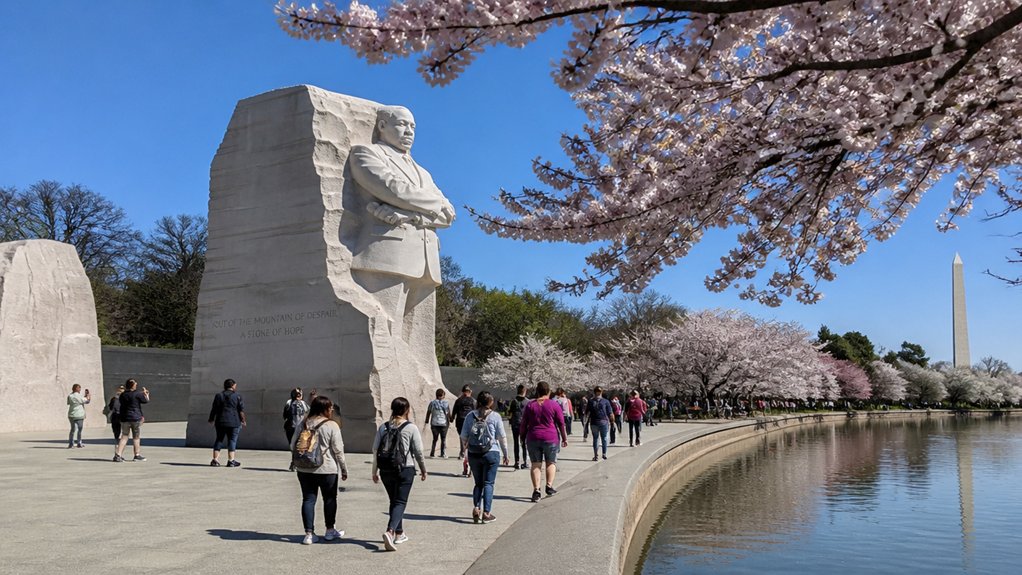
When you reach the MLK Memorial on the National Mall, you walk through the granite Mountain of Despair toward the 30-foot Stone of Hope, and the whole design makes Dr. King’s words feel solid enough to touch. You’ll spot it between the Lincoln Memorial and the Washington Monument, where the four-acre site opens up with etched quotes that invite you to pause and read. As the first memorial to an African American on or near the Mall, it reminds you that the civil rights story isn’t distant history. A stop at the Martin Luther King Jr. Memorial gives you a closer look at how the site’s symbolism and setting deepen its impact.

VIP Best of DC with US Capitol + National Archives Reserved Entry
Get the presidential treatment with the most comprehensive Washington DC day tour! The tour includes reserved access...
DC in a Day: 10+ Monuments, Boat Cruise, National Mall, Tickets
Explore Washington DC’s top landmarks and monuments on a 6-hour tour by deluxe touring coach with full narration f...
African American History Tour with Museum of African American History Ticket
KB Tours is a one of a kind African American Heritage tour operator in Washington DC that takes visitors to explore...
Memorial Design Features
As you approach the Martin Luther King, Jr. Memorial, you move through a four-acre setting between the Lincoln Memorial and the Washington Monument. The path feels deliberate. You pass between the granite Mountain of Despair and emerge at the 30-foot Stone of Hope, where Martin Luther King appears carved in calm strength.
The design gives you layers to notice:
- The entry compresses space, then opens it, so you feel movement from struggle toward hope.
- The 450-foot Inscription Wall wraps part of the site with 14 quotations, letting words guide your pace.
- Sculpture, landscape, and text work together, so the memorial reads like a walkable story.
The memorial also includes engraved quotes that connect the site to Dr. King’s legacy and struggle for freedom, equality, and justice.
Listen for the hush of footsteps on stone. Even on a busy day, the place encourages a slower look and quiet reflection.
Civil Rights Legacy
Because the Martin Luther King, Jr. Memorial lets you trace civil rights history on foot, you feel the movement’s force here. On the National Mall, the Martin Luther King,Jr. Memorial stands between Lincoln and the Washington Monument, linking King’s dream to the place he voiced it. Nearby, the Korean War Veterans Memorial bears the reminder Freedom Is Not Free, deepening the Mall’s broader story of sacrifice and citizenship.
| View | You notice | Feeling |
|---|---|---|
| Entrance | Mountain of Despair | Tension |
| Center | Stone of Hope statue | Resolve |
| Wall | Fourteen quotations | Reflection |
| Mall | Lincoln nearby | Connection |
You face a 30-foot King rising from granite. Along the 450-foot wall, his words echo from speeches, sermons, and writings. This is the first major memorial to an African American on or near the Mall, and only the fourth for a non-president there. Even the breeze feels like a page turning nearby.
Frederick Douglass’s Cedar Hill
At Cedar Hill, you stand where Frederick Douglass shaped his later legacy, in the 21-room Victorian mansion he bought in 1877 and filled with purpose until 1895. From the hilltop in Anacostia, you get wide city views that help you picture why he welcomed allies here and spoke so fiercely about abolition, voting rights, and women’s rights. The Frederick Douglass National Historic Site preserves this home and helps visitors explore the setting that defined his final decades. When you join a National Park Service tour, you can walk the restored rooms, spot the historic outbuildings, and get practical details from the site’s website before you go.
Cedar Hill Legacy
Perched high above the Anacostia River, Frederick Douglass’s Cedar Hill gives you a vivid sense of the life he built after bondage. When you visit, you step into the world Frederick Douglass shaped after buying this 21-room Victorian home in 1877. He lived here from 1878 until 1895, and the place still reflects his forceful public voice and private family life.
You can trace his legacy through period rooms, exhibits, and National Park Service tours that highlight his work as:
- an abolitionist
- a writer and statesman
- an advocate for women’s rights
The grounds feel calm and purposeful, not fussy. You can imagine speeches, garden work, and family routines unfolding here. Like other major historic destinations near the capital, including Arlington National Cemetery, Cedar Hill works well as part of a day trip from Washington DC. Before you go, check the National Park Service website for current hours and tour availability.
Still comparing Washington DC Black History Sites?
Ask for tour ideas, hotel suggestions, or a simple trip plan that combines both.
Trip Helper
Mansion And Views
Grandeur comes into focus the moment you see Cedar Hill, Frederick Douglass’s 21-room Victorian mansion rising above Anacostia with wide views over the Anacostia River. From the hilltop, you can understand why Douglass prized this perch. He bought the estate in 1877 for $6,700, a serious sum that matched his stature and ambition.
Today, at the Frederick Douglass National Historic Site, you can tour the restored house with National Park Service guides. They connect the rooms to Douglass’s abolitionist work, famous speeches, and family life, so the mansion feels lived in, not frozen. For another mansion-centered history stop, Mount Vernon offers guided entry to the George Washington’s Mansion with a separate tour ticket. The river glints below, traffic hums far off, and the breeze does a little scene-setting of its own. Cedar Hill has reopened after renovations, but you should check the park website for current hours and tour availability before you go.
Mary McLeod Bethune Council House
Step inside the Mary McLeod Bethune Council House and you can feel how this three-story Victorian home once worked as a powerhouse for Black women’s leadership. As you move through its rooms, Mary McLeod’s presence still feels vivid, from parlor strategy sessions to national meetings that shaped advocacy for Black women and girls.
Today, the National Park Service runs it as a museum, and you can explore exhibits that reveal Bethune’s reach as an educator, organizer, and civil rights leader. It stands out in many Washington DC hidden gems guides for the way it preserves a deeply personal side of national Black history.
- You see where the NCNW first built momentum after its 1935 founding.
- You trace Bethune’s work beyond these walls, including Bethune-Cookman College.
- You leave with a sharper sense of how one home helped fuel national change.
It’s intimate, focused, and quietly powerful, without needing any flashy tricks at all.
Howard University and Black Washington
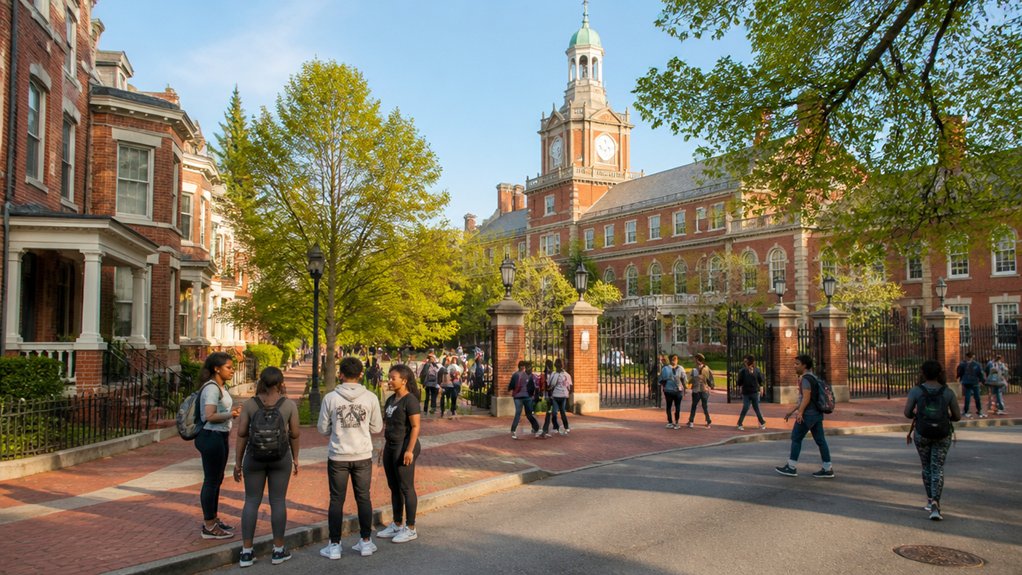
When you reach Howard University in Northwest D.C., you feel its historic pull right away in landmarks like Founders Library, Frederick Douglass Memorial Hall, and Rankin Chapel. You can trace Black intellectual life here through the stories of Thurgood Marshall, Toni Morrison, Zora Neale Hurston, and Kamala Harris, plus the lectures, protests, and big ideas that have long filled the campus air. As you walk between the yard and nearby Black neighborhoods, you see how Howard doesn’t stand apart from Washington, it helps shape the city around it. For a broader sense of Northwest D.C., guides to Foggy Bottom show how nearby neighborhoods add their own layers to the city’s history.
Howard’s Historic Influence
Set just north of the U Street and Shaw corridors, Howard University does more than fill a campus map. As you walk nearby, you feel how the school helped shape Black Washington, linking classrooms to churches, businesses, and music-filled streets. Founded by Congress in 1867, Howard University became “the Mecca,” and that nickname still fits. For travelers planning where to stay, nearby U Street and Shaw also rank among the best areas in Washington DC for first-time visitors.
- You see history in stone at Founders Library, Rankin Chapel, and Douglass Hall, all National Historic Landmarks.
- You trace leadership through alumni like Thurgood Marshall, Kamala Harris, Zora Neale Hurston, and Toni Morrison.
- You sense movement here. Howard fueled civil rights action in D.C. and helped push desegregation and Black empowerment forward.
Come curious. The campus doesn’t whisper its influence. It practically clears its throat and announces it to every passerby.

Hop-On Hop-Off Tour, Arlington Audio Tour, & Optional Sunset Tour
Explore Washington, D.C. with the Official Tour of the National Mall. As the National Park Service's authorized conc...
DC in a Day: 10+ Monuments, Boat Cruise, National Mall, Tickets
Explore Washington DC’s top landmarks and monuments on a 6-hour tour by deluxe touring coach with full narration f...
Washington DC Hop-On Hop-off Trolley Tour with 15 Stops
Enjoy a 90-minute Hop-on Hop-off panoramic trolley tour of Washington, DC. The tour route will maximize your time an...
Black Intellectual Life
Ideas travel fast around Howard. When you walk through Howard University, you feel why people call it the Mecca. Founded by Congress in 1867, this HBCU became one of the nation’s strongest producers of African American PhDs, and that energy still hums across the grounds.
You can trace Black intellectual life through three landmark buildings: Andrew Rankin Memorial Chapel, Frederick Douglass Memorial Hall, and Founders Library. Their stone facades and quiet interiors hold decades of debate, study, and strategy. Howard University also shaped figures like Thurgood Marshall, Toni Morrison, Zora Neale Hurston, and Kamala Harris. Conferences, lectures, archives, and student activism here helped push national movements forward. If you want to understand Black Washington, start where ideas were tested, sharpened, and sent into the world from here. For a broader sense of how Washington commemorates American thought and leadership, a first-time stop at the Jefferson Memorial adds useful context.
Campus And Community
Because Howard never sits apart from the city around it, a walk across campus quickly turns into a walk through Black Washington itself. At Howard University, you feel that link in brick paths, chapel bells, and the steady hum of Georgia Avenue.
- History lives here in Founders Library, Frederick Douglass Memorial Hall, and Rankin Chapel.
- Leadership grew here as students and faculty built civil rights strategy and Black professional networks.
- The neighborhood answers back with Black-owned shops, churches, and venues that keep the culture moving.
Chartered in 1867 and called the Mecca, Howard University helped make Washington a center of Black education and civic life. As you explore, you’re tracing a city story that produced PhDs, Thurgood Marshall, Toni Morrison, and plenty of local pride too. Nearby, Capitol Hill adds another layer to Washington’s civic story, connecting Black history sites to the broader political landscape of the city.
U Street and Black Broadway
Step onto U Street and you can still feel why this corridor became known as Black Broadway. As you walk, theaters, murals, and brass notes seem to linger in the air. The Howard and Lincoln recall nights when national stars lit up the block, while Duke Ellington’s roots remind you this strip shaped jazz, then R&B and go-go. Today, Black Broadway still defines U Street’s identity as the cultural heart of this historic DC neighborhood.
| Site | Why stop | What you notice |
|---|---|---|
| Howard Theatre | Historic performances | Classic marquee glow |
| Ben’s Chili Bowl | Surviving landmark | Neon, booths, late-night buzz |
You’ll also spot Industrial Bank, churches, and markers that trace Black-owned businesses and civic life. If you like easy exploring, follow the African American Heritage Trail or a walking tour. Plaques and nearby Metro stops make the history feel close, clear, and wonderfully alive today.
African American Civil War Memorial
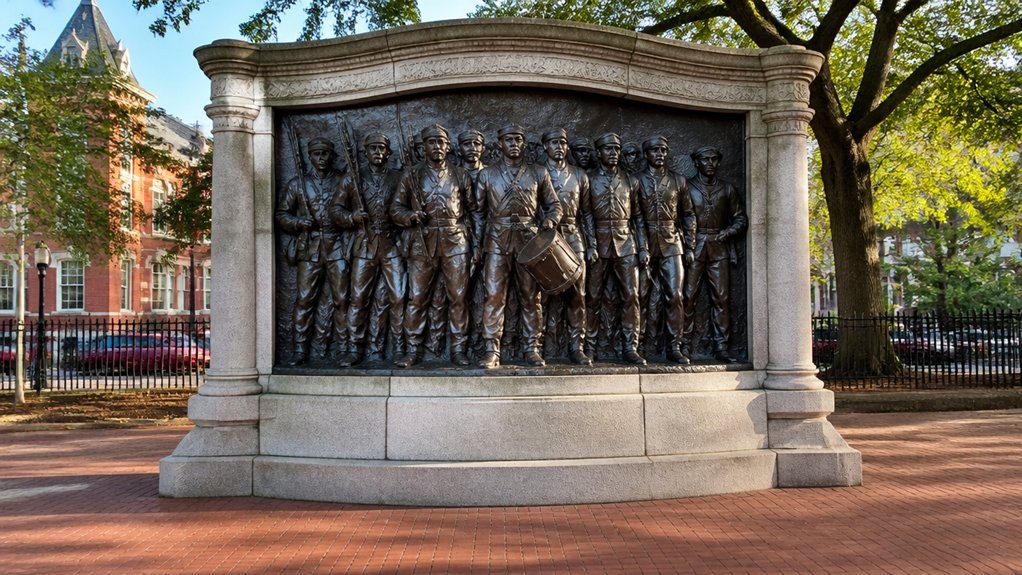
At the African American Civil War Memorial in Shaw, you stand before a roll call of 209,145 Black soldiers and sailors who served in the U.S. Colored Troops, and the names on the Wall of Honor make that history feel close. You can’t miss the nine-foot bronze Spirit of Freedom, where three infantrymen and a sailor gather under a watchful figure that gives the memorial its force and meaning. Step next door to the museum, and you start to see how this Shaw neighborhood site ties service, freedom, and citizenship together without losing the human scale. As part of National Mall parks, it connects this neighborhood memorial to the broader landscape of Washington’s monuments and remembrance.
U.S. Colored Troops
While many Civil War sites focus on generals, the African American Civil War Memorial in DC brings you face to face with the 209,145 Black soldiers and sailors who served in the U.S. Here, names on the Wall of Honor turn history into a roll call you can actually trace with your eyes.
You’ll also see The Spirit of Freedom, a nine-foot bronze grouping of three infantrymen and a sailor, topped by a watchful face that suggests grit and protection.
- You grasp the scale of Black service.
- You meet individual lives, not abstract numbers.
- You can step next door into the museum for artifacts on recruitment, combat, and veterans’ lives.
At the African American Civil War Memorial, the story feels immediate, human, and impossible to hurry past on any visit. Washington visitors interested in broader historical remembrance can also explore the United States Holocaust Memorial Museum, which is free and open daily except Yom Kippur and Christmas Day and offers American Witnesses resources on firsthand evidence of Nazi crimes.
Shaw Neighborhood Legacy
Because the African American Civil War Memorial stands right where Shaw meets U Street, you don’t experience it as an isolated monument so much as part of a living Black neighborhood story. You step out into a crossroads shaped by memory, music, business, and protest.
At the African American Civil War Memorial, you connect Shaw’s past to the people moving around you now. Nearby, the museum interprets the service of 209,145 Black soldiers in the U.S. Colored Troops and includes the Wall of Honor, where names create a lasting roll call. The site feels rooted in the neighborhood’s civic life. Like the Korean War Veterans Memorial, it invites reflection through public remembrance and commemorative interpretation. You’re close to historic institutions and the pulse of Black Broadway, so remembrance doesn’t feel distant. It feels local, active, and still speaking. Annual programs keep that conversation going.
Memorial Design Meaning
If you pause in front of the memorial for a minute, its design starts to read like a story in bronze and stone. At the African American Civil War Memorial, you see The Spirit of Freedom rising nine feet high above three U.S. Colored Troops soldiers and a sailor. Their upward gaze feels purposeful, not posed.
- You read courage in the strong stances and protective placement above the infantry.
- You feel remembrance at the Wall of Honor, where 209,145 names create a literal roll call.
- You notice connection in the Shaw setting, where Black military service meets later civil rights struggles.
Stand there long enough and the city noise fades. Bronze catches the light. Names line the wall. The whole space turns service into memory and insists Black soldiers stand at the center of American history.
Anacostia Black History Sites in DC
Start in Anacostia and you’ll find a part of DC where Black history feels close, lived-in, and easy to see block by block. You can begin at the Anacostia Community Museum, where about 6,000 objects trace the neighborhood from the early 1800s through migration, church life, and everyday material culture.
Then head up to Cedar Hill, the Frederick Douglass National Historic Site. You’ll tour the 21-room Victorian mansion where Douglass lived from 1878 to 1895, and the hilltop view alone earns the walk. Across Anacostia, the city’s Black History Sites list helps you spot places tied to Black civic and social life. Barry Farm and nearby communities add another layer, with stories of housing fights, organizing, and neighbors who refused to be pushed aside. Nearby, Anacostia Park adds more local context as a neighborhood national park in the heart of Washington, DC.

DC Monuments & Capitol Hill Highlights Tour by Electric Cart
Experience a whole different side of Washington, DC during our Monuments by day tour! Climb into our all-electric Re...

Washington DC Monuments Tour by Electric Cart Day and Night
Experience a whole different side of Washington, DC during our Monuments tour! Climb into our all-electric Red Roads...
VIP Best of DC with US Capitol + National Archives Reserved Entry
Get the presidential treatment with the most comprehensive Washington DC day tour! The tour includes reserved access...
DC Black Power Movement Sites
From Anacostia, the story widens into a citywide map of Black Power in D.C. You can trace it through Shaw, U Street, and other neighborhoods where storefront offices, churches, and community centers once hummed with strategy, music, and mutual aid. The 2023 Historic Context Study helps you see how these places connect.
- You notice self-determination in headquarters and meeting halls.
- You feel self-love in cultural programs and neighborhood gatherings.
- You recognize self-defense in organizing around housing, policing, schools, and economic control.
These Black Power sites aren’t frozen relics. They’re part of the living city, tucked into blocks you can still walk today. The study also gives preservation a practical mission, helping protect places that future visitors and neighbors can read, remember, and keep in public memory. In that spirit, the city’s emphasis on community trust through transparency and accountability echoes how public memory depends on visible, respected neighborhood institutions.
DC Civil Rights Sites to Visit
You can keep tracing that legacy at the Martin Luther King, Jr. Memorial, where the 30-foot Stone of Hope faces the Tidal Basin and 14 inscriptions invite a slow walk. At Cedar Hill, the Frederick Douglass home gives you polished wood, broad views, and tours on abolition and women’s rights. The Mary McLeod Bethune Council House adds strategy and leadership. Inside the Capitol Visitor Center, the slave marker reveals enslaved labor behind national symbols and deepens African American Civil War context.
Go-Go Landmarks and Music History
That story carries into sound when you step into D.C.’s go-go legacy, a homegrown funk style born here about 50 years ago and built on rolling percussion, call-and-response vocals, and pure live-wire energy. You feel it in places that honor Chuck Brown and the beat he helped define.
- At Chuck Brown Memorial Park, you meet the music’s hometown hero.
- At the Go-Go Museum & Cafe, free exhibits and live sets show how neighborhoods shaped the sound.
- At concerts, record shops like Smash! and Som Records, and venues in U Street, Shaw, and Anacostia, you join the scene.
Go-go isn’t background music. It asks you to answer back. Drums echo, crowds respond, and the city feels like one big block party with better timing and a deeper memory.
Best Stops on the Heritage Trail
Start with the African American Heritage Trail brochure, and the city opens up into 100 historic sites across 15 neighborhoods, each with its own map and nearby Metro stop so planning doesn’t turn into a scavenger hunt.
For headline stops, you can’t miss the National Museum of African American History and Culture near the Mall, then Frederick Douglass National Historic Site at Cedar Hill, where the climb rewards you with space, quiet, and a bigger view.
Head to U Street for Black Broadway. You can spot the Howard Theatre, Lincoln Theatre, Ben’s Chili Bowl, and Duke Ellington ties within a few lively blocks.
For military history, visit the African American Civil War Museum and Memorial. The Spirit of Freedom sculpture and Wall of Honor stay with you.
Then add Bethune’s Council House and Howard University’s landmark spaces too.

Washington DC's Monuments & US History Guided E-Cart Tour
This tour offers a detailed introduction to U.S. history and Washington D.C.’s famous monuments, guided by expert...

DC's Monuments & Landmark Guided Small Group E-Cart Tour
This tour is a great alternative to see DC's Monuments by a E-Cart and knowledgeable guide. This tour offers a detai...
African American History Tour with Museum of African American History Ticket
KB Tours is a one of a kind African American Heritage tour operator in Washington DC that takes visitors to explore...
How to Map Black History Sites in DC
With the African American Heritage Trail brochure as your base map, DC gets much easier to read. You get 100 sites in 15 neighborhoods, plus Metro stops, so African American history feels navigable instead of scattered. Then build outward with the Black History Sites of Washington, DC inventory and the Black Power Historic Context Study.
- Add federal landmarks like Cedar Hill, the Bethune Council House, NMAAHC, and Anacostia for amenities and anchors.
- Create themed layers for Black Broadway, Howard Theatre, Howard University, and the African American Civil War Memorial.
- Cross-check redlining maps and segregation GIS studies to see how streets, housing, and power changed over time.
Soon your map shows more than pins. It reveals sound, struggle, and movement across neighborhoods, block by block, with purpose.
Frequently Asked Questions
Are These Black History Sites Accessible for Wheelchair Users?
Yes, you’ll find Wheelchair accessibility at many sites, but it varies by location. You should check each venue’s ramps, elevators, entrances, and restrooms before visiting, because some historic buildings can’t fully accommodate wheelchair users.
What’s the Best Time of Year to Visit These Sites?
You’ll find Peak Springtime offers the best visit, with mild weather, blooming scenery, and comfortable walking conditions. You should also consider fall, when crowds thin and temperatures stay pleasant, making your experience easier and more enjoyable.
Do Any Sites Require Timed-Entry Passes or Advance Reservations?
Yes—over 3 million people visit top DC museums yearly, so you’ll often need timed-entry passes. You should reserve ahead for the National Museum of African American History and Culture; many others don’t, but check first.
Are There Guided Tours Focused Specifically on Black History?
Yes, you’ll find guided tours focused specifically on Black history, including museum tours, neighborhood walks, and memorial visits. You can choose ranger-led programs or private experiences that use Guided storytelling to deepen your understanding.
Which Neighborhoods Have the Best Black-Owned Restaurants Nearby?
You’ll find the best nearby black-owned restaurants in U Street, Shaw, and H Street Corridor. If you test the theory that historic hubs serve richer food scenes, you’ll likely prove it true and eat exceptionally well.
Conclusion
In DC, one turn often leads to another story. You step from U Street’s murals and go-go echoes to Shaw memorials, then somehow end up at Cedar Hill where Frederick Douglass once looked over the city. That coincidence is the point. History here doesn’t stay in one museum. It follows you onto sidewalks, Metro platforms, and theater blocks. Bring good shoes, charge your phone, and stay curious. DC keeps connecting the dots when you least expect it.
African American History Tour with Museum of African American History Ticket
KB Tours is a one of a kind African American Heritage tour operator in Washington DC that takes visitors to explore the historic African American neig...
Washington DC Hop-On Hop-off Trolley Tour with 15 Stops
Enjoy a 90-minute Hop-on Hop-off panoramic trolley tour of Washington, DC. The tour route will maximize your time an...
DC in a Day: 10+ Monuments, Boat Cruise, National Mall, Tickets
Explore Washington DC’s top landmarks and monuments on a 6-hour tour by deluxe touring coach with full narration f...