
Federal Triangle isn’t exactly off the radar, but you might still miss how much Washington packs into these stately blocks. You walk past limestone facades, broad plazas, and the steady churn of Pennsylvania Avenue, then step into the National Archives to see the Charters of Freedom and even a 1297 Magna Carta. Come early on a weekday, claim a bench, and you’ll start to notice why this district feels bigger than its map.
Key Takeaways
- Federal Triangle is a grand 1928–1938 civic district of Beaux-Arts and Neoclassical federal buildings beside the National Mall and White House area.
- Start at the National Archives to see the Charters of Freedom and a 1297 Magna Carta copy; allow two to four hours.
- A compact walking loop links the Archives, central lawn, IRS, FTC, Commerce, Justice, and Ronald Reagan buildings with strong architectural views.
- Visit early on weekdays, especially in late fall or winter, for quieter galleries, lighter sidewalks, and easier document viewing.
- Families can pair the district with the National Children’s Museum, White House Visitor Center, Ellipse lawn, and nearby Mall attractions.

VIP Best of DC with US Capitol + National Archives Reserved Entry
Get the presidential treatment with the most comprehensive Washington DC day tour! The tour includes reserved access to the National Archives Building...
DC Monuments Night Tour with 10+ Stops, National Mall, Tickets
Experience Washington DC lit up at night during this 3-Hour Guided Night Tour of the National Mall and Monuments. Make your way through the city at ni...
Federal Triangle DC: What to Know First

Think of Federal Triangle as Washington’s grand front hall. You step into a planned civic stage built mostly from 1928 to 1938, where Beaux-Arts and Neoclassical facades line up with calm confidence. In the Federal Triangle Historic District, the scale feels deliberate. Broad stone fronts, tall columns, and echoing sidewalks make even a quick walk feel ceremonial.
You’ll spot major landmarks fast. The National Archives draws you with the Declaration of Independence, the Constitution, the Bill of Rights, and even a 1297 Magna Carta. Nearby, the Commerce and Justice buildings show off City Beautiful ambition in limestone and symmetry. The nearby Capitol campus adds another layer of discovery, with 570 acres of grounds and more than 18.4 million square feet of facilities to explore. There’s history beneath the polish too. Redevelopment displaced DC’s first Chinatown, a reminder that grand plans can carry a hard edge.
Where Federal Triangle Is on the Mall
Along the north edge of the National Mall, Federal Triangle sits in a prime spot between the Mall and the White House area. When you’re standing near Constitution Avenue or walking up Pennsylvania Avenue, you’re right beside Federal Triangle. The district is bounded roughly by 15th Street NW, Constitution Avenue NW, and Pennsylvania Avenue NW, so it’s easy to place on a map.
You can spot the National Archives along Constitution Avenue, then the Herbert Hoover Building and the Ronald Reagan Building nearby. Federal Triangle stretches within the Pennsylvania Avenue National Historic Site and sits just northeast of the Ellipse. From the Washington Monument or Jefferson Pier, you can often see its long row of pale stone buildings framing the Mall’s northern edge. It feels central, formal, and surprisingly easy to reach on foot. Visitors exploring nearby government landmarks often also pair the area with a stop at the United States Capitol.
Why Federal Triangle Matters
Because it gathers some of Washington’s most important institutions into one grand sweep of stone and plazas, Federal Triangle does more than fill space on the map. It shows you how the capital turned civic power into architecture during the 1928-1938 era under Andrew Mellon. As you walk Pennsylvania Avenue, you feel the City Beautiful idea in the huge facades, ordered courtyards, and echoing plazas. The district also carries a harder story: redevelopment erased older blocks, including the city’s first Chinatown, while restoring L’Enfant’s ceremonial plan. Inside Federal Triangle, the National Archives anchors the nation’s memory with the Declaration, Constitution, and Bill of Rights. Visitors can also explore permanent National Archives exhibits including the Charters of Freedom, open daily from 10 a.m. to 5:30 p.m. Even the Ronald Reagan Building reminds you this area still shapes how Washington works every single day. Still, it feels timeless.
Best Things to Do in Federal Triangle
You can stand inches from the Declaration of Independence at the National Archives, then walk a few steps to airy exhibits at the White House Visitors Center or hands-on science play at the National Children’s Museum if you’ve got kids in tow. If you want the area to click fast, you can book a highly rated day or night tour, or hop in a pedicab and let someone else do the steering while you watch the monuments glow. You should also leave time to wander the grand Federal Triangle streets, where pale stone facades, carved details, and big civic buildings make even a short walk feel surprisingly cinematic. Nearby, the National Gallery of Art is always free and open daily from 10:00 a.m. to 5:00 p.m.

Washington DC Night Tour: ICONIC Landmarks, Monuments SMALL GROUP
Experience Washington DC at its most striking; after dark! This guided night tour showcases the city’s most iconic...

Hop-On Hop-Off Double Decker Tour & Arlington Cemetery Audio Tour
As the Official Tour Provider of the National Mall, Big Bus gets you closer than anyone else to the monuments and me...

Small Guided Tour Inside the Capitol and Library of Congress
Have the opportunity to discover the interiors of the most important and famous buildings of this Nation with a spec...
Iconic Museums And History
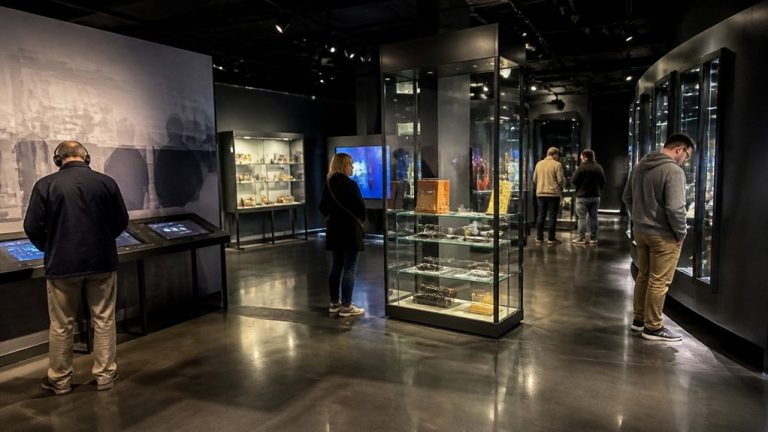
History takes center stage in Federal Triangle, where a short walk can put you face to face with the nation’s founding papers and a few lesser-known gems. At the National Archives, you’ll see the Declaration of Independence, Constitution, Bill of Rights, and even a 1297 Magna Carta copy. Give yourself two hours, or longer if you like lingering over interactive displays. The National Archives is one of Washington, D.C.’s most important stops for exploring original documents that shaped American history. If you’re traveling with kids, the National Children’s Museum packs several floors with hands-on science and play that can easily fill an afternoon. When White House tours aren’t happening, the White House Visitors Center offers artifacts, family photos, and a short film, though security feels a bit airport-like. For a quieter stop, the Woodrow Wilson exhibit adds compact, surprising context to your visit today.
Guided Tours And Landmarks
From the Rotunda’s dim glow to the rumble of evening tour buses, Federal Triangle is easy to explore with a little guidance and a short list of smart stops. Start at the National Archives, where you can see the Declaration, Constitution, and Bill of Rights, then stay two hours or linger longer for exhibits and a free 50-minute Art & Architecture tour. For first-time visitors, Federal Triangle is a practical base because it puts several major museums and monuments within an easy walk.
For guided tours, book Signature Tours of DC for day or night narration, or hop into a 5.0-rated pedicab for easy photos, pets included as well. You can also duck into the White House Visitors Center, then catch the Old Post Office Pavilion, Hancock statue, and Woodrow Wilson exhibit. Security lines happen, screens sometimes glitch, but the landmarks still reward your curiosity.
Visit the National Archives
Where else can a two-hour visit put the Declaration of Independence, the Constitution, the Bill of Rights, and even a 1297 Magna Carta in the same room? At the National Archives, the Rotunda is your must-see stop, though you’ll want three or four hours if interactive galleries pull you in.
- See the founding documents in one hushed, crowded hall.
- Check for free 50-minute Art and Architecture tours.
- Book timed tickets for newer galleries, and use your phone.
- Go off-peak, then browse the excellent gift shop and basement cafe.
You’ll notice changing photos, glowing screens, and a main viewing area that can feel gloriously chaotic at busy times. Visit early or late, and you’ll get more room to stare without bumping elbows every few seconds for long. As a highlight of the National Mall, the National Archives is an easy fit for first-time visitors exploring Washington, DC.
Visit the White House Visitor Center
Think of the White House Visitor Center as a compact backstage pass that doesn’t require a West Wing connection. Inside, you move through a bright museum-style space with presidential family photos, crockery, foreign gifts, artifacts, and a short film that gives you an intimate look at life in the executive mansion. Expect airport-style security first. Touch screens add context, though some can act moody. Helpful staff and rangers keep the visit smooth. It is also a good place to learn about White House tours, which must be scheduled through your Congressperson or embassy.
| Highlight | Why go |
|---|---|
| Artifacts and film | You get White House context fast |
| Gift shop | You leave with souvenirs |
The White House Visitor Center works especially well when public tours aren’t available. It’s near the Mall, easy to fit in, and pleasantly manageable for a quick, smart Federal Triangle stop between bigger museum visits.
Still comparing Federal Triangle Washington DC Walking Tour?
Ask for tour ideas, hotel suggestions, or a simple trip plan that combines both.
Trip Helper
Federal Triangle for Kids and Families

You can give kids a strong start at the National Children’s Museum, where hands-on science and play fill multiple floors just off the National Mall, then balance the fun with a stop at the National Archives for a smart history break. When they need to move, you can head to the Ellipse for open grass, quick runs, and a little fresh-air reset near the White House, with short stops like the Hancock statue if attention spans are fading. If your schedule’s tight, you’ve got easy family options like kid-friendly pedicab rides or flexible guided tours, and the White House Visitors Center works well too if you plan for security lines and a few touch screens that don’t always cooperate. This area fits well into a broader Washington DC With Kids plan because so many family-friendly stops sit close together for easy transitions.
Kid-Friendly Museum Stops
Often, Federal Triangle works surprisingly well for a family museum day because the stops mix big-name history with places kids can actually touch, climb through, and explore at their own pace.
- National Children’s Museum gives ages 0 to 12 multi-floor science play.
- National Archives Museum turns Historic Sites into kid-sized wonder with the Declaration, Constitution, and Bill of Rights.
- White House Visitors Center adds artifacts, photos, and a short film when tours aren’t happening.
- Bring a charged phone since some touchscreens glitch, and peak hours can feel noisy.
You can spend two hours at the Archives, longer with interactive displays, and expect airport-style security at the White House center for a smoother visit with younger kids who don’t love long lines or waiting much. Families can also pair this area with the Library of Congress, which offers helpful visitor planning information for a smoother stop nearby.
Active Play Options
After a museum stop, Federal Triangle gives kids room to move without straying far from the main sights. You can head to the National Children’s Museum for climbing, tinkering, and hands-on science that keeps ages birth to 12 busy on multiple floors.
Outside, the Ellipse opens up with lawn, breeze, and room to sprint near the White House. Pedicab rides add motion without much effort, and kid-friendly drivers sometimes hand out water or snacks. You’ll also find plazas around Pennsylvania Avenue National Historic streets where kids can stretch their legs, though crowds and sparse equipment mean imagination does some of the work. If they want a quieter challenge, the National Archives offers child-friendly exhibits, but busy times can feel like a patience test too. For a scenic family walk nearby, the National Mall stays open 24 hours and offers broad greenspaces between major monuments.
Family Visit Logistics
Getting around Federal Triangle with kids feels pretty manageable once you map out a few smart stops. Start near the National Mall and keep your day flexible.
- National Children’s Museum suits ages birth to 12, with hands-on floors and kind staff.
- At the National Archives, give yourselves two hours for the rotunda, or 3 to 4 if you’ll explore galleries.
- Choose Signature Tours or a pedicab when little legs fade; both make short sightseeing easier.
- White House Visitors Center works well for kids, but expect security lines, glitchy screens, and bring snacks or use the Archives cafe.
If your route extends toward the Mall, the Vietnam Veterans Memorial is an easy add-on for a quieter reflective stop. Visit early or late to dodge crowds. The gift shop is surprisingly strong, which may save your afternoon. Tiny planners will feel oddly heroic there today.

Skip-the-Line Washington Monument Tickets + Self Guided Book
Enjoy timed entry access to the Washington Monument observation deck & take in breathtaking 360-degree views of Wash...

Washington DC Monuments and Memorials Night Tour
See Washington, DC in ways large bus tours can’t—especially after dark. This small‑group night tour (12 guests...

DC Monuments & Capitol Hill Highlights Tour by Electric Cart
Experience a whole different side of Washington, DC during our Monuments by day tour! Climb into our all-electric Re...
See the Old Post Office and Reagan Building
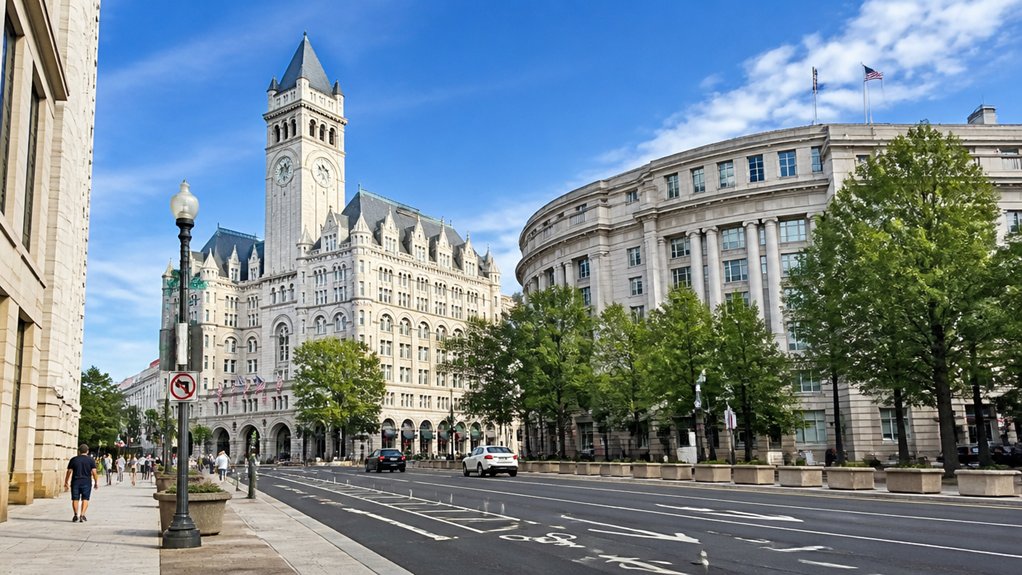
Start with the Old Post Office, where rough stone, arched windows, and a soaring clock tower give Federal Triangle a welcome jolt of late 19th-century character. Built from 1891 to 1899, the Old Post Office now mixes history with shops and dining, so you can browse a little before moving on. The Old Post Office Tower offers a close look at one of the district’s most recognizable historic landmarks. Check current tower access before you go, since public entry has been temporarily closed as of October 1, 2025. Then walk to the Ronald Reagan Building and International Trade Center, a huge civic hub where you might find an event, convention, or public program. It fills a key Federal Triangle block and feels busy in a good way. Peek inside and check the schedule before you commit. Your feet will thank you later.
Architecture to Notice in Federal Triangle
Look up as you walk, because Federal Triangle turns a government district into a crash course in grand civic design. In Washington, you can spot layers of ambition in stone, plazas, and colonnades.
- National Archives, finished in 1935 by John Russell Pope, grabs you with a Neoclassical front and the famed Rotunda.
- The Mellon Board ensemble, built mainly from 1928 to 1938, shows the City Beautiful love of monumental order.
- District Building adds Beaux-Arts symmetry and ornament from 1904 to 1908, a dressier neighbor among sterner offices.
- Reagan Building, completed in the 1980s, closes the triangle with a huge footprint and a later federal mood.
Like Union Station, the district rewards visitors who pay attention to monumental facades and the way major public buildings shape the experience of moving through Washington. Stroll the inner courts and you’ll feel the Paris-like axial plan click into place along Pennsylvania Avenue, where open spaces keep everything breathing.
Best Tours Around Federal Triangle
Tours can turn Federal Triangle from a handsome government district into a story you can actually follow block by block. For classic tours in Washington, Signature Tours of DC stands out with polished three-hour morning or evening trips and a six-hour day that adds a Potomac boat ride. Their Night Monuments outing is especially good if you want bright photos and lively guide banter.
If you prefer something smaller, pedicabs from Nonpartisan Pedicab, DC Pedicab, or Wheel The People give you door-to-door pickup and pet-friendly flexibility. For speed, try Bi-Partisan’s electric scooters or Capitol Express golf carts. Check recent reviews, ask about your guide, and compare extras like water, coffee, or photo help. Some operators charm you. Some move you along with less value. If you want to pair downtown sightseeing with the city’s shoreline, a trip toward the Capitol Riverfront adds a different waterfront perspective to your Washington visit.
Plan a Federal Triangle Walking Route
Ease into Federal Triangle at the National Archives, where you can give the Rotunda a solid two hours or stretch to three or four if you want time with the interactive displays and the original Declaration of Independence, Constitution, and Bill of Rights.
- Walk south on Pennsylvania Avenue past grand Neoclassical facades.
- Pause at Commerce’s Herbert Hoover Building and the Ronald Reagan Building.
- Stop at the Ellipse lawn or Visitor Pavilion for White House views.
- End with Hancock’s statue and the Woodrow Wilson exhibit, then loop back.
Like any good Washington DC guide, this route balances monumental architecture with easy orientation on foot. You’ll trace buildings raised from 1928 to 1938 under the Mellon Board, including the IRS and FTC. It’s a compact route with big civic drama and a few welcome benches. You’ll hear traffic hiss and footsteps click nearby.
When to Visit for Fewer Crowds
Usually, the calmest time to see Federal Triangle is right when doors open on a weekday, before school groups roll in and the National Mall starts to hum.
If you’re exploring the nation’s capital, target late fall or winter weekdays, when sidewalks feel looser and galleries breathe. The National Archives gets hectic fast, so arrive early. Give yourself two hours for highlights, or 3 to 4 hours if you want the Rotunda before the midday swell. If the Washington Monument is on your list too, reserve timed tickets in advance to avoid disappointment during busy periods.
| Best time | Why |
|---|---|
| Weekday opening | Quietest galleries |
| Mid-week school hours | Easier family museum visit |
Book the Archives’ free Art and Architecture tour one to two weeks ahead, and pick a less popular slot. You’ll hear more, shuffle less, and dodge the field-trip wave. Kids seem calmer then too.
Federal Triangle Food, Restrooms, and Tips
Before the marble halls and security lines start to blur together, it helps to know where to pause. In this Historic district, your easiest refuel stop is the National Archives basement cafe, where prices stay reasonable and the gift shop is terrific for snacks.
- Use restrooms at the National Archives or Ronald Reagan Building.
- Expect screening before using facilities at the White House Visitor Center.
- Give the Archives 2 hours, or 3 to 4 with interactive displays.
- Bring a charged phone and portable charger for newer exhibits.
If you can, go on a weekday morning. You’ll dodge crowds, shorten restroom waits, and keep your cafe break from turning into its own federal process. That leaves more time for documents, rotundas, and a little people-watching. If you want a quick safety check before heading out, MPD’s Crime Cards offer a simple snapshot of recent crime information around the city.
Frequently Asked Questions
Is Federal Triangle Haunted or Linked to Famous Ghost Stories?
No—you won’t find famous, well-documented hauntings here. You might hear Paranormal folklore about the Old Post Office and displaced communities, but most stories stay anecdotal, local, and unverified rather than ghost cases or investigated legends.
Which Films or TV Shows Were Shot in Federal Triangle?
You’ll spot Federal Triangle in Air Force One, political dramas, news-magazine b-roll, commercials, and TV series. Capitol Cameos include the National Archives, Old Post Office Pavilion, Ronald Reagan Building, and Pennsylvania Avenue walk-and-talk scenes there.
Can You See Government Employees Entering Buildings During Weekdays?
Yes, you can see government employees entering buildings on weekdays, especially during morning arrivals and late-afternoon departures. For Weekday Observations, watch sidewalks near major offices, where security checks and commuter traffic make staff movements visible.
Are Any Federal Triangle Buildings Open During Citywide Events or Festivals?
Yes, you can usually visit several Federal Triangle buildings during citywide events, but you’ll need to verify hours, entrances, and closures. Check official sites for Event Accessibility updates, since security, tours, and access can change.
What Was in Federal Triangle Before Federal Redevelopment Began?
Before redevelopment, you’d have found a gloriously “respectable” district of cheap hotels, brothels, tattoo parlors, chop suey spots, and Native Marketplaces, plus DC’s first Chinatown—until officials cleared it all for grand federal buildings later on.
Conclusion
Federal Triangle rewards you with big civic drama in a compact walk. You can step from the Archives and its faded parchment glow to broad plazas, stone facades, and the steady hum of downtown in minutes. Go early, wear good shoes, and keep water handy. Need a quick reset? Benches and museum restrooms make this easy. By the end, you won’t just see Washington’s grand plan. You’ll feel its scale under your feet and in your head.

Private Washington DC City Tour
Make this spring unforgettable with a private Washington DC tour designed just for your family, perfectly timed for cherry blossom season. Explore ico...
DC Monuments Night Tour with 10+ Stops, National Mall, Tickets
Experience Washington DC lit up at night during this 3-Hour Guided Night Tour of the National Mall and Monuments. Ma...
VIP Best of DC with US Capitol + National Archives Reserved Entry
Get the presidential treatment with the most comprehensive Washington DC day tour! The tour includes reserved access...