

Washington, DC works best when you treat it as a collection of neighborhoods rather than one monumental district. Downtown places major sights within easy reach, Capitol Hill mixes national institutions with residential streets, and areas such as Dupont Circle, Adams Morgan, and U Street bring distinct dining, cultural, and evening scenes. The right choice depends on what you want outside your hotel door and how much walking or transferring fits your trip.
- Choose Downtown or Penn Quarter when convenient access to museums, restaurants, shopping, and major sights leads your priorities.
- Consider Capitol Hill for the Capitol, Library of Congress, Eastern Market, and a more residential setting.
- Pick Dupont Circle for embassies, boutiques, dining, and direct neighborhood rail access.
- Look at Adams Morgan or U Street when nightlife and varied dining matter more than being beside the monumental core.
- Check the route from the exact hotel address, since a neighborhood described as Metro-accessible can still require a walk or bus connection.
- Review live transit alerts, street closures, security restrictions, and venue entry rules shortly before each day of sightseeing.
A neighborhood name is only the first filter. Two hotels in the same district can produce different walks, transfers, and evening environments. Compare the exact address with your must-see places, then consider dining plans, luggage, mobility needs, and how late you expect to return. A focused Where to Stay in Washington DC for First Timers guide can help narrow the hotel search after you choose a suitable district.

Washington DC in One Day: Guided Sightseeing Tour + boat cruise
Board your glamourous, climate-controlled panoramic bus at the U.S. Navy Memorial for one of the best bus tours in Washington DC!Expanding on our p...

Hop-On Hop-Off Tour, Arlington Audio Tour, & Optional Sunset Tour
Explore Washington, D.C. with the Official Tour of the National Mall. As the National Park Service's authorized conc...

DC in a Day: 10+ Monuments, Boat Cruise, National Mall, Tickets
Explore Washington DC’s top landmarks and monuments on a 6-hour tour by deluxe touring coach with full narration f...

US Capitol with Library of Congress or Supreme Court Entry
Join an expert local guide on this small-group guided tour of Capitol Hill, one of the top things to do in DC! Expl...
How to choose a Washington DC neighborhood
Start with the part of your itinerary that cannot move. That could be a museum-heavy day, a Capitol visit, an evening event, or a restaurant reservation. Select two neighborhood finalists and test the routes to those fixed points. A slightly longer sightseeing trip can be worthwhile when the surrounding dining or evening scene better matches your travel style.
| Neighborhood | Strongest visitor fit | Rail or route consideration |
|---|---|---|
| Downtown and Penn Quarter | Museums, restaurants, shopping, nightlife, and proximity to major sights | Gallery Place–Chinatown serves Penn Quarter and Chinatown |
| Capitol Hill | The Capitol, Library of Congress, Eastern Market, and residential streets | Capitol South is the listed nearby station |
| Dupont Circle | Embassies, boutiques, and dining | Dupont Circle station serves the neighborhood |
| Adams Morgan | Nightlife and varied dining | Woodley Park–Zoo/Adams Morgan is followed by about a 10-minute walk or short bus ride |
| U Street | Black heritage, jazz history, and nightlife | Use U Street/African-American Civil War Memorial/Cardozo |
| Other visitor districts | Best assessed against a specific hotel, venue, or itinerary | Test the exact door-to-door route before booking |
Visitors often overvalue straight-line distance on a map. A route involving a long station approach, a transfer, or an uphill walk with luggage can feel less convenient than a slightly longer direct trip. Check both daytime sightseeing routes and the journey back after dinner. This is especially useful when comparing an energetic nightlife area with a central business and museum district.
Downtown and Penn Quarter for central sightseeing
Downtown is a practical choice when major attractions, museums, restaurants, shopping, and central-city convenience dominate the itinerary. It is also a busy center for business and nightlife, so do not assume every block settles down after office hours. Compare hotel micro-locations if an undisturbed evening matters as much as short daytime routes.
Penn Quarter and Chinatown work well for travelers who want a named rail connection at Gallery Place–Chinatown. This can simplify trips that begin or end in the district, although the exact hotel entrance still matters. Place your accommodation, station entrance, and first attraction on the same route before deciding that one property is more convenient than another.
For days centered on museums and the monumental core, pair your neighborhood plan with a National Mall Guide for First Timers. Keeping one area as the day's main focus reduces unnecessary backtracking. Save a restaurant district or evening venue for later only when its return route remains comfortable for everyone in the group.
Who should stay in the central districts?
- First-time visitors placing major sights above neighborhood nightlife
- Travelers who prefer short, straightforward sightseeing days
- Families or groups trying to limit mid-day transfers
- Visitors comfortable with a busy business, dining, shopping, and entertainment center
- Anyone willing to compare the exact block rather than choosing by district name alone
Capitol Hill for national institutions and residential streets
Capitol Hill combines some of Washington's defining institutions with a neighborhood setting. The visitor highlights identified for the area include the United States Capitol, Library of Congress, Eastern Market, and residential streets. That mix suits travelers who want major civic sights without making a commercial downtown district their entire experience.
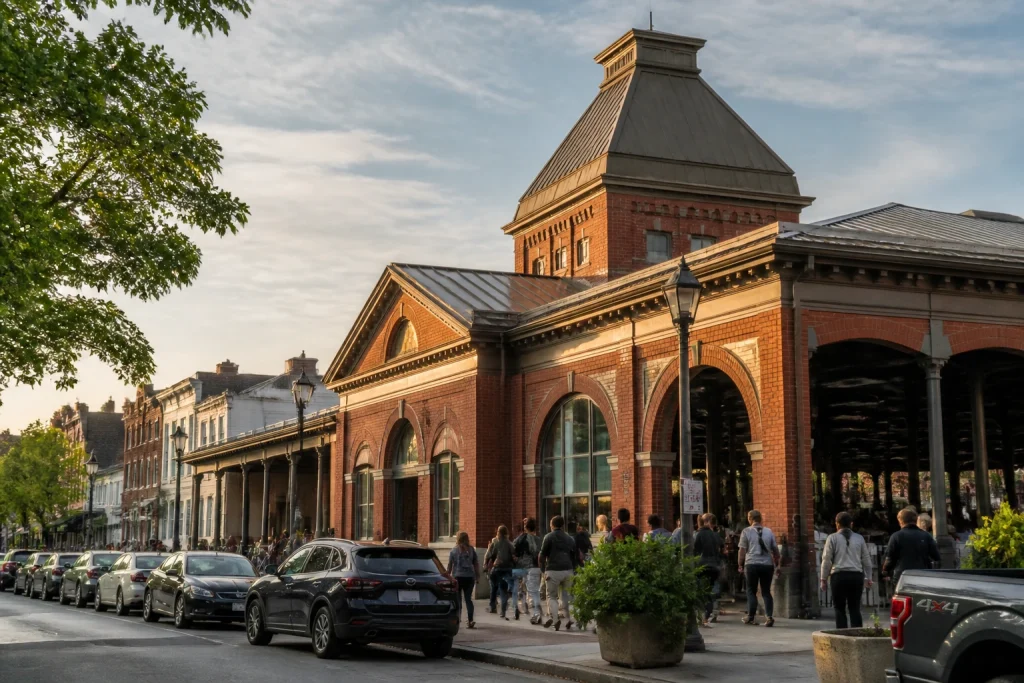
Capitol South is the listed rail station for visiting the neighborhood. Test the walk between the station, your hotel, and any scheduled entry point rather than treating the station as a universal front door. If the Capitol is central to your plans, use a United States Capitol Tour Guide to organize that visit before filling the remaining time with flexible neighborhood exploration.
Capitol Hill is especially effective when your itinerary contains a fixed institutional visit. Put the scheduled commitment first, then use Eastern Market or nearby residential streets as flexible additions. This approach leaves room for security procedures, walking, and ordinary travel delays without forcing you to abandon a second timed activity.

Ghosts of Georgetown & The Exorcist Steps Walking Tour
Deep, dark secrets about a forgotten past lie among the manicured gardens and Victorian row houses of DC’s finest...

Washington DC Monuments Tour by Electric Cart Day and Night
Experience a whole different side of Washington, DC during our Monuments tour! Climb into our all-electric Red Roads...

Washington DC's Monuments & US History Guided E-Cart Tour
This tour offers a detailed introduction to U.S. history and Washington D.C.’s famous monuments, guided by expert...
Dupont Circle, Adams Morgan, and U Street for dining and evenings
These three neighborhoods suit visitors who want more activity after the main sightseeing day, but they are not interchangeable. Dupont Circle is associated with embassies, boutiques, and dining. Adams Morgan emphasizes varied dining and nightlife, while U Street combines Black heritage and jazz history with a nightlife scene.
Dupont Circle
Dupont Circle offers the simplest named rail connection of the three because Dupont Circle station serves the neighborhood. It is a strong candidate for travelers who want restaurants and shops near their base while retaining a clear transit link. A Dupont Circle Washington DC Guide can help with a closer look at the district once it reaches your shortlist.
Adams Morgan
Choose Adams Morgan when varied dining and nightlife carry real weight in your decision. Rail access requires more attention: Woodley Park–Zoo/Adams Morgan is followed by roughly a 10-minute walk or a short bus ride. That is manageable for many visitors, but it can matter with suitcases, reduced mobility, young children, or repeated late returns.
U Street
U Street stands out for Black heritage and jazz history as well as nightlife. The listed station is U Street/African-American Civil War Memorial/Cardozo. This neighborhood fits travelers who want cultural history and evening activity in the same part of the itinerary, provided the exact accommodation and return route suit the group.
Nightlife labels describe a district, not every hotel room. Compare the property's precise block, nearby venues, and event calendar if sleep is a priority. Travelers who enjoy a lively dinner scene can use the same information in reverse and choose a location that limits the journey home.
Georgetown, Foggy Bottom, and Woodley Park require route-by-route comparison
Georgetown, Foggy Bottom, and Woodley Park are among the distinct visitor neighborhoods recognized across Washington. Treat each as an exact-route choice rather than relying on a broad city map. Pin the hotel, the nearest useful transit connection, and the places you expect to visit most often. Then repeat the check for the return journey.
If Georgetown is a serious contender, consult a Georgetown Washington DC Travel Guide before reserving a room. A focused neighborhood plan is more useful than assuming that every address bearing a familiar district name offers the same access. Give extra weight to luggage handling and the final portion of the journey between transit and the hotel.
Apply the same test to Foggy Bottom and Woodley Park. A district can be suitable even when it is not the closest option, particularly if your itinerary repeatedly returns to one nearby venue. The goal is not to minimize every mile. It is to reduce the awkward transfers and long final walks that create friction day after day.
H Street NE, NoMa, Union Market, and Shaw for itinerary-led stays
H Street NE, NoMa and Union Market, and Shaw are identified as distinct visitor neighborhoods. They make the most sense when a specific hotel, restaurant, event, or attraction draws you to that part of the city. Build the choice around the actual destination and route rather than an expectation that every visitor should stay near the same central landmarks.

When NoMa reaches your shortlist, a NoMa Washington DC Guide can provide a more focused planning layer. Before booking, compare at least one morning route to your main sightseeing area and one evening return. This catches transfer or walking issues that a neighborhood-level description can hide.
Do not assume that every advertised transportation option remains current. In particular, confirm operator information before planning around any neighborhood shuttle. Metro service, station work, street restrictions, and major-event security arrangements can also change, so perform a final route check close to your visit.
Southwest, The Wharf, and Navy Yard as focused itinerary bases
Southwest and The Wharf, along with Navy Yard, belong on Washington's broader visitor-neighborhood map. Consider them when your plans repeatedly bring you to a hotel, event, meal, or attraction in the area. They should be evaluated as distinct bases, not treated as interchangeable extensions of Downtown.
A useful comparison asks how many trips begin or end there, not simply how far the neighborhood looks from a landmark. One longer outing can be easy to absorb. Repeating a transfer or lengthy final walk morning and night is more likely to become tiring, especially for families, travelers with luggage, and visitors who need step-free routes.
If an evening event anchors the day, reverse the usual planning order. Start with the route home, then choose the daytime sightseeing cluster. This keeps the final journey predictable and reduces the temptation to cross the city several times for unrelated stops.

Skip-the-Line Washington Monument Tickets + Self Guided Book
Enjoy complimentary timed entry to the Washington Monument observation deck & breathtaking 360° views of Washington...

Washington DC: Easy Sightseeing Guided Monuments Tour by E-Cart
Explore Washington, DC’s iconic monuments and memorials on a relaxed, open-air electric cart tour. Enjoy a small-g...

VIP Best of DC with US Capitol + National Archives Reserved Entry
Get the presidential treatment with the most comprehensive Washington DC day tour! The tour includes reserved access...
Getting around Washington neighborhoods without guesswork
Washington's tourism guidance recommends exploring neighborhoods on foot or by Metro and directs travelers to Metro's trip-planning tools. Use that combination to test real journeys between your hotel and priority sights. A How to Get Around Washington DC Without a Car guide can help connect neighborhood selection with the wider transportation plan.
Check the full journey, not only the station name
Station branding can make a district sound closer than it feels on foot. Adams Morgan is the clearest example in the visitor guidance: the listed rail approach includes about a 10-minute walk or short bus ride. Run the same door-to-door check for every finalist, including the station entrance and final block.
Plan accessible routes before travel
Travelers who depend on elevators, step-free entrances, paratransit, or accessible vehicles should verify the exact route with the relevant transit operator and venue. Elevator availability, construction, and entrance arrangements can affect an otherwise simple trip. Check again near the travel date because operational conditions can change.
Use current prices for budgeting
Compare live hotel, parking, dining, transit, and attraction prices for your actual dates rather than relying on a generic neighborhood cost label. Rates and charges vary by provider and timing. A Washington DC on a Budget Travel Guide can supply broader money-saving ideas, but current operator and hotel listings should guide the final calculation.
Keep a map and live information handy
Washington's official visitor guide covers neighborhoods, attractions, tours, restaurants, and hotels, making it useful for general orientation. Use live operator and agency information for service disruptions, station work, street closures, demonstrations, weather hazards, security perimeters, and attraction entry rules. A planning map cannot replace same-day operational details.
Build your neighborhood plan in a few clear steps
Match the neighborhood to your travel style
- For central sightseeing convenience, begin with Downtown or Penn Quarter.
- For the Capitol, Library of Congress, Eastern Market, and residential streets, compare Capitol Hill.
- For embassies, boutiques, dining, and direct neighborhood rail access, consider Dupont Circle.
- For nightlife and varied dining, assess Adams Morgan while accounting for its station approach.
- For Black heritage, jazz history, and nightlife, place U Street on the shortlist.
- For every other district, start with the specific hotel or venue that makes the neighborhood relevant to your trip.
Use this booking sequence
- List the three places or activities that matter most.
- Group attractions that can reasonably share the same day.
- Choose two neighborhood finalists based on those clusters.
- Test hotel-to-attraction routes in both directions.
- Compare the exact block, dining options, evening activity, and final walk.
- Before travel, check live transit conditions, accessibility needs, street restrictions, weather, and venue entry rules.
The practical final choice
The best Washington neighborhood is the one that removes friction from your specific itinerary. First-time visitors often benefit from central sightseeing access, while repeat visitors or evening-focused travelers can give more weight to dining, culture, and nightlife. Make the decision using the exact hotel address and real routes. Then leave enough flexibility to explore at street level rather than spending the trip racing between districts.

Frequently asked questions
What is the best Washington DC neighborhood for first-time visitors?
Downtown or Penn Quarter is a practical starting point for first-time visitors who prioritize museums, restaurants, shopping, and access to major sights. Capitol Hill is a strong alternative when the Capitol, Library of Congress, Eastern Market, and residential surroundings matter more. The best final choice depends on the exact hotel and itinerary.
Which Washington DC neighborhoods are best for nightlife?
Adams Morgan and U Street are the clearest nightlife choices in the visitor guidance. Adams Morgan also emphasizes varied dining, while U Street combines its evening scene with Black heritage and jazz history. Compare the precise hotel block if late activity or nighttime noise affects your decision.
Can visitors stay in Adams Morgan without a car?
Yes, visitors can approach Adams Morgan by public transportation, but the listed rail route requires about a 10-minute walk or a short bus ride from Woodley Park–Zoo/Adams Morgan. Check the route from your exact accommodation, particularly when traveling with luggage or requiring step-free access.
Is Capitol Hill a good neighborhood for tourists?
Yes, Capitol Hill is well suited to visitors interested in the United States Capitol, Library of Congress, Eastern Market, and residential streets. Capitol South is the listed nearby rail station. Confirm the route between the station, accommodation, and any scheduled entry point before the visit.
Do visitors need a car to explore Washington DC neighborhoods?
A car is not essential for many neighborhood itineraries because Washington's tourism guidance recommends walking and Metro. Convenience still varies by address, and some trips include a final walk or bus connection. Test the full hotel-to-attraction route instead of relying only on the nearest station name.
Which Washington DC neighborhood is best for dining?
Dupont Circle and Adams Morgan are strong dining candidates, with Dupont also known for embassies and boutiques and Adams Morgan associated with nightlife. Downtown also combines restaurants with museums, shopping, business, and entertainment. Choose according to the type of evening you want and the route back to your hotel.
How should travelers plan an accessible route in Washington DC?
Travelers should verify the exact station entrances, elevator conditions, step-free path, and venue access with the relevant transit operator and attraction. Construction or elevator changes can affect the route, so check again shortly before travel.
How many Washington DC neighborhoods should visitors explore in one day?
Most visitors will have an easier day by choosing one main neighborhood or sightseeing cluster and adding another only when the connection is straightforward. This is a planning guideline rather than a fixed rule. Scheduled entries, walking tolerance, and evening plans should determine the pace.
Washington DC in One Day: Guided Sightseeing Tour + boat cruise
Board your glamourous, climate-controlled panoramic bus at the U.S. Navy Memorial for one of the best bus tours in Washington DC!Expanding on our p...

African American History Tour with Museum of African American History Ticket
KB Tours is a one of a kind African American Heritage tour operator in Washington DC that takes visitors to explore...

DC Monuments by Night: 10+ Landmarks | Open-Top Upgrade Available
See a different side of Washington DC after dark on a guided night tour of the city's floodlit monuments. This tour...
US Capitol with Library of Congress or Supreme Court Entry
Join an expert local guide on this small-group guided tour of Capitol Hill, one of the top things to do in DC! Expl...
Still comparing Washington DC Neighborhoods And Where To Stay Planning?
Ask for tour ideas, hotel suggestions, or a simple trip plan that combines both.