A Smithsonian Natural History Museum tour is usually a self-guided adventure rather than a scheduled general tour. Free, reservation-free admission gives you freedom to choose your route, but the museum is large enough to reward a little advance planning. Use the current museum map, pick a short list of priorities, and leave room for security screening before entering the galleries.
- General admission is free, and individual visitors do not need timed tickets or passes.
- The practical choice for most travelers is a self-guided visit using the museum map.
- Current public hours are 10:00 a.m. to 5:30 p.m. daily, except December 25.
- Allow extra arrival time for mandatory security screening and current access limits around the National Mall.
- Bring only what you can carry because the museum has no coat check, lockers, or bag storage.
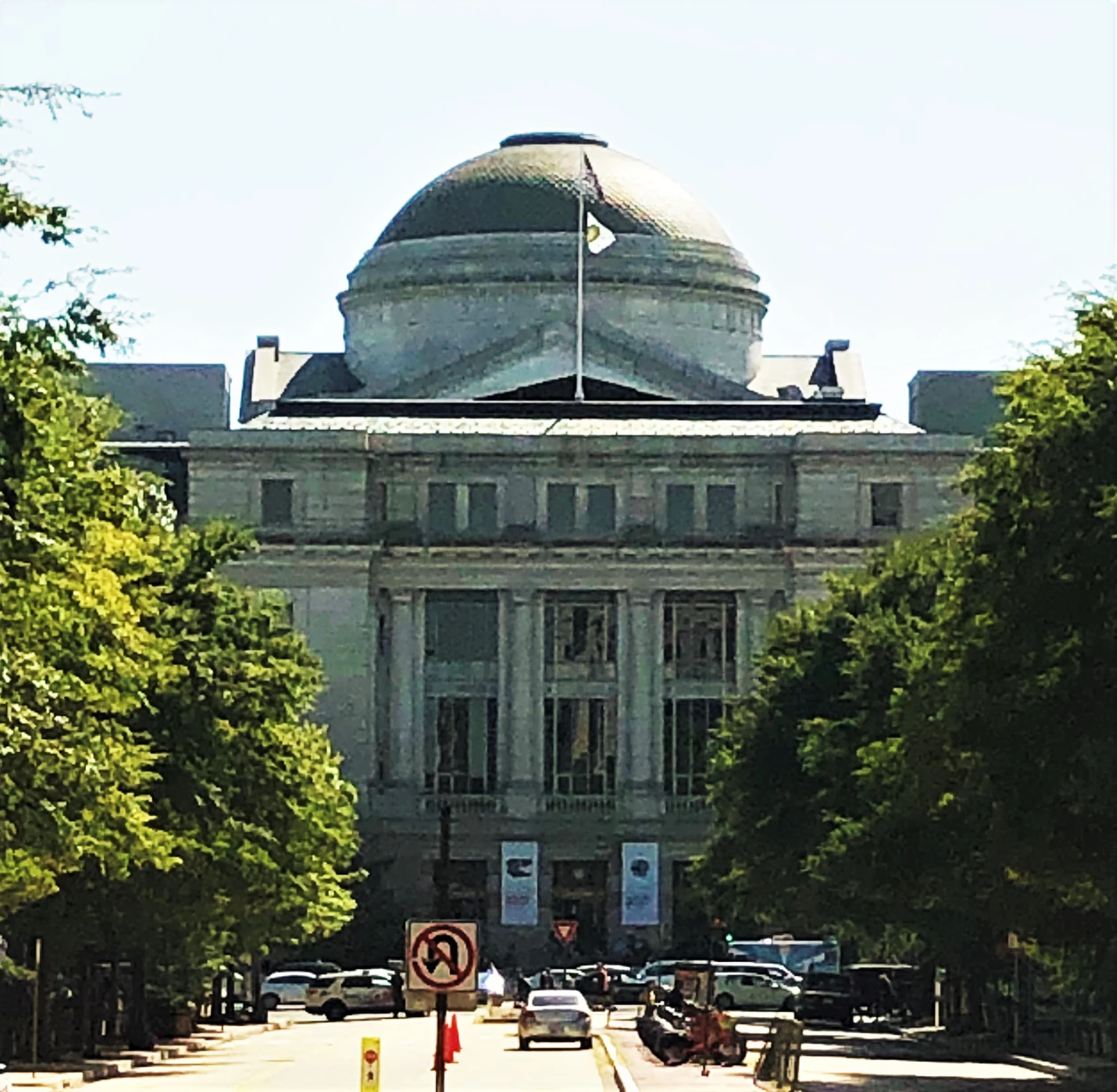
The museum stands at 10th Street and Constitution Avenue NW, beside the National Mall. Its central location makes it easy to combine with another Smithsonian museum or an outdoor walk, although trying to cover too much can turn a day of discovery into a race against closing time. A focused route is usually more satisfying than checking off every gallery.

Smithsonian Museum of Natural History - Exclusive Guided Tour
Join a 2 hour exclusive guided tour of the National Museum of Natural History, featuring rare marvels from around the world. The tour will lead you th...

Smithsonian "Big 3" Highlights Tour (Air & Space Entry Included)
See the best of the Smithsonian Museums on a 3-hour guided tour of the highlights of the American History, Natural History, and Air and Space Museums...
Which Smithsonian Natural History Museum tours are available?
For ordinary individual visitors, the museum does not advertise a standing, bookable general guided tour. The standard experience is self-guided, supported by museum maps and a virtual tour that can help with advance orientation. This arrangement suits travelers who want to change direction, linger over an unexpected display, or leave when younger visitors run out of steam.
The museum calendar also lists talks, family activities, and other public programs. These are separate from ordinary daytime admission, and their dates, availability, and status can change. Check the live calendar shortly before your visit rather than building an itinerary around an older event listing.
School and youth groups have a more structured option in 2026. The museum is piloting Exhibit Explorations, an educator-led program for pre-registered groups in grades 6 through 12. Museum entry itself remains reservation-free, but participation in this program requires advance registration. Review the registration details for current availability and any program-specific conditions.
- Independent visitor: use the museum map for a flexible self-guided route.
- Family: choose a few shared priorities and include breaks before attention fades.
- School or youth group in grades 6–12: investigate the pre-registered Exhibit Explorations pilot.
- Program-focused visitor: consult the current calendar for date-specific talks or family activities.
- Remote planner: use the virtual tour to understand the building before arrival.
Build a self-guided route without exhausting yourself
Start by choosing three priorities from the current museum map. Treat the first two as essential and the third as a bonus. This simple rule keeps the visit useful when screening takes longer than expected or one gallery captures more attention than planned. It also prevents a common museum mistake: spending the opening stretch wandering without deciding what matters most.
Next, group your choices by location inside the building. Moving through nearby galleries before changing floors reduces backtracking and preserves energy. The virtual tour can help you understand the layout in advance, while the current map should guide your actual route. Exhibitions and circulation details can change, so an old screenshot is less useful than the information available during your visit.
Give each person one selection when traveling as a family or small group. Adults get a say, children get ownership of the route, and no one has to pretend that every display is equally fascinating. Agree on a meeting point before splitting up, then keep the plan simple enough that everyone can follow it without constantly checking a phone.
- Check the current map and choose three priorities.
- Visit the two essential choices before optional galleries.
- Cluster nearby stops to reduce unnecessary walking.
- Pause before starting the final section of the route.
- Leave enough time to exit by the posted closing time.
Choose a visit length that matches your attention span
The museum does not prescribe a standard visit length, and its many galleries make a single recommendation unhelpful. Think in terms of a highlights visit, a balanced multi-gallery visit, or a slower half-day. The suggested windows below are editorial planning tools, not museum rules. Every option should include arrival and security time.

| Planning style | Suggested window | How to use it |
|---|---|---|
| Focused highlights | About 90 minutes | Choose two priorities and keep transitions short. |
| Balanced visit | About 2–3 hours | See several nearby galleries and include a break. |
| Slower exploration | Half-day | Follow more interests without trying to cover the entire museum. |
A short visit works when the museum is one stop in a full National Mall day. It requires discipline: choose your priorities before entering and avoid adding an entire new wing near the end. The National Mall Guide for First Timers can help place the museum within a broader day of monuments, museums, and outdoor walking.
Two to three hours offers more breathing room. You can explore several sections, pause when something catches your eye, and still leave with enough energy for the rest of Washington. A half-day is better for visitors who enjoy reading labels closely or who want the freedom to follow questions as they arise.
Do not use the 5:30 p.m. closing time as the moment to start your final gallery. Doors close at 5:30 p.m., and visitors must exit then. Work backward from closing, allowing time to regroup, gather belongings, and make your way through the building.

Washington DC's Monuments & US History Guided E-Cart Tour
This tour offers a detailed introduction to U.S. history and Washington D.C.’s famous monuments, guided by expert...

DC's Monuments & Landmark Guided Small Group E-Cart Tour
This tour is a great alternative to see DC's Monuments by a E-Cart and knowledgeable guide. This tour offers a detai...

Washington DC Night Tour: ICONIC Landmarks, Monuments SMALL GROUP
Experience Washington DC at its most striking; after dark! This guided night tour showcases the city’s most iconic...
Free admission still requires an arrival plan
General admission is free, with no timed ticket or pass required. Current posted hours are 10:00 a.m. to 5:30 p.m. daily except December 25. The absence of a reservation makes spontaneous visits possible, but it does not remove security screening or guarantee identical entry conditions throughout the day.
Build a margin between your planned arrival and the first must-see stop. Every visitor undergoes screening, and bags can be searched. A small delay matters more on a 90-minute route than on a half-day visit, so short itineraries need the clearest priorities.
Free entry also does not mean every special experience has the same terms. Public programs can be date-specific, while the school and youth program requires registration. If a tour or event is central to your plans, confirm that particular listing rather than assuming ordinary museum admission includes it.
Getting to the museum during current Mall access limits
The museum currently warns that summer pedestrian and vehicle access along and across the National Mall can be limited. It recommends allowing extra travel time and using the Constitution Avenue entrance. These conditions are especially important for tightly scheduled visits, organized groups, and travelers arriving shortly before a program.
For public transportation, the museum's current notice identifies Federal Triangle on the Blue, Orange, and Silver lines as the closest Metro station. Recheck transit service and Mall access conditions on the day of travel because temporary routing can affect the most convenient approach.
Travelers planning a car-free itinerary can use the guide to how to get around Washington DC without a car for a broader look at moving between neighborhoods and major sights. For this museum visit, the key is to avoid treating your train arrival time as your gallery start time. The walk to the entrance and security screening both need space in the schedule.
Pack light for security and a full day on your feet
All visitors pass through security. Most walk through a metal detector, while visitors unable to do so are screened with an electronic wand. Bags may be searched. The process is easier when loose belongings are organized and the group is ready to follow instructions at the checkpoint.

There is no coat check, bag storage, or locker service. Bring only what you can comfortably carry through the museum, and do not arrive with large travel luggage expecting to store it. A compact day bag is more practical than a load that becomes heavier with every gallery.
Useful personal items depend on the season and your wider itinerary, but the museum rule is straightforward: anything you bring stays with you. If the day also includes a long National Mall walk, keep the combined museum and outdoor plan in mind when packing.
- Carry only belongings you can keep with you all day.
- Organize small items before reaching the screening point.
- Do not depend on lockers or a coat check.
- Leave large luggage at your accommodation or another appropriate facility.
- Keep any food and drink sealed while inside the museum.
Planning family, school, and youth group visits
Groups enter through the general entry line and should carry as little as possible to make screening more efficient. Children under 18 must be accompanied by an adult, and the museum states a ratio of one adult for up to 10 children. Assigning smaller units within a large group can make transitions and head counts easier.
Brown-bag lunches cannot be eaten inside the museum. Food and drinks must remain sealed, and the museum recommends using the National Mall for a picnic. Build that meal stop into the schedule before the group becomes hungry, especially if the visit stretches across several hours.
School and youth leaders interested in Exhibit Explorations should remember that it is a 2026 pilot for grades 6 through 12. The program is educator-led and requires pre-registration even though regular entry does not. Its availability and registration details should shape the day's timetable before transportation is finalized.
For an ordinary family visit, use a route with clear stopping points rather than a continuous march through the building. Let children choose one priority, schedule a pause, and keep an optional final stop ready. If energy drops, ending after the essential galleries is a successful tour, not an unfinished one.
Still comparing Smithsonian National Museum Of Natural History?
Ask for tour ideas, hotel suggestions, or a simple trip plan that combines both.
Trip Helper
Accessibility and program accommodations
The museum states that its entrances, exhibitions, and restrooms are fully accessible. The current recommendation to use the Constitution Avenue entrance during Mall access limits still makes a day-of route check worthwhile, particularly for anyone coordinating transportation or minimizing unnecessary distance.
For public programs, ASL interpretation, CART, and audio description may be available with advance notice. The museum cautions that it may not be possible to arrange accommodations with less than two weeks' notice. Contact the program organizer early when one of these services is important to participation.
Separate the building visit from any scheduled program when planning accessibility. General museum admission requires no reservation, but a particular program can have its own registration, timing, and accommodation arrangements. Keeping those details distinct reduces confusion at arrival.
Pair the museum with the rest of Washington DC
A focused museum visit can fit comfortably into a larger Washington itinerary, but avoid stacking several large collections without a break. The Smithsonian National Museum of American History Guide helps travelers compare another collection-based experience, while the Smithsonian National Air and Space Museum Guide offers planning context for a different scientific theme.

Outdoor time can provide a useful change of pace after several hours indoors. A National Mall walk, a seated meal, or a slower monument stop allows everyone to reset before the next attraction. The 4 Days in Washington DC Itinerary offers one way to distribute major museums and landmarks across a longer stay instead of compressing them into one day.
If you have only one day, choose the museum because its subject matter genuinely interests you, not simply because admission is free. A free attraction still uses limited vacation time. The strongest itinerary pairs one substantial indoor experience with a few clearly chosen outdoor sights rather than attempting every building along the Mall.
Is a Smithsonian Natural History Museum tour worthwhile?
The museum is a strong choice for curious travelers who value flexibility, broad natural-history subject matter, and free admission. Its main planning limitation is the absence of a standing general guided tour for individual visitors. You need to shape the route yourself, but that freedom also lets you spend time according to your interests rather than a fixed group schedule.
Before visiting, check the current hours, access notice, map, and event calendar. Choose two essential priorities, pack lightly, and allow time for security. That small amount of preparation turns a vast museum into a manageable Washington experience while preserving the pleasure of following an unexpected discovery.
Frequently asked questions
Are Smithsonian Natural History Museum tours free?
General museum admission is free, but the standard visit for individual travelers is self-guided rather than a standing official general tour. Special programs can have separate registration or participation terms.
Do I need a reservation for the National Museum of Natural History?
No timed ticket or pass is required for general admission. Pre-registration is required for the 2026 Exhibit Explorations pilot available to eligible school and youth groups.
How long should I allow for the Smithsonian Natural History Museum?
Allow about 90 minutes for focused highlights, two to three hours for a balanced visit, or a half-day for slower exploration. These are practical planning windows rather than official museum recommendations, and you should add time for security screening.
What are the museum's current opening hours?
The current posted schedule is 10:00 a.m. to 5:30 p.m. daily except December 25. Visitors must exit when the doors close at 5:30 p.m.
Which Metro station is closest to the Natural History Museum?
The museum's current summer access notice identifies Federal Triangle on the Blue, Orange, and Silver lines as the closest station. It also recommends the Constitution Avenue entrance and extra travel time while Mall access is limited.
Can I store luggage at the Smithsonian Natural History Museum?
No, the museum has no lockers, bag storage, or coat check. All visitors undergo security screening, bags may be searched, and travelers should bring only what they can carry.
Is the Smithsonian Natural History Museum accessible?
Yes, the museum states that its entrances, exhibitions, and restrooms are fully accessible. ASL interpretation, CART, and audio description may be available for public programs with advance notice, preferably at least two weeks.
Can school groups eat packed lunches inside the museum?
No, brown-bag lunches cannot be eaten inside the museum. Food and drinks must remain sealed, and the museum recommends picnicking on the National Mall.
The Smithsonian National Museum of Natural History stands at 10th Street and Constitution Avenue NW by Beyond My Ken, CC BY-SA 4.0.
Smithsonian "Big 3" Highlights Tour (Air & Space Entry Included)
See the best of the Smithsonian Museums on a 3-hour guided tour of the highlights of the American History, Natural History, and Air and Space Museums...

DC Night Tour: 10+ National Mall Monuments, Entry Ticket Upgrades
Experience Washington DC lit up at night during this 3-Hour Washington DC Guided Moonlit Tour of the National Mall a...
DC Monuments Night Tour with 10+ Stops, National Mall, Tickets
Experience Washington DC lit up at night during this 3-Hour Guided Night Tour of the National Mall and Monuments. Ma...

Gettysburg National Military Park Small Group Day Tour
Travel from Washington D.C. to Gettysburg for a full day focused on one of the most important sites of the American...
Smithsonian Museum of Natural History - Exclusive Guided Tour
Join a 2 hour exclusive guided tour of the National Museum of Natural History, featuring rare marvels from around the world. The tour will lead you th...
Smithsonian "Big 3" Highlights Tour (Air & Space Entry Included)
See the best of the Smithsonian Museums on a 3-hour guided tour of the highlights of the American History, Natural H...