
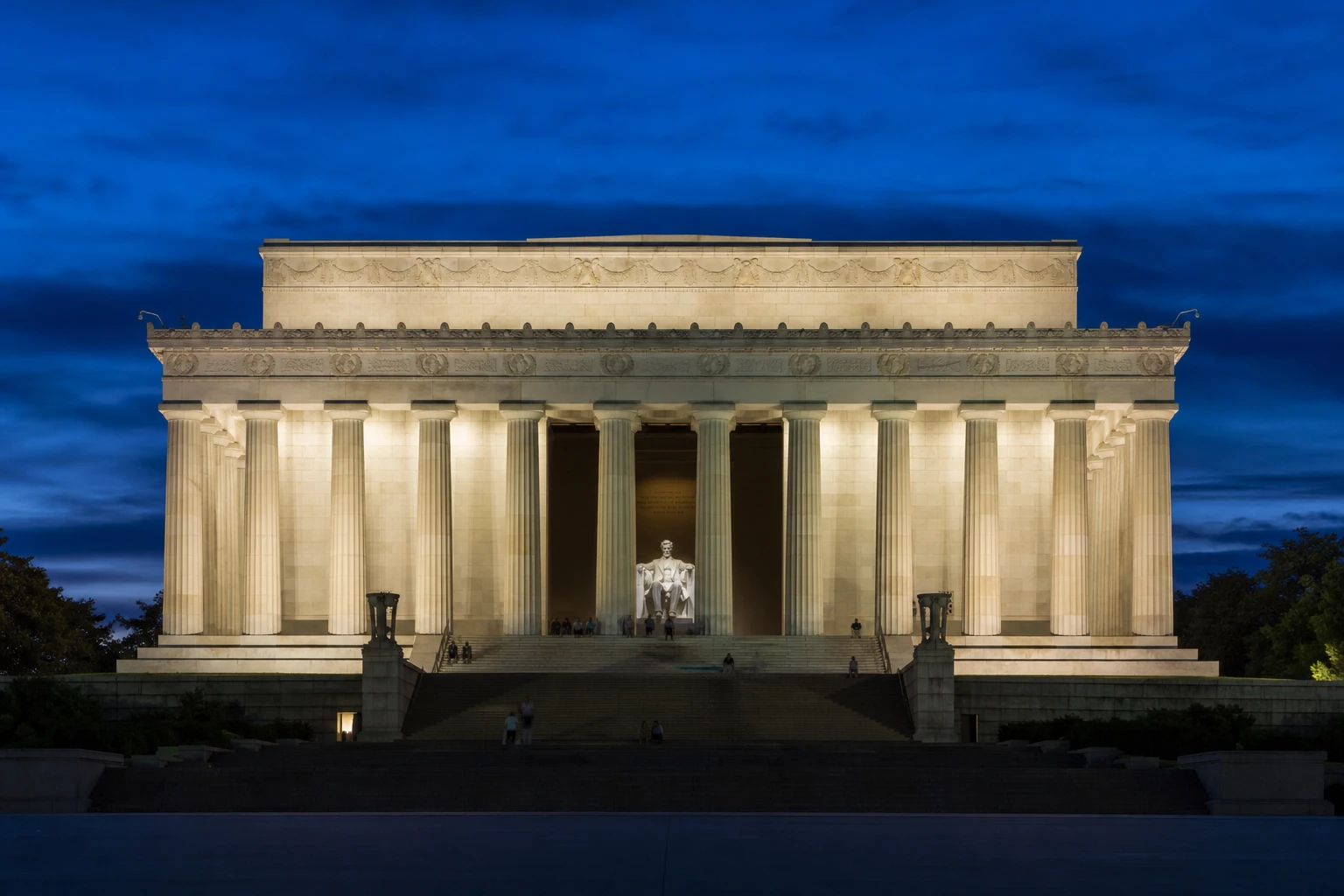
The Lincoln Memorial remains open to the public 24 hours a day, so its illuminated chamber and exterior can anchor an evening on the National Mall. The tradeoff is reduced visitor service. Restrooms, elevators, and the lower-level museum and undercroft close in the evening, making preparation especially important for anyone who needs step-free access or indoor facilities.
- The memorial chamber and exterior are open 24 hours a day and are free to visit.
- Evening visitors should not depend on restrooms, elevators, or the undercroft being open.
- Foggy Bottom–GWU is the closest Metro station, about 0.8 mile away.
- Nearby parking is limited, and most area spaces have a two-hour limit.
- Check current National Park Service conditions before using the Reflecting Pool photo route.
A successful night visit is simple: decide how you will arrive, confirm that the route you want is open, and carry what you need for the walk. Plan an earlier visit instead if the museum, undercroft, elevator, or restroom access is an essential part of your experience.

Washington DC Monuments and Memorials Night Tour
See Washington, DC in ways large bus tours can’t—especially after dark. This small‑group night tour (12 guests max) offers engaging stories, mor...

Washington DC Night Tour: ICONIC Landmarks, Monuments SMALL GROUP
Experience Washington DC at its most striking; after dark! This guided night tour showcases the city’s most iconic...

Washington, DC: Sunset & After-Dark Monuments Tour by E-Cart
Please Note: The 6:00 PM tour may not be fully dark depending on the season. The 8:30 PM tour offers a fully after-d...

Monuments and Memorials Night Tour by Open-top Bus with Guide
Big Bus is the only official bus tour partner of the National Park Service; no one gets you closer to the best memor...
Why visit the Lincoln Memorial after dark?
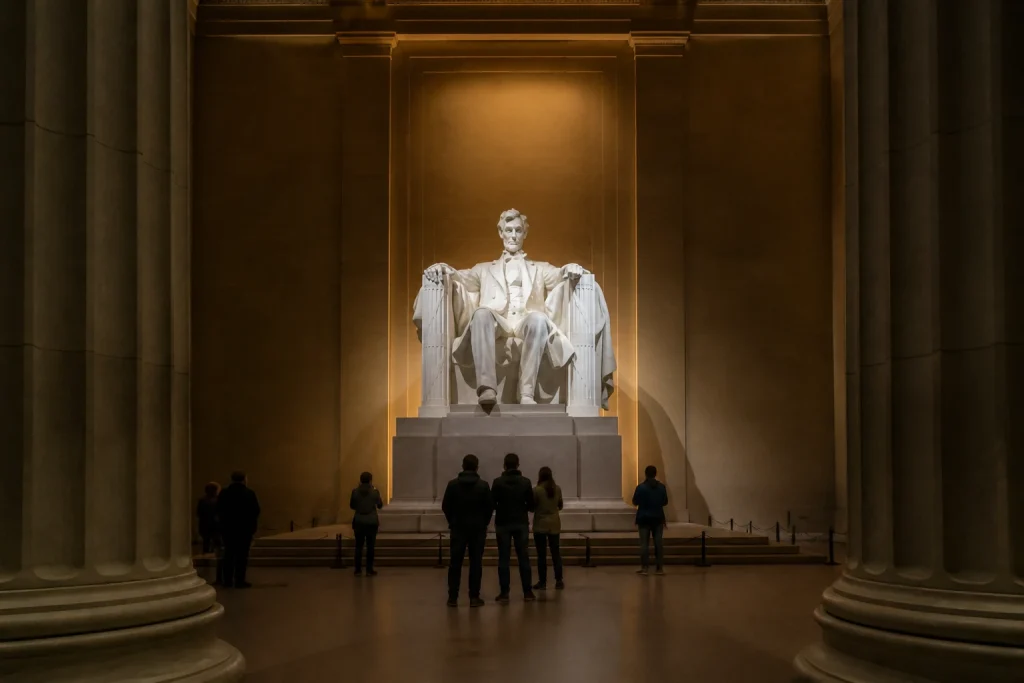
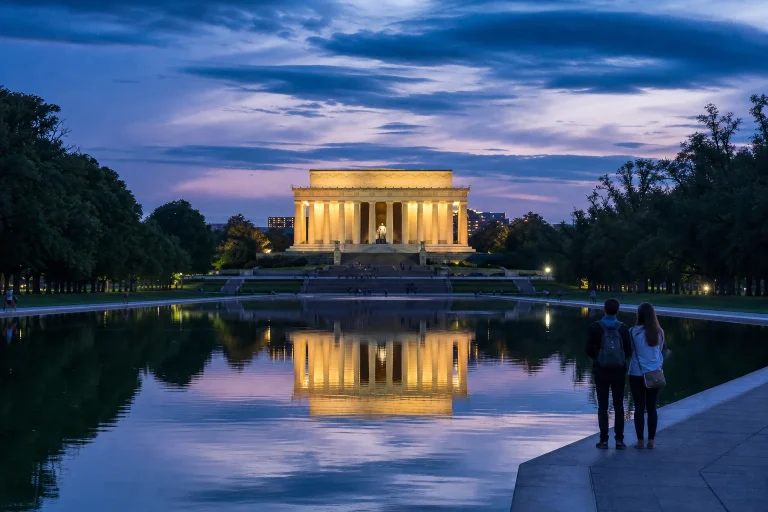
After dark, architectural lighting draws attention to the memorial’s columns and illuminated chamber. The surrounding night sky reduces visual clutter, while the broad exterior provides space to study the structure from several angles. It is a strong choice for travelers interested in monumental architecture, evening photography, or a final stop after daytime museums have closed.
The atmosphere can change with weather, events, and visitor numbers. One evening can feel spacious, while another brings groups moving through the chamber and gathering on the exterior steps. Instead of counting on solitude, give yourself enough time to pause, change viewpoints, and wait for a clear photograph.
First-time visitors who want more historical and daytime planning context can also consult the Lincoln Memorial Guide for First Timers. For a broader evening that includes several illuminated landmarks, the Washington DC Monuments by Night Guide offers a more suitable framework than treating this memorial as an isolated stop.
Choose your arrival time around access and atmosphere
Twilight is the most flexible choice when you want changing light, visible paths, and a transition into full illumination. Arriving later creates a darker setting, but it also increases the chance that elevators, restrooms, and lower-level spaces will already be closed. Facility closing times should not be confused with the memorial’s 24-hour public access.
Schedule the visit earlier if anyone in your group needs the elevator to reach the chamber. The elevator is located to the left of the main stairs, but it closes in the evening. The same planning rule applies to restrooms and the undercroft experience. Confirm same-day operations before leaving rather than arriving with an itinerary that depends on those services.
Do not build the evening around the assumption that late hours mean empty spaces. Weekends, favorable weather, school travel periods, public events, and group tours can all shape the experience. If the chamber is busy, begin outside and return later. A little patience usually matters more than choosing an exact minute.
What is open at night and what costs money?
The standard visit to the memorial chamber and exterior is free, and those areas remain open around the clock. The lower-level undercroft and museum operate differently. They require timed entry, and their availability should not be assumed during a night visit.
| Area or service | Access and cost | Night planning note |
|---|---|---|
| Memorial chamber and exterior | Free; open 24 hours daily | The main focus of an after-dark visit |
| Undercroft and museum | Timed entry required | Do not assume evening entry is offered |
| Advance undercroft reservation | $1; reservations can be made up to 30 days ahead | Select an earlier time if this experience is important |
| Same-day undercroft ticket | Free while supplies last | Availability is limited and not assured |
| Restrooms and elevators | Close in the evening | Use earlier if your visit depends on them |
Treat the chamber and exterior as the dependable core of a night plan. If you want to explore the undercroft, choose a timed entry separately and organize the evening around it. Undercroft visitors also pass through security screening, so a short wait can occur even with a ticket.
Getting there by Metro, bus, or on foot
Foggy Bottom–GWU is the closest Metro station. It is served by the Blue, Orange, and Silver lines and sits about 0.8 mile from the memorial. Smithsonian station is about 1.2 miles away. Neither station places you directly beside the memorial, so include the outdoor walk when deciding whether Metro fits your group.
Multiple bus stops also serve the surrounding area. Because useful routes depend on your starting point and service conditions, use WMATA’s trip-planning information shortly before departure. This is more reliable than memorizing a single route that may not suit your hotel, dinner location, or return journey.
Plan the return trip before you begin the walk. Save the station or stop you intend to use, keep your phone charged, and note any route changes shown by your navigation service. The guide to How to Get Around Washington DC Without a Car can help place the Metro and bus choices within a wider city itinerary.
Walking can be part of the appeal, especially when the memorial is one stop in a National Mall evening. Wear footwear suited to paved paths and long approaches. If anyone in the group tires easily, choose one clear arrival route and avoid adding unnecessary backtracking simply to chase another camera angle.

DC Night Tour: 10+ National Mall Monuments, Entry Ticket Upgrades
Experience Washington DC lit up at night during this 3-Hour Washington DC Guided Moonlit Tour of the National Mall a...

Small Group National Mall Night Tour with 10 Top Attractions
Visit 10-iconic Washington DC landmarks in three hours! Explore Washington DC with a professional tour guide on this...

DC Monuments by Night: Open-Top Bus Tour of Illuminated Landmarks
See Washington DC's monuments and memorials the way they were meant to be seen at night — floodlit, dramatic, and...
Driving reduces the walk but does not guarantee parking
Parking close to the Lincoln Memorial is limited. The National Park Service identifies metered street parking along Ohio Drive SW and parking lots south of the Jefferson Memorial. Most parking in the area has a two-hour limit, and ticketing and towing are enforced.
Driving can shorten part of the nighttime approach, but it does not guarantee a space near the memorial. Leave time to search legally, read posted restrictions, and walk from wherever you park. Avoid creating an itinerary that depends on finding a spot immediately beside the site.
If several people are traveling together, decide in advance whether transit, a taxi or rideshare, or a private vehicle offers the best balance. The important comparison is not simply driving versus walking. It is the complete trip, including the parking search, the final approach, and the return to the vehicle after dark.
Accessibility requires extra planning in the evening
The memorial chamber is accessible by an elevator located to the left of the main stairs. However, the elevator closes in the evening. Visitors who cannot use the stairs should plan an earlier arrival and confirm that the elevator is operating before setting out.
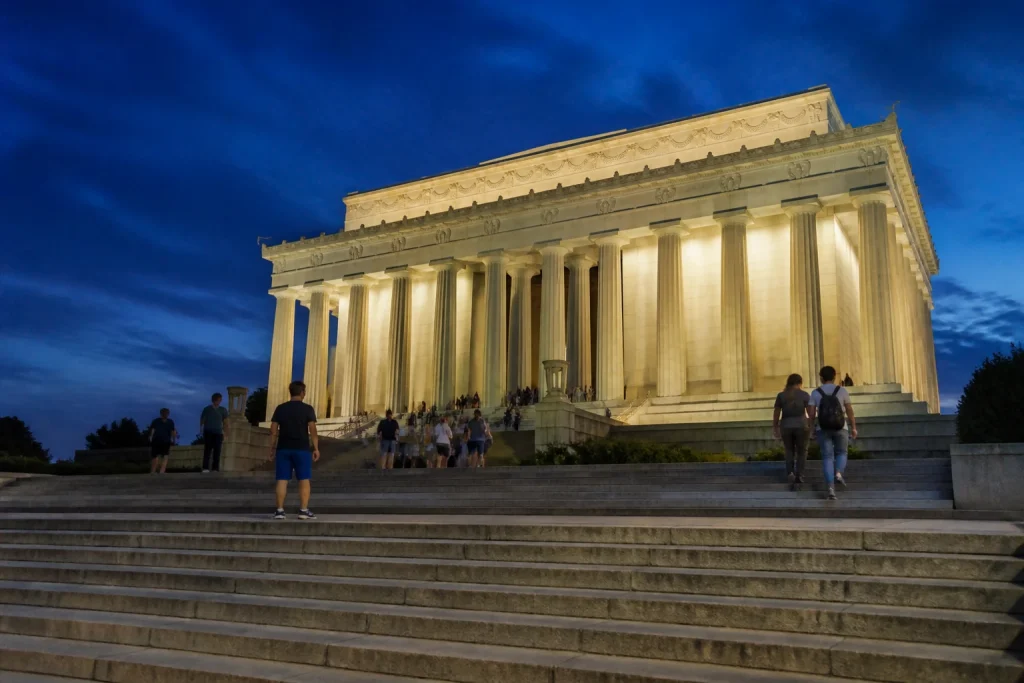
Seven accessible street-parking spaces are located on the drive immediately south of the memorial. They are subject to a two-hour limit. Accessible restrooms are across the street from those spaces, but the restrooms also close in the evening. A parking space therefore does not guarantee that every supporting facility will be available late at night.
The undercroft is described as a fully accessible exhibit space. It includes tactile features, open captions on the film, and downloadable audio-description materials. No-cost American Sign Language interpretation can be requested at least three weeks ahead. Timed entry and security screening apply, so this is best planned as an earlier, structured visit rather than an unplanned late-night addition.
How to photograph the Lincoln Memorial at night
Begin with a wide exterior composition before moving closer. A centered view emphasizes the spacing of the columns, while an angled position can add depth and separate overlapping architectural lines. Take several frames as people move through the scene instead of expecting the entire foreground to remain empty.
Inside the chamber, expose for the illuminated subject rather than the darkest corners. On a phone, tap the bright area and lower the exposure if highlights lose detail. Brace the device against your body, use a railing only when doing so does not obstruct anyone, and take a short burst to improve the odds of a sharp image.
For a camera, a stable stance and a moderate shutter speed are often more practical than carrying elaborate equipment through a busy public space. Check images at full size before leaving. Night photographs can look sharp on a small screen while hiding motion blur in columns, faces, or architectural edges.
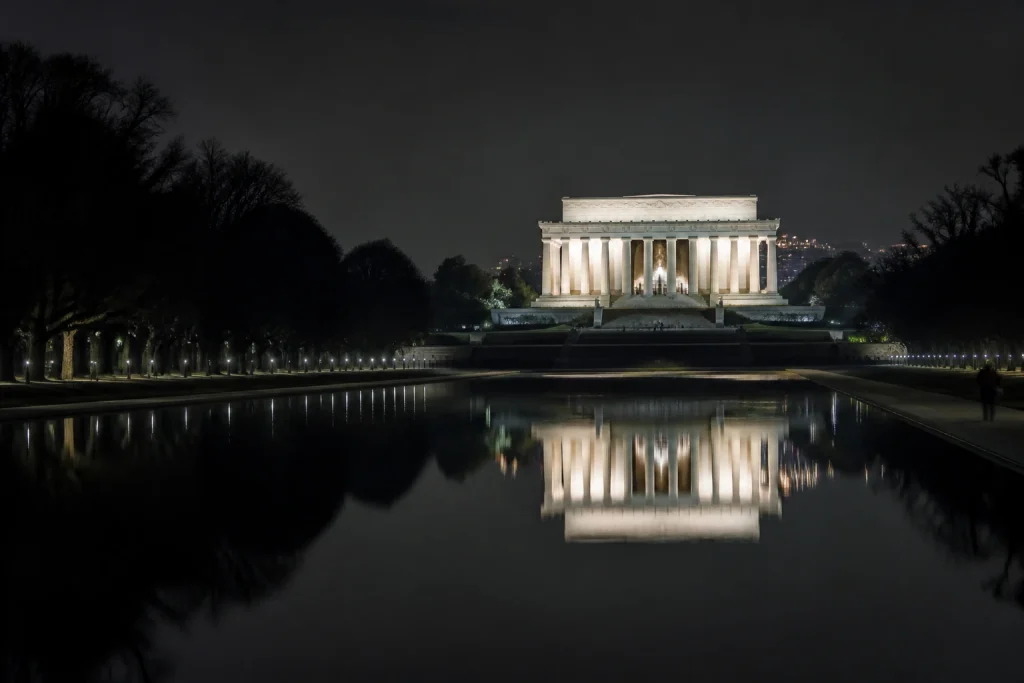
The Reflecting Pool is a popular part of the broader photo route, but access conditions can change during construction, maintenance, or special restrictions. Check current conditions before planning a composition that depends on a particular walkway. Keep bags and tripods out of the main pedestrian flow, especially near stairs and entrances.
Still comparing Lincoln Memorial At Night?
Ask for tour ideas, hotel suggestions, or a simple trip plan that combines both.
Trip Helper
Check temporary closures before choosing your approach
A temporary closure affecting the Reflecting Pool and adjacent walks was scheduled to end on August 10, 2026. That date has passed, but visitors should still check current National Park Service conditions before relying on the full poolside route. Work zones and reopening arrangements can change the approach even when the memorial itself remains accessible.
A separate partial closure around the Arts of War and Peace statues is scheduled through September 30, 2026. Sidewalks beside the closed lawn and turf, along with sidewalks leading toward Memorial Bridge, remain accessible. Even so, the west side of the memorial can look different from its usual layout during the work.
Look at current conditions on the day of your visit, then keep the plan flexible. If a preferred path is blocked, follow posted detours rather than crossing barriers or closed turf. A direct visit to the chamber and exterior can still be worthwhile without completing every planned viewpoint.
Build a simple National Mall night route
A focused visit works well when you want time for both the exterior and chamber. Start with the broad architectural view, climb to the chamber if stairs are suitable, and finish with any available Reflecting Pool viewpoint. This order avoids spending the entire visit taking photographs before you have actually studied the memorial.
For a longer evening, place the memorial within a National Mall route rather than jumping between distant neighborhoods. The National Mall Guide for First Timers can help organize the larger area, while the World War II Memorial Guide provides focused planning for another commemorative stop that can be considered for the same outing.
- Check current path, elevator, and facility conditions before departure.
- Choose Metro, bus, driving, or a drop-off based on the entire group’s mobility needs.
- Visit the exterior first if the chamber is crowded.
- Allow time for the chamber without blocking entrances or circulation routes.
- Confirm the route back to your station, stop, vehicle, or accommodation before leaving.
Avoid packing too many monuments into one evening. Outdoor distances, photo stops, parking searches, and transit connections consume more time than a map initially suggests. Two or three meaningful stops usually create a better pace than racing through a long checklist without time to look closely.
What to bring for an after-dark visit
Wear comfortable shoes and bring a layer suited to the forecast. Much of the visit is outdoors, including the approach from Metro, a bus stop, or parking. A compact umbrella can help in unsettled weather, but bulky gear becomes awkward on stairs and in active pedestrian areas.
- A charged phone with the return route saved
- Comfortable footwear for the station or parking walk
- A weather-appropriate layer
- Water, especially when combining several outdoor stops
- A compact camera setup rather than unnecessary equipment
- Any mobility supplies needed if evening facilities are unavailable
Use the restroom before beginning a late visit because on-site facilities close in the evening. Keep valuables close, remain aware of your surroundings, and choose a return plan that suits your comfort level. Travelers who prefer less navigation can consider a guided monuments-at-night outing, but should check its walking requirements and meeting point before booking.

Washington DC: Monuments at Night Bike Tour
See the famous sights of Washington by night including the Vietnam War Memorial, Jefferson, Lincoln and WWII memoria...

Private Night-Time Monuments Tour of DC for up to 10 Guests
Experience the magic of Washington DC under the stars with Perfect Private Tours on our enchanting 3-hour Night Tour...

Private Night-Time Tour of Washington DC | DC After Dark™
See all the main sights in Washington DC with your private chauffeur aboard a late model SUV( Chevy Suburban or GMC...
Is the Lincoln Memorial at night worth visiting?
Yes, a night visit is worthwhile for illuminated architecture, photography, and an outdoor Washington experience after many daytime activities have ended. It works best for visitors who are comfortable with an outdoor approach and do not need late-evening access to the museum, restrooms, or elevator.
The main limitation is reduced visitor service, not access to the chamber and exterior. Choose twilight or an earlier evening arrival when accessibility and facilities matter. Otherwise, check current paths, settle the return route, and leave enough space in the itinerary to appreciate the memorial without rushing.
Frequently asked questions
Is the Lincoln Memorial open at night?
Yes. The Lincoln Memorial is open to the public 24 hours a day, every day. Restrooms, elevators, the museum, and the undercroft close in the evening, so a late visit should focus on the chamber and exterior.
Is it free to visit the Lincoln Memorial at night?
Yes. The memorial chamber and exterior are free to visit. The lower-level undercroft and museum require timed entry, with $1 advance reservations or free same-day tickets while supplies last.
Can I visit the Lincoln Memorial undercroft at night?
Do not plan on undercroft access late at night. The lower-level experience uses timed entry, and the published information does not establish nighttime availability. Choose an earlier reservation if the undercroft is important to your visit.
What is the closest Metro station to the Lincoln Memorial?
Foggy Bottom–GWU is the closest Metro station, about 0.8 mile from the memorial. It is served by the Blue, Orange, and Silver lines. Smithsonian station is another option about 1.2 miles away.
Is parking available near the Lincoln Memorial at night?
Parking is available in the wider area, but spaces near the memorial are limited. Metered parking can be found along Ohio Drive SW, and lots are located south of the Jefferson Memorial. Most area parking has a two-hour limit, with ticketing and towing enforced.
Is the Lincoln Memorial accessible after dark?
The chamber has an elevator to the left of the main stairs, but the elevator closes in the evening. Visitors who need step-free access should arrive earlier and confirm same-day operation. Seven accessible parking spaces are located on the drive immediately south of the memorial and have a two-hour limit.
When is the best time to see the Lincoln Memorial at night?
Twilight is the most practical choice when you want changing light and a better chance of using evening facilities before they close. A later visit provides a darker setting, but it should be planned around outdoor access rather than elevators, restrooms, or the undercroft.
Washington DC Monuments and Memorials Night Tour
See Washington, DC in ways large bus tours can’t—especially after dark. This small‑group night tour (12 guests max) offers engaging stories, mor...

Monuments and Memorials Night Walking Tour
Experience the National Mall like never before on this enchanting night tour. A journey from the illuminated Washing...

Illuminated Monuments and Memorials Washington DC Night Tour
Explore the iconic monuments of Washington, DC under the enchanting night sky on this small-group tour. With a maxim...

Essential Monuments & Memorials Tour
You can see all Washington DC Monuments and Memorials, the White House and the Capitol at your own pace, with no bus...
Experiences to explore
 Explore experience ↗
Private Vacation Photography Session with Photographer in Washington DC
◷ 1 hr
Flytographer Private Vacation Photo Shoot Connect with a local hand-picked professional photographer in Washington DC and capture your
From $325.00 USD
View dates Explore experience ↗
Evening National Mall Walking Tour + Lincoln Undercroft Tickets
◷ 2 hr
Explore the National Mall in a whole new light on this small-group evening walking tour. As the monuments glow against the night sky, e
See dates for Current pricing
View dates Explore experience ↗
DC's Lincoln Memorial Undercroft Museum Direct Entry & Guidebook
◷ 45 min
This is not a guided tour but entry ticket with e-guidebook. Discover the hidden treasures beneath the iconic Lincoln Memorial with the
See dates for Current pricing
View dates
2 Comments
[…] parking and passenger loading around National Mall and Memorial Parks are limited to designated areas. A guide may adjust the stop order or use a […]
[…] at the Lincoln Memorial for the classic Reflecting Pool […]