A Washington DC memorials bike tour turns a long National Mall day into a more manageable outing. The Lincoln Memorial and the Capitol stand two miles apart, so cycling helps connect the big landmarks without treating the day like a march. Think of the bike as transportation between stops, not a vehicle for rolling through the memorials themselves. The most rewarding plan leaves time to park, walk, and absorb each place on foot.
Plan the ride around walking time, not just distance
- Arrive by Metro or another non-driving option, since National Mall parking cannot serve every visitor.
- Use the bike to connect memorial areas, then walk it through memorial spaces or lock it at a rack.
- Choose a focused set of priorities instead of trying to race through every memorial.
- Ride in early morning or early evening for a less busy outdoor experience.
- Treat Washington Monument entry as a separate ticketed visit, not an automatic tour stop.
- Carry water, sun protection, and a same-day plan for temporary route restrictions.
The National Mall’s scale is exactly what makes a bike useful, but every major stop adds a walking break. A shorter list of four to six meaningful memorial visits usually feels richer than a hurried attempt to cover the entire park. Build pauses into the day for locking up, walking paths, reading the landscape, and finding shade before moving on.

Washington DC: Monuments at Night Bike Tour
See the famous sights of Washington by night including the Vietnam War Memorial, Jefferson, Lincoln and WWII memorials. There is no better way to spen...
Choose a self-guided ride or a separately booked group outing
A self-guided memorials bike day gives you control over pace, priorities, and photo stops. It suits travelers who are comfortable navigating the city and who prefer to linger at a small number of sites. Capital Bikeshare can keep the commitment low, while visitors with their own bikes can shape the day around the memorials that matter most to them.
A separately booked guided bike outing can be a useful choice for travelers who prefer a planned group structure. Still, the core park rules remain the same: commercial and guided bicycle groups are not permitted in CFR Restricted Areas, and bicycles must be walked through memorials. A good bike itinerary therefore combines riding between sites with on-foot visits inside the memorial areas.
Before reserving any group experience, review its current meeting point, route, duration, inclusions, and cancellation terms. These details depend on the operator and booking selected. For a wider look at formats available around the city, the Washington DC bike tours guide is a useful companion when comparing a memorial-focused day with other cycling options.
Build a focused memorials itinerary
Rather than following a rigid turn-by-turn route, organize the ride by groups of stops. Start with the places you most want to experience on foot, then use the bicycle to bridge the gaps. The framework below keeps the day realistic while respecting the fact that memorial precincts are for walking, reflection, and slower looking.
| Stop group | How to handle the bike | Planning focus |
|---|---|---|
| Lincoln Memorial, Korean War Veterans Memorial, and Vietnam Veterans Memorial | Use a nearby bike rack, then continue on foot. | Give each memorial its own unhurried visit rather than treating the area as a quick pass-through. |
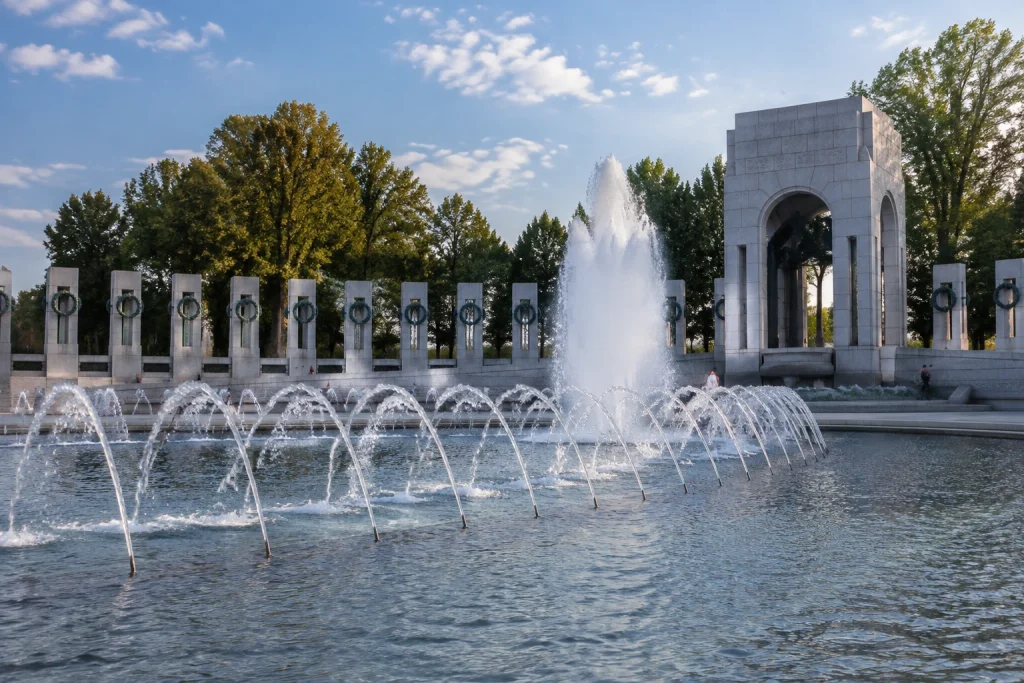
| World War II Memorial and Washington Monument | Park before entering memorial spaces; keep Washington Monument interior entry optional unless you have tickets. | Combine outdoor viewing with a flexible schedule for any timed activity. |
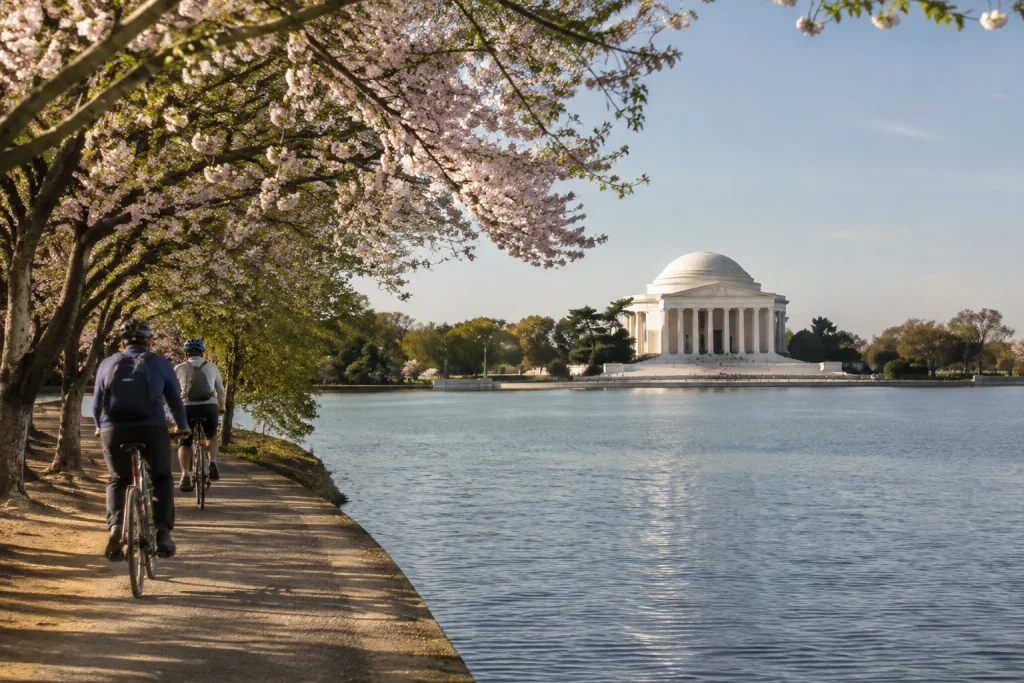
| Tidal Basin stops, including the Thomas Jefferson Memorial and Franklin Delano Roosevelt Memorial | Walk bicycles along Tidal Basin walks and use racks before exploring. | Allow extra time for a slower waterside section of the day. |
| DC War Memorial | Leave the bike outside the memorial structure. | Avoid steps, colonnades, and chambers with a bicycle. |
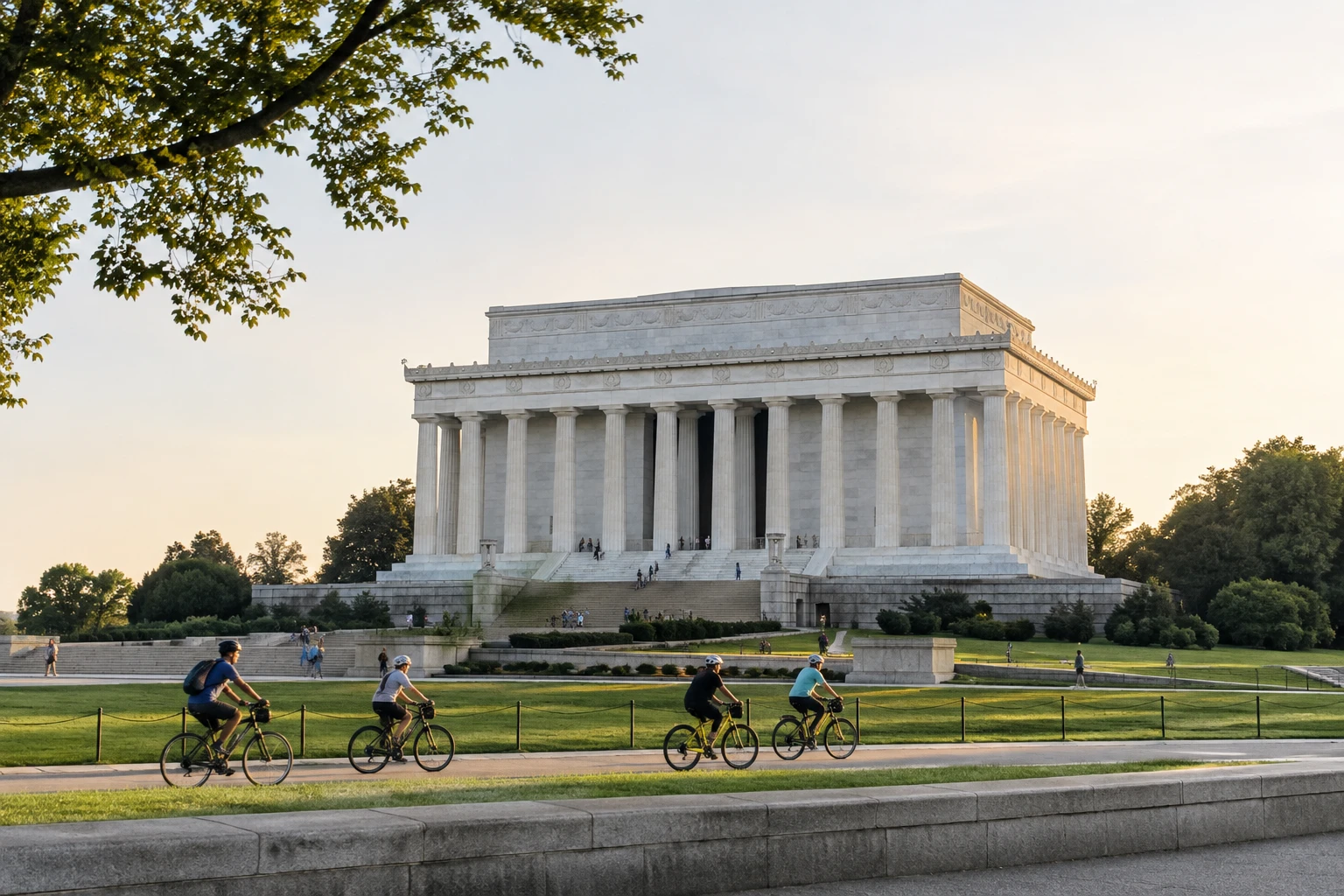
The Lincoln Memorial is a natural priority for many first-time visitors, especially when you want a substantial stop rather than a quick exterior view. A Lincoln Memorial guide for first timers can help you decide how much time to set aside there before committing to a broader ride across the park.
The Tidal Basin portion deserves a deliberate pace because bikes must be walked along its walks. It works best as a walking-centered segment of the itinerary, with the bike secured or guided beside you as required. A Tidal Basin Washington DC guide and a Jefferson Memorial guide for first timers can help shape this portion into a fuller visit instead of a rushed detour.
Follow National Mall bicycle rules at every stop
The key rule is simple: walk your bicycle through memorials and along Tidal Basin walks. Bicycles are permitted on sidewalks adjacent to roadways and on the North and South Elm Walks, but that permission does not extend to riding through memorial spaces. Plan each stop with the expectation that you will dismount.
Do not take bikes onto the steps, colonnades, or into chambers at the DC War Memorial, Lincoln Memorial, Thomas Jefferson Memorial, or Washington Monument. Use the bike racks provided at memorials, then continue on foot. This approach protects the sites and prevents an avoidable interruption to the day.
These rules are why a memorials bike tour feels different from a casual park ride. The cycling sections are connectors between landmark areas. The memorial experience happens after you slow down, step away from the handlebars, and take in each setting at walking pace.

Private DC Monuments at Night Bike Tour
Bicycling among DC illuminated marble monuments is magical against the night sky. Ride stress free on the safest r...

Private Family-Friendly Bike Tour of DC
Exploring DC by bike gives you the opportunity to experience DC’s iconic monuments and museums in a personable and...

Customized Private Bike Tour of DC
Experience the best of DC with your own private guide, but unlike other private tours, you get a fully tailored tour...
Pick the right time and protect your energy
Outdoor areas of National Mall and Memorial Parks are generally open around the clock, and early morning or early evening are sensible windows for a ride with fewer people around. Interior access is different: hours and conditions can change because of weather, staffing, security, funding, and other operational needs.
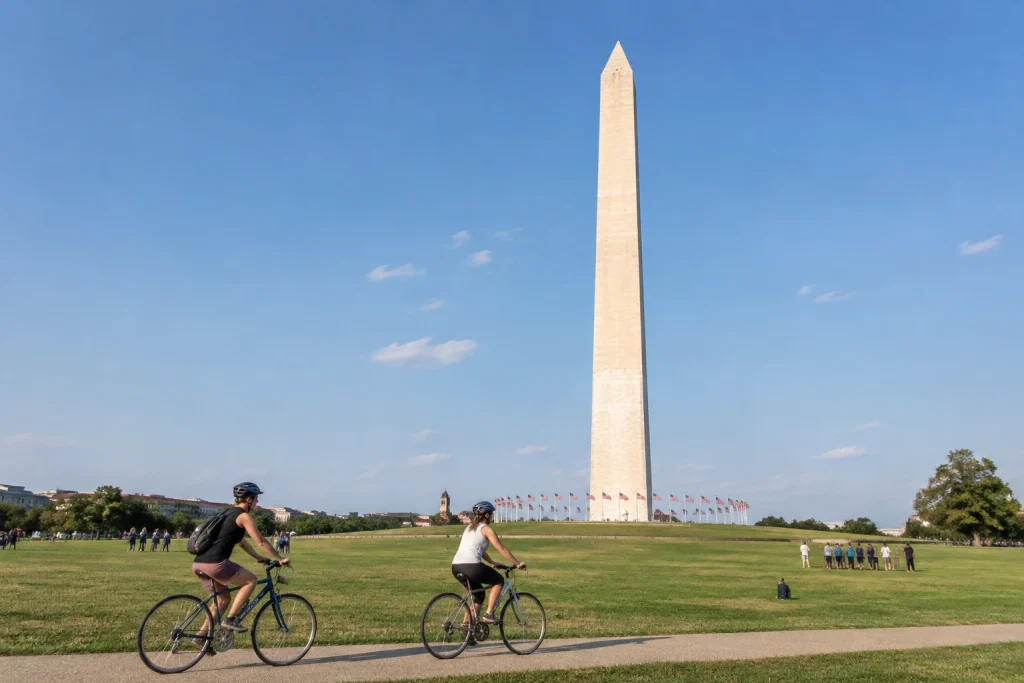
Washington Monument entry should be treated as a planned add-on. Visitor hours are currently listed as 9 a.m. to 5 p.m. daily, except July 4 and December 25; tickets are required, routine maintenance closes the monument one day each month, and security screening can apply. A Washington Monument tickets and visitor guide can help you decide if fitting an interior visit into the bike day is worthwhile.
Washington heat can turn a scenic ride into an exhausting one quickly. Bring water, use shade breaks, wear breathable clothing, and protect exposed skin. Make a point of pausing before you feel depleted, especially because each memorial stop involves more walking than a map of the ride first suggests.
Check park notices on the morning of your visit. Temporary event operations and turf-restoration work can affect access around the National Mall with little warning. A flexible sequence of stops is more useful than a tightly timed route, since you can shift to another memorial area if a path is temporarily restricted.
Budget for bike share and skip the parking gamble
For a self-guided option, Capital Bikeshare lists a $10 Day Pass that includes unlimited 45-minute rides on classic bikes. Day Pass users who park an e-bike at a public bike rack within the service area are charged $2. Review the current app and pricing details before unlocking, since availability and charges can change.
For most visitors, Metro or another non-driving arrival option is the easier way to begin. National Mall street and lot parking cannot accommodate all visitors, and public transportation is the recommended approach. A how to get around Washington DC without a car guide can help you build the bike outing into a wider car-free city itinerary.
Pack lightly but purposefully: water, sun protection, a charged phone, and a secure way to carry essentials are practical basics. Keep your schedule open enough to return a bike, rest, or spend longer at a memorial that catches your attention. The point is to make the Mall feel connected, not to turn every stop into a checkpoint.
Accessibility and comfort on a bike-centered day
All major National Mall monuments and memorials are wheelchair accessible, though accessibility at historic facilities is not always ideal. Limited loaner wheelchairs are available first-come, first-served at the Korean War Veterans Memorial, Vietnam Veterans Memorial, Franklin Delano Roosevelt Memorial, and World War II Memorial.
A bicycle is not a fully ride-through accessibility solution because riders must dismount and walk through memorial spaces. Visitors using personal mobility devices should follow current park rules, including the 8 mph maximum and the requirement to park alongside bicycle racks. Plan the experience around the on-foot portions, not just the cycling connections.
Is a Washington DC memorials bike tour worth doing?
A Washington DC memorials bike tour is a strong choice for travelers who want to cover the National Mall’s broad footprint while still making meaningful stops. Its main limitation is also part of its value: the bike gets you between the monuments, but the memorials require you to slow down and walk. Choose a handful of priorities, arrive without relying on parking, check same-day conditions, and let the ride unfold at a human pace.
Washington DC: Monuments at Night Bike Tour
See the famous sights of Washington by night including the Vietnam War Memorial, Jefferson, Lincoln and WWII memorials. There is no better way to spen...
Frequently asked questions
Are bicycles allowed at Washington DC memorials?
Yes, bicycles are allowed in designated National Mall areas, including sidewalks adjacent to roadways and the North and South Elm Walks. Riders must walk bikes through memorials and along Tidal Basin walks, then use memorial bike racks before exploring on foot.
Can I ride a bike around the Tidal Basin?
You must walk your bicycle along Tidal Basin walks. Build this section as a slower, on-foot part of the outing rather than expecting to ride continuously beside the water.
How long does a Washington DC memorials bike tour take?
Allow several hours for a satisfying self-guided outing because cycling is only one part of the experience. The Lincoln Memorial and Capitol are two miles apart, and every memorial stop requires time to park or walk the bike and explore on foot.
Do I need tickets for the Washington Monument during a bike tour?
Yes, tickets are required to enter the Washington Monument. Its visitor hours are currently listed as 9 a.m. to 5 p.m. daily except July 4 and December 25, with a routine maintenance closure one day each month.
What is the best time for a National Mall bike ride?
Early morning and early evening are good choices for a less busy outdoor ride. Outdoor park areas are generally open 24 hours, while indoor-site access can vary, so schedule timed interior visits separately.
What does Capital Bikeshare cost for a day?
Capital Bikeshare lists a $10 Day Pass with unlimited 45-minute rides on classic bikes. Day Pass users are charged $2 when parking an e-bike at a public bike rack within the service area, and current pricing should be checked before riding.
Are the National Mall memorials accessible for wheelchair users?
All major National Mall monuments and memorials are wheelchair accessible, although historic facilities can have limitations. Limited loaner wheelchairs are available first-come, first-served at four memorials, including the World War II and Franklin Delano Roosevelt memorials.
Washington DC: Monuments at Night Bike Tour
See the famous sights of Washington by night including the Vietnam War Memorial, Jefferson, Lincoln and WWII memorials. There is no better way to spen...

Monumental Electric Bike Tour
See All of The Mall! Our Monumental Electric Bike Tour route covers the whole National Mall from The Capitol Buildin...
Experiences to explore
 Explore experience ↗
Sunset Monuments and Memorials National Mall Walking Tour
◷ 2 hr
Experience Washington, DC’s most iconic monuments at sunset. Join an expert guide along the National Mall to see these historic landmar
See dates for Current pricing
View dates Explore experience ↗
National Mall and Memorials Tour with Retired Ranger
◷ 2 hr
Join me for an insider's walk through the National Mall, where history, nature, and events come alive. See the memorials, and learn hid
See dates for Current pricing
View dates Explore experience ↗
Washington DC: Monuments and Memorials Bike Tour
◷ 3 hr
See Washington DC's historical monuments and memorials up close and personal on a 3-hour bike tour with an informative guide. Cruise ar
See dates for Current pricing
View dates