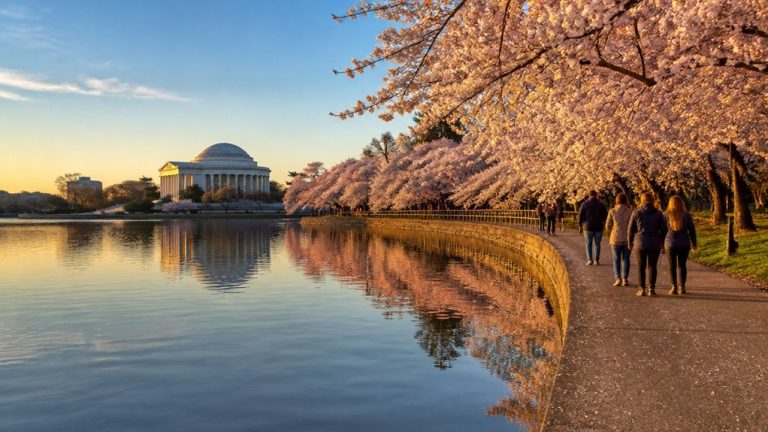
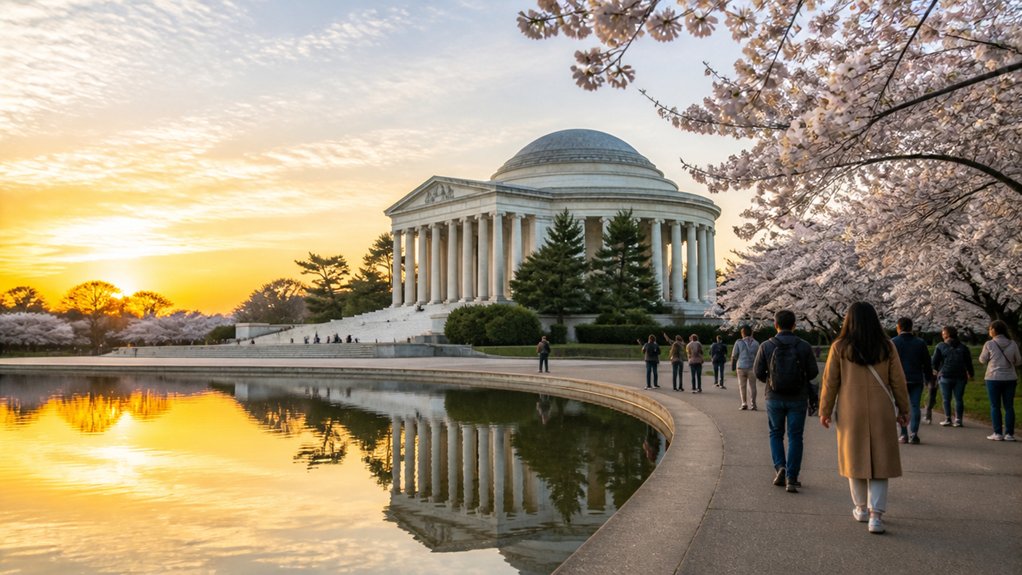
Go at sunrise, go after dark, go when the Tidal Basin feels calm, and you’ll meet the Jefferson Memorial at its best. You can walk in from the Smithsonian Metro or roll up by bike and skip the parking headache. Inside, marble glows under the dome, Jefferson’s bronze figure towers 19 feet high, and his carved words hit with surprising force. Then the path curves toward MLK and FDR, and that’s where your route gets interesting.
Key Takeaways
- Visit at sunrise or late evening for fewer crowds, soft light, glowing marble, and the most peaceful Tidal Basin views.
- Take the Smithsonian Metro and walk 15–20 minutes, since parking near West Basin Drive is limited and fills quickly.
- Inside, see the 19-foot bronze Jefferson statue, white rotunda, coffered ceiling, and inscriptions from his most influential writings.
- Walk the Tidal Basin loop for views of the White House and Washington Monument, plus easy access to nearby MLK and FDR memorials.
- Expect cherry blossom crowds in spring; fall and weekdays usually offer cooler weather, clearer views, and a calmer visit.

VIP Best of DC with US Capitol + National Archives Reserved Entry
Get the presidential treatment with the most comprehensive Washington DC day tour! The tour includes reserved access to the National Archives Building...
Washington DC Small-Group Sightseeing Experience
Visit 10-iconic Washington DC landmarks in four hours! Explore Washington DC with a professional tour guide on this...

Washington, DC: Sunset & After-Dark Monuments Tour by E-Cart
Please Note: The 6:00 PM tour may not be fully dark depending on the season. The 8:30 PM tour offers a fully after-d...

DC in a Day: 10+ Monuments, Boat Cruise, National Mall, Tickets
Explore Washington DC’s top landmarks and monuments on a 6-hour tour by deluxe touring coach with full narration f...
When to Visit the Jefferson Memorial
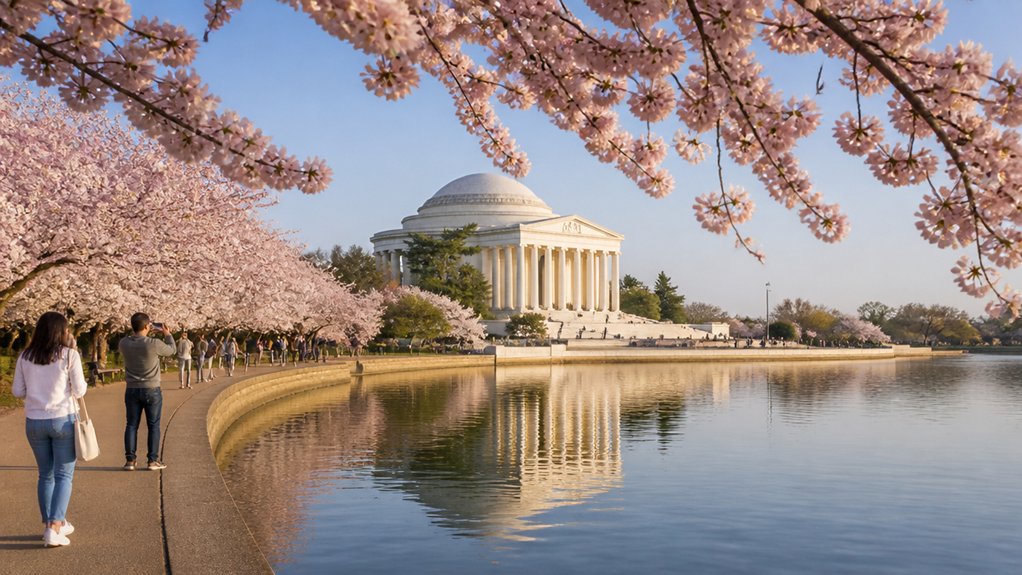
Often, the best time to visit the Jefferson Memorial depends on what kind of moment you want. Because the Jefferson Memorial is open 24 hours, you can chase sunrise in early mornings for soft light, quiet paths, and room to linger by the Tidal Basin. If you prefer drama, come at sunset, when warm color spreads across the water and the columns glow.
Spring brings the famous Cherry Blossoms, and peak bloom turns the Tidal Basin into a pink-white ring. It’s gorgeous, but you’ll share it with plenty of people. Set on the Tidal Basin among Japanese flowering cherry trees, the memorial is especially striking during peak bloom. For a calmer visit the Jefferson Memorial on weekdays outside blossom season. Fall is a smart pick too. You get cooler air, bright leaves, and clearer views, plus fewer footsteps echoing inside the rotunda. The bronze statue feels almost private then.
How to Get to the Jefferson Memorial
Getting to the Jefferson Memorial is pretty simple once you know which path fits your day. You can reach the Jefferson Memorial from Smithsonian Metro with an easy 15 to 20 minute walk toward the Tidal Basin. The route feels especially pleasant when the water comes into view.
If you’d rather skip the walk, hop on the DC Circulator or the Old Town Trolley, which stops nearby. If you’re biking, Capital Bikeshare has a dock on East Basin Drive SW behind the memorial, and the paths from the Mall are smooth and scenic. Driving works too, but metered spaces along West Basin Drive SW fill fast, especially during cherry blossom season. For a more memorable arrival, consider seasonal paddle boats or guided water tours. It’s not your usual monument commute, and that’s the charm. The National Park Service also provides Maps and Directions to help visitors plan routes by public transportation, bicycle, car, or air.
What to Expect at the Jefferson Memorial
You’ll step into a bright white rotunda where a 19-foot bronze Jefferson stands under a patterned ceiling, and the marble all around you feels cool and grand without trying too hard. As you circle the open-air space, you can read bold inscriptions from his most famous writings and catch wide views over the Tidal Basin, with the White House waiting at the top of the steps like a well-placed cameo. If you come early or after dark, you’ll get a quieter mood, glowing light on the stone, and an easy visit thanks to ramps, elevators, and level paths. The memorial is part of National Mall and Memorial Parks, a collection that includes many of the capital’s most iconic monuments and memorials.
Rotunda And Statue
Step into the rotunda and the space immediately pulls your eyes upward and inward at once. At the center stands the 19-foot bronze statue of Jefferson, created by Rudolph Evans and installed in 1947 after a wartime plaster version. Marble walls, a coffered dome, and the circular colonnade echo the Pantheon in Rome, giving the room a calm, balanced feel.
As you circle the rotunda, you’ll spot excerpts from Jeffersons writings on the walls and a frieze above the statue with his fierce quote about tyranny over the mind. The shallow dome shapes the light beautifully, and evening illumination makes the bronze glow against cool marble. It’s especially striking when the Tidal Basin outside turns quiet and reflective. You may even find yourself whispering, just because the room seems to ask for it.

Washington DC Sightseeing Tour with Vintage Model-T Classic Cars
Experience the enchanting beauty of Washington, D.C.'s monuments and landmarks on a captivating day and night tour a...

Private Night-Time Monuments Tour of DC for up to 10 Guests
Experience the magic of Washington DC under the stars with Perfect Private Tours on our enchanting 3-hour Night Tour...

Washington DC Hop-On Hop-off Trolley Tour with 15 Stops
Enjoy a 90-minute Hop-on Hop-off panoramic trolley tour of Washington, DC. The tour route will maximize your time an...
Views And Inscriptions
As you move around the rotunda, the memorial keeps opening new angles on both Jefferson and the city beyond. Inside the Jefferson Memorial, the coffered ceiling and ring of Ionic columns create a full circle of views. You can look past the bronze statue to the Tidal Basin, then catch the Washington Monument from the steps. If you pause, the marble inscriptions pull you back in.
You’ll read lines from the Declaration of Independence, Jefferson’s Statute for Religious Freedom, and his letters. The most striking quote vows eternal hostility against tyranny over the mind. It’s hard to miss, and worth a minute. At night, lights sharpen the words and make the statue glow. The reflections outside feel almost staged, in the best possible way after sunset, especially. Like other presidential memorials in Washington, it uses marble inscriptions to turn big ideas into something visitors can read, pause over, and remember.
Why the Jefferson Memorial Matters

As you step into the white marble rotunda, you can feel how Jefferson’s democratic legacy still shapes the country, from the Declaration of Independence to the fight for religious freedom. You see that message built into the memorial itself, with its Pantheon-inspired dome, ring of Ionic columns, and bronze statue standing calm over the Tidal Basin. Even the view toward the White House reminds you that these national ideals still matter, and they don’t exactly whisper. Like the Lincoln Memorial, it gives first-time visitors a powerful sense of how American ideals are expressed through monumental architecture.
Jefferson’s Democratic Legacy
Monuments can feel distant, but the Jefferson Memorial pulls big ideas into view. As you step inside the rotunda, you meet Jefferson not just as a statue, but as the author of the Declaration. The Jefferson Memorial uses inscriptions from the Declaration of Independence to show how his words still shape democratic ideals.
You also see lines from the Virginia Statute for Religious Freedom, which helped define the separation of church and state. One frieze quote vows eternal hostility against tyranny over the mind, and it still lands with force. From the top step, you can spot the White House and sense a direct line between Jefferson’s vision and today’s government. It’s a place that nudges you to think about liberty, power, and your own civic role too. If you’re planning to explore more of the National Mall, checking ticket info for nearby landmarks like the Washington Monument can help you make the most of your visit.
Architecture And Symbolism
Even before you read a single quote, the Jefferson Memorial tells you what it values through shape, scale, and setting. You see it in the architecture right away. John Russell Pope gave the Jefferson Memorial a white domed rotunda inspired by the Pantheon and Jefferson’s own Rotunda at UVA. As part of a first-timer’s guide to the National Mall, it also stands out as one of the area’s most recognizable classical landmarks. Marble columns ring the space, and the north portico frames the stairs like a stage.
Inside, a 19-foot bronze statue by Rudulph Evans rises from the cool marble floor. It’s hard not to look up. Around you, inscriptions curve along the walls and guide your eye. Step outside and the Tidal Basin glints nearby. From the top, the alignment with the White House feels deliberate, almost like the memorial is keeping a respectful, watchful conversation with power across the water.
Still comparing Jefferson Memorial?
Ask for tour ideas, hotel suggestions, or a simple trip plan that combines both.
Trip Helper
Enduring National Ideals
Legacy gives this memorial its real weight. At the Jefferson Memorial, you meet Thomas Jefferson not as a distant marble name, but as a voice still arguing for liberty. Inscriptions from the Declaration of Independence and other writings surround you. The frieze drives it home with his fierce pledge against tyranny of the mind.
You feel those ideals in the setting too. The neoclassical dome, bronze statue, and Tidal Basin light make reason and civic virtue feel almost touchable. Like the Washington Monument, it anchors national memory by honoring a founder at the symbolic heart of the capital. The White House sightline quietly ties Jefferson’s words to power today. Even the dedication 1943 matters. In wartime, this place declared that democracy still had a future and a conscience. Stand there a minute. You’ll hear school groups, water lapping, and maybe your own questions, too.
What to Do Near the Jefferson Memorial
Around the Jefferson Memorial, you can turn one stop into an easy half-day on foot. Walk the 2-mile Tidal Basin loop for postcard views of the white dome, soft reflections, and spring cherry blossoms. Step inside the rotunda to see Jefferson’s 19-foot bronze statue and marble inscriptions that feel surprisingly personal.
Then keep moving. The Martin Luther King Jr Memorial sits just across the water, and the Franklin Delano Roosevelt Memorial unfolds along the same path with waterfalls, stone rooms, and shady spots to pause. At the King memorial, engraved quotes and the “Stone of Hope” design deepen the stop with themes of freedom, equality, and justice. Sunrise/evening visits add extra mood. Morning brings golden water and quiet paths, while night lighting sharpens every column. Getting there is simple too. Ride the Smithsonian Metro or hop off the Old Town Trolley nearby, then start wandering without fuss, parking drama, or sore patience later.
Tips for Visiting the Jefferson Memorial

Often, the smartest move is to visit the Jefferson Memorial at sunrise or late in the evening, when the crowds thin out and the white marble picks up that dramatic glow photographers love. Since it’s open 24 hours, you can time your visit for quiet views over the Tidal Basin and better photography tips. If you’re also exploring nearby landmarks, the White House Visitor Center is a helpful place to learn more and connect with ranger staff.
Visit at sunrise or late evening for fewer crowds, glowing marble, and serene Tidal Basin views perfect for photos.
- Use public transit. Smithsonian Metro is a manageable walk from the National Mall, and trolley Stop 8 drops you close.
- Go inside the rotunda. You’ll stand beneath the 19-foot statue of Jefferson and spot powerful inscriptions.
- Plan for cherry blossom season. Arrive early, expect crowds, and use accessible routes around the Tidal Basin. Ramps help, and lower-level restrooms are reachable by elevator. Parking can test your patience, so let trains and trolleys save the day instead.
Frequently Asked Questions
Is There an Admission Fee for the Jefferson Memorial?
No, you don’t pay an admission fee; you get free entry. Check the ticket policy for special events, guided tours, entry exceptions, seasonal hours, donation suggestions, and whether group discounts apply for nearby services.
How Long Does a Typical Jefferson Memorial Visit Take?
You’ll typically spend 20–60 minutes; coincidentally, your average duration often shifts with peak hours, seasonal variance, guided tours, or self guided pacing. For family visits, photography time, time management, and nearby attractions, plan 90+ minutes.
Is the Jefferson Memorial Wheelchair Accessible?
Yes, you can access the Jefferson Memorial via wheelchair ramps, accessible routes, and elevator access. You’ll find ADA signage, accessible seating, service animals allowed, limited parking accessibility, but no tactile exhibits or transfer aids.
Are Restrooms Available at the Jefferson Memorial?
Yes—you won’t need to search elsewhere; you’ll find restroom locations downstairs. Check facility hours, accessibility features, cleaning schedule, changing stations, gender neutrality, emergency services, water fountains, and family facilities; expect lines during peak crowds.
Can You Take Photos Inside the Jefferson Memorial?
Yes, you can take photos inside the Jefferson Memorial. Follow photography rules, flash restrictions, and tripod policies; note commercial permits, privacy concerns, lighting conditions, night photography, drone regulations, and interior reflections for best results.
Conclusion
At the Jefferson Memorial, you don’t just check off a landmark. You step into white marble light, hear water lap at the Tidal Basin, and watch the city soften around you. Come early or stay late for the best glow. Arrive by Metro or bike and skip the parking headache. Then follow the basin path to MLK and FDR. It’s a simple route with big rewards, like turning one page and finding a whole chapter.
VIP Best of DC with US Capitol + National Archives Reserved Entry
Get the presidential treatment with the most comprehensive Washington DC day tour! The tour includes reserved access to the National Archives Building...

Small Group National Mall Night Tour with 10 Top Attractions
Visit 10-iconic Washington DC landmarks in three hours! Explore Washington DC with a professional tour guide on this...
Washington DC Small-Group Sightseeing Experience
Visit 10-iconic Washington DC landmarks in four hours! Explore Washington DC with a professional tour guide on this...

Moonlight Tour of Washington DC
* Fully climate controlled brand new 2017 Sprinter/Van used in this tour. * Comprehensive Three Hours Moonlight Tou...
DC Monuments Night Tour with 10+ Stops, National Mall, Tickets
Experience Washington DC lit up at night during this 3-Hour Guided Night Tour of the National Mall and Monuments. Make your way through the city at ni...

DC Monuments by Night: 10+ Landmarks | Open-Top Upgrade Available
See a different side of Washington DC after dark on a guided night tour of the city's floodlit monuments. This tour...

Washington DC Night Tour: ICONIC Landmarks, Monuments SMALL GROUP
Experience Washington DC at its most striking; after dark! This guided night tour showcases the city’s most iconic...
Small Group National Mall Night Tour with 10 Top Attractions
Visit 10-iconic Washington DC landmarks in three hours! Explore Washington DC with a professional tour guide on this...