
Downtown and Penn Quarter are the easiest all-purpose bases
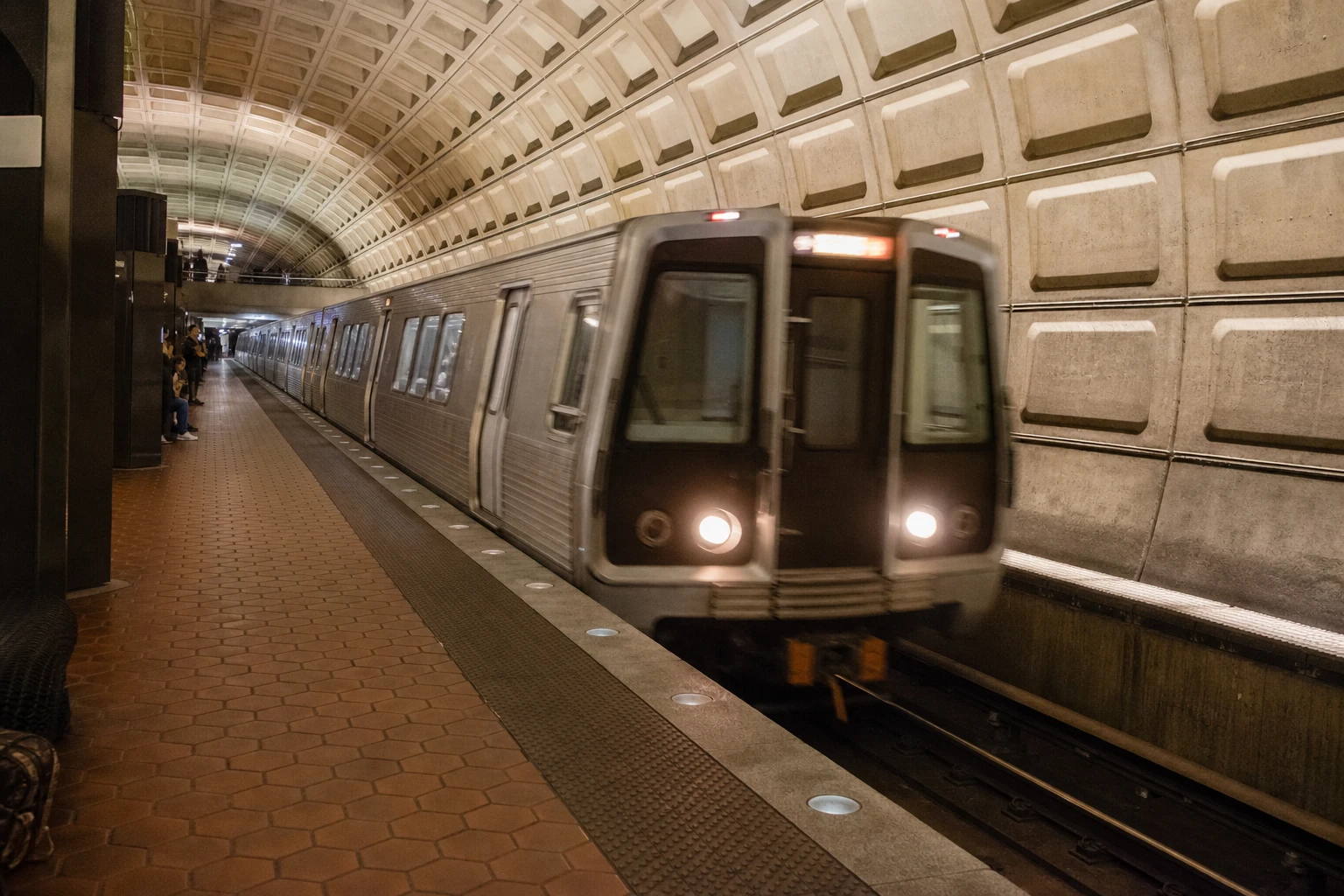
For most visitors, Downtown and nearby Penn Quarter are the best places to stay in Washington DC without a car. Downtown is walkable, close to major attractions and beside Penn Quarter, while Gallery Place-Chinatown serves the area on the Red, Green and Yellow lines. That combination makes it easy to pair Metro rides with time on foot, especially on a first visit.
- Choose a hotel by its real walking route to a named Metro station, not by a broad neighborhood label.
- Book Downtown or Penn Quarter for the strongest all-purpose mix of major sights, dining and multi-line Metro access.
- Choose Capitol Hill for the U.S. Capitol, Library of Congress, Eastern Market and historic streets.
- Pick Dupont Circle for restaurants, boutiques, museums and a more neighborhood-oriented feel.
- Treat The Wharf as a waterfront choice, but factor in the walk to L'Enfant Plaza when carrying luggage or traveling in difficult weather.
A successful car-free stay is built around two layers: a practical Metro connection for longer hops and an area you will enjoy walking around between rides. The National Mall and individual neighborhoods reward walking, while Metrorail, Metrobus, bikes, scooters and rideshare help bridge the longer gaps.

Washington DC in One Day: Guided Sightseeing Tour + Boat Cruise
Board your glamourous, climate-controlled panoramic bus at the U.S. Navy Memorial for one of the best bus tours in Washington DC!Expanding on our p...
Compare Washington DC's best no-car neighborhoods
| Area | Best for | Metro anchor | Main tradeoff |
|---|---|---|---|
| Downtown and Penn Quarter | First visits, major sights, dining and flexible transit | Gallery Place-Chinatown: Red, Green and Yellow lines | A busy central setting |
| Capitol Hill | The U.S. Capitol, Library of Congress, Eastern Market and historic streets | Capitol South: Blue, Orange and Silver lines | More government-and-history focused than downtown |
| Dupont Circle | Restaurants, boutiques, museums and neighborhood atmosphere | Dupont Circle: Red Line | A one-line base |
| Foggy Bottom | Kennedy Center evenings, George Washington University and Mall-focused plans | Foggy Bottom-GWU: Blue, Orange and Silver lines | More specialized than Downtown or Penn Quarter |
| The Wharf | Waterfront dining, concerts and the International Spy Museum area | L'Enfant Plaza, about a 10-minute walk away | The station walk can be inconvenient with luggage, rain, heat or reduced mobility |
| U Street | Black history, jazz heritage, bars and live music | U Street/African-American Civil War Memorial/Cardozo: Green Line | Better for atmosphere-led trips than a default first-sightseeing base |
These areas are all useful starting points, but they do different jobs. Start with the sights and evenings that matter most to you, then compare the exact hotel entrance-to-station walk. Straight-line distance can conceal awkward crossings, long blocks or a route that feels far less convenient after a full day of museums.

Choose a car-free base that matches your trip
Downtown and Penn Quarter for a first visit
Downtown and Penn Quarter work well when you want one hotel base for a packed first trip. The area combines walkability, proximity to major attractions and access to Gallery Place-Chinatown's three Metro lines. It is a practical choice for visitors who prefer to keep decisions simple and return to a central area between daytime sightseeing and dinner. Expect a lively, busy setting rather than a residential retreat.
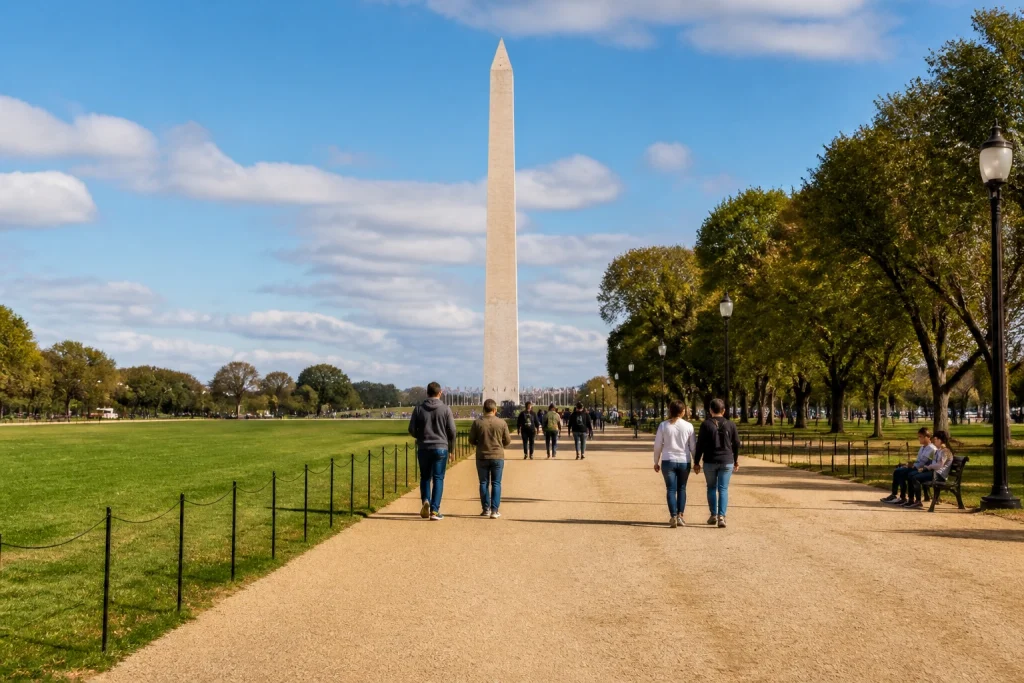
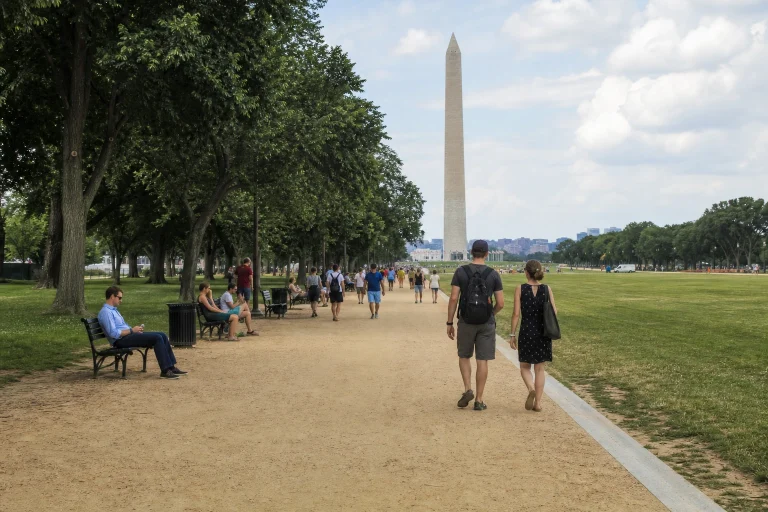
Use this base to group major sightseeing days on foot instead of trying to ride between every stop. A National Mall guide for first timers can help shape a walk-focused day, with Metro used mainly to begin or end the route. That approach makes the most of the city's compact central core.
Capitol Hill for Capitol landmarks and historic streets
Capitol Hill is the strongest fit for travelers who want their stay to revolve around the U.S. Capitol, the Library of Congress, Eastern Market and the neighborhood's historic streets. Capitol South connects the area to the Blue, Orange and Silver lines. It is a rewarding base for a history-centered visit, although it offers a more focused experience than Downtown or Penn Quarter.
A United States Capitol tour guide is especially useful when you are building a Capitol Hill morning. Choose a hotel with a direct, manageable walk to Capitol South if you also plan to spend several days exploring other parts of the city by Metro.
Dupont Circle for dining and a neighborhood feel
Dupont Circle suits travelers who want restaurants, boutiques, museums and an everyday neighborhood rhythm outside the busiest downtown blocks. Its Red Line station gives it a clear transit anchor, while the streets around the circle offer a natural place to spend an unstructured afternoon or evening. The tradeoff is simple: it is a one-line base, not a major multi-line transfer point.
A Dupont Circle Washington DC guide can help you decide if this is the right fit for your trip. It is particularly appealing when meals, browsing and a more local-feeling base are as important as reaching the biggest attractions as quickly as possible.

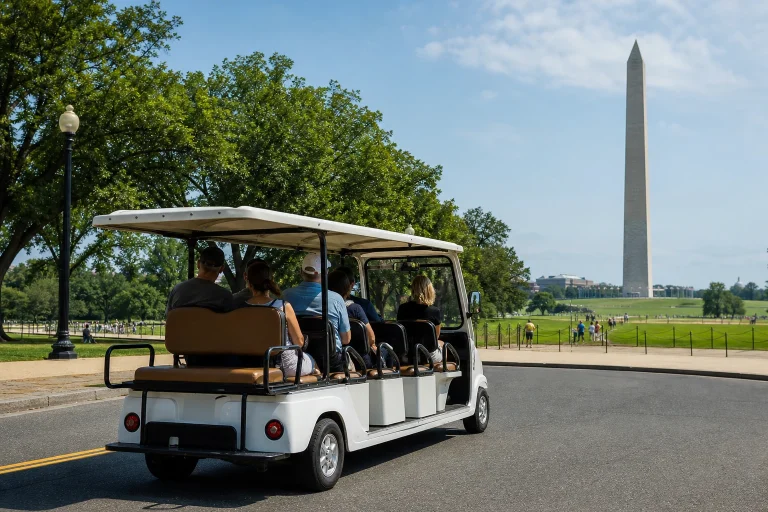
Washington, DC: Sunset & After-Dark Monuments Tour by E-Cart
Please Note: The 6:00 PM tour may not be fully dark depending on the season. The 8:30 PM tour offers a fully after-d...

Washington DC Monuments Open-Air Sightseeing Guided Tour
Experience D.C. as day turns to night on this intimate sunset, day and moonlight tour, limited to just 12 guests max...

Washington DC's Monuments & US History Guided E-Cart Tour
This tour offers a detailed introduction to U.S. history and Washington D.C.’s famous monuments, guided by expert...
Foggy Bottom for Kennedy Center evenings and west-side access
Foggy Bottom is a smart specialist choice for Kennedy Center performances, George Washington University events and a Mall-oriented itinerary. Foggy Bottom-GWU is served by the Blue, Orange and Silver lines, giving the area useful cross-city reach. It makes most sense when these west-side priorities shape your schedule, rather than as the broadest all-purpose base for every first-time visitor.
If a performance is a centerpiece of your visit, a Kennedy Center visitor guide can help you organize the evening around your hotel location. Check the walking route between the property, station and venue before booking, especially if you expect to return late.
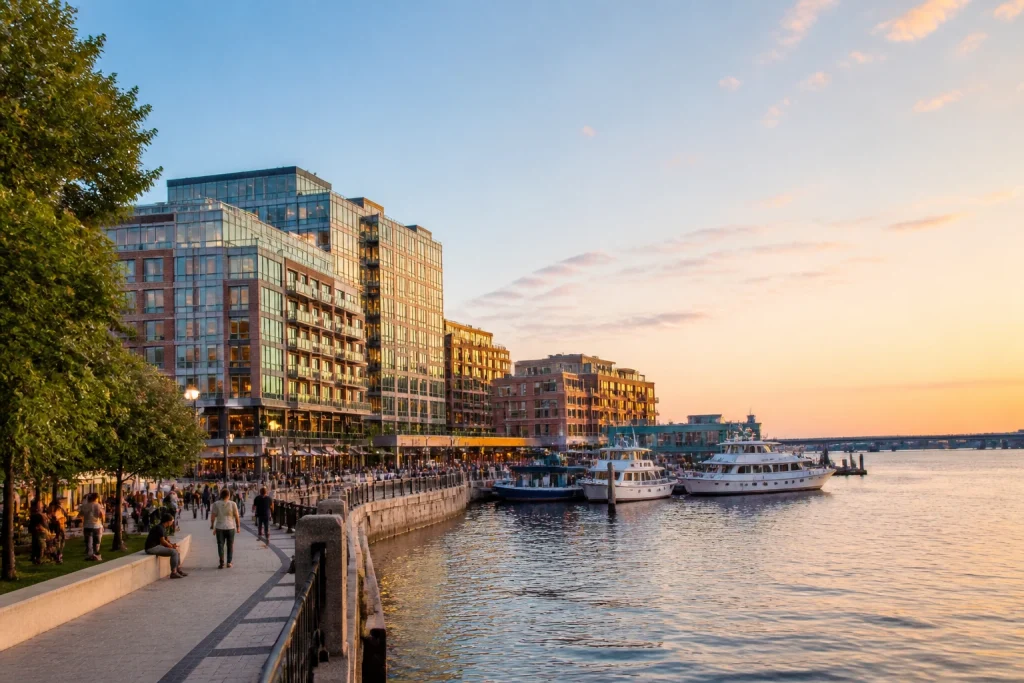
The Wharf for waterfront energy, with one important walk
The Wharf is best for travelers drawn to waterfront dining, concerts and the International Spy Museum area. It can be a pleasant place to end the day, but it is not the most effortless Metro hotel base: L'Enfant Plaza is described as roughly a 10-minute walk away. That last stretch matters when you have rolling luggage, heavy rain, summer heat or mobility needs.
An International Spy Museum Washington DC guide can help anchor a Wharf stay around one of the neighborhood's key attractions. Select a specific hotel only after tracing the walk from its entrance to L'Enfant Plaza, rather than assuming all waterfront addresses have the same transit convenience.
U Street for music, nightlife and cultural character
U Street is an atmosphere-first option for visitors interested in Black history and jazz heritage, along with bars and live music. The Green Line serves the area at U Street/African-American Civil War Memorial/Cardozo. It is an excellent match when evenings and neighborhood character lead the plan, but it is not automatically the most efficient choice for a first trip centered on major sightseeing.
How to get around after you check in
Metrorail is the simplest way to cover many longer in-city trips, while walking is particularly useful on the National Mall and inside individual neighborhoods. Metrobus, shared bikes, scooters and rideshare are useful gap-fillers when a station is not near the exact place you want to go. Plan for a mix of these options rather than expecting every attraction to sit beside a station.
Use the payment option that fits your stay
Metrorail riders can tap a credit card, debit card or mobile wallet at faregates. Unlimited one-, three- and seven-day passes require a SmarTrip card. Check the current fare and pass rules shortly before travel instead of building a fixed transit price into your budget far in advance.
Build days around walkable clusters
A car-free itinerary feels smoother when each day has a geographic center. Reserve a Mall day for walking, then use Metro to reach a different neighborhood for dinner or an evening event. This avoids spending your trip repeatedly backtracking through stations. For fuller route-planning help, How to Get Around Washington DC Without a Car is a useful companion before you set out.
Check live conditions on the day
Traffic, rush hour, special events and road closures can alter a route that looked straightforward when you booked. Use live routing on each travel day, particularly before a timed tour, dinner reservation or show. This matters most when you are choosing between walking, Metro, a bus or a rideshare for the final stretch.
Still comparing Washington DC Car Free Hotel Neighborhoods And Sightseeing Planning?
Ask for tour ideas, hotel suggestions, or a simple trip plan that combines both.
Trip Helper
Use this hotel booking checklist before reserving
Do not stop at a search filter for “near Metro.” The useful question is how the hotel works with your own itinerary, luggage and walking comfort. A few minutes of route-checking before you reserve can make a much bigger difference than moving one neighborhood over on a map.
- Identify the nearest named Metro station and the lines it serves.
- Trace the actual walk from the hotel's front entrance to the station, not just the straight-line distance.
- Test routes to the two or three places you expect to visit most often.
- Look at the return journey after dinner, a performance or an evening tour, when the last walk matters more.
- Check live transit conditions, current fare rules and any event-related disruption shortly before you travel.
For an accessible stay, verify the hotel entrance, the station's current elevator availability and the step-free route between them before booking. A hotel described as Metro-adjacent is not automatically step-free. For an in-city itinerary, most visitors do not need a rental car, and avoiding one also sidesteps the city's heavy traffic and potentially limited or expensive parking in popular areas.
Turn your neighborhood choice into a better itinerary
Once your hotel is booked, give each day a neighborhood focus. Downtown and Penn Quarter make the simplest first base for broad sightseeing. Capitol Hill fits landmark-heavy mornings, Dupont Circle suits food and neighborhood time, and The Wharf works best when waterfront evenings are a priority. A 4 Days in Washington DC Itinerary can help turn that base into a sequence of walkable days rather than a string of cross-city detours.
The best choice for most visitors
Choose Downtown or Penn Quarter if you want the most flexible car-free Washington DC stay. Gallery Place-Chinatown's multi-line access and the area's central walkability create the easiest foundation for first-time sightseeing. Pick another neighborhood when its specific strengths match your plans: Capitol Hill for landmark history, Dupont Circle for dining, Foggy Bottom for the Kennedy Center, The Wharf for waterfront energy or U Street for music and nightlife.
Frequently asked questions
What is the best area to stay in Washington DC without a car?
Downtown and Penn Quarter are the best all-purpose choice for most visitors because they are walkable, close to major attractions and served by Gallery Place-Chinatown on the Red, Green and Yellow lines. Choose another area when a specific priority, such as Capitol Hill landmarks or Kennedy Center events, shapes your trip.
Can I visit Washington DC without renting a car?
Yes. Most visitors do not need a rental car for an in-city itinerary. Metrorail, walking, Metrobus, bikes, scooters and rideshare cover different parts of a car-free trip, while driving can mean heavy traffic and limited or expensive parking in popular areas.
Is The Wharf a good place to stay without a car?
The Wharf is a good choice for waterfront dining, concerts and the International Spy Museum area. Its main limitation is that L'Enfant Plaza is about a 10-minute walk away, which can be inconvenient with luggage, difficult weather or reduced mobility.
Do I need a SmarTrip card to ride the Washington Metro?
No. Metrorail riders can tap a credit card, debit card or mobile wallet at faregates. You do need a SmarTrip card for unlimited one-, three- and seven-day passes.
Which Washington DC neighborhood is best for the U.S. Capitol and Library of Congress?
Capitol Hill is the best fit for the U.S. Capitol, Library of Congress, Eastern Market and historic streets. Capitol South provides Blue, Orange and Silver Line access for trips beyond the neighborhood.
How should I plan airport-to-hotel travel without a car?
Use a live routing tool shortly before departure to plan from your specific arrival terminal to the hotel. Current routing is important because travel times can change with traffic, special events, road closures and rush hour.
What should accessible travelers check before booking a Metro-adjacent hotel?
Verify the hotel's entrance, the station's current elevator availability and the step-free route between them. A hotel near a Metro station does not automatically provide a step-free journey from station to room.
Experiences to explore
 Explore experience ↗
Echoes of Early Washington DC, Penn Quarter and Chinatown Tour
◷ 2 hr
Step into the past and see Washington, D.C. in a whole new way. Meet your guide near the iconic Friendship Arch and begin a journey thr
See dates for Current pricing
View dates Explore experience ↗
The Escape Game DC: Epic 60-Minute Adventures in Penn Quarter
◷ 1 hr 15 min
Our Downtown DC location is in Penn Quarter, just a few blocks from The White House and National Mall — perfect if you want to plan a d
See dates for Current pricing
View dates Explore experience ↗
Washington DC Neighborhoods Personalized Self-Guided App Tour
◷ 2 hr–4 hr
World class app-led tour, completely controlled by you! See the best sights in Capitol Hill, at your leisure! Narrated by Certified Mas
See dates for Current pricing
View dates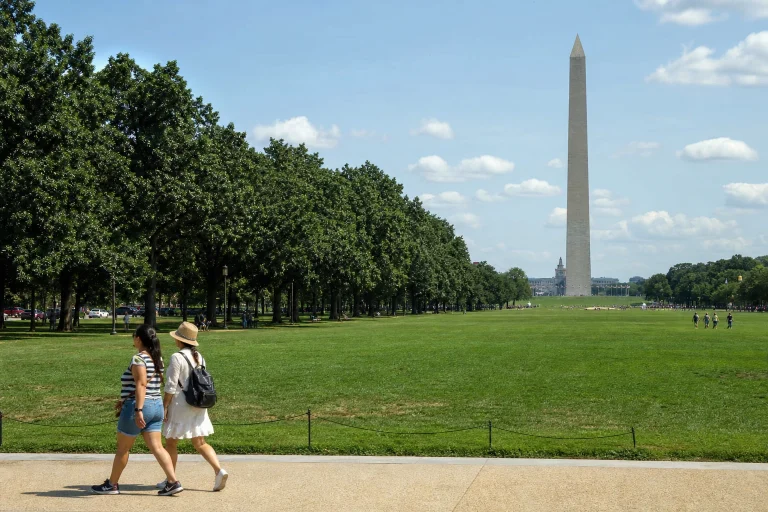
One Comment
[…] InterContinental combines historic grandeur with a location near the National Mall. It is an appealing match for couples who want ceremonial Washington close at hand and prefer a […]