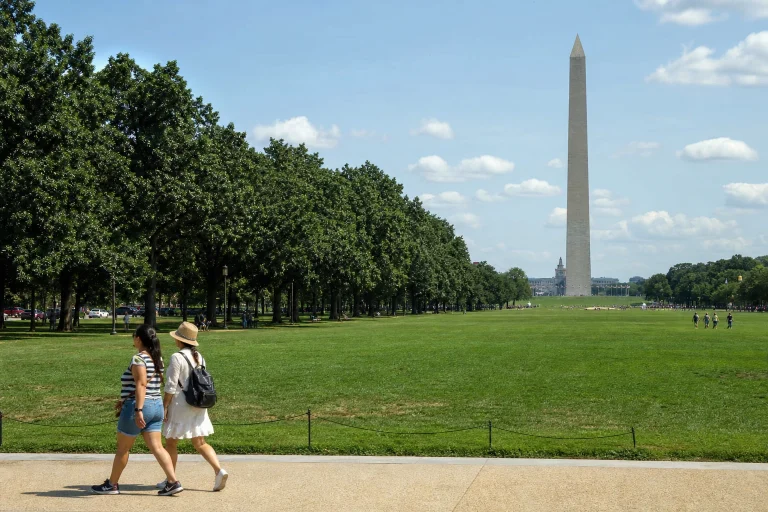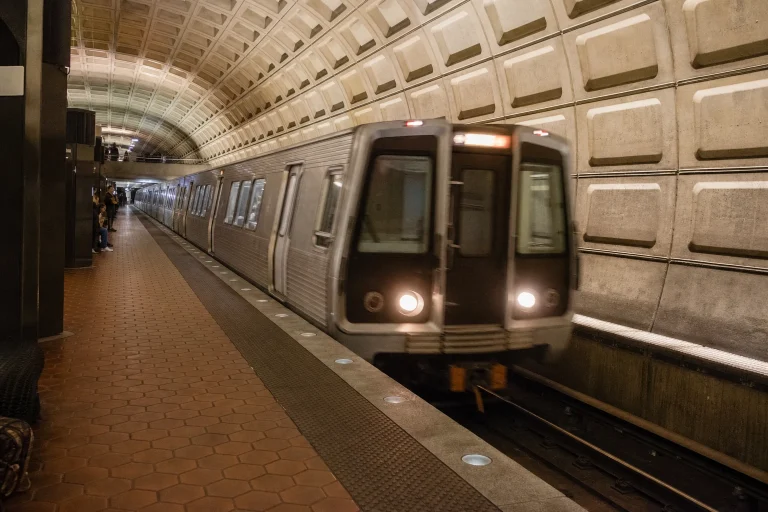
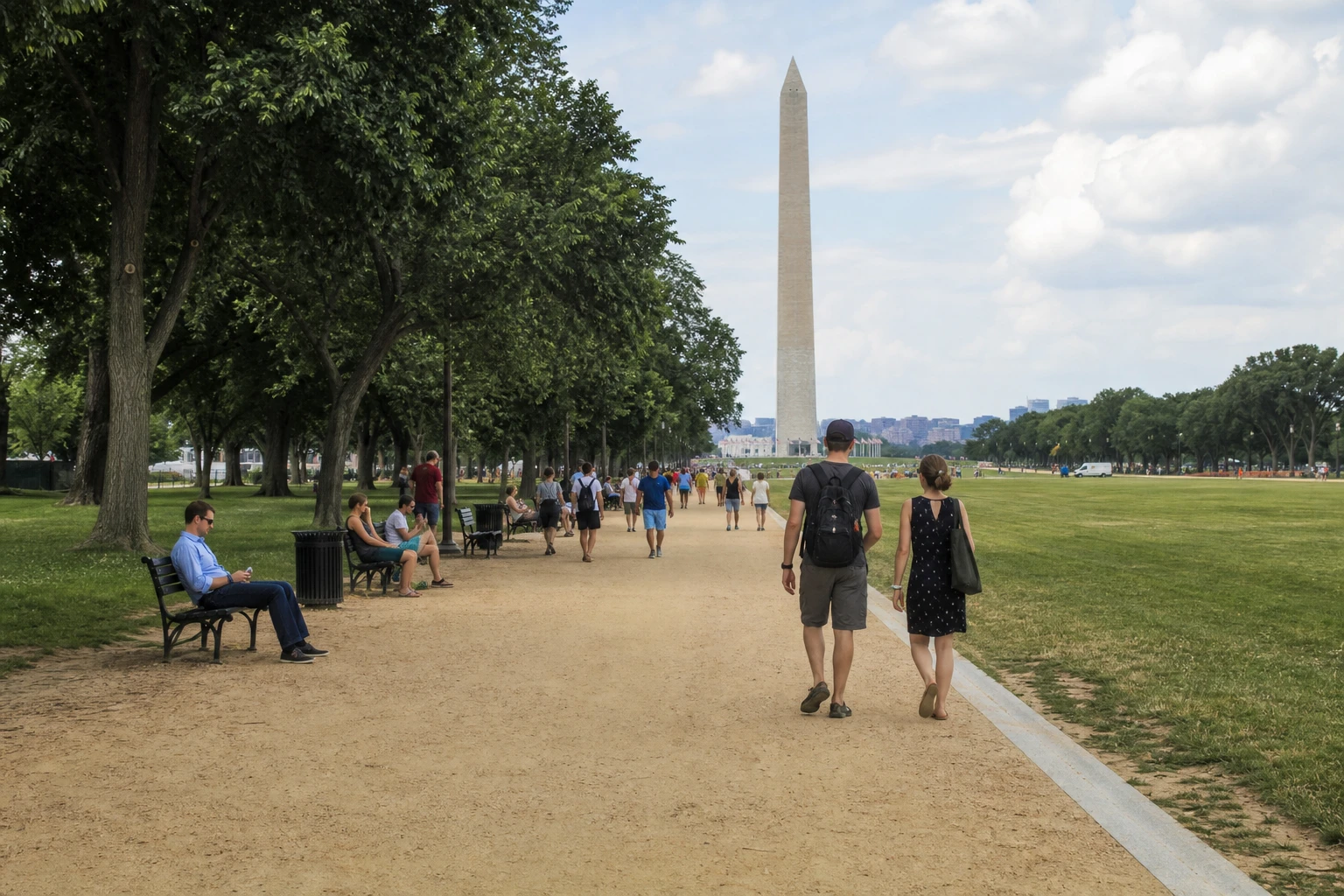
Yes, Washington, DC is highly walkable for a visitor focused on the National Mall and central neighborhoods. Downtown, Capitol Hill, Dupont Circle, Georgetown, Shaw and The Wharf all work well as walking destinations. The important qualifier is distance: DC is walkable by district, not as one small, continuous sightseeing zone. Pair long walks with Metro, bus or rideshare, and the city becomes much easier to explore without a car.
- Washington, DC is easiest on foot when you focus on one central area at a time.
- The National Mall is a major walking experience, not a quick stroll between monuments.
- Most in-city visitors can skip a rental car, especially when staying near a Metro station.
- Metro and Metrobus are useful for bridging long gaps before or after a walk.
- Long crossings, heat, rain, crowds and changing service conditions all affect a walking day.
Walkable by area, not from one end of the city to the other
DC rewards a walking-first approach in its visitor core. Wide sidewalks around major monuments, museums and central neighborhoods make it easy to slow down and take in the city at street level. A stroll works particularly well when your day has a clear geographic center rather than a long list of scattered stops.

Washington DC Monuments Extended Guided Open-Air Cruiser Tour
Explore Washington, D.C. on an extended Washington DC Guided Tour by Open-Air Cruiser, designed for travelers who want to see more of the nation’s c...
Still, a walking route can look shorter on a map than it feels on the pavement. Washington's grand avenues also function as busy arterial roads, and some crossings take time. A route that crosses several districts can become tiring before the sightseeing is finished. Treat transit as part of the walking plan, not as a fallback for a failed one.
The National Mall is walkable, but it demands a full day’s energy
The National Mall and its surrounding memorial parks cover a substantial area. It is one of the best places in the city to walk, with major sights and broad open spaces encouraging an unhurried pace, but it should be planned as a long walk. Build in time for pauses, crossings, museum entry and the simple fact that the Mall stretches farther than its postcard views suggest.
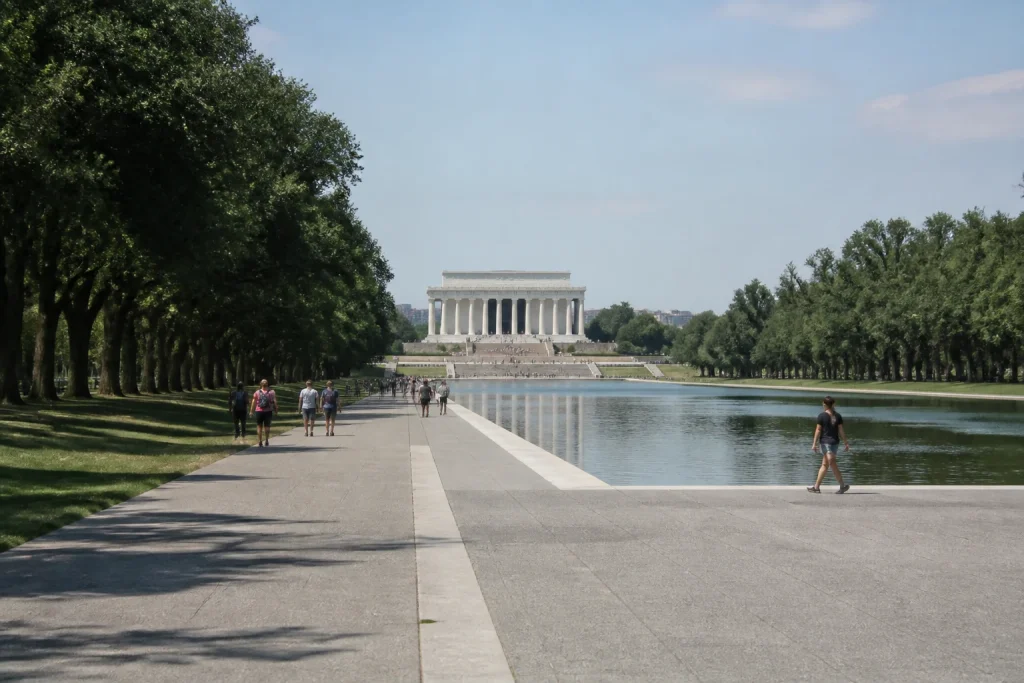
Several Metro stations serve the Mall area, yet transit does not deliver visitors directly to every memorial. The stations that serve the west end are at least a mile from the Lincoln Memorial. That makes a transit ride to the general area useful, but it does not erase the walking required once you arrive.
A better strategy is to choose a Mall segment and let that be the day’s main route. Use a National Mall Guide for First Timers to define a focused visit, then avoid piling every landmark into the same itinerary. Save time around the Tidal Basin Washington DC Guide and the Jefferson Memorial Guide for First Timers for another portion of your schedule instead of turning the day into one continuous march.
Central neighborhoods are best enjoyed one at a time
Beyond the Mall, several central districts support rewarding walks: Downtown, Capitol Hill, Dupont Circle, Georgetown, Shaw and The Wharf. Pick one as the center of an afternoon or evening, then let the nearby streets set the pace. This approach leaves room to stop without worrying that a distant attraction will turn a pleasant walk into a logistical push.
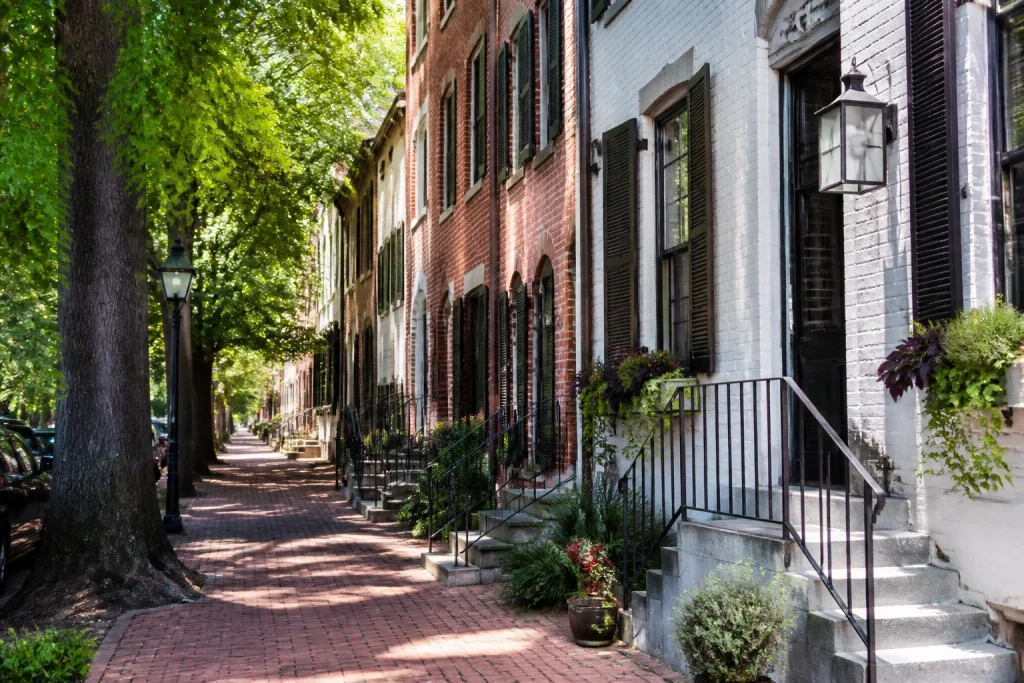
Georgetown belongs on the list of walkable central neighborhoods, but it works best as its own destination rather than an extra stop added to an already ambitious Mall route. A Georgetown Washington DC Travel Guide is useful when Georgetown is your chosen district. The same principle applies across the city: give one neighborhood a proper time window, then use transit to change districts.
Use Metro, bus and rideshare to extend your walking range
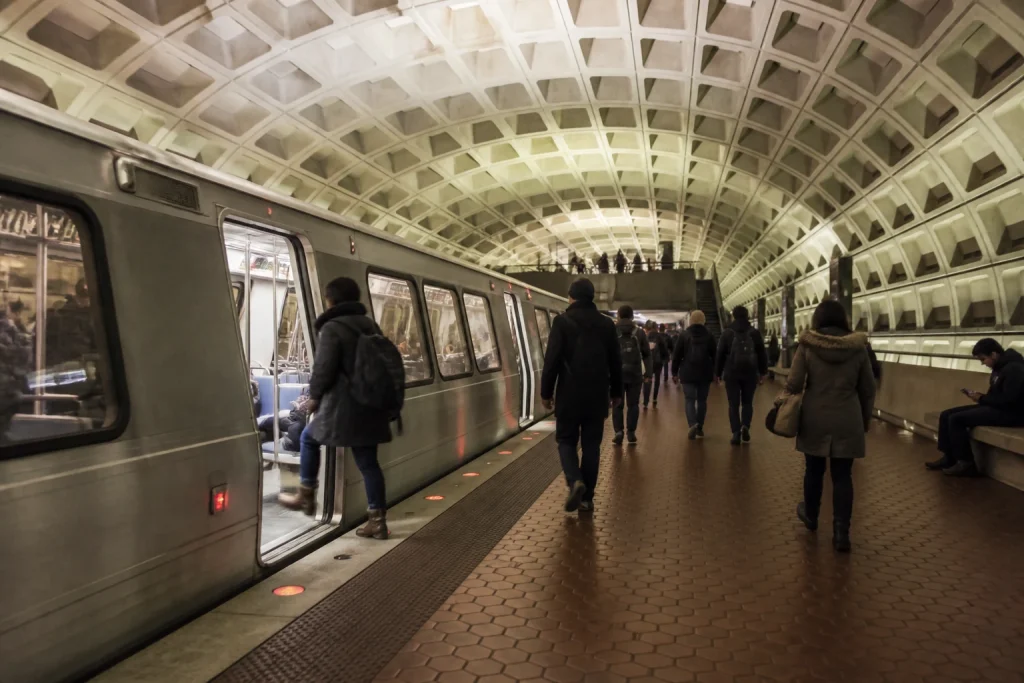
Most visitors do not need a rental car for an in-city stay. Traffic and limited or expensive parking can make driving more trouble than it is worth. Staying near a Metro station is a practical advantage because it lets you begin with a rail ride, explore on foot, then ride back when your feet are done for the day.
| Option | Best use on a walking-first trip | Practical note |
|---|---|---|
| Walk | Exploring one central neighborhood or a chosen Mall segment | Allow extra time for long crossings, weather and crowds. |
| Metrorail | Bridging longer gaps and handling the approach or return leg | Full fares range from $2.25 to $6.75 one way, depending on distance and time. |
| Metrobus | Local connections when a rail trip is not the most direct fit | The local full fare is $2.25 one way. |
| Rideshare | A point-to-point bridge when the final gap feels too long | Useful as a supplement, not a reason to overpack the day. |
Visitors can tap a contactless bank card or mobile wallet at Metro faregates. Multi-day passes require a SmarTrip card. Rail fares vary by distance and time, so check the trip-specific fare when planning. For a fuller rail-and-bus plan, use How to Get Around Washington DC Without a Car alongside the current trip planner.

DC's Monuments & Landmark Guided Small Group E-Cart Tour
This tour is a great alternative to see DC's Monuments by a E-Cart and knowledgeable guide. This tour offers a detai...

DC Monuments & Capitol Hill Highlights Tour by Electric Cart
Experience a whole different side of Washington, DC during our Monuments by day tour! Climb into our all-electric Re...

Washington, DC: Sunset & After-Dark Monuments Tour by E-Cart
Please Note: The 6:00 PM tour may not be fully dark depending on the season. The 8:30 PM tour offers a fully after-d...
Plan each walking day around a single geographic cluster
The strongest DC itineraries use walking for the parts that benefit from it and transit for the rest. Grouping sights by area makes the day feel calmer and more flexible. It also gives you a simple choice when conditions change: shorten the walk, move to another district by transit, or return to your hotel without treating the journey home as another sightseeing mission.
- Choose one core area for the day, such as a Mall segment or one central neighborhood.
- Use Metro, bus or rideshare for the longest approach or return leg.
- Leave buffer time for major crossings, museum entry, heat, rain and crowds.
- Avoid assuming that the Mall, Tidal Basin, Georgetown and other districts belong in one uninterrupted walking route.
- Keep the itinerary adjustable so that transit can replace a tiring stretch without disrupting the rest of the day.
This rhythm also suits visitors who want the atmosphere of a walking trip without the pressure to cover every block. You can walk the memorable stretch, then ride over the less compelling gap. That balance is the key to enjoying the city’s avenues and public spaces while keeping enough energy for the places you came to see.
Accessibility requires route-specific planning
Walkable does not always mean low-effort or barrier-free. Long distances and broad arterial roads can be demanding for travelers with limited mobility, families managing strollers or anyone pacing a full sightseeing day. The National Mall itself is listed as wheelchair accessible, which makes it an important option for visitors building an accessible outdoor itinerary.
Metro can help reduce distance, but travelers relying on elevators or step-free routing should check the relevant station’s current accessibility status before leaving. That quick check matters because elevator availability can affect the practical shape of a route. Plan for a manageable section of the city rather than assuming every central destination will connect easily on foot.
Weather, events and rush hour can reshape a walking route
Heat, rain and crowds can make a long route feel much longer, particularly in the open spaces around the Mall. Traffic, special events, road closures and rush hour can also affect travel times. A flexible itinerary has room to change the order of stops or use transit earlier than planned when conditions call for it.
Before a major walking day, check current Metro trip-planning and service information along with National Park Service or venue notices for the places on your list. This is especially useful when your route depends on a particular station, a timed visit or a long walk through the memorial parks.
The verdict: Washington, DC is an excellent walking city with smart transit breaks
Washington, DC is a strong choice for travelers who enjoy exploring on foot and do not expect every attraction to sit a few blocks apart. The core districts offer satisfying street-level walks, while the National Mall delivers a grand but demanding pedestrian experience. Its main limitation is scale. Choose one area at a time, stay near Metro when possible, and use transit to bridge the long gaps.
Frequently asked questions
Is Washington, DC fully walkable for tourists?
Washington, DC is highly walkable in the National Mall and central neighborhoods, but it is not equally practical to walk between every attraction or district. Use Metro, bus or rideshare to bridge longer gaps.
Do I need a rental car in Washington, DC?
Most visitors do not need a rental car for an in-city visit. A hotel near a Metro station makes it easy to combine rail rides with walks, while driving can involve traffic and limited or expensive parking.
Can you walk the entire National Mall in one day?
You can spend a full day walking the National Mall, but plan it as a long walk rather than a quick loop. Stations serving the west end are at least a mile from the Lincoln Memorial, and the memorial parks cover an extensive area.
How much does Metro cost in Washington, DC?
Full-fare Metrorail trips cost $2.25 to $6.75 one way, depending on distance and time, while the local full Metrobus fare is $2.25 one way. Check the current fare for your specific journey before traveling.
Is the National Mall accessible for wheelchair users?
The National Mall is listed as wheelchair accessible. Travelers who need elevators or step-free Metro routing should check the current status of the specific station they plan to use.
Washington DC Monuments Extended Guided Open-Air Cruiser Tour
Explore Washington, D.C. on an extended Washington DC Guided Tour by Open-Air Cruiser, designed for travelers who want to see more of the nation’s c...
Experiences to explore
 Explore experience ↗
Capitol Hill with US Capitol, National Mall Bus Tour, Boat Cruise
◷ 8 hr
Explore Washington DC on this Full Day Guided Bus, Walking, and Boat Tour. Start your day with a 2-hour Guided Walking Tour through Cap
From $125.00 USD
View dates Explore experience ↗
2-Hour National Mall Walking Tour from Washington DC
◷ 2 hr
Take a fully-guided, interactive 2-hour walking tour where they will discover the most iconic monuments found along the National Mall i
See dates for Current pricing
View dates Explore experience ↗
Washington DC National Mall Family Friendly Walking Tour
◷ 2 hr
Discover the National Mall with your family and kids on a private tour and see the major attractions located between the U.S. Capitol t
See dates for Current pricing
View dates