
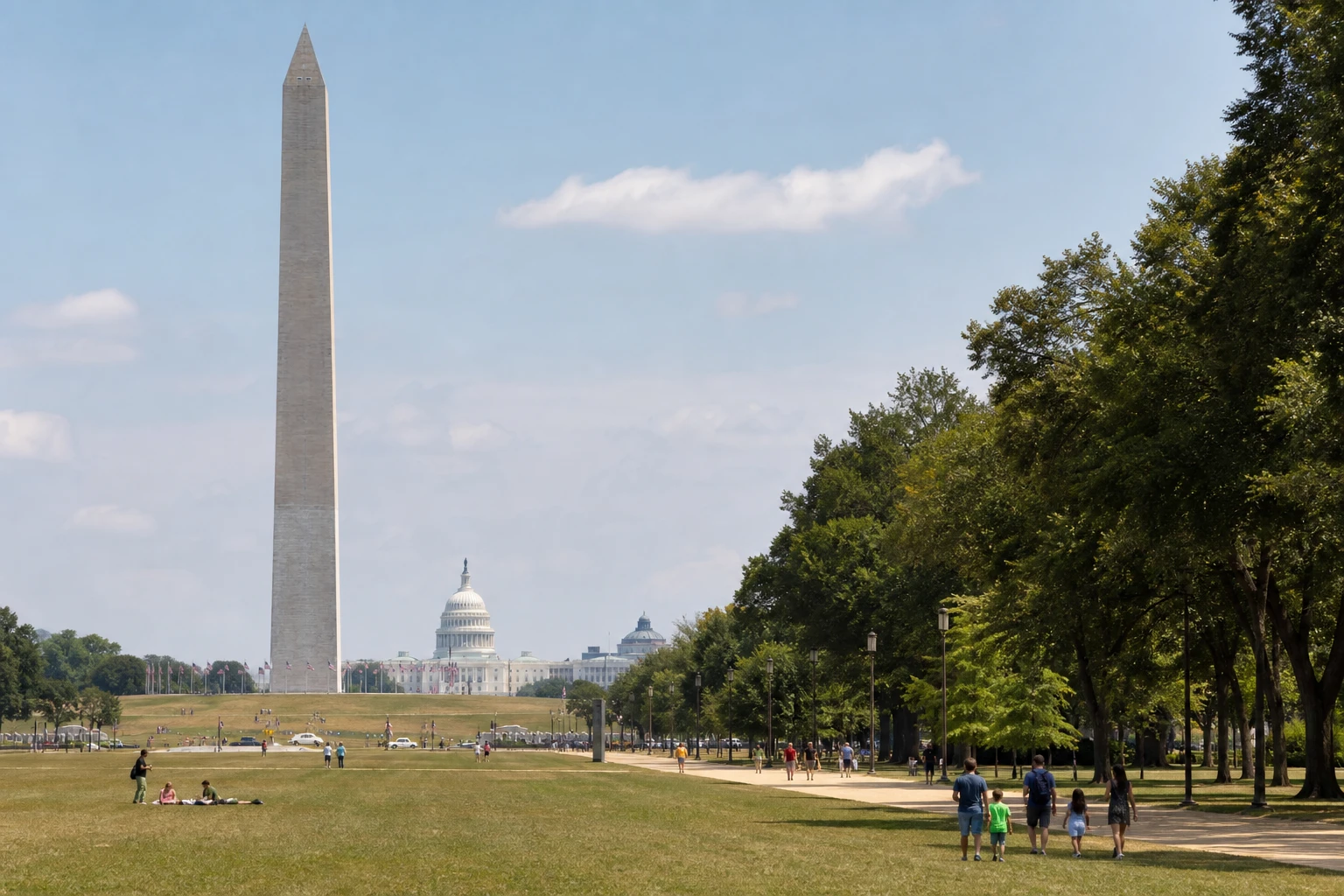
Washington, DC rewards families who plan by neighborhood rather than trying to race across the map. A strong three-day outline puts the National Mall and free Smithsonian museums first, gives Georgetown its own slower day, and uses Eastern Market with Capitol Riverfront or Navy Yard for a change of scene. If the National Zoo is a priority, swap it for a neighborhood day or add a fourth day.
The smartest rhythm for a Washington, DC family trip
- Build each day around one part of the city, not a long list of scattered attractions.
- Put timed-entry stops, including the Washington Monument or Ford’s Theatre National Historic Site, at the start of the day.
- Choose one Smithsonian museum for a Mall day and leave room for breaks.
- In summer, use morning for an indoor or reservation-based anchor and save outdoor memorials for evening.
- Treat the National Zoo as a full or near-full day, not a quick add-on.
- Use Metro stations that match the day’s geography instead of repeatedly crossing the city.
This itinerary deliberately leaves breathing room. Children notice the marble lions, fountains, skylines and snack breaks as much as the headline sights. A flexible plan also makes heat, rain, tired feet and an unexpectedly fascinating museum gallery easier to handle without turning the day into a negotiation.

Washington DC in One Day: Guided Sightseeing Tour + Boat Cruise
Board your glamourous, climate-controlled panoramic bus at the U.S. Navy Memorial for one of the best bus tours in Washington DC!Expanding on our p...
For an August visit, begin with the day’s fixed commitment, keep the middle of the day flexible, and use the cooler evening for outdoor memorials. The National Mall covers a broad outdoor area, while the Zoo has a defined seasonal operating window, so this sequence prevents the least adaptable activities from being squeezed into the hottest or most tiring part of the day.
| Day | Main focus | Practical family anchor |
|---|---|---|
| Day 1 | National Mall and Smithsonian museums | Use Smithsonian or Federal Triangle Metro stations; reserve timed-entry stops first. |
| Day 2 | Georgetown | Keep the schedule intentionally light and let one neighborhood set the pace. |
| Day 3 | Eastern Market plus Capitol Riverfront or Navy Yard | Use Waterfront or Navy Yard-Ballpark Metro stations and keep the afternoon flexible. |
| Optional swap or Day 4 | Smithsonian’s National Zoo | Reserve a free entry pass for every visitor before building the rest of the day. |
Day 1: National Mall, one Smithsonian museum and an evening memorial walk
Start with the National Mall, where most sites in National Mall and Memorial Parks have no entrance fee. Smithsonian and Federal Triangle are useful Metro choices for this part of town. Resist the temptation to make a museum checklist. Pick one museum that fits your group’s interests, then use the Mall itself as the connective tissue between stops.
If the Washington Monument is on your list, let its timed entry set the morning’s order. Timed-entry tickets are also required for Ford’s Theatre National Historic Site, so reserve either of these sensitive stops before filling in the rest of the day. Ticket rules can change, so confirm the current reservation process before travel. A National Mall guide for first timers is useful when you want to narrow the sightseeing route further.
Use the middle of the day for your chosen Smithsonian museum, lunch and a reset. The city’s free Smithsonian museums are a major advantage for families, but free admission does not mean an unlimited attention span. If aircraft and space exploration are the clear favorite, a Smithsonian National Air and Space Museum guide can help you make that museum the day’s main indoor commitment rather than one rushed stop among several.
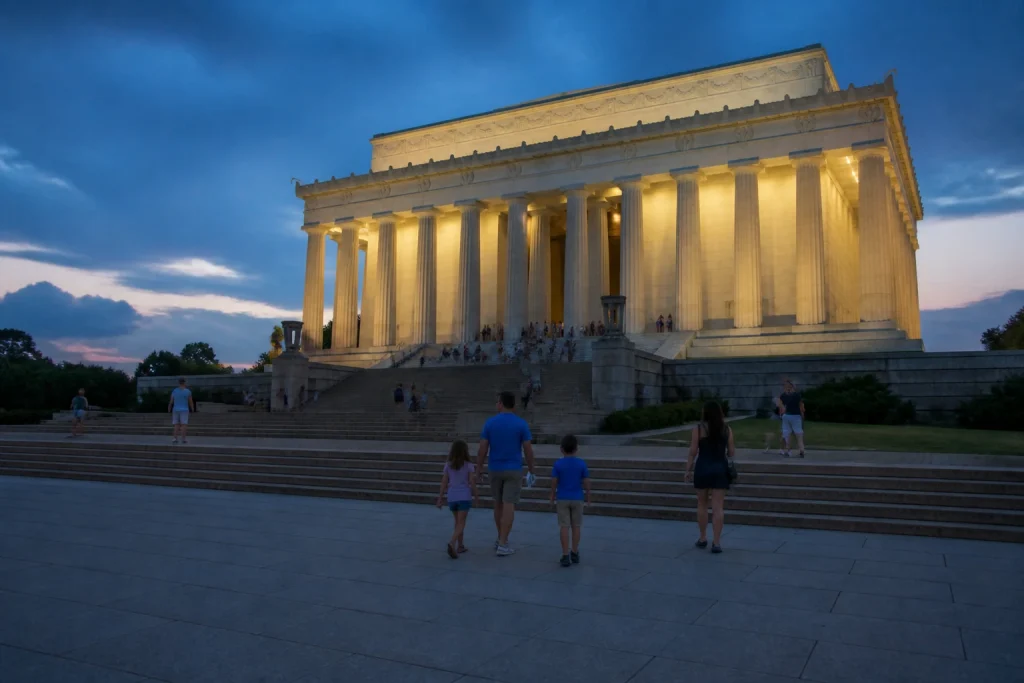
Return to the Mall later if the group still has energy. National Mall and Memorial Parks are generally publicly accessible around the clock, which makes an evening memorial walk a useful summer option. The Washington Monument is an exception, so do not treat it as an after-dark drop-in. A Washington DC monuments by night guide can help parents choose a manageable evening loop instead of trying to see every memorial.
Day 2: Give Georgetown a slower, kid-led day
Georgetown works best as a change of pace after the scale of the Mall. The official family itinerary framework gives the neighborhood its own day, and that is a useful guardrail for families. Keep the plan loose enough for a long meal, an unhurried walk, a rest stop or a child who simply wants to linger rather than move on to the next landmark.

Avoid combining Georgetown with a packed Mall agenda just because both appear on a short Washington, DC trip. Saving the neighborhood for its own day reduces unnecessary backtracking and protects the trip’s pace. A Georgetown Washington DC travel guide is a helpful next step if you want to tailor this day to your family’s interests and available energy.

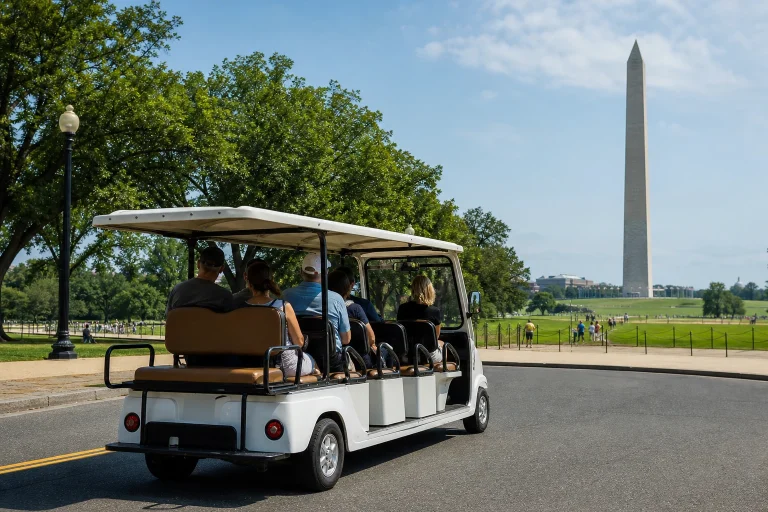
Washington DC Monuments Tour by Electric Cart Day and Night
Experience a whole different side of Washington, DC during our Monuments tour! Climb into our all-electric Red Roads...

Washington, DC: Sunset & After-Dark Monuments Tour by E-Cart
Please Note: The 6:00 PM tour may not be fully dark depending on the season. The 8:30 PM tour offers a fully after-d...

Washington DC Monuments and Memorials Night Tour
See Washington, DC in ways large bus tours can’t—especially after dark. This small‑group night tour (12 guests...
Day 3: Eastern Market and Capitol Riverfront or Navy Yard
For the third day, use Eastern Market as the starting point and then choose Capitol Riverfront or Navy Yard as the later focus. This neighborhood-based pairing follows the family itinerary framework and offers a useful contrast to the monument-heavy first day. It also gives you a day that can stay flexible if the family needs a slower morning or a longer midday break.
Waterfront and Navy Yard-Ballpark are the Metro stations identified for the Capitol Riverfront and Navy Yard area. Use that station logic when deciding the order of the day, then leave time unscheduled rather than adding a cross-city detour. This is a good place in the itinerary to follow the family’s momentum instead of forcing one more major sightseeing goal.
Make the National Zoo a full-day priority, not a spare-hour stop
The Smithsonian’s National Zoo is free to enter, but every guest, including infants, needs a reserved free entry pass. For a mid-August visit, the published summer grounds schedule runs from 8 a.m. to 6 p.m. through September 14, with last entry by 5:30 p.m. Check same-day hours before leaving, then arrive early enough that the family is not watching the clock at the entrance.
Plan on the Zoo as a full or near-full day. The site reports accessible routes through ramps, elevators and escalators, along with wheelchair, electronic-vehicle, stroller and wagon rentals, benches, baby-changing stations and a lactation space in the Think Tank exhibit. The important tradeoff is terrain: the Zoo is hilly, so build in pauses for strollers, grandparents and anyone managing mobility needs.
Some parts of the Africa Trail and the Saudi Arabia: Arabian Leopard exhibits are affected by current construction. Check which exhibits are open shortly before the visit, and do not build the day around a single enclosure. This is another reason to preserve extra time and let the Zoo day unfold at a child-friendly pace.
Driving offers direct convenience but adds a known cost. Zoo parking is listed at $30 when bought at least a day ahead and $40 when purchased on the visit date. A car-free visit avoids that parking charge, although it does not remove the challenge of the Zoo’s hills. Decide based on the group’s stamina, stroller needs and how much gear you are carrying.
Move around Washington, DC with less backtracking
For a car-light family itinerary, match Metro to the day’s cluster of sights. Smithsonian or Federal Triangle fit the National Mall day, while Waterfront or Navy Yard-Ballpark fit the Capitol Riverfront and Navy Yard plan. This simple approach saves energy because each station choice supports a concentrated day rather than a zigzag across Washington, DC.
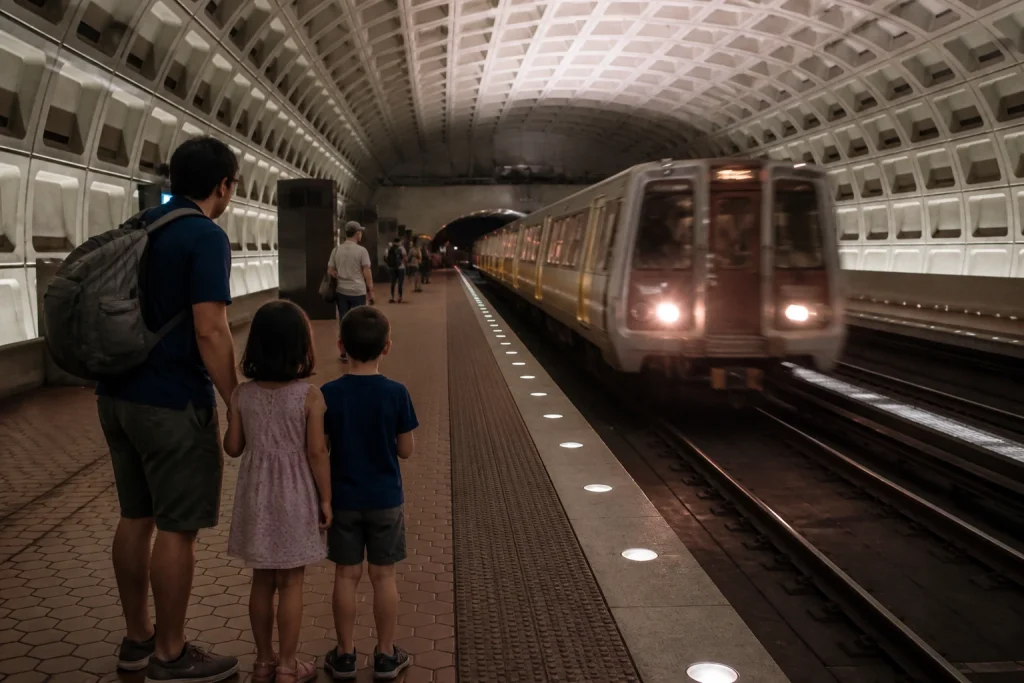
Use current fares as a planning baseline, not a fixed trip promise. WMATA’s FY2026 fare material lists regular Metrorail fares of $2.25 to $6.75 and regular bus fares of $2.25. Check current fares, service conditions and traveler-specific fare rules before departure. For route choices beyond this itinerary, our guide on how to get around Washington DC without a car is a useful companion.
Keep the budget realistic even when admission is free
Washington, DC can be unusually good value for a family because the National Mall and many Smithsonian museums are free, and Zoo admission is free with a reserved pass. Still, a free-admission itinerary has real trip costs. Set aside funds for food, local transportation, parking if you drive to the Zoo, and any optional tours or activities you choose to add.
- Free foundation: most National Mall sites and the Smithsonian museums highlighted in the family itinerary.
- Reservation priority: timed entries for the Washington Monument and Ford’s Theatre, plus a Zoo entry pass for every visitor.
- Transit baseline: regular Metrorail fares listed at $2.25 to $6.75 and regular bus fare listed at $2.25 in WMATA FY2026 material.
- Zoo driving tradeoff: listed parking is $30 in advance or $40 on the day of the visit.
- Flexible spending: meals and any optional activities you decide suit your family.
The simplest savings strategy is to make the free sights the backbone of the trip, then choose only the paid extras that genuinely improve your day. A Washington DC on a budget travel guide can help families turn that principle into a more detailed spending plan without sacrificing the Mall, museum and Zoo priorities that make the city memorable.
Still comparing Washington DC Itinerary With Kids?
Ask for tour ideas, hotel suggestions, or a simple trip plan that combines both.
Trip Helper
Plan for strollers, mobility needs and sensory breaks
The National Park Service treats accessibility as a priority at National Mall and Memorial Parks, but historic facilities are not always ideally accessible. When a family member has mobility, sensory or service-animal needs, check the page for each specific memorial or museum before committing to a route. It is better to choose fewer dependable stops than to spend the day solving avoidable access problems.
The Zoo has particularly useful family services, but its hills deserve the same respect as a long museum day. Make rest opportunities part of the itinerary rather than a sign that the plan has failed. Benches, changing stations, a lactation space and rental options can make the difference between a visit that feels manageable and one that ends too early.
A successful DC itinerary with kids leaves room for wonder
The best Washington, DC itinerary with kids has a clear shape: one big National Mall day, one slower neighborhood day, one flexible eastern-city day, and a Zoo day when animals are a must. Start reservations early, group each day around the right Metro stop, and keep evenings available for the Mall. If you have more time, a 4 Days in Washington DC itinerary lets you add the Zoo without cutting Georgetown or the Capitol Riverfront plan.
Frequently asked questions
How many days do families need in Washington, DC?
Three days give families a practical introduction to Washington, DC: the National Mall and Smithsonian museums, Georgetown, and Eastern Market with Capitol Riverfront or Navy Yard. Add a fourth day if the National Zoo is a priority and you do not want to replace a neighborhood day.
What should I reserve before a Washington, DC trip with kids?
Reserve timed-entry tickets for the Washington Monument or Ford’s Theatre National Historic Site if they are on your plan, and reserve a free National Zoo entry pass for every guest, including infants. Check current reservation rules before travel because operations can change.
Is the National Zoo free for kids?
Yes, admission to the Smithsonian’s National Zoo is free for all visitors, but every guest, including infants, needs a reserved free entry pass. Parking is separate for visitors who drive.
Can a family visit Washington, DC without a car?
Yes, a car-light itinerary is practical when each day is grouped around Metro-accessible areas. Smithsonian or Federal Triangle support National Mall sightseeing, while Waterfront and Navy Yard-Ballpark support the Capitol Riverfront and Navy Yard area; confirm current fares and service before travel.
How should families plan Washington, DC in August?
Start with a morning reservation or indoor anchor, keep midday flexible for a museum or meal break, and use the evening for outdoor memorials if the family still has energy. The Zoo’s summer schedule also rewards an early start, especially on hot days.
Washington DC Monuments and Memorials Night Tour
See Washington, DC in ways large bus tours can’t—especially after dark. This small‑group night tour (12 guests max) offers engaging stories, mor...
Washington DC in One Day: Guided Sightseeing Tour + Boat Cruise
Board your glamourous, climate-controlled panoramic bus at the U.S. Navy Memorial for one of the best bus tours in W...
Experiences to explore
 Explore experience ↗
CAPITOL HILL AND EASTERN MARKET GUIDED WALKING TOUR - 3.5hrs 10AM with Earpieces
◷ 3 hr 30 min
The Capitol Hill is the summit of American Democracy-literally and figuratively. The Capitol was built on Jenkins Hill, the highest ele
See dates for Current pricing
View dates Explore experience ↗
Washington Monument Entry and National Mall Walking Tour
◷ 3 hr
Visit the Washington Monument on a self guided tour with entry ticket (approximately 1 hour). Discover the iconic National Mall with an
See dates for Current pricing
View dates Explore experience ↗
DC Monuments Night Tour with 10+ Stops, National Mall, Tickets
◷ 3 hr
Experience Washington DC lit up at night during this 3-Hour Guided Night Tour of the National Mall and Monuments. Make your way through
See dates for Current pricing
View dates

4 Comments
[…] lunch, choose one Smithsonian museum rather than trying to dart between several collections in the rain. Smithsonian museums offer free […]
[…] not expect nighttime entry to the Washington Monument observation deck. The National Park Service lists interior hours of 9 a.m. to 5 p.m., and interior […]
[…] the Washington Monument interior as a separate, ticketed daytime […]
[…] Washington Monument requires a ticket, and visitor capacity is limited. For November 2026, the National Park Service […]