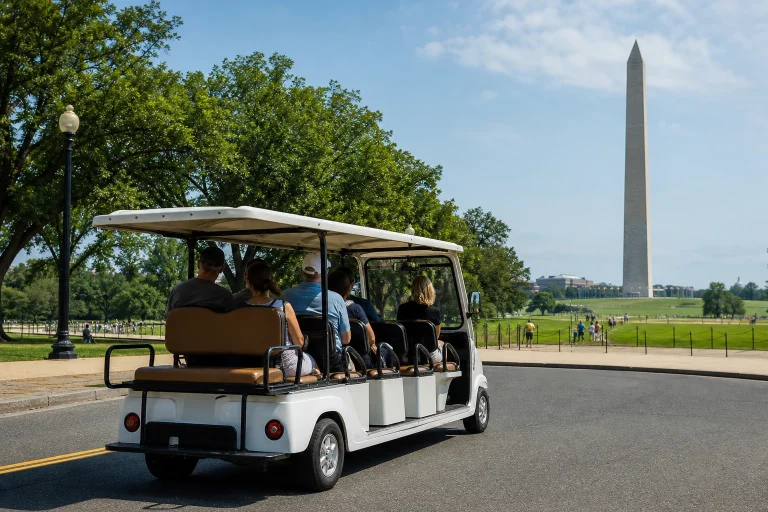

Washington DC small group tours balance expert guidance with enough flexibility to adjust the pace, linger at a memorial, or simplify transportation. The main decision is not which landmark to see first. It is how the group will move through a city where major sights are spread across a broad ceremonial core, indoor stops can have capacity limits, and traffic can reshape a vehicle itinerary. Start with the tour format, reserve the least flexible attraction, and build the rest of the day around it.
- Choose between a private vehicle, a guided walking tour, or a Metro-and-walking plan before selecting stops.
- Reserve limited-capacity or timed-entry attractions first, especially the Washington Monument.
- Use outdoor National Mall memorials as flexible stops around fixed reservations.
- Ask for the exact group-size limit because “small group” does not have one universal definition.
- Confirm walking distance, pickup arrangements, accessibility needs, and included admission before paying.
- Check current transit, road, and attraction updates shortly before departure.
Is a small group tour the right choice?
A small group format works well for travelers who want structure without the pace of a large coach itinerary. A guide can coordinate meeting points, keep the route focused, and adapt the order of flexible outdoor stops. Private arrangements are especially useful when the group includes different walking speeds, children, older adults, or travelers who want more time for questions. Before booking, ask how many guests can join and whether the listed number includes only travelers or also the guide.

Washington DC Night Tour: ICONIC Landmarks, Monuments SMALL GROUP
Experience Washington DC at its most striking; after dark! This guided night tour showcases the city’s most iconic landmarks beautifully illuminated...

Washington DC: Easy Sightseeing Guided Monuments Tour by E-Cart
Explore Washington, DC’s iconic monuments and memorials on a relaxed, open-air electric cart tour. Enjoy a small-g...

Washington DC's Monuments & US History Guided E-Cart Tour
This tour offers a detailed introduction to U.S. history and Washington D.C.’s famous monuments, guided by expert...

DC Monuments by Night: 10+ Landmarks | Open-Top Upgrade Available
See a different side of Washington DC after dark on a guided night tour of the city's floodlit monuments. This tour...
The format has limits. The National Mall is spread out, and even a carefully designed walking route needs realistic expectations about distance, weather, seating breaks, and restroom stops. A vehicle reduces some walking, but Washington traffic and parking constraints can consume time. A concise National Mall guide for first timers can help the group identify priority memorials instead of trying to cover every landmark in one sweep.
Compare the main small group tour formats
| Tour format | Best suited to | Main advantages | Main tradeoffs |
|---|---|---|---|
| Private guide with a van | Groups seeking a custom pace or reduced walking | Coordinated pickup, easier route changes, and less navigation work | Traffic, parking, and restricted drop-off areas can affect the schedule |
| Guided walking tour | Travelers comfortable covering meaningful distances | Close-up exploration and no time lost parking a vehicle | Requires weather preparation, rest planning, and a focused route |
| Metro and walking | Independent groups staying near a station | Avoids much road traffic and connects well with walking routes | The group must navigate stations, transfers, and elevator status |
| Motorcoach tour | Larger parties or groups prioritizing fewer walking segments | Keeps a larger party together between planned stops | Capitol-area routes, permits, and traffic rules require careful planning |
A private van is not automatically faster than rail or walking. Washington has traffic delays, limited or costly parking, temporary road closures, and specific motorcoach restrictions around the U.S. Capitol and parts of Capitol Hill. Smaller vehicles can be simpler than full-size coaches, but they still cannot stop anywhere the group wishes. Ask where boarding and drop-off will occur, then compare those locations with the entrances your group plans to use.
Transit-led tours remove much of the parking problem. Metrorail serves many visitor trips, while walking, Metrobus, bikes, scooters, and rideshare can fill gaps. Contactless credit cards, debit cards, and mobile wallets can be used at Metrorail faregates. Unlimited one-, three-, and seven-day passes require a SmarTrip card. A guide to getting around Washington DC without a car is useful when comparing fare options and station-based routes.
Build the itinerary around fixed reservations
The strongest itinerary gives fixed-time attractions priority and treats outdoor memorials as flexible pieces. National Mall outdoor areas are generally accessible around the clock, while indoor locations and limited-capacity experiences follow their own schedules. This makes it easier to move an outdoor stop if lunch runs long, traffic slows the vehicle, or the group needs an extra rest.

- List the two or three places the group would be most disappointed to miss.
- Identify which priorities require a ticket, timed entry, or fixed tour.
- Reserve the least flexible stop before arranging meals and transportation.
- Cluster nearby outdoor memorials into a walking loop rather than crossing the Mall repeatedly.
- Add a buffer before every fixed reservation and keep one optional stop that can be removed.
- Review current road, transit, and attraction notices shortly before the tour.
Treat the Washington Monument as a book-first stop
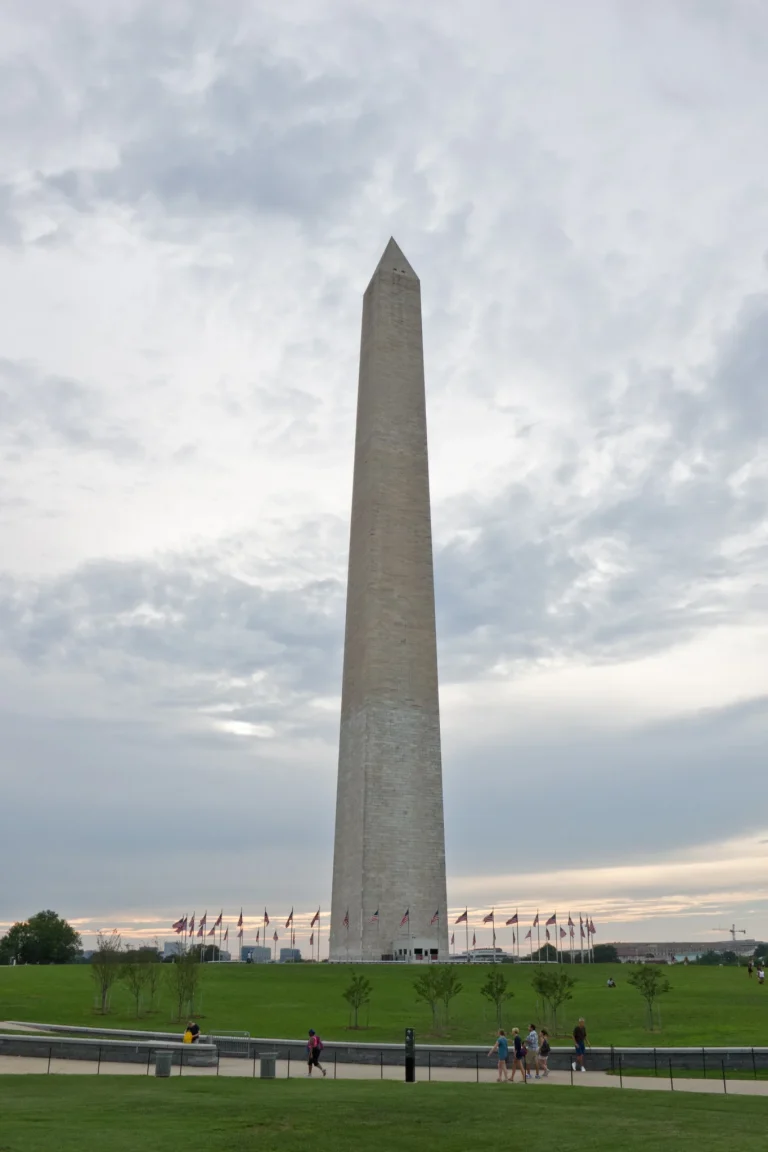
The Washington Monument is an important exception to the Mall’s flexible outdoor access. Its current schedule lists daily hours of 9 a.m. to 5 p.m., closures on July 4 and December 25, and one routine-maintenance closure day each month. Tickets are required and capacity is limited. Recheck the date before visiting, and consult a Washington Monument tickets and visitor guide before placing this stop at the center of the day.

DC Monuments Night Tour with 10+ Stops, National Mall, Tickets
Experience Washington DC lit up at night during this 3-Hour Guided Night Tour of the National Mall and Monuments. Ma...

Arlington Cemetery Small-Group Tour & Changing of the Guards
Witness the solemn Changing of the Guard ceremony from a prime viewing spot on this guided walking tour of Arlington...

Washington DC Monuments Open-Air Sightseeing Guided Tour
Experience D.C. as day turns to night on this intimate sunset, day and moonlight tour, limited to just 12 guests max...
Sample itinerary frameworks for different groups
A memorial-focused outing
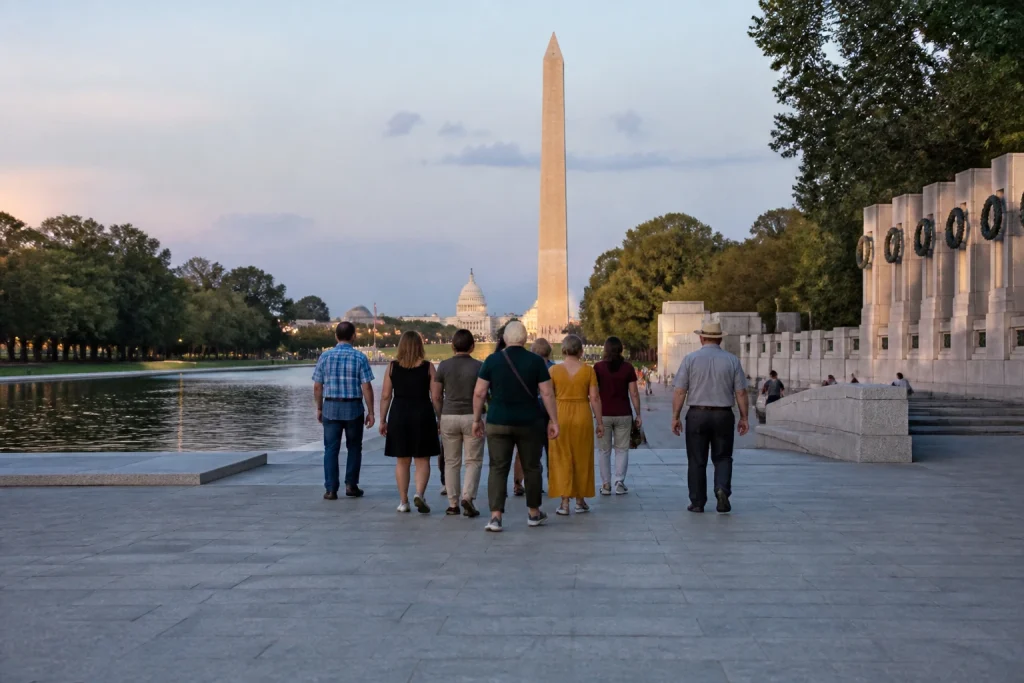
Choose one compact section of the National Mall and explore it thoroughly. Build a loop around the group’s highest-priority memorials, schedule a seated break, and avoid adding a distant attraction simply because it looks close on a map. The Mall’s scale becomes more apparent on foot. This format suits travelers who value interpretation and reflection more than collecting a long checklist of quick photographs.
A mixed indoor and outdoor day
Place the indoor or ticketed visit first, then continue through nearby outdoor sites. If the fixed visit runs late, shorten the memorial loop rather than risking the next reservation. Destination planning resources include timed-entry information for free attractions, which can help organizers distinguish free access from unrestricted access. A free ticket can still involve a specific entry time or limited capacity.
A one-day highlights plan
For one day, divide the schedule into two geographic clusters with a meal or transit break between them. Keep the morning focused on the least flexible reservation. Use the later block for memorials or another area that permits a more adjustable pace. A one-day Washington DC itinerary can provide a broader planning framework, but a small group should still remove stops that require unnecessary backtracking.
A lower-walking custom route
Use a private vehicle to connect a small number of carefully selected stops, and ask the provider to describe the walking required between each drop-off point and landmark. Build in seated breaks rather than relying on finding convenient seating at the moment it is needed. This approach can reduce navigation work, but the vehicle route must still account for traffic, legal stopping locations, and event-related closures.
Getting around Washington DC as a group
Groups based near a Metrorail station can generally explore central Washington without renting a car. The most practical plan often combines rail for longer movements with walking inside a compact sightseeing area. Keep everyone together before passing through faregates, identify the destination station in advance, and agree on a meeting point in case someone boards the wrong train or exits through a different station entrance.
Rideshare can fill an awkward gap, but one vehicle may not hold the whole party. If the group must split, send each driver the same precise destination and avoid vague instructions such as “the Mall.” For guided vehicle tours, check whether pickup is at the hotel, a central meeting point, or a designated curb. The booking confirmation should provide the final location and departure time.
Full-size motorcoaches require more planning. Routes and traffic-flow rules around the Capitol and Capitol Hill can limit how a coach approaches or leaves an attraction, and some operators need specific plates or District permits. A coach still suits larger parties and travelers who need fewer walking segments, but a small van, rail itinerary, or walking-led tour is often simpler for a compact in-city route.
Time outdoor memorials for flexibility
National Mall outdoor areas are generally open 24 hours a day, while ranger staffing is listed from 9:30 a.m. to 10 p.m. Early morning and evening are practical options for outdoor stops, although those periods do not guarantee lighter crowds. Schedule indoor and ticketed visits first. Outdoor memorials can then absorb minor delays without forcing the group to miss a reserved entry.
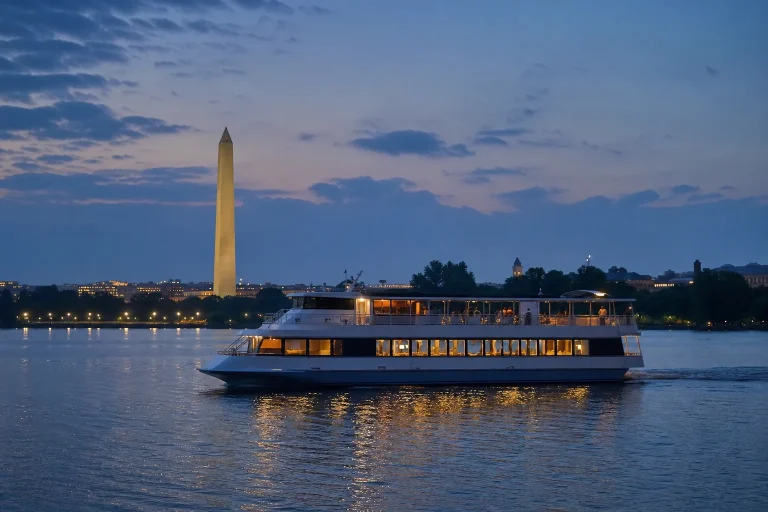
An evening route can also extend sightseeing beyond the operating window of an indoor attraction. Keep the walking loop compact, establish a clear end point, and confirm return transportation before the group begins. A Washington DC monuments by night guide can help narrow the route to a manageable set of illuminated landmarks rather than attempting the entire Mall after dark.
Major events, temporary road closures, crowds, traffic delays, staffing changes, and unforeseen conditions can alter a carefully planned route. Indoor-site hours can also change. Check live attraction and transport information shortly before departure, then give the guide or group organizer permission to cut one secondary stop if delays begin to accumulate.
Understand tour costs and free attractions
Washington offers many free attractions, so admission does not have to dominate the budget. A lower-cost itinerary can focus on outdoor memorials and selected free institutions. Free admission does not cover a private guide, vehicle, food, gratuities, or every timed-entry arrangement. It also does not mean visitors can arrive at any hour without a reservation. Review the requirements for each stop separately.
There is no dependable citywide price for a small group tour. Rates vary with the provider, date, duration, group size, guide, vehicle, and included admission. Compare the total private-group charge with per-person pricing, then check what the quoted rate includes. A Washington DC on a budget travel guide can help identify free sights that pair well with a shorter paid tour.
- Exact maximum number of guests
- Private tour or shared departure
- Guide services and vehicle type
- Admission or timed-entry tickets
- Hotel pickup or central meeting point
- Meals, drinks, and gratuities
- Cancellation and weather terms
- Extra charges for route extensions or waiting time

Washington DC Monuments Tour by Electric Cart Day and Night
Experience a whole different side of Washington, DC during our Monuments tour! Climb into our all-electric Red Roads...

Washington DC Sightseeing Tour with Vintage Model-T Classic Cars
Experience the enchanting beauty of Washington, D.C.'s monuments and landmarks on a captivating day and night tour a...

DC: US Capitol & Library of Congress / Supreme Court Guided Tour
Explore the heart of American democracy on Capitol Hill with reserved timed-entry tickets and a guide who knows thes...
Plan an accessible small group route
All major monuments and memorials within National Mall and Memorial Parks are wheelchair accessible, although some historic facilities are not ideal. Limited loaner wheelchairs are available on a first-come, first-served basis at the Korean War Veterans Memorial, Vietnam Veterans Memorial, Franklin Delano Roosevelt Memorial, and World War II Memorial. Because availability is limited, do not make a loaner chair the group’s only mobility plan.
Free American Sign Language interpretation is available by request at least three weeks in advance. Travelers who need interpretation should build that lead time into the booking process. Ask a private guide to confirm the accessible approach to each planned stop, the walking or rolling distance from the vehicle, and where the group can pause between attractions.
All Metrorail stations and rail cars include accessibility features such as elevators, extra-wide faregates, and accessible fare machines. Elevator outages can disrupt an otherwise step-free route. Check current elevator status immediately before leaving, identify a backup station, and keep a rideshare or vehicle alternative for any traveler who cannot use stairs or escalators.
How to compare guides and tour operators
Begin with the itinerary rather than the promotional description. Look for a realistic number of stops, a clear meeting point, and an explanation of how the group travels between areas. Destination DC maintains group-planning material covering itineraries, timed entry, dining, guides, motorcoach logistics, and Metro pass orders. Use those planning topics as a checklist when comparing packaged departures with private arrangements.

- Ask for the exact maximum number of travelers on the departure.
- Confirm whether the group is private or shared with other bookings.
- Request the expected walking distance and longest continuous walking segment.
- Check which admissions require separate reservations.
- Confirm the vehicle type and legal pickup location, if transportation is included.
- Describe mobility, hearing, sensory, or pacing needs before finalizing the route.
- Read the cancellation terms and determine how weather or closures are handled.
Pay attention to the language used for transport. “Pickup included” does not necessarily mean every hotel is served, and “panoramic tour” can imply more viewing from the vehicle than time on foot. A useful description should make the balance clear. If the route includes the Capitol area, ask how current traffic and stopping restrictions affect boarding, walking, and the order of visits.
Prepare the group for a smoother tour day
Send one short plan to every traveler. Include the meeting point, start time, guide’s contact details, first fixed reservation, expected finish area, and transport method. Ask everyone to arrive ready to walk unless the itinerary explicitly says otherwise. Comfortable footwear, water, a weather-appropriate layer, and a charged phone are sensible basics for a route that moves between outdoor memorials and transit.
Choose one group coordinator. That person should hold reservation details, track the schedule, and make the final decision about dropping an optional stop. Multiple people giving the driver or guide different instructions wastes time. Families can also establish a regrouping rule before entering a station or crowded outdoor area.
Avoid planning every minute. A small group gains value from being able to pause for a question, take a rest, or adjust after a delay. Leave a buffer around the fixed reservation and label at least one attraction as optional. This prevents a minor disruption from turning the rest of the itinerary into a rushed march across the Mall.
Common planning mistakes to avoid
- Assuming “small group” always means the same maximum number of guests
- Treating free admission as proof that no timed entry is needed
- Underestimating distances between National Mall landmarks
- Expecting a van or coach to stop directly beside every attraction
- Scheduling the Washington Monument without securing the required ticket
- Ignoring Metrorail elevator status on a step-free itinerary
- Adding so many stops that the guide has no room to adapt
Make the small group format work for your priorities
A Washington DC small group tour is most worthwhile when the route reflects the people taking it. Choose a private vehicle for custom pacing and reduced navigation, a walking tour for focused interpretation, or a Metro-based plan to avoid parking and much of the road traffic. The main limitation is the temptation to include too much. Reserve the least flexible attraction, organize nearby sights into compact clusters, and leave enough open time for the guide to turn a list of landmarks into a coherent day.
Frequently asked questions
How many people are usually on a Washington DC small group tour?
There is no universal group-size limit for the term “small group.” Ask for the exact maximum number of travelers and confirm whether the departure is private or shared before booking.
Can a small group explore Washington DC without renting a car?
Yes. Groups staying near a Metrorail station can combine rail with walking, Metrobus, or occasional rideshare trips. Contactless cards and mobile wallets work at faregates, while unlimited one-, three-, and seven-day passes require a SmarTrip card.
Do small group tours include free attractions?
Many Washington attractions are free, but guided services, transportation, food, gratuities, and some reservation arrangements can still add costs. Check the selected tour’s inclusion list rather than assuming free admission is bundled with the booking.
Do I need Washington Monument tickets on a group tour?
Yes, tickets are required and capacity is limited. The monument follows its own operating schedule rather than the National Mall’s general all-hours outdoor access, so reserve it first and recheck conditions for the specific date.
What time is best for an outdoor memorial tour?
Early morning and evening are practical options because National Mall outdoor areas are generally open 24 hours. These periods do not guarantee fewer people, so place fixed-time indoor visits first and use outdoor memorials as flexible stops.
Are National Mall small group tours wheelchair accessible?
All major monuments and memorials are wheelchair accessible, although some historic facilities are not ideal. Confirm the route, vehicle access, walking or rolling distances, and planned rest points with the provider before booking.
Is Metrorail accessible for a small group?
Yes. All stations and rail cars have accessibility features, including elevators, extra-wide faregates, and accessible fare machines. Check elevator status just before traveling and prepare an alternative if the route must remain step-free.
Is a motorcoach practical for touring central Washington DC?
A motorcoach can work for larger parties or travelers needing fewer walking segments, but it is not a drop-anywhere option. Capitol-area route, permit, traffic-flow, and stopping restrictions require advance planning.
How far ahead should accessibility services be arranged?
Arrange specialized services as early as possible. Free American Sign Language interpretation at National Mall and Memorial Parks must be requested at least three weeks ahead.

VIP Best of DC with US Capitol + National Archives Reserved Entry
Get the presidential treatment with the most comprehensive Washington DC day tour! The tour includes reserved access to the National Archives Building...

Small Group National Mall Night Tour with 10 Top Attractions
Visit 10-iconic Washington DC landmarks in three hours! Explore Washington DC with a professional tour guide on this...

Washington DC Monuments and Memorials Night Tour
See Washington, DC in ways large bus tours can’t—especially after dark. This small‑group night tour (12 guests...

Washington, DC: Sunset & After-Dark Monuments Tour by E-Cart
Please Note: The 6:00 PM tour may not be fully dark depending on the season. The 8:30 PM tour offers a fully after-d...
Washington DC Night Tour: ICONIC Landmarks, Monuments SMALL GROUP
Experience Washington DC at its most striking; after dark! This guided night tour showcases the city’s most iconic landmarks beautifully illuminated...
Washington DC's Monuments & US History Guided E-Cart Tour
This tour offers a detailed introduction to U.S. history and Washington D.C.’s famous monuments, guided by expert...
Washington DC: Easy Sightseeing Guided Monuments Tour by E-Cart
Explore Washington, DC’s iconic monuments and memorials on a relaxed, open-air electric cart tour. Enjoy a small-g...
Washington, DC: Sunset & After-Dark Monuments Tour by E-Cart
Please Note: The 6:00 PM tour may not be fully dark depending on the season. The 8:30 PM tour offers a fully after-d...
Still comparing Washington DC Small Group Monuments Tours?
Ask for tour ideas, hotel suggestions, or a simple trip plan that combines both.
Trip Helper
Experiences to explore
 Explore experience ↗
Washington DC Museums self-guided walking tour & scavenger hunt
◷ 3 hr
This Tourist Scavenger Hunt takes you through the Eastern part of the National Mall where Washington's Museums are located. There are a
From $14.25 CAD
View dates Explore experience ↗
Washington DC Monuments Self-Guided Walking Audio Tour
◷ 1 hr–2 hr
Visit the most famous landmarks of America’s capital city! See the White House, the Lincoln Memorial, the Capitol Building, Smithsonian
See dates for Current pricing
View dates Explore experience ↗
Washington DC Mall Self Guided Audio Walking Tour
◷ 1 hr 15 min–1 hr 30 min
On our location aware smart phone guided walking tour you will see D.C.’s best-known monuments and museums with a few hidden gems in be
See dates for Current pricing
View dates