

Washington DC civil rights tours connect nationally recognized memorials with museums, historic homes, and neighborhoods shaped by Black civic and cultural life. The strongest itinerary does not remain on the National Mall. It combines the Martin Luther King, Jr. Memorial and Lincoln Memorial with the National Museum of African American History and Culture, U Street, and selected historic sites elsewhere in the city.
- Reserve a free timed-entry pass for the National Museum of African American History and Culture before arranging the rest of the day.
- Book Frederick Douglass National Historic Site in advance if a house tour is central to your plans.
- Use Metro or another form of transportation between the National Mall, U Street, and the Anacostia area instead of treating them as one walking circuit.
- Choose a guided U Street tour for neighborhood history, architecture, music, and local context beyond the monuments.
- Keep an outdoor memorial visit flexible in case heat or rain makes a long walking route uncomfortable.
Reserve the least flexible experiences first. Museum passes, historic-house reservations, and scheduled neighborhood tours should determine the framework. The Martin Luther King, Jr. Memorial is a more flexible component because it is open 24 hours and does not require an activity reservation. This approach leaves room to adjust outdoor portions around weather, crowds, and transit conditions.

African American History Tour with Museum of African American History Ticket
KB Tours is a one of a kind African American Heritage tour operator in Washington DC that takes visitors to explore the historic African American neig...

Washington DC Monuments Extended Guided Open-Air Cruiser Tour
Explore Washington, D.C. on an extended Washington DC Guided Tour by Open-Air Cruiser, designed for travelers who want to see more of the nation’s c...
Choose between self-guided, neighborhood, and vehicle-based tours
A self-guided route offers the most control and can keep costs low. It works especially well for travelers comfortable using Metro and managing separate reservations. A guided U Street walk adds neighborhood-level interpretation that the Mall cannot provide, while a private vehicle-based Black-history tour can reduce walking and simplify transfers between widely separated sites.
| Tour format | Best for | Main advantage | Main limitation |
|---|---|---|---|
| Self-guided Metro itinerary | Independent travelers and tighter budgets | Flexible timing around reserved attractions | Requires route planning and transit transfers |
| Guided U Street walk | Architecture, music, and neighborhood history | Local context beyond federal memorials | Fixed schedule and substantial outdoor walking |
| Private vehicle-based tour | Limited time or reduced walking tolerance | Easier movement between dispersed sites | Prices and exact inclusions vary by operator |
Travelers who enjoy independent exploration can also consult a broader Washington DC walking tours guide when comparing route styles. The important distinction is geographic scope. A Mall-only walk covers nationally framed memorial history, but it leaves out much of the neighborhood and historic-home context that makes a civil rights itinerary more complete.
Essential civil rights sites to include
A balanced route needs at least one memorial area, one museum, and one neighborhood or historic home. That mix places major national events beside the lives, institutions, architecture, and communities that shaped Washington beyond its ceremonial core.
| Stop | Area | Planning role |
|---|---|---|
| Martin Luther King, Jr. Memorial | Tidal Basin and National Mall area | Flexible outdoor memorial stop |
| Lincoln Memorial | National Mall | Context for the 1963 March on Washington |
| National Museum of African American History and Culture | National Mall | Major indoor museum anchor requiring a timed pass |
| African American Civil War Memorial and U Street | U Street area | Starting point for neighborhood history and guided walks |
| Frederick Douglass National Historic Site | Anacostia area | Reservation-based historic-house component |
| Mary McLeod Bethune Council House | Northwest Washington | Historic-home stop on an expanded route |
| Carter G. Woodson Home | Northwest Washington | Historic-home stop on an expanded route |
These locations are too dispersed to treat as a comfortable continuous walk. Use a National Mall guide for first-timers to understand the monument area, then plan separate transportation for U Street and the Frederick Douglass site. This prevents an ambitious history route from turning into an exhausting cross-city march.
Make NMAAHC the indoor anchor of the itinerary
The Smithsonian National Museum of African American History and Culture deserves the largest uninterrupted indoor block in the plan. All visitors need a free timed-entry pass, and entry is allowed through 4 p.m. The museum contains 85,000 square feet of exhibition space, so it should not be squeezed between several distant attractions as a brief add-on.

The regular schedule currently listed is 10 a.m. to 5:30 p.m. Tuesday through Sunday and noon to 5:30 p.m. on Monday. Monday opening shifts to 10 a.m. on observed federal holidays, and the museum is closed on December 25. Hours and pass-release procedures can change, so confirm both when building a date-specific itinerary.
Plan around passes and the busiest periods
Friday through Sunday between noon and 4 p.m. is identified as the museum's busiest period. Lines can also form for the History Galleries. If your dates are flexible, choose a less crowded window. If they are not, avoid scheduling a fixed neighborhood tour immediately after the museum because gallery lines and the museum's scale can make a rushed departure frustrating.
Once a pass is secured, arrange the surrounding day by geography. Pair the museum with National Mall sites rather than a distant historic-house reservation. Keep U Street or the Frederick Douglass site for another block unless the timing and transit route are unusually convenient.
Washington DC Monuments Extended Guided Open-Air Cruiser Tour
Explore Washington, D.C. on an extended Washington DC Guided Tour by Open-Air Cruiser, designed for travelers who wa...
Connect the Martin Luther King, Jr. and Lincoln memorials
The Martin Luther King, Jr. Memorial stands beside the Tidal Basin near Independence Avenue SW, within the wider Lincoln Memorial and Washington Monument area. The National Park Service describes a typical visit as a 30- to 90-minute walking activity with no reservation or activity fee. Its 24-hour access makes it suitable for an early start or an evening return.
Continue to the Lincoln Memorial for essential historical context. Dr. King delivered the “I Have a Dream” speech there on August 28, 1963, during the March on Washington for Jobs and Freedom. A Lincoln Memorial guide for first-timers can help with the physical layout, while a Tidal Basin Washington DC guide provides useful orientation around the waterfront memorial area.
Allow time to pause rather than treating both memorials as boxes to check. The route is outdoors, and its broad paths leave visitors exposed to heat and rain. Interpretive exhibits and visitor amenities are available at the King memorial, including restrooms and transportation access, but conditions across the full walk still depend on weather and current site operations.
Add a guided U Street and Black Broadway walk
U Street adds a different scale to the story. Instead of monumental spaces, a guided Black Broadway walk examines Black cultural history through neighborhood architecture, music, civic life, and the legacy of the 1968 uprising. This is the most useful guided addition for travelers who want context beyond the federal landscape of the National Mall.
The Building Black Broadway: U Street Architecture Tour is listed as a two-hour experience. It begins at the African American Civil War Memorial at 1925 Vermont Avenue NW and ends near Meridian Hill, also known as Malcolm X Park. The tour is listed as wheelchair and stroller accessible.
Tour dates and start times vary, so check the current calendar before organizing the rest of the day. Because this is a scheduled outdoor walk over a substantial neighborhood route, leave a buffer around museum reservations and meal plans. A vehicle-based alternative is more practical for travelers whose mobility, weather tolerance, or schedule makes an extended walk difficult.
Build historic homes into the route carefully
Frederick Douglass National Historic Site is the historic-home stop that requires the most advance planning. House tours require reservations, and the National Park Service estimates that visits can take 30 to 120 minutes. Secure the reservation before arranging transportation or adding another fixed attraction nearby.

A dedicated Frederick Douglass National Historic Site guide can help visitors prepare for this separate part of the city. Do not assume it fits naturally into a National Mall walking day. The Mary McLeod Bethune Council House and Carter G. Woodson Home can extend the historic-home theme, but their current access arrangements should be checked when selecting a date.
Travelers with only one day should favor depth over collecting every address. The museum, the King and Lincoln memorials, and either U Street or Frederick Douglass create a coherent day. Adding every historic home is more realistic when the civil rights route is spread across a longer Washington stay.
Use these one-day and two-day itinerary frameworks
A focused one-day route
- Begin with the National Museum of African American History and Culture at the time printed on your pass.
- Continue across the National Mall area toward the Lincoln Memorial.
- Walk to the Martin Luther King, Jr. Memorial beside the Tidal Basin.
- Use Metro or another form of transportation to reach U Street.
- Finish around the African American Civil War Memorial and the U Street corridor, or join a scheduled neighborhood tour if its calendar aligns.
This plan works best when the museum pass is early enough to leave a comfortable outdoor block afterward. If the pass falls late in the day, reverse the sequence and visit the memorials first. Do not force U Street into the evening if a fixed walking tour or transit schedule creates a rushed connection.
Still comparing Washington DC Civil Rights Tours Guide?
Ask for tour ideas, hotel suggestions, or a simple trip plan that combines both.
Trip Helper
A deeper two-day route
- Day one: Visit NMAAHC, the Lincoln Memorial, and the Martin Luther King, Jr. Memorial.
- Day two: Use a Frederick Douglass house-tour reservation as the first fixed point.
- Continue with the African American Civil War Memorial and a guided or self-guided U Street visit.
- Add the Mary McLeod Bethune Council House or Carter G. Woodson Home only after checking access and allowing for transportation.
The two-day version produces a clearer narrative and reduces cross-city backtracking. Day one concentrates on nationally framed history around the Mall. Day two shifts toward historic homes and neighborhood life. It also leaves more room to adapt if weather, museum crowds, or a reservation change affects one part of the route.
Use Metro for the gaps between sites
Metrorail and Metrobus are the practical foundation of a lower-cost self-guided itinerary. Use Metro's trip planner for the specific date and time rather than relying on a fixed fare or an old route estimate. Fares, service patterns, and operating conditions can change.
A guide to getting around Washington DC without a car is useful for understanding the larger transit network before attempting this itinerary. Check each journey separately, especially when traveling between the National Mall, U Street, and the Anacostia area. Build a little flexibility into any transfer that ends at a timed museum entry or reserved house tour.
Walking remains a major part of the experience even when Metro handles the long gaps. Distances inside the Mall area can feel longer after several hours in a museum. Comfortable shoes and a route divided into manageable sections will usually matter more than trying to follow the shortest line on a map.
Prepare for outdoor conditions and uneven accessibility
Washington's civil rights sites do not share one accessibility profile. The Building Black Broadway architecture tour is listed as wheelchair and stroller accessible. The Martin Luther King, Jr. Memorial lists restrooms, interpretive exhibits, parking, a bus or shuttle stop, and scenic-view access among its amenities.

Eligible riders can use MetroAccess, Metro's complementary paratransit service. Elevator status and accessible station routing should still be checked immediately before travel. Anyone booking a guided or private tour should confirm the vehicle, boarding arrangement, walking distance, and historic-building access that apply to the selected experience.
Heat, rain, and extended outdoor exposure can affect the National Mall and U Street portions. Carry water, dress for the forecast, and keep one flexible indoor or shorter-route alternative. An early or evening visit to the King memorial is particularly easy to move because the site is open 24 hours.
Control costs without weakening the itinerary
The core self-guided plan can be inexpensive. The Martin Luther King, Jr. Memorial has no activity fee, and the timed-entry pass for NMAAHC is free. Transportation, guided tours, meals, and other reservations still affect the day's total. Current Metro fares should be calculated for the actual journeys rather than estimated with a single citywide figure.
A Washington DC on a budget guide can help place this route within a wider low-cost trip. For a paid neighborhood or private tour, compare duration, walking demands, meeting point, cancellation terms, and exact inclusions. Public prices were not consistent enough to quote here, and totals can vary by date, provider, and group size.
Spend where interpretation or convenience adds real value. A guided U Street experience can reveal neighborhood context that is harder to recreate independently. A private vehicle can be worthwhile when it replaces difficult transfers or excessive walking. Travelers already comfortable with Metro can preserve most of the route's substance through free and self-guided components.
Complete reservations in the right order
- Choose the trip date and check NMAAHC timed-entry availability.
- Reserve a Frederick Douglass house tour if it is a priority.
- Check the current calendar for any guided U Street experience.
- Place flexible Mall memorial visits around those fixed entries.
- Use Metro's trip planner to test each cross-city connection.
- Recheck museum hours, weather, tour meeting details, and transit accessibility shortly before departure.
Keep the final booking confirmation easy to reach on the day. It should provide the selected tour's meeting point, start time, inclusions, and cancellation conditions. Avoid placing separate reservations too close together, particularly when a museum gallery line or Metro transfer sits between them.
The best approach for most visitors
For most first-time visitors, the strongest choice is a hybrid itinerary. Explore NMAAHC and the Mall independently, then add a guided U Street walk for neighborhood context. Travelers with limited mobility or little time can replace the neighborhood walk with a vehicle-based Black-history tour, while history-focused visitors should reserve a separate block for Frederick Douglass National Historic Site.
The main challenge is distance, not a shortage of meaningful stops. Reserve the museum or historic house first, use transit for the long gaps, and let the flexible memorials absorb schedule changes. That structure creates a thoughtful Washington DC civil rights tour without reducing the city's history to a hurried checklist.
Frequently asked questions
What is the best Washington DC civil rights tour for first-time visitors?
A hybrid itinerary is the best option for most first-time visitors. Tour NMAAHC and the National Mall independently, then add a guided U Street walk for neighborhood history, architecture, music, and civic context.
Are Washington DC civil rights sites free to visit?
Several core components are free. The Martin Luther King, Jr. Memorial has no activity fee, and NMAAHC timed-entry passes are free, although transportation and guided tours can add to the total cost.
Do I need reservations for a civil rights itinerary?
Reservations are required for key parts of the route. All NMAAHC visitors need a free timed-entry pass, and Frederick Douglass house tours require reservations. The King memorial does not require an activity reservation.
How long should I allow for a Washington DC civil rights tour?
Allow at least one full day for a focused route, and use two days if you want to include historic homes without rushing. The King memorial typically takes 30 to 90 minutes, the listed U Street architecture tour lasts two hours, and NMAAHC is too large to treat as a quick stop.
Can I walk between all the major civil rights sites?
No, the major sites are too dispersed for one comfortable walking circuit. Use Metro, Metrobus, or another transportation option between the National Mall, U Street, and the Anacostia area.
When is NMAAHC busiest?
The museum identifies Friday through Sunday between noon and 4 p.m. as its busiest period. Lines can also form for the History Galleries, so avoid placing another fixed reservation immediately after the visit.
Is the U Street Black Broadway tour accessible?
The Building Black Broadway: U Street Architecture Tour is listed as wheelchair and stroller accessible. Confirm current route and meeting arrangements when booking, especially if a traveler has specific mobility needs.
What should I do if rain or extreme heat affects the tour?
Move the flexible outdoor stops and protect the fixed reservations. The King memorial is open 24 hours, making it easier to visit earlier or later, while museum passes and scheduled tours should remain the anchors of the day.

Private African American History Tour with Reserved Museum Entry
Go back in time to some of the most iconic moments from the civil rights movement with this fascinating African American history tour of Washington DC...

Small Group Washington DC City Landmarks, Monuments Half Day Tour
Experience Washington D.C.’s most iconic landmarks in a focused and efficient half-day morning tour led by a profe...

DC's Lincoln Memorial Undercroft Museum Direct Entry & Guidebook
This is not a guided tour but entry ticket with e-guidebook. Discover the hidden treasures beneath the iconic Lincol...

American and Natural History in One Day
Join us on a captivating guided tour through two of the Smithsonian's most iconic museums: the National Museum of Am...
Washington DC Monuments Extended Guided Open-Air Cruiser Tour
Explore Washington, D.C. on an extended Washington DC Guided Tour by Open-Air Cruiser, designed for travelers who want to see more of the nation’s c...
African American History Tour with Museum of African American History Ticket
KB Tours is a one of a kind African American Heritage tour operator in Washington DC that takes visitors to explore...
Experiences to explore
 Explore experience ↗
Private Transportation to Smithsonian Museums
◷ 5 hr
Everyone has different approaches and priorities when it comes to trip planning. The team members at RSN have various areas of expertis
See dates for Current pricing
View dates Explore experience ↗
Two Smithsonian Museums Private Tour: American & Natural History
◷ 3 hr
Explore two of the famed Smithsonian Museums in Washington DC's National Mall, the fascinating National Museum of American History, and
See dates for Current pricing
View dates Explore experience ↗
Smithsonian Museums Walking Tour Explore DCs Treasures
◷ 1 hr–6 hr
Discover the rich tapestry of history and art at the Smithsonian Museums with a knowledgeable local guide. This immersive walking tour
See dates for Current pricing
View dates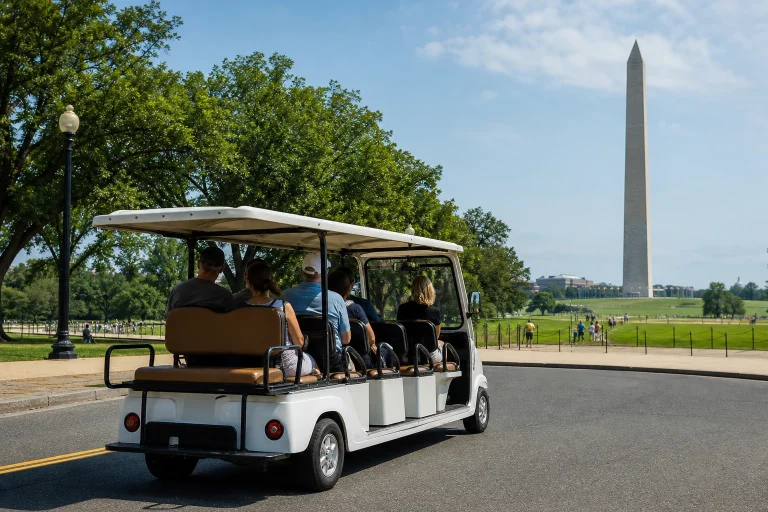
6 Comments
[…] outdoor National Mall memorials as flexible stops around fixed […]
[…] a hop-on, hop-off bus for the broadest National Mall overview with minimal […]
[…] Park Service rangers are normally on duty between 9:30 a.m. and 10 p.m. in National Mall and Memorial Parks. A later tour can still view exterior memorials, but ranger assistance and […]
[…] is the visual heart of this route. The Washington Monument anchors one end of the view while the Lincoln Memorial rises behind you. Small changes in position alter the balance of water, sky, and architecture, so […]
[…] to Washington, while a monuments night tour brings you close to the illuminated memorials of the National Mall. The cruise is the stronger choice when relaxation, a meal, or a Wharf-based outing matters most. […]
[…] the Lincoln Memorial is a priority, the Lincoln Memorial Guide for First Timers can help you plan what to notice after […]