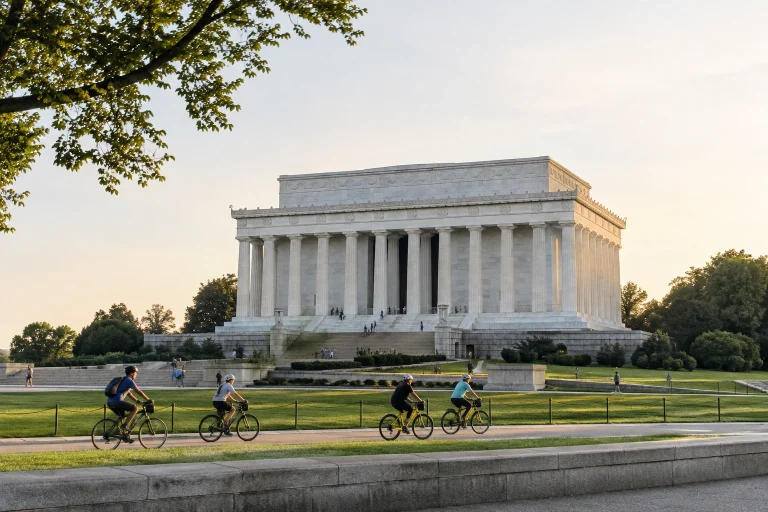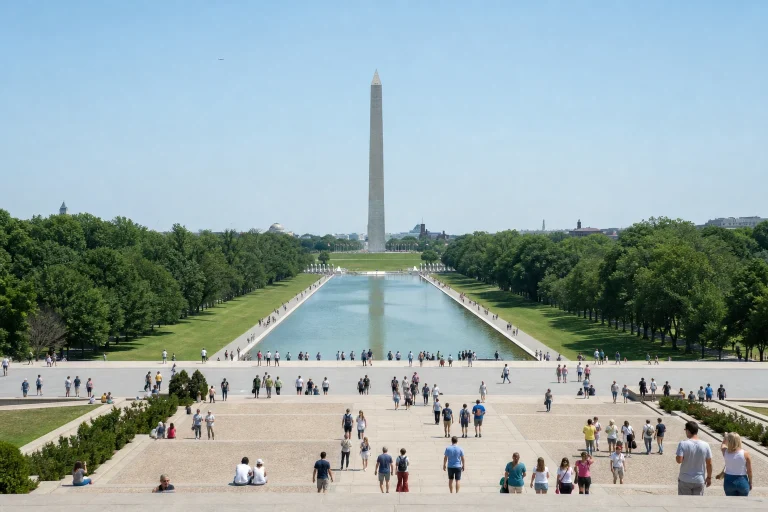
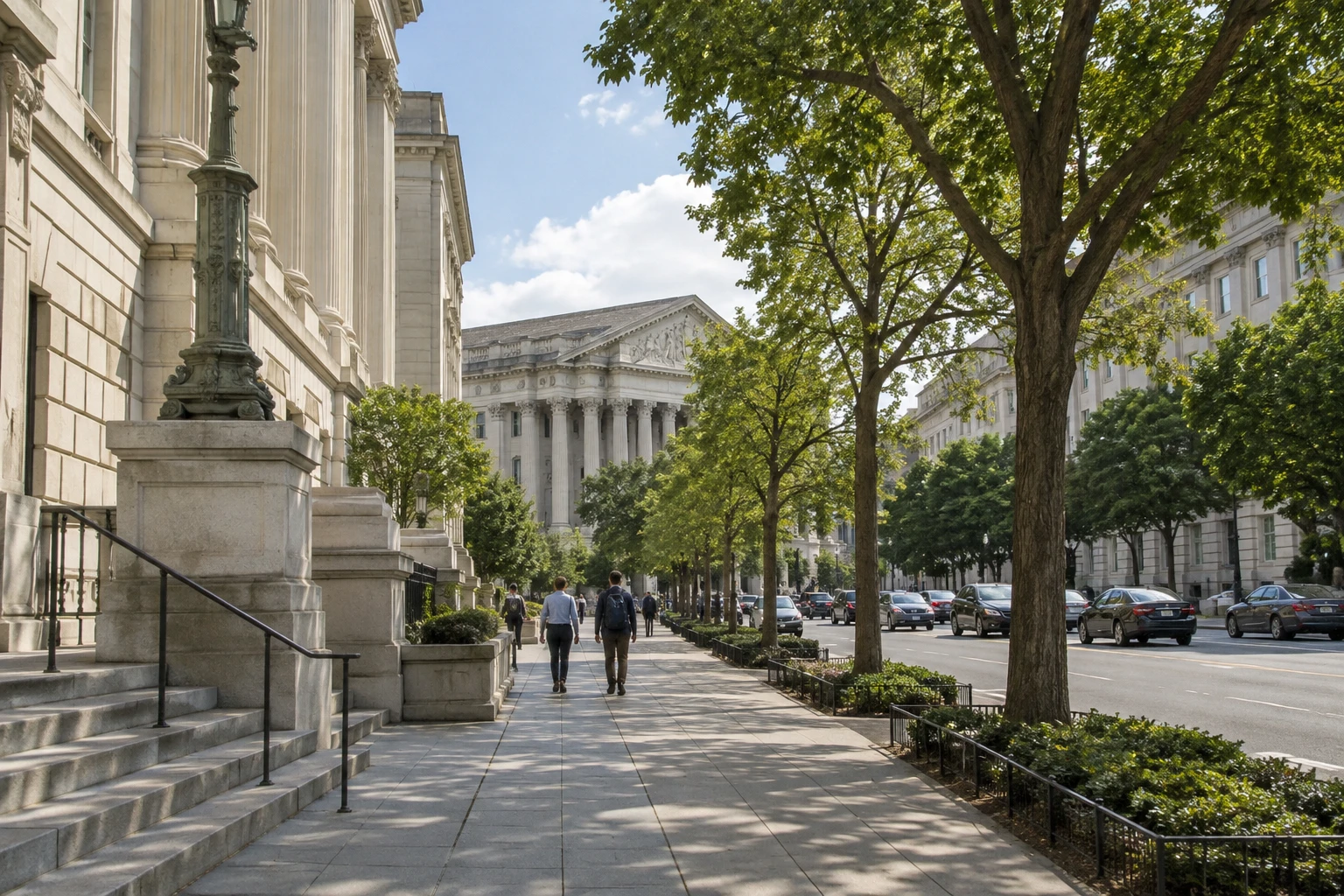
Washington DC architecture tours give structure to an outing that could otherwise become a blur of impressive facades and long walks. The most satisfying approach is simple: choose a theme, leave room to look closely, and decide early if you want a guide’s interpretation or the freedom to set your own pace. Good planning matters here, because the day’s walking, transit choices, weather, and access needs shape the experience as much as the buildings do.
A self-guided architecture walk is the flexible, lower-cost choice, using Metro and walking to connect the places that interest you. A guided experience can add interpretation and a ready-made structure, but its route, group size, duration, accessibility arrangements, weather policy, and price depend on the operator and tour selected. Review the details before committing to either format.

Iconic Capitol Hill Architectural Walking Tour
Explore the political core of Washington DC! This tour takes visitors through the heart of Federal power in Washington DC, looking at the history of o...

Dupont Circle and Embassy Row Architectural Walking Tour
Gilded Age mansions, high-stakes diplomacy, and sordid scandals converge in Dupont Circle, once on the rural edge of...

The Architecture of Argument: A DC Self-guided Walking Tour
This elf-guided walking tour explores how Washington's federal buildings reflect ideas about democracy, governance...

CAPITOL HILL AND EASTERN MARKET GUIDED WALKING TOUR - 3.5hrs 10AM with Earpieces
The Capitol Hill is the summit of American Democracy-literally and figuratively. The Capitol was built on Jenkins Hi...
- Choose guided touring for interpretation and a set plan; choose self-guided touring for flexibility and control of pace.
- Build one clear visual theme rather than trying to cover every architectural style in a single outing.
- Use Metro and walking for a car-free route, and check the actual rail fare for each trip.
- Ask guided-tour providers about the meeting point, walking distance, accessibility, weather policy, and cancellation terms before booking.
- Check Metro elevator status on the day if a step-free journey is essential.
Treat a Washington DC architecture tour as a sequence of observations rather than a checklist. Look for how a building meets the pavement, frames a view, handles light, or changes the scale of a street. That approach works with a commercial walk, a private guide, or an independently planned route, and it keeps the day rewarding even when you decide to shorten it, stop for a break, or linger at one especially compelling scene.
Choose Between a Guided Tour and a Self-Guided Walk
Book a guided architecture tour when expert commentary is the point of the experience and you prefer someone else to manage the route. Build your own walk when you want to photograph at length, change direction on a whim, or keep transportation costs separate from the cost of a guide. Both choices can work well, but they answer different travel needs.
| Format | Best for | Plan before you go |
|---|---|---|
| Guided architecture tour | Travelers who want interpretation and a defined experience | Confirm the route focus, meeting point, duration, walking demands, accessibility, price, and weather policy. |
| Self-guided architecture walk | Travelers who value flexibility, independent pacing, and transit-based savings | Choose a theme, map a logical sequence, check Metro service, and build in breaks. |
| Hybrid day | Travelers who want a little structure without filling the whole day | Use a guide or building visit for one segment, then leave the rest of the day open for your own observations. |
Questions to ask before booking a guide
- What architectural theme, area, or building types does the walk cover?
- Where exactly is the meeting point, and how will it be communicated?
- How long is the outing, including any scheduled stops or indoor visits?
- What is the expected walking distance and surface condition?
- What happens if rain, heat, or another weather issue changes the plan?
- What accessibility accommodations are available, and what is the cancellation policy?
It is also sensible to ask whether the person leading a commercial walking tour is licensed in the District. DC administers a tour-guide licensing program intended to protect guides and consumers. Licensing is one practical booking check, while the guide’s subject knowledge and the itinerary itself still deserve direct questions.
For a fully independent day, a Washington DC Walking Tours Guide can help you think about pacing and route structure beyond architecture alone. Use it as a planning companion, then narrow your architecture outing to a small number of stops connected by a clear visual idea.
Build a Self-Guided Architecture Route That Feels Coherent
The strongest self-guided routes have a question at their center. Instead of chasing every famous address, decide what you want to notice. You could compare formal civic streetscapes with more intimate blocks, focus on exterior materials, look for how older and newer structures meet, or trace the relationship between public entrances and the street around them.
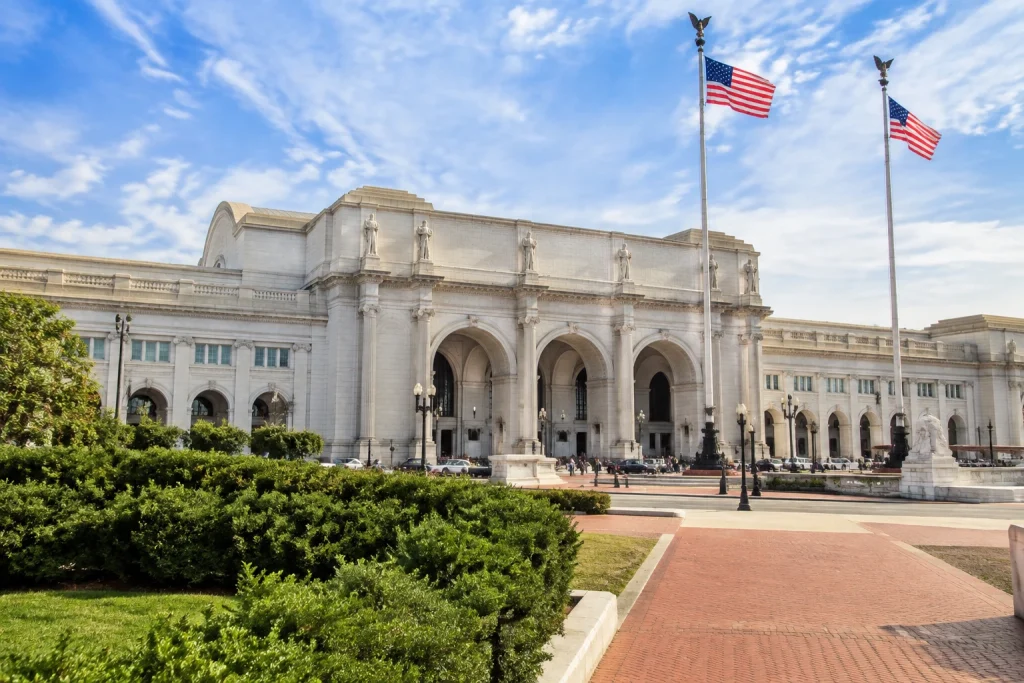
- Civic presence: broad approaches, formal entrances, and the way buildings shape public space.
- Material and texture: stone, glass, metal, brick, shadows, and changing surfaces.
- Street rhythm: repeating windows, corners, setbacks, arcades, and the view down a block.
- Human scale: benches, stairs, doorways, trees, and the transitions between building and sidewalk.
- Design dialogue: the visual contrast or harmony between neighboring structures.
Map a simple chain rather than a tangled loop. Begin at a transit stop that works for your arrival, group nearby observation points together, and finish close to a convenient onward connection. Keep the number of stops modest enough that you can look up rather than stare at a screen. A route that leaves space for detours will usually feel more memorable than one planned to the minute.

Bureaucracy: Pillars of Policy in D.C Self-Guided Walking tour
This 90-minute tour explores the "Pillars of Policy," revealing the history and infrastructure of the federal bureau...

Guided Capitol Hill with US Capitol and Library of Congress Entry
Enjoy a 2-Hour Guided Capitol Hill Walking Tour in Washington DC. This immersive tour includes official entry inside...

U.S. Capitol and Library of Congress Tour with Rotunda & Crypts
Experience American democracy on this 2-hour guided Capitol Hill tour with entry to the U.S. Capitol and Library of...
Give every stop a purpose
At each stop, pause long enough to identify one thing that makes the place work visually. It could be the doorway sequence, a roofline, a framed vista, a change in materials, or the way people move through the foreground. Take a wide photo first, then a closer detail. This small routine turns a casual walk into a more focused architecture tour without making it feel like homework.
For a civic-building-focused segment, a Federal Triangle Washington DC Guide is a useful companion for fitting that named area into a larger day. Keep the architecture route’s theme in charge: the goal is not to accumulate stops, but to see the selected streetscape with more attention.
Use Metro for a Car-Free Architecture Outing
Metro makes a self-guided architecture day easier to divide into manageable walking segments. WMATA lists weekday Metrorail full fares of $2.25 to $6.75 for trips from 5 a.m. to 9:30 p.m. Weekday late-evening and weekend rail fares are listed at $2.25 to $2.50. Metrobus local and limited-stop rides are $2.25.
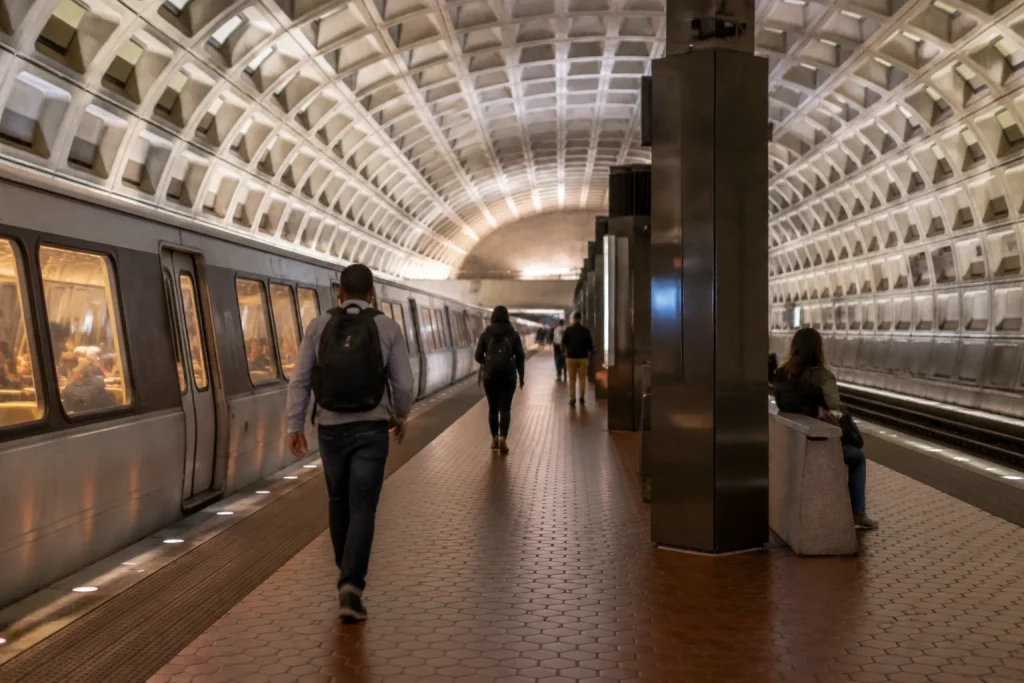
You can pay with a SmarTrip card or a contactless bank card. On Metrorail, use the same payment method when entering and exiting the station. Rail fares vary by weekday trip length, so check the planned journey rather than treating the daytime fare as a flat rate. This is especially useful when your route links more than one walking area.
For broader transport planning, How to Get Around Washington DC Without a Car is a helpful companion to an architecture itinerary. It can help you place your walking route within the rest of a car-free visit, rather than solving each journey separately as the day unfolds.
Plan the fare around the route, not the clock
Build the route around comfort, the order of your stops, and any timed indoor visits first. Then use WMATA’s trip-planning and fare information to check the actual journey. Weekend and late-evening fares have a narrower published range than weekday daytime rail fares, but a well-paced route is more valuable than rearranging the day solely around a small fare difference.
Make Accessibility Part of the Route Design
WMATA states that all Metrorail stations and railcars are accessible, with step-free routes from street to platform via elevators. Metrobus vehicles have ramps or lifts, and buses can secure wheelchairs or mobility aids. Rail stations also have extra-wide accessible faregates. These features make a transit-supported architecture outing more practical for many travelers.
Elevator status is the important same-day variable. Check it before leaving when a step-free route is necessary, since an elevator outage can change the practical accessibility of a station. WMATA says free shuttle service can be arranged during an elevator outage, but allowing extra time will make the day less stressful.
Visitors who cannot use accessible fixed-route rail or bus because of disability may qualify for MetroAccess visitor service for 21 days in a rolling 365-day period. MetroAccess is a shared, door-to-door paratransit option, with a fare of up to $4.50. It can reduce walking, though it requires eligibility and advance trip planning.
For any self-guided route, keep the physical design uncomplicated. Favor shorter links between stops, identify places where your group can pause, and avoid building the day around a single critical connection. An architecture outing should leave room to look around, not force a race between elevators, street crossings, and tight reservations.
Budget for Transportation and Keep Guide Costs Separate
A self-guided route has transparent transportation costs: use the applicable Metro fare for the trips you actually take, plus any food, admissions, or optional experiences you decide to add. A guided architecture tour has a separate operator-set price, which can vary by format and date. Review the current booking details before deciding which version fits your budget.
Do not confuse a guide’s ticket price with the District’s tour-guide licensing fee. The licensing program is an operator regulation, not a visitor-facing admission charge. Travelers looking to balance touring with other expenses can use a Washington DC on a Budget Travel Guide alongside this architecture-focused plan.
- Use Metro fare information to estimate each self-guided transit connection.
- Choose a compact route to avoid paying for unnecessary backtracking.
- Decide which experiences need a guide and which are better explored independently.
- Confirm the full guided-tour price and its inclusions before booking.
- Keep a little flexibility for a café stop, an indoor break, or a changed transit connection.

US Capitol, Supreme Court, Library of Congress, & House Chambers
Step inside the epicenter of American democracy with an exclusive, semi-private walking tour of Capitol Hill that in...

Private Washington, DC Landmarks Walking Tour
Private Washington, DC Landmarks Walking Tour invites you to uncover the stories, symbols, and architectural wonders...

Architecture of Washington's National Mall Audio Guide
Uncover the meaning behind some of the most iconic structures in D.C. on this self-guided audio tour. Experience the...
Dress and Pace for an Outdoor-Focused Day
For any architecture walk with substantial outdoor time, dress for the forecast and the pavement. Comfortable shoes matter more than almost any other item, since even a compact route involves standing still, crossing streets, and changing position to see a facade or a long view. Water, sun protection, and a light rain layer can keep a weather shift from deciding the day for you.
Use light as a planning tool. Morning, midday, and late afternoon can reveal different shadows, reflections, and textures, so give yourself permission to return to a scene instead of treating it as a one-pass photo stop. If rain or heat changes the plan, reduce the route rather than rushing it. A shorter, attentive walk is better than an overextended one.
A Practical Framework for the Day
- Pick one architecture theme and a realistic number of exterior observation stops.
- Choose a transit arrival point and a simple direction of travel, with a convenient finish.
- Check the weather, Metro trip details, fare, and elevator status if step-free access is needed.
- If using a guide, review the confirmation for the meeting point, timing, route demands, and policies.
- At each stop, notice one wide composition and one close detail before moving on.
- Leave an open stretch at the end for a repeat visit, a rest, or an unplanned discovery.
If your plan combines an architecture walk with a specific building visit, keep the two pieces distinct so neither gets rushed. A United States Capitol Tour Guide can help organize a visit focused on that individual site, while your architecture walk can remain broader and slower. For a longer stay, a 4 Days in Washington DC Itinerary can help place the outing within a more balanced trip.
Is a Washington DC Architecture Tour Worth It?
Yes, especially for travelers who enjoy cities through details that are easy to miss at normal sightseeing speed. Choose a guided tour if informed interpretation is worth the extra planning and operator-set cost. Choose a self-guided route if you want a flexible, transit-based day with more time for photography and personal detours. Set a theme, check your practical details before departure, and let the route breathe.

Architecture of Washington's National Mall Audio Guide
Uncover the meaning behind some of the most iconic structures in D.C. on this self-guided audio tour. Experience the magic of GPS playback on this imm...

Evening Guided Tour of Washington DC's Most Inspiring Memorials
As the sun goes down, some of America's most cherished monuments and memorials are transformed by lights that make t...

Private Walking Tour in Washington with Memorials
Trivate Walking Tour in Washington with Memorials invites you to explore the powerful stories and iconic landmarks t...

Library of Congress Washington DC Private Tour with Tickets
Skip the lines and step into the world’s largest library, home to 170 million treasures. Marvel at the Main Readin...
Frequently asked questions
Are Washington DC architecture tours better guided or self-guided?
Neither is automatically better. Guided tours suit travelers who want interpretation and a structured experience, while self-guided walks offer more flexibility and can keep costs focused on transit and personal choices.
How much does Metro cost for a self-guided architecture tour?
WMATA lists weekday Metrorail full fares of $2.25 to $6.75 from 5 a.m. to 9:30 p.m., while weekday late-evening and weekend rail fares are $2.25 to $2.50. Metrobus local and limited-stop rides are $2.25. Check the actual trip before traveling because fares can change.
Can I use a contactless card on Washington Metro?
Yes. Riders can use a contactless bank card or a SmarTrip card, and Metrorail riders need to use the same payment method at entry and exit.
Is Metro accessible for an architecture outing?
Yes, WMATA says all Metrorail stations and railcars are accessible, and Metrobus vehicles have ramps or lifts. Check elevator status on the day when step-free access is essential, because outages can affect the route.
What should I confirm before booking a guided architecture tour?
Confirm the architectural focus, meeting point, duration, walking demands, accessibility arrangements, weather policy, cancellation terms, and current price. It is also reasonable to ask whether the guide is licensed in the District.
Can visitors use MetroAccess in Washington DC?
Eligible visitors who cannot use accessible fixed-route rail or bus because of disability may qualify for MetroAccess visitor service for 21 days in a rolling 365-day period. It is a shared door-to-door option that requires advance planning.

Mount Vernon & Old Town Alexandria Tour with Historian Guide
Explore early American history on a guided walking tour led by world-renowned archaeologist and historian Dr. Yohannes Zeleke, offering expert insight...

Historic Georgetown: History, Gossip, & Architecture Walking Tour
Take a guided walking tour of a historic neighborhood older than DC itself. One of our guides (Canden Schwantes) wro...

Old Town, Alexandria and Mount Vernon Private Tour
Visit the colorful and historic Old Town Alexandria and the historic former home of George Washington on this unmiss...

Embassy Row: Architecture, Mansions & International Intrigue
Take a walk around the world and see the international side of the nation’s capital city. From diplomatic scandals...
Have a question about this guide?
Ask for tour ideas, hotel suggestions, or a simple trip plan that combines both.
Trip Helper
Experiences to explore
 Explore experience ↗
Washington DC Monuments Self-Guided Walking Audio Tour
◷ 1 hr–2 hr
Visit the most famous landmarks of America’s capital city! See the White House, the Lincoln Memorial, the Capitol Building, Smithsonian
From $16.99 USD
View dates Explore experience ↗
The Architecture of Argument: A DC Self-guided Walking Tour
◷ 1 hr 30 min–2 hr
This elf-guided walking tour explores how Washington's federal buildings reflect ideas about democracy, governance, and power. Tracing
See dates for Current pricing
View dates Explore experience ↗
Skip the Line Washington Monument Tickets and Self Guided Book
◷ 1 hr
Enjoy complimentary timed entry to the Washington Monument observation deck and breathtaking 360° views of Washington, DC. Your purchas
See dates for Current pricing
View dates