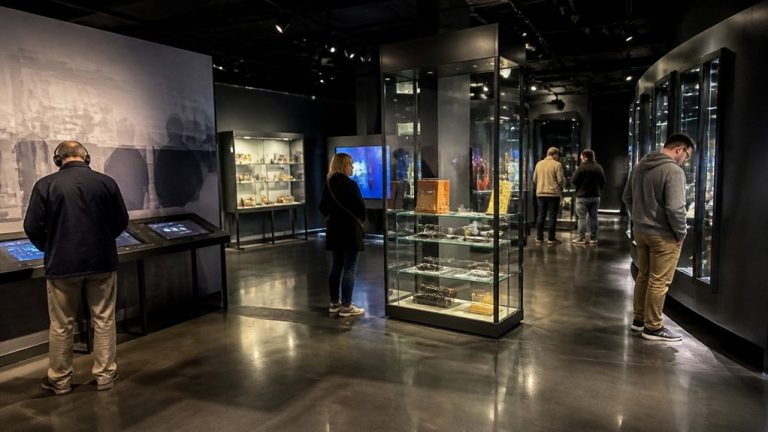

More than 7 million specimens sit behind the scenes at the Smithsonian National Museum of Natural History, and you can step into the public highlights for free every day from 10:00 a.m. to 5:30 p.m. You’ll pass dinosaur bones the size of buses, a blue whale model that seems to float, and the Hope Diamond glowing under glass. Arrive early, keep security simple, and bring your museum map. The real trick is knowing where to start.
Key Takeaways
- The museum is free, open daily 10:00 a.m.–5:30 p.m., and closed only on December 25.
- Arrive early, use Metro, and enter via Madison Drive or 10th Street for the easiest start.
- Expect security screening; avoid large bags and prohibited items like knives, tripods, scooters, and e-cigarettes.
- Prioritize Henry the elephant, the Hope Diamond, Fossils Hall, Ocean Hall, and the Mammals Hall.
- Pick up or download a map to locate elevators, restrooms, cafés, and accessible routes throughout the museum.

Smithsonian Museum of Natural History - Exclusive Guided Tour
Join a 2 hour exclusive guided tour of the National Museum of Natural History, featuring rare marvels from around the world. The tour will lead you th...

Smithsonian "Big 3" Highlights Tour (Air & Space Entry Included)
See the best of the Smithsonian Museums on a 3-hour guided tour of the highlights of the American History, Natural H...

Washington DC "See the City" Guided Sightseeing Segway Tour
Experience Washington DC on a 2-Hour Guided Sightseeing Segway Tour through the nation's capital and experience all...

Private Day or Night Tour with 10 Stops, Guide, and Hotel Pick-Up
Experience Washington DC during the morning or under the stars on a Private 3-Hour Guided Morning or Night-Time Sigh...
How Do You Plan a Smithsonian Natural History Visit?

How do you make the most of a day at the Smithsonian National Museum of Natural History? Start early. Arrive at 10:00 a.m. when the Smithsonian National Museum opens, and give yourself until the 5:30 p.m. close to explore. Build your visit around three stars: Henry the African Bush Elephant in the Rotunda, the Hope Diamond on the second floor, and the Fossils Hall on the first.
Skip driving and take Metro instead. You’ll save time and avoid the no-parking headache. Expect security screening, so pack light and leave prohibited items behind, including large backpacks and selfie sticks. If you need accessibility services, book them at least two weeks ahead. Then wander with a plan, but stay curious. A giant elephant tends to improve anyone’s schedule, even yours. Admission is always free, and guided tours are also offered at no cost.
Where Is the Smithsonian Natural History Museum?
Right in the middle of the National Mall, the Smithsonian National Museum of Natural History sits between 9th and 12th Streets NW along Madison Drive, with broad stone steps and busy walkways that make it hard to miss.
You can enter from Madison Drive or from 10th Street NW at Constitution Avenue NW. If you’re riding Metro, several stations work well. Smithsonian is the classic choice, but Federal Triangle, Archives, and Metro Center also put you within an easy walk. Driving takes more planning because the National Mall doesn’t offer Smithsonian public parking. Nearby garages and commercial lots fill that gap. If you need accessible access, you’ll find designated parking spaces, accessible entrances, and elevators reaching every public floor. The nearby National Mall also connects you conveniently to the Smithsonian museums for a full day of exploring. Once you arrive, the museum feels planted at the city’s center and ready for wandering.
When Is the Museum Open and Free?
You can visit the National Museum of Natural History every day from 10:00 a.m. to 5:30 p.m., except December 25, and yes, admission is completely free. You won’t need passes or tickets, so you can focus on planning your route instead of fumbling at the door. Just arrive ready for security screening and keep an eye on the clock, because everyone heads out when the doors close at 5:30. This makes it a standout stop in a budget travel guide to Washington DC.
Museum Hours
Usually, the easiest part of visiting the National Museum of Natural History is the price: it’s free, and you don’t need passes or tickets to walk in. For planning, what matters most is timing. The museum is open daily from 10:00 a.m. to 5:30 p.m., except December 25, when it closes for the holiday. Like the American History Guide, it’s smart to confirm current details before your visit in case hours or entry procedures change. Arrive early if you want quieter halls and more time with the fossils.
Keep the clock in mind while you wander. All visitors must head out by 5:30 p.m. when the doors close. You’ll also pass through security screening, usually metal detectors, before entering. You can take noncommercial photos unless a sign says otherwise. Leave tripods, monopods, and selfie sticks behind unless you’ve cleared them with the Press Office. Also, don’t light up anywhere inside.

Washington, DC: Sunset & After-Dark Monuments Tour by E-Cart
Please Note: The 6:00 PM tour may not be fully dark depending on the season. The 8:30 PM tour offers a fully after-d...

Washington DC Monuments and Memorials Night Tour
See Washington, DC in ways large bus tours can’t—especially after dark. This small‑group night tour (12 guests...

DC Monuments by Night: 10+ Landmarks | Open-Top Upgrade Available
See a different side of Washington DC after dark on a guided night tour of the city's floodlit monuments. This tour...
Free Admission
Here’s the good news: the National Museum of Natural History stays free all year, so you can walk in without buying a ticket or reserving a pass. At this Smithsonian favorite, free admission means you can pop in daily from 10:00 a.m. to 5:30 p.m., except December 25. It’s also one of the top museums to include while you discover Washington DC’s museums and hidden gems. You’ll still pass through security screening and metal detectors, so pack light.
| What to know | Quick detail |
|---|---|
| Hours | Open daily, 10:00 a.m. to 5:30 p.m. |
| Cost | Free admission all year |
| Closed | December 25 only |
Plan your timing carefully. Everyone must exit at 5:30 p.m., even if the dinosaur halls still have your full attention. If you want extras like special programs or temporary exhibits, check the museum calendar first because those can follow different schedules or entry rules.
How Do You Use the Museum Map?
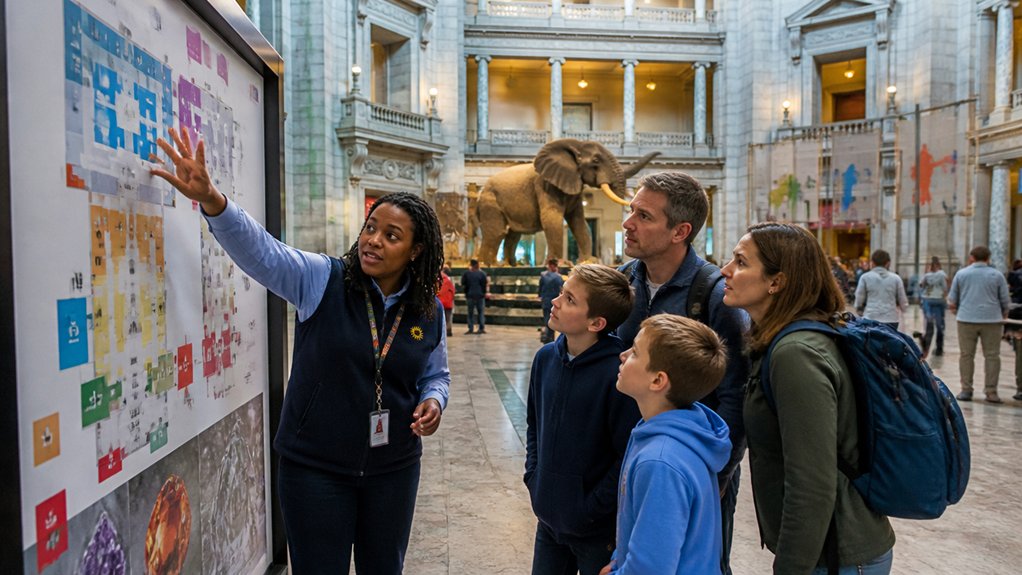
How do you turn a giant museum into a day that feels smooth instead of overwhelming? Start with the map. Download it or grab one at the museum, then use its floor labels to track all three levels and key stops like the David H. Koch Hall of Fossils, Sant Ocean Hall, and Janet Annenberg Hooker Hall.
The map also helps you move smart. Check elevator icons if you want an accessible route, since every public floor and entrance works for that. Mark break spots like Ocean Terrace Café, Atrium Café, and the Gem and Mineral Store. You can also find restrooms, the family restroom near Sant Ocean Hall, the Security Office, and the nursing station. Follow must-see markers too, so you can time the Hope Diamond, T. rex, and Henry well. If you have time after planning your route, comparing it with a visitor’s guide can help you think about how other Smithsonian museums organize highlights and navigation.
What Are the Best Museum Halls to Explore?
You’ll probably want to start with Fossils and Deep Time, where T. rex, Triceratops, and a huge 31,000-square-foot story of life make the first floor feel epic fast. Then you can shift to glitter and fire in the Gems hall for the Hope Diamond and Earth drama, or head to Sant Ocean Hall for reef fish, a giant right whale replica, and cool conservation displays. If you want something lively and close-up, the Mammals hall gives you a leaping tiger, the famous Lion diorama, and thousands of animals that make adaptation look like nature’s best trick. For a broader Washington experience, you can also pair your visit with the Smithsonian National Zoo for another family-friendly Smithsonian stop.
Fossils And Deep Time
If deep time is what pulls you in, start on the First Floor in the David H. Koch Hall of Fossils — Deep Time. You’ll trace 3.8 billion years of life through Deep Time, from tiny early organisms to today’s biodiversity, inside a huge immersive gallery. Follow the museum map and keep your eyes moving.
- A towering T. rex that seems ready to lunge
- Triceratops displays that anchor big evolutionary shifts
- Fossils paired with changing climates and planetary upheaval
- Quiet panels that make Earth’s vast age feel personal
- Nearby Bones Hall upstairs for skeleton comparisons
After the fossils, head to the Second Floor and compare fish, turtles, snakes, giraffes, and primates in Bones Hall. If timing works, check the Events calendar for tours or programs. They sharpen your focus nicely. At the National Portrait Gallery, the free daily Walk-In Highlights Tour meets in the F Street Lobby.
Gems, Oceans, And Mammals
The museum’s best hall-to-hall stretch pairs sparkle, saltwater, and fur in one easy sweep. Start upstairs in the Janet Annenberg Hooker Hall of Geology,Gems,and Minerals, where the Hope Diamond glows and meteorites, crystals, and mineral specimens crowd the cases with serious shine. Like a good museum guide, this route works best when you move with a plan instead of trying to see everything at once.
Then head to Sant Ocean Hall on the first floor. You’ll move through 3.8 billion years of ocean history, pause by the live coral reef tank, and stare up at the suspended mega-toothed shark. The Megalodon jaws are a fun reality check.
Next, step into the Kenneth E. Behring Family Hall of Mammals for the leaping tiger and the Lion specimen. If you want extra context, connect these stops with Fossils. Check the map, pass the Gem and Mineral Store, and time lunch around café hours well.

Washington DC's Monuments & US History Guided E-Cart Tour
This tour offers a detailed introduction to U.S. history and Washington D.C.’s famous monuments, guided by expert...

DC's Monuments & Landmark Guided Small Group E-Cart Tour
This tour is a great alternative to see DC's Monuments by a E-Cart and knowledgeable guide. This tour offers a detai...

DC Monuments & Capitol Hill Highlights Tour by Electric Cart
Experience a whole different side of Washington, DC during our Monuments by day tour! Climb into our all-electric Re...
Which Smithsonian Natural History Exhibits Are Must-Sees?
Where do you start when one museum packs in dinosaurs, diamonds, whales, and an elephant big enough to stop you in your tracks? At Smithsonians National Museum, you’ll want a short must-see list before curiosity steals the map from your hands.
- Henry the elephant towers in the Rotunda, all muscle, tusk, and awe.
- The Hope Diamond glows icy blue in the gem hall upstairs.
- David H. Koch Hall of Fossils pulls you through deep time with T. rex and Triceratops.
- Sant Ocean Hall surrounds you with reef fish, ocean stories, and a giant right whale model.
- The mammal hall brings motion to stillness with a leaping tiger and bronze bison.
Don’t miss Bison Standing Strong, a new exhibit that traces the American bison’s story from ancient times to its remarkable comeback.
If you’re choosing only a few stops, start here. You’ll get the museum’s biggest hits fast, without missing wonder.
Where Can You Eat at the Museum?
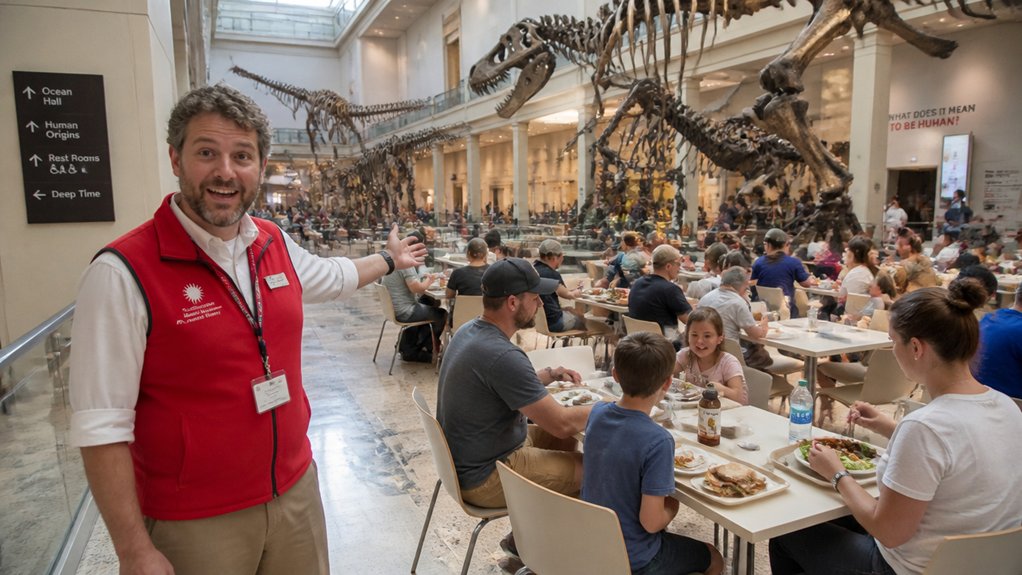
After a lap past fossils and gemstones, you’ll probably want a recharge plan. The museum gives you two easy options. Ocean Terrace Café on the First Floor serves lunch from 11:00 a.m. to 3:00 p.m., with a Coffee Bar pouring drinks from 10:00 a.m. to 5:00 p.m. You can build grain bowls, grab sandwiches, lunch plates, desserts, snacks, and beverages. If you’re planning more D.C. sightseeing afterward, a Library of Congress visitor guide can help you map out your next stop.
Atrium Café on the Ground Floor runs 11:00 a.m. to 5:00 p.m., though choices thin out after 3:00 p.m. Expect burgers, grill items, focaccia hot melts, a seasonal market table, desserts, and drinks. If you brought a bagged lunch, you’ll need to store it and eat outside since indoor seating and refrigeration aren’t provided. Free si-visitor Wi-Fi helps you check menus or place an order fast on-site.
Where Can You Shop at the Museum?
Swing by a shop before you head out, and you can turn a museum visit into a take-home souvenir hunt. You’ll find several stops across the museum, and most follow museum hours until 5:30 p.m.
- Glittering stones at the Gem and Mineral Store on the First Floor
- Kid-friendly picks at the Family Store in the Evans Gallery on the Ground Floor
- Nature-themed gifts at the Nature Store on the Second Floor
- Dinosaur and mammal merchandise near the halls that inspired it
- Quick finds at the Natural History Express Kiosk upstairs
If you miss something, you can browse selected items online through the Smithsonian Store. Need help tracking down a gift? Call the NMNH Store Management Team at 202-633-2060. Smaller kiosks may keep their own schedules, so peek in early. The museum’s broader Smithsonian community also offers membership benefits, including Air & Space Quarterly magazine and support for exhibitions, programs, and collection care.
What Are the Security, Bag, and Photo Rules?
Before you step inside, you’ll pass through full security screening, so travel light and leave prohibited items like knives, tools, signs, scooters, and pets at home unless it’s a trained service animal. You won’t find lockers or coat check, which makes big backpacks and rolling suitcases more trouble than treasure. You can snap still photos and video for personal use, but selfie sticks, tripods, and monopods aren’t allowed, and yes, the museum may catch you on camera too. At the Library of Congress, formal photography for personal use requires a permit through the Library’s photography permitting system.
Security Screening Rules
Since museum entry starts with security, plan for a full screening at the door and expect to walk through a metal detector, with hand-screening by electronic wand available if you can’t use it. You’ll move faster if you arrive light and ready. As part of a first-timer’s guide to the National Mall, it helps to build in a little extra time for museum security lines.
During security screening, keep these prohibited items out of your plans:
- Firearms, ammunition, knives, scissors, and tools
- Aerosol cans and e-cigarettes
- Placards, signs, and banners
- Pets, unless they’re service animals
- Tripods, monopods, and selfie sticks without permission
Picture the entry line as brisk but orderly, with bins, beeps, and staff guiding you forward. If you’re carrying too much, there’s no locker backup waiting inside. Travel lean, keep essentials close, and you’ll clear the doors smoothly and get to the dinosaurs sooner.
Bags And Photography
Usually, the easiest way to handle the museum’s bag and photo rules is to pack light and keep your camera simple. At the Museum of Natural History, you’ll pass through security, usually a metal detector, and staff can use an electronic wand if needed. Since there’s no coat check or public lockers, skip large bags, backpacks, suitcases, coats, and bulky parcels.
You also can’t bring firearms, ammunition, knives, aerosol cans, scissors, tools, signs, banners, skateboards, or scooters inside. You may take still photos and video for personal use unless a gallery posts otherwise. Leave tripods, monopods, and selfie sticks at home unless you’ve arranged Press Office permission and an escort. Don’t smoke or vape on museum grounds. Also remember, Smithsonian cameras may catch you while you’re exploring. Exit by 5:30 p.m. If you’re planning another D.C. stop, the National Archives’ Charters of Freedom are open daily from 10 a.m. to 5:30 p.m.
What Accessibility Services Does the Museum Offer?
Happily, the museum makes it easy for more people to explore its halls with confidence. You’ll find elevators serving every public floor, plus accessible parking near the National Mall, so arrival feels straightforward, not like a fossil hunt.
- Smooth entrances and exits welcome wheels and strollers alike
- Free manual wheelchairs wait in limited numbers, first come first served
- service dogs trained to assist are welcome beside you
- Open captions, induction loops, listening devices, and booked sign language or CART support hearing access
- Tactile objects, described tours, and the Deep Time Audio Description App add texture for blind or partially sighted visitors
If you want interpreted or described tours, give two weeks’ notice by phone or email. That little bit of planning can open up a much richer visit for you. Other Smithsonian spaces, like the Hirshhorn, also extend art beyond gallery walls through audio offerings that bring museum content to your earbuds.
How Can You See Virtual Tours and Events?
You can dive right in from home by visiting the museum’s Virtual Tour page, where galleries past and present open up on your screen along with a few behind-the-scenes spaces most visitors never see in person. Use the downloadable map and exhibit pages first so you can spot Deep Time Fossils and the Hope Diamond without wandering in digital circles.
For live programs, check the Calendar of Events or the Today at the Museum section. You’ll find gallery talks, family activities, and adult after-hours events. If you want a guided Virtual Tour, look under Group & School Visits, Professional Visits, and Virtual Tours for organized online experiences and educator resources. Keep an eye on event listings for temporary exhibition programs, like Imagining Bison or Lights Out, then click the posted dates and access links. If you also enjoy digital museum experiences beyond natural history, the National Portrait Gallery in Washington, DC offers another way to explore art and history online.
Frequently Asked Questions
How Old Is the African Bush Elephant Display?
It’s about 65 years old; you’re seeing the African bush elephant display revealed in 1959. You can connect its exhibit history to elephant lifespan facts, since these animals often live 60 to 70 years.
What Can Kids Do in the Q?Rius Discovery Area?
Like a time-traveling TikTok, you can explore hands on experiments, try fossil handling, examine specimens, use microscopes, ask scientists questions, and investigate natural history through interactive activities designed to spark your curiosity and discovery.
Which Gems and Meteorites Are Most Famous Here?
You’ll find the Hope Diamond and Willamette Meteorite are the most famous highlights here. You can also spot dazzling sapphires, giant quartz crystals, and dramatic space rocks that make the collection feel unforgettable and truly iconic.
How Does the Museum Present Human Origins Research?
You explore human origins through immersive exhibits, reconstructed ancestors, and interactive evidence displays. You trace human evolution across time, compare skulls and tools, and see how scientists use fossil interpretation to test changing ideas.
What Rotating Exhibits Are Currently Featured at the Museum?
You’ll find Smithsonian rotations changing regularly, so you should check the museum’s current exhibitions page for the latest exhibit highlights. You can usually see limited-time shows in art, fossils, culture, and interactive science displays.
Conclusion
Plan ahead and you’ll glide from the Fossil Hall’s towering bones to the Hope Diamond’s cold blue flash without wasting a minute. Arrive early, pass security, and keep the map handy. You can pause by the Ocean Hall’s whale, grab a quick bite, then wander the Mammals dioramas as the galleries hum around you. The early bird catches the worm, and here it catches more time for wonder. Before you go, check events and virtual tours online first.
Smithsonian Museum of Natural History - Exclusive Guided Tour
Join a 2 hour exclusive guided tour of the National Museum of Natural History, featuring rare marvels from around the world. The tour will lead you th...
Smithsonian "Big 3" Highlights Tour (Air & Space Entry Included)
See the best of the Smithsonian Museums on a 3-hour guided tour of the highlights of the American History, Natural H...

Private Smithsonian Guided Tour with Private Transportation
Welcome to an exciting private walking guided experience through Washington, DC’s most iconic Smithsonian museums! You’ll choose 2–3 museums fro...
Smithsonian Museum of Natural History - Exclusive Guided Tour
Join a 2 hour exclusive guided tour of the National Museum of Natural History, featuring rare marvels from around th...

Smithsonian Museum of Natural History Small Group Tour: 8ppl Max
Join a 2 hour small group guided tour of the National Museum of Natural History, featuring rare marvels from around...

Small Group| 1.5h Chinese guided tour to Smithsonian Museum
Step into one of the most renowned museums in the world—the Smithsonian National Museum of Natural History—and e...
Still comparing Smithsonian National Museum Of Natural History?
Ask for tour ideas, hotel suggestions, or a simple trip plan that combines both.
Trip Helper
Experiences to explore
 Explore experience ↗
Smithsonian Museum of Natural History - Exclusive Guided Tour
◷ 2 hr
Join a 2 hour exclusive guided tour of the National Museum of Natural History, featuring rare marvels from around the world. The tour w
From $105.00 USD
View dates Explore experience ↗
Smithsonian Museum of Natural History Small Group Tour: 8ppl Max
◷ 2 hr
Join a 2 hour small group guided tour of the National Museum of Natural History, featuring rare marvels from around the world. The tour
From $105.00 USD
View dates Explore experience ↗
Smithsonian Natural History + Air & Space Museum Tour 8ppl Max
◷ 5 hr 30 min
This 5.5 hour Semi-Private (8 Guest Max.) guided combo tour welcomes guests to experience the Smithsonian’s two most visited museums in
From $215.00 USD
View dates