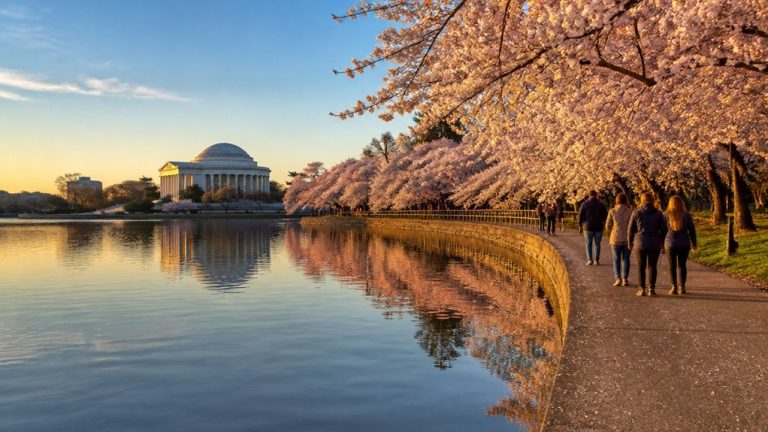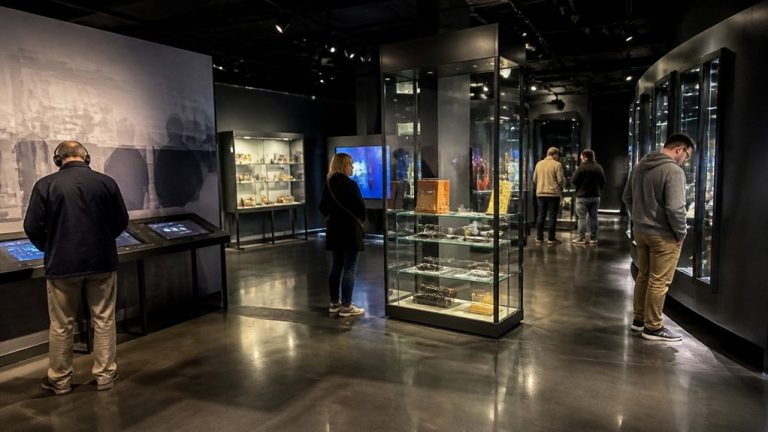

You could spend a lifetime on the National Mall and still stop short at one of its most affecting corners. At the Korean War Veterans Memorial, you walk shaded paths into a triangle of steel soldiers, black granite reflections, and quiet water that catches every footstep and breeze. It’s open all day, easy to pair with nearby stops, and best when the light is low. Then you notice the faces in the wall, and the place shifts.
Key Takeaways
- The Korean War Veterans Memorial is on the National Mall near the Lincoln Memorial, Reflecting Pool, and World War II Memorial.
- It is open 24 hours with free admission, and park rangers usually offer talks and assistance from 9:30 a.m. to 10 p.m.
- The memorial honors 5.8 million Americans who served, with inscriptions noting the war’s dead, missing, prisoners, and wounded.
- Its Field of Service features 19 stainless steel figures whose reflections create 38 images, symbolizing the 38th parallel.
- Don’t miss the Mural Wall, Pool of Remembrance, United Nations Wall, and the inscription “Freedom Is Not Free.”
Where the Memorial Is

On the National Mall, the Korean War Veterans Memorial rests just southeast of the Lincoln Memorial and directly south of the Reflecting Pool, so it’s easy to fold into a walk between Washington’s biggest landmarks. You’ll find it in a triangular site on the National Mall in Washington, where two long granite walls angle inward and meet at the circular Pool of Remembrance.
As you move through the memorial, the layout quietly guides your eye. North of the Field of Service statues, the United Nations Wall lists the 22 nations that supported the war effort. Polished stone catches shifting light, and the nearby Reflecting Pool keeps the setting calm even when the Mall feels busy. It’s a place that sits close to famous sights yet still feels slightly tucked away, which suits its reflective mood. The memorial is also marked by the phrase Freedom Is Not Free, reinforcing the solemn purpose of the site.
How to Get There
From most National Mall routes, getting to the Korean War Veterans Memorial is simple. You’ll find it southeast of the Lincoln Memorial and just south of the Reflecting Pool, so it fits naturally into a walk between major monuments. If you’re strolling nearby, just follow the tree-lined paths and you’ll spot it without much trouble.
If you prefer transit, take Metrobus 32, 34, or 36 for an easy approach. You can also ride Metro to Smithsonian or Federal Triangle on the Orange, Blue, or Silver lines, then walk across the Mall. Foggy Bottom works too if you don’t mind a longer stretch. Many visitors pair the memorial with the Lincoln Memorial and World War II Memorial, turning the trip into a full scenic loop. The nearby World War II Memorial is open 24 hours a day, which can make it an easy addition to your route. Comfortable shoes help. The paths invite wandering.
Hours and Best Times to Visit
Because the Korean War Veterans Memorial never closes, you can visit whenever your Mall walk brings you by, and admission is always free. It’s open to the public 24 hours, so you can shape your stop around your day.
- Arrive early for cool air, soft light, and a quieter path beside the Pool of Remembrance.
- Come between 9:30 a.m. and 10:00 p.m. if you want park rangers nearby for questions and programs.
- Expect midday crowds, tour groups, and more foot traffic when the National Mall is humming.
- Try late evening for still water, fewer voices, and a reflective mood that feels almost cinematic.
The memorial is part of America’s Front Yard, where more than 100 unique monuments and memorials shape the National Mall experience.
If you’re riding Metrobus or using nearby Smithsonian, Federal Triangle, or Foggy Bottom stations, a midday visit fits easily. Just know you’ll trade convenience for company.
What the Memorial Honors
As you walk through the memorial, you see that it honors the service and sacrifice of 5.8 million Americans who served in the Korean War, with special recognition for those killed, missing, or wounded. You also spot how it reaches beyond the U.S. by naming 22 United Nations nations that sent troops, medical help, or supplies. The steel figures, the quiet pool, and the line “FREEDOM IS NOT FREE” remind you that this place honors both the people who served and the steep cost they carried. Like a visitor’s guide, this memorial also helps you reflect on the stories behind the names, symbols, and sacrifices remembered here.
Still comparing Korean War Veterans Memorial?
Ask for tour ideas, hotel suggestions, or a simple trip plan that combines both.
Trip Helper
Service And Sacrifice
Memory takes solid form here. You don’t just read about the Korean War. You feel what service and sacrifice meant for 5.8 million Americans who served between June 25, 1950, and July 27, 1953. The message hits hardest in four vivid sights:
- Nineteen stainless steel statues stride through juniper like a patrol moving in silence.
- A granite alcove beside the Pool of Remembrance lists 36,634 killed, 8,177 missing or lost, and 103,284 wounded.
- The words Freedom Is Not Free stop you cold and make the breeze feel sharper.
- The United Nations wall names 22 countries that sent troops, aid, or supplies.
Like the Vietnam memorial’s Find a Name feature, this space also shows how remembrance becomes more personal when individual service is made visible.
As you walk, stone, water, and reflected light turn numbers into something human. Even your footsteps seem to lower their volume here, a little.
Korean War Service Members
What those images finally point to is the people themselves. At the Korean War Veterans Memorial, you meet the roughly 5.8 million Americans who served from June 25, 1950, to July 27, 1953. Like a first-time guide, the memorial helps orient visitors by turning large history into details you can actually follow. In the Field of Service, 19 steel figures move through scrubby ground in ponchos and helmets, as if the wind still matters.
| Element | What you notice |
|---|---|
| Service members honored | About 5.8 million Americans |
| Statue squad | 14 Army, 3 Marines, 1 Navy, 1 Air Force |
| Reflections | 19 become 38, echoing the 38th parallel |
| Wall of Remembrance | 36,634 American names |
| Casualty inscriptions | 36,634 killed, 8,177 missing/POW, 103,284 wounded |
You don’t just see symbols here. You see faces, gear, and the weight of service made real.
International Allied Contributions
Even if you arrive thinking this is mainly an American memorial, the site quickly widens your view. At the United Nations wall, you see all 22 countries that provided help, from Australia and Turkey to Denmark and Ethiopia. The memorial doesn’t stop at combat. It also honors nations that provided medical care, supplies, and logistics under U.N. command. Visitors coming from Washington can also pair this stop with Arlington National Cemetery, another major place of military remembrance nearby.
- You trace names cut into stone on the United Nations wall.
- You hear water at the Pool of Remembrance beside casualty totals.
- You notice troops and support roles separated in crisp inscriptions.
- You step back and see statues, mural, and pool tell one shared story.
Those numbers for killed, captured, missing, and wounded place U.N. sacrifices beside U.S. losses. Suddenly, the war feels global, not distant, and definitely not small at all.
The Field of Service Statues
| Detail | What you notice | Why it matters |
|---|---|---|
| Squad size | 19 patrol figures | Tension feels immediate |
| Branches | Army, Marines, Navy, Air Force | Service looks united |
| Diversity | Five ethnic groups represented | The force feels real |
In the Field of Service, ponchos ripple with cold-weather energy. You can spot 14 Army, 3 Marines, 1 Navy, and 1 Air Force servicemembers. Together, statues and reflections echo 38 figures, nodding to the 38th parallel. For travelers also exploring DC museums, the nearby National Portrait Gallery offers another powerful way to connect with American history.
The Mural Wall and Its Symbolism
As you move toward the Mural Wall, the memorial shifts from a frozen patrol scene to a broader picture of the war. This Mural wall stretches 164 feet in Black Granite, with 41 panels carrying more than 2,400 sandblasted photos from the National Archives.
The Mural Wall broadens the story: 164 feet of black granite, 41 panels, and 2,400 faces of war
- You see troops moving by sea.
- You spot medics and chaplains at work.
- You catch aircraft, gear, and fire support.
- You notice mountainlike waves in the wall’s line.
Designed by Louis Nelson, the reflective Academy Black Granite mirrors the 19 statues nearby, so you seem to count 38 figures. That visual echo points to the 38th parallel and the war’s 38 months. Then one sentence stops you cold: “FREEDOM IS NOT FREE.” It’s simple, direct, and impossible to shrug off there.
The Pool of Remembrance
Past the Mural Wall, the memorial grows quieter and more inward at the Pool of Remembrance. You reach this shallow circular Pool at the far end, where the tip of the triangular mural wall meets a 30 foot wide mirror of water. Trees ring the space and let sunlight flicker across the surface, so the whole area seems to breathe.
You’ll notice how the reflective water anchors the memorial’s shape and deepens the nearby words, “Freedom Is Not Free.” Like the World War II Memorial, this kind of reflective space encourages visitors to pause and take in the weight of service and sacrifice. An alcove and granite wall beside the Pool add sobering detail. They list those killed, wounded, missing in action, and held prisoner during the Korean War. Most visitors slow down here without planning to. The hush, the stone, and the shifting reflections make this stop feel quietly unforgettable for many.
The U.N. Wall and International Support
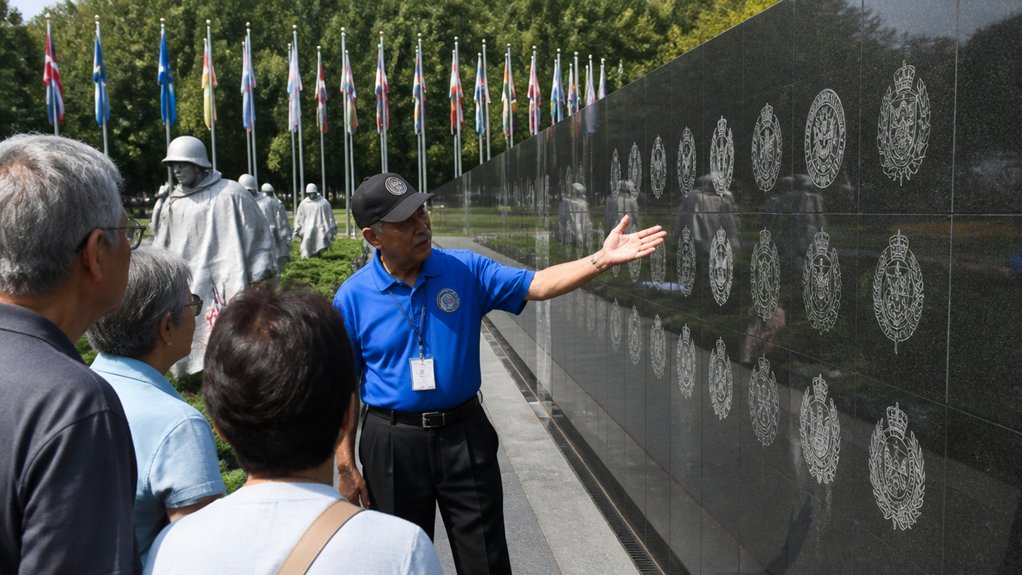
As you walk north of the Field of Service beside the Pool of Remembrance, you’ll spot the U.N. Wall and its engraved markers naming 22 nations that sent troops, medical teams, or other aid. You can read countries from Australia and Canada to Turkey and the United States, and you quickly see that this wasn’t a one-country war. Paired with the nearby casualty inscriptions, the wall shows you the scale of a global effort and the human cost that came with it. For visitors planning broader memorial and civic-history stops, visitor resources can help maximize time during a trip.
United Nations Contributors
Look north of the Field of Service statues and you’ll find the U.N. United Nations Wall, a polished reminder that this war drew a truly United coalition. As you trace the names, you see 22 nations, from Australia and Canada to Turkey, Thailand, and the United States, all gathered under U.N. authorization.
- Dark stone catching light like still water
- Country names lined up in crisp order
- A triangular path pulling you toward the Pool of Remembrance
- Quiet footsteps and low voices around you
You’re not just looking at a list. You’re seeing an international effort from 1950 to 1953. The wall places American sacrifice beside allied service and reinforces the memorial’s core message: Freedom Is Not Free. It quietly widens your view. Like the Lincoln Memorial’s tribute to unity and strength, this space also frames sacrifice as part of a larger shared purpose.
Support Roles Recognized
Just beyond the list of nations, the U.N. Wall shows you that help came in more than one form. The engraved markers on the United Nations Wall recognize combat troops, supplies, aid, and medical support. As you walk north of the Field of Service toward the Pool of Remembrance, the stone feels calm and exact, almost like a ledger set outdoors.
Nearby, the alcove and pool add harder context. You see totals for killed, wounded, missing, and captured that include U.S. and U.N. participants, so the scale lands with real weight. This part of the memorial reminds you that defending South Korea took many kinds of service, not only front-line fighting. In Washington, memorial visits often pair well with places like the National Arboretum, where landscape and public memory also shape how you reflect on service and history. It also ties back to the memorial’s core message, Freedom Is Not Free. Even the quiet here speaks clearly today.
Global War Effort
When you reach the United Nations Wall, the memorial widens your view of the war in one clean sweep of stone. You stop seeing only American soldiers and start seeing a true coalition. The United Nations Wall names 22 nations that sent troops, medics, or aid, reminding you this fight ran under combined U.N. command.
- Sandblasted surfaces catch the light like worn field gear.
- Country names line up with quiet authority.
- Nearby water at the Pool of Remembrance softens the scene.
- Casualty inscriptions add hard numbers to the human cost.
Like the Martin Luther King, Jr. Memorial, it also stands in downtown Washington, DC among other major national monuments that frame its message in a broader civic landscape. As you walk, the Field of Service connects visually to this wall, linking U.S. figures with international partners. That pairing gives the memorial its larger message. Freedom wasn’t defended by one flag alone, and the stone makes sure you feel it.
Ranger Talks and Nearby Memorials
Even if you arrive late, the Korean War Veterans Memorial never really goes off duty. You can walk the site any hour for free, but a Ranger is there daily from 9:30 a.m. to 10 p.m. to answer questions and bring the Memorial to life. Throughout the day, you can join short talks that add context without slowing your stroll.
If you’re visiting with a class, tour group, or curious relatives, you can request a program built for your visit. Rangers also help during Honor Flight trips, when veterans arrive and the mood turns quietly powerful. The memorial is part of the National Mall, which stretches from the United States Capitol to the Potomac River. From here, it’s easy to continue toward the Lincoln Memorial or the World War II Memorial. Many National Mall tours connect these stops, and ranger talks often point out those links. Your feet get history and exercise together.
Frequently Asked Questions
Who Designed the Korean War Veterans Memorial in Brooklyn?
You’re looking for the designers: Brooklyn sculptors Mac Adams and Vito Acconci created the Korean War Veterans Plaza memorial in Brooklyn. You can see Military symbolism throughout its design, honoring service, sacrifice, remembrance, and the war’s enduring legacy.
When Was the Memorial Officially Dedicated to the Public?
It was officially dedicated to the public on November 11, 1992. If you think that seems late, you’d still recognize its impact: the Dedication Ceremony marked remembrance, and the Public Opening welcomed you to reflect.
Why Is Cadman Plaza Historically Significant to the Memorial Site?
Cadman Plaza matters because you stand where Civil rights activism and Urban renewal reshaped Brooklyn, giving the memorial added civic meaning. You connect wartime sacrifice to struggles over justice, public space, and the borough’s evolving identity.
How Many Brooklyn Servicemembers Are Commemorated at the Memorial?
As they say, count your blessings: you’ll find 327 Brooklyn honorees commemorated at the memorial. You can see their names honored during Local ceremonies, where you connect directly with Brooklyn’s sacrifice, service, and lasting remembrance.
What Accessibility Features Are Available for Visitors With Disabilities?
You’ll find wheelchair access throughout the memorial, including ramps and smooth pathways. You can use a tactile map for navigation, and you’ll benefit from accessible entrances, seating areas, and clear signage designed for visitors disabilities.
Conclusion
As you leave, you’ll carry more than directions. You’ll remember the steel patrol emerging through juniper, the ghosted faces on granite, and the hush around the Pool of Remembrance. The memorial works like a quiet drumbeat, steady and hard to forget. Come early or stay late for softer light and fewer crowds. Then wander to nearby memorials with fresh eyes. You won’t just check off a site. You’ll feel history standing beside you.