

If you arrive at 8:30 a.m. on an oral-argument day, you’ll beat the biggest lines and step into one of Washington’s most formal rooms with time to spare. You’ll enter through security, pack light, and trade street noise for hushed marble halls, bronze doors, and the steady gaze of John Marshall. The Court is free, but a smooth visit depends on timing, entrances, and a few rules that can shape what you see next.
Key Takeaways
- The Supreme Court is free to visit Monday–Friday, 9:00 a.m.–3:00 p.m., but hours and access can change with Court business.
- Check Today at the Court before visiting for oral arguments, opinion releases, closures, and same-day entrance or courtroom access updates.
- Use plaza-level public entrances for easier access, or the Maryland Avenue entrance for accessibility accommodations; arrive early on argument days.
- Expect airport-style security screening, pack light, and use free small lockers for restricted items near public restrooms.
- Explore the Great Hall, Courtroom lectures, bronze doors, and architecture highlights; photography is allowed only on public ground and first floors.

Capitol Hill & Library of Congress Highlights Walking Tour (With Tickets)
A grand walking tour of Capitol Hill to explore the Supreme Court, Library of Congress, and US Capitol. Learn about the country's legislative & judici...

Small Guided Tour Inside the Capitol and Library of Congress
Have the opportunity to discover the interiors of the most important and famous buildings of this Nation with a spec...

The Original Small-Group US Capitol Tour: Best of Capitol Hill
Do you want to learn about the iconic buildings of Capitol Hill and their complex history? Do you want a guide that...
Plan Your Supreme Court Visit Day

If you want the smoothest Supreme Court visit, start by timing your day well. Before you go, check Today at the Court so you know what’s happening and whether access has shifted. The building is open to the public, but your path begins with security screening, so pack light and keep only permitted items with you.
If you hope to catch oral arguments or a courtroom lecture, treat it like a popular museum opening and arrive ready to wait. Seating is first come, first served. Free lockers near the public restrooms hold items you can’t bring in. Inside, give yourself 30 to 60 minutes for a self-guided look around. You can take non-flash photos on the ground and first floors, but not in the Courtroom. Admission is free, and the Court is generally open Monday through Friday from 9 a.m. to 3 p.m., excluding federal holidays, though public access may change depending on Court business.
Check Supreme Court Hours and Best Times
You’ll want to check the Supreme Court’s hours before you go, since the building usually welcomes visitors Monday through Friday from 9:00 a.m. to 3:00 p.m., with earlier entry on some session days. If you like a calmer visit, aim for non-argument days and skip the spring rush, when lines stretch, security slows, and the marble halls feel a lot less hushed. Before you head out, pull up the Court’s “Today at the Court” calendar so you can catch any changes and pick the best time to step through those bronze doors.
Current Operating Hours
On most weekdays, the Supreme Court building opens to visitors from 9:00 a.m. to 3:00 p.m., with the marble halls closed on weekends and all federal holidays. If Court is in session, entrances may open around 7:30 a.m., so check Today at the Court before you go. Admission is free, but lines and security can stretch longer from March through June. Plan to arrive at least 60 minutes early because security screening can involve extended wait times.
| What to know | Quick note |
|---|---|
| building is open | Monday through Friday |
| Courtroom access | First come, first served |
You can roam certain public spaces on your own, though some areas stay limited. If you’re hoping to hear arguments, official business gets priority, and timing can shift fast. The Court runs on its clock, sometimes.
Best Visiting Days
When should you go? You’ll want a weekday, because the Supreme Court is open Monday–Friday from 9 a.m. to 3 p.m., never on weekends or federal holidays. The Court is the highest in the land, but planning your visit is pleasantly practical.
Before you head up the marble steps, check Today at the Court on the homepage. That daily calendar can shift access, lectures, and entry details. If you hope to hear oral arguments, choose a Monday, Tuesday, or Wednesday between October and April, then arrive early. On session days, doors open at 7:30 a.m., and the line starts humming fast. For a calmer visit, pick fall or winter. March through June brings more visitors to Washington, and the building feels busier from the start. As with a visitor’s guide to major federal landmarks, checking official updates before you go can make the day run more smoothly.
Small Guided Tour Inside the Capitol and Library of Congress
Have the opportunity to discover the interiors of the most important and famous buildings of this Nation with a spec...
Capitol Hill & Library of Congress Highlights Walking Tour (With Tickets)
A grand walking tour of Capitol Hill to explore the Supreme Court, Library of Congress, and US Capitol. Learn about...
The Original Small-Group US Capitol Tour: Best of Capitol Hill
Do you want to learn about the iconic buildings of Capitol Hill and their complex history? Do you want a guide that...
Peak Times To Avoid
Usually, the toughest time to visit falls from March through June, when tour groups thicken the plaza and security lines stretch across the front steps. If you can, dodge those peak months and aim for quieter windows. On Court-in-session days, usually Monday through Wednesday, visitor entrances may open by 7:30 a.m., and people hoping to hear oral arguments get priority. If you want a seat, arrive early.
Otherwise, regular hours run Monday through Friday from 9:00 a.m. to 3:00 p.m. You’ll often find late morning calmer than opening time, before lunch stirs the building again. Check Today at the Court before you go. Schedules shift fast. Add extra time for security screening, especially on session days. Marble halls reward patience and quiet shoe squeaks. If you’re also exploring nearby Capitol sites, the broader campus spans 570 acres of grounds, so plan extra time for walking between destinations.
Find the Right Supreme Court Entrance
Before you head inside, pick your entrance with a quick look at the building. The west front at 1 First Street NE is the classic arrival, with the main steps rising beneath “Equal Justice Under Law” and Fraser’s marble guardians watching your approach. The stone feels cool, and the plaza often hums with school groups and low voices. Like Union Station, this landmark rewards a moment to take in the architecture before entering.
| Entrance | Where you go | Best for |
|---|---|---|
| West front | Center, under inscription | Iconic first view |
| Northwest or Southwest | plaza-level public entry | Easier no-stair access |
If you need the accessible entrance, use Maryland Avenue on the building’s left side. Routine visitor hours run Monday through Friday, 9:00 a.m. to 3:00 p.m. Session days may open earlier. Since access can shift, check Today at the Court before you go.
Get Through Supreme Court Security
You’ll pass through security at a designated entrance, so arrive early, especially from March through June or on Court days when lines can start moving at 7:30 a.m. Leave food, drinks, drones, and anything else on the prohibited list behind, then keep your voice low and follow Supreme Court Police directions as the room settles into that polished hush. Keep your belongings with you or tuck small items into the free lockers near the restrooms, since there’s usually no general coat check. Check the official visitor guide before you go in case security procedures or prohibited items have changed.
Arrival And Screening
Head to one of the public entrances and expect an airport-style check, just with more marble and quieter shoes. You’ll use the designated visitor entrances at the plaza-level Northwest or Southwest doors, or the accessible Maryland Avenue entrance, and every guest goes through security screening before stepping inside. If you’re planning more civic sightseeing after your visit, the nearby National Archives in Washington, D.C. is another major federal building with its own visitor procedures worth checking ahead of time.
If the Court is in session, doors open at 7:30 a.m. and staff may prioritize people with official business and courtroom visitors, so arrive early. Expect longer wait times from March through June and on busy mornings. Leave prohibited items outside or use the free unattended lockers near the public restrooms. They’re small, so pack light. Supreme Court Police enforce screening and conduct rules, including quiet voices and hands off artifacts. Follow directions and your arrival should feel smooth.
Prohibited Items Rules
Once you’re past the metal detectors and marble hush, the next win is knowing what not to bring inside. Expect security screening delays on busy Court days. Leave Food and beverages outside, including bottled water, unless you’re headed to the Café.
| Rule | Picture |
|---|---|
| No flash photography | Quiet galleries, soft light |
| No Courtroom cameras | Velvet silence, watchful eyes |
| No touching statues | Cool stone, hands off |
Keep photography to public ground and first-floor spaces. Inside the Courtroom, all photos, video, and audio recording are banned. Drones can’t fly here, either. Smoking and e-cigarettes are out too. Follow posted rules and Supreme Court Police directions, or your visit may end early. Think museum manners with a constitutional soundtrack. Nearby, the National Mall is known as America’s Front Yard and includes many memorial spaces with their own posted rules. polished floors echo every misstep, so pack light mentally.
The Original Small-Group US Capitol Tour: Best of Capitol Hill
Do you want to learn about the iconic buildings of Capitol Hill and their complex history? Do you want a guide that...
Small Guided Tour Inside the Capitol and Library of Congress
Have the opportunity to discover the interiors of the most important and famous buildings of this Nation with a spec...
Capitol Hill & Library of Congress Highlights Walking Tour (With Tickets)
A grand walking tour of Capitol Hill to explore the Supreme Court, Library of Congress, and US Capitol. Learn about...
Lockers And Belongings
A few smart packing choices can make Supreme Court security feel less like a hurdle and more like a smooth first step. You’ll pass through security screening at a designated entrance, so arrive early, especially from March through June, when lines can stretch and shuffle. Keep your personal belongings with you at all times, since the Court won’t cover lost or forgotten items. Similar screening and bag policies also apply at the Library of Congress, where waits can be longer during peak season.
If you need to lighten your load, free unattended lockers sit on the ground and first floors near restrooms. Each one is about 10 inches high, 8 inches wide, and 14 inches long, so think small bag, not suitcase. There’s no coat check unless the Court is in session. Bring only what you can carry, and leave food, drinks, and banned items behind.
Know What You Can Bring Inside
Before you step into the Supreme Court, pack light and keep the rules in mind. Bring only what you need, and keep your personal belongings with you at all times. Food and beverages, even bottled water, can’t go inside, so save snacks for the Café or vending alcove.
You may spot unattended lockers near public restrooms, but use them only for small items if needed. Keep your camera ready in public areas on the ground and first floors, where non-flash photography and personal video are allowed. Once you reach the Courtroom, though, all photography and recording stop. Leave drones, cigarettes, and e-cigarettes behind. And resist the urge to touch statues, portraits, busts, or artifacts. Supreme Court Police enforce the rules, and they’ll ask you to leave if you don’t comply.
If you’re also planning a White House visit, note that White House tours are free of charge.
Use Supreme Court Lockers and Amenities
Before you head into the public areas, you can stash extras in the free lockers on the ground and first floors near the restrooms, and they’re sized for small essentials at 10″ x 8″ x 14″. You’ll also want to tuck away any snacks or bottled water, since food and drinks stay out of the exhibits and courtroom spaces. If you need a break, you can find restrooms nearby and head to the ground floor Café or vending alcove when it’s time to eat. Similar to the Library of Congress, visitor guides often highlight where to find lockers, restrooms, and food options before you begin exploring.
Locker Locations And Sizes
Plenty of visitors end up using the Supreme Court’s free lockers, tucked on the ground and first floors near the public restrooms, because they’re an easy fix for the extras you don’t want to carry through the exhibits. These lockers are for short visits, not all day stashing. Since there’s no coat check unless Court is sitting, you should keep most belongings with you. If you are also planning nearby sightseeing, the White House Visitor Center is a place to learn about the White House and engage with ranger staff.
| Spot | What to know |
|---|---|
| ground floor | Free lockers for quick storage |
| first floor | Same setup, easy to find |
| locker interior dimensions | 10 x 8 x 14 inches |
Pack lightly. The Court isn’t responsible for lost or forgotten items, so double check your locker before you leave. A small bag fits neatly, but souvenirs or winter layers can turn the door into a puzzle.
Food, Restrooms, And Café
Step inside with a coffee in hand and you’ll need to pause, because food and drinks, even bottled water, can only go in the Café or the vending-machine alcove on the ground floor. Historic galleries stay crumb-free, so save snacks for approved spots.
- Use free lockers near restrooms on the ground and first floors for snacks and bottled water.
- Those lockers are unattended, so take valuables with you and store only what public areas prohibit.
- There’s no coat check unless the Court is sitting, so plan around lockers for extra belongings.
- Eat and drink only in the Café or the ground-floor vending-machine alcove, where rules stay simple.
- Ignore the food policy and Supreme Court Police may politely ask you to leave for the day.
If you’re also planning other DC history stops, Ford’s Theatre is another landmark often included in visitor itineraries.
See a Supreme Court Oral Argument
Catch the action on a Court-in-session Monday, Tuesday, or Wednesday, when the Supreme Court hears oral arguments in two-week blocks from October through late April, usually starting at 10 a.m. and sometimes adding an afternoon session.
Check Today at the Court before you go, since schedules and access can change. Public entrances open at 7:30 a.m., and seating is first come, first served, so early birds usually win. As part of a first-timer’s guide to the National Mall, this stop rewards early planning and patience. After security screening, you’ll enter a hushed room of red drapes, polished wood, and focused silence. Most cases run 15 to 30 minutes, and the Court usually hears two each day. Follow the rules. You can’t take photos or record inside. Crowds grow from March through June, so waits can stretch like a line outside a bakery.
Attend a Supreme Court Courtroom Lecture
Slip into a docent-led Courtroom Lecture when the Court isn’t in session, and you’ll get a brisk 30-minute look at the room and its rituals without needing a ticket or a grand plan.
Catch a docent-led Courtroom Lecture for a quick, graceful glimpse of the room and its rituals—no ticket or elaborate planning required.
- Courtroom Lectures are free and first come, first served.
- They usually start on the half hour in the public portions.
- Check Today at the Court before you go. The schedule can change fast.
- Arrive early for security screening. Lines often grow from March through June.
- Keep your voice low, follow Supreme Court Police directions, and skip photos or recordings inside the Courtroom.
You’ll hear soft footsteps, polished marble echoes, and a guide who translates ceremony into plain English. It’s efficient, a little stately, and surprisingly easy for such a famous place. If you’re planning a fuller day from downtown, pair it with a stop at Arlington National Cemetery from Washington DC.
Tour the Supreme Court on Your Own
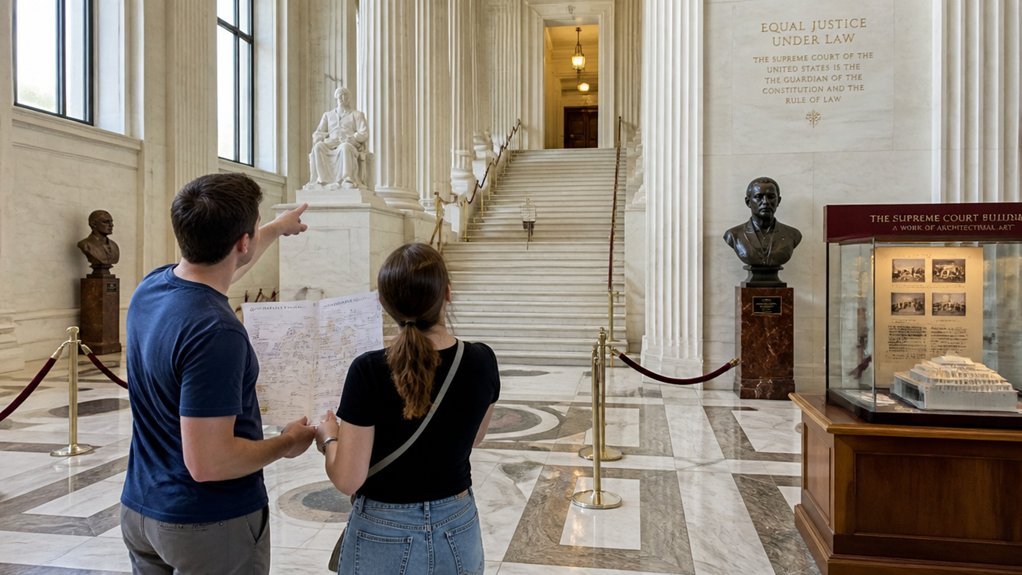
If the docent talk sparks your curiosity, you can keep going on your own and wander the Supreme Court’s public spaces at your own pace. The Supreme Court Building welcomes visitors Monday through Friday from 9:00 a.m. to 3:00 p.m., except federal holidays, and admission is free. You can explore the public portions of the ground and first floors, admire marble walls and bronze doors, and pause in the Great Hall. If you’re planning to visit other nearby institutions too, keep in mind that admission always free also applies at the museum campus, where no passes or tickets are required for galleries, exhibitions, or guided tours.
Before you roam, expect security screening and possible lines, especially from March through June or when the Court is in session. Check Today at the Court for lecture updates. In public areas, you may take non-flash photos and video for personal use. Just skip snacks, keep drinks in café, and don’t touch artifacts.

Historic Georgetown: History, Gossip, & Architecture Walking Tour
Take a guided walking tour of a historic neighborhood older than DC itself. One of our guides (Canden Schwantes) wro...
The Original Small-Group US Capitol Tour: Best of Capitol Hill
Do you want to learn about the iconic buildings of Capitol Hill and their complex history? Do you want a guide that...
Small Guided Tour Inside the Capitol and Library of Congress
Have the opportunity to discover the interiors of the most important and famous buildings of this Nation with a spec...
See the Best Things Inside the Supreme Court
Often, the best way to start is right at the West façade, where you can stand beneath the carved words “Equal Justice Under Law” and face the two massive 6.5-ton bronze doors. Their panels hint at law’s long story. Then head inside and let the building unfold at your pace.
Begin at the West façade, beneath Equal Justice Under Law, and let the Court’s story open with the bronze doors.
- Walk the Great Hall and spot busts of former Chief Justices.
- Find John Marshall waiting at the Lower Great Hall’s end.
- Step into the Court Chamber and take in the mahogany Bench.
- Look up for marble panels, legal figures, and quiet heraldic details.
- Pause near the stairway figures and notice how the room suddenly hushes.
You’ll leave with a sharper sense of the Court’s scale, ritual, and presence before heading back outside to Washington. If you plan to continue exploring the city afterward, a Washington DC Shopping Guide can help you find some of the best places to shop in Washington DC.
See Supreme Court Architecture and Art
As you approach the Supreme Court, the building’s neoclassical design does a lot of the talking for you. Cass Gilbert gave it a grand Corinthian look, finished in 1935, with 16 marble columns and the bold promise “Equal Justice Under Law” across the west front. At the stairs, James Earle Fraser’s Contemplation of Justice and its male counterpart greet you like solemn hosts.
Look closer at the bronze west doors by John Donnelly, Jr. Each weighs about 6.5 tons and carries scenes from the history of law. Inside, the Great Hall lines up busts of former Chief Justices and medallions of famous lawgivers. In the Court Chamber, 24 marble columns rise around a room, and panels overhead reward anyone who remembers to look up. For another perspective on Washington’s historic architecture, the nearby Old Post Office Tower offers a different kind of landmark experience.
Follow Supreme Court Photo Rules
While you’re lining up those marble columns and bronze doors in your frame, keep the Court’s photo rules in mind. At the Supreme Court, personal photography is allowed only on the public ground and first floors, and only without flash.
- Skip flash to protect exhibits and historic collection pieces.
- Never record inside the Courtroom. No photos, audio, or video.
- Keep videos and snapshots to public areas only.
- Leave drones and other unmanned devices grounded outside.
- Don’t touch statues, portraits, busts, or artifacts, and follow Supreme Court Police directions.
Like the Lincoln Memorial, many Washington landmarks ask visitors to respect historic spaces and the meaning they hold. You’ll still capture plenty: cool stone, bright skylight, hushed halls. Respect the rules, and your visit stays smooth, curious, and drama-free. The justices would probably approve. A little care lets everyone enjoy the building’s quiet grandeur.
Check Today at the Court Before You Go

Before you head for those broad marble steps, check the Supreme Court’s “Today at the Court” calendar online for the latest schedule and any changes to public access. It tells you when oral arguments start, whether opinions are coming, and if special proceedings might trim exhibits or self-guided routes. On session days, visitor entrances may open at 7:30, so verify times and seating before you leave your hotel. Today at the Court also flags closures, security shifts, and entry changes, including first-come, first-served seating for arguments. Crowds swell from March through June, and lines can snake across the plaza. A quick check helps you time your arrival, dodge surprises, and keep your day feeling smooth, curious, and pleasantly judicial from the very start today. If you’re taking Metro, review System Status before you go in case rail or bus service changes affect your trip.
Frequently Asked Questions
Is Parking Available Near the Supreme Court?
Yes, you can find metered parking and private garages nearby, but you won’t get on-site parking. You should expect availability during busy times, so consider public transit. For disabled access, use Maryland Avenue drop-off points.
Are Guided Tours Offered for School or Large Groups?
No, you won’t find guided tours for school groups or large groups. You can plan self-guided visits and attend first-come Courtroom Lectures instead. Check student programs, chaperone requirements, and group reservations details before visiting online.
Where Can I Eat Near the Supreme Court?
You’re surrounded by a feast fit for royalty near the Court: Food trucks, Casual cafes, Upscale dining, and Fast food cluster around Capitol Hill. You can also eat inside only at the Supreme Court Café.
Can International Visitors Attend Without U.S. Identification?
Yes, you can attend without U.S. identification, but you’ll still face visitor screening and may need government-issued ID. Bring passport alternatives if available, ask about temporary IDs, and seek embassy assistance before visiting early there.
Who Should I Contact About Lost Items After Visiting?
Misplaced treasures happen; you should contact the Supreme Court Police about Lost property or Visitor services in exhibit areas. Share Contact information and visit details so they can guide you through the Claims process promptly.
Conclusion
You’ll leave with marble in your memory and a better respect for quiet shoes. You checked Today at the Court, packed light, found the right entrance, and survived security without trying to smuggle in a selfie stick worthy of constitutional review. Inside, the bronze doors, soaring columns, and hushed courtroom do the talking. Outside, the city resumes its racket. You head back to the Metro with useful facts, good timing, and one unusually dignified morning.
Small Guided Tour Inside the Capitol and Library of Congress
Have the opportunity to discover the interiors of the most important and famous buildings of this Nation with a specialized Tour guide who will show y...
Capitol Hill & Library of Congress Highlights Walking Tour (With Tickets)
A grand walking tour of Capitol Hill to explore the Supreme Court, Library of Congress, and US Capitol. Learn about...
The Original Small-Group US Capitol Tour: Best of Capitol Hill
Do you want to learn about the iconic buildings of Capitol Hill and their complex history? Do you want a guide that...