
If you want a quieter side of Washington, start at the U.S. National Arboretum, where 451 acres give you bonsai pines, meadow paths, herb scents, and the surprise of old Capitol columns rising from the grass. You’ll want the R Street gate for the easiest entry, and yes, admission is free. But the real question isn’t how to get in. It’s what season, trail, or garden will catch you off guard first.
Key Takeaways
- The U.S. National Arboretum is a free 446-acre living museum for gardens, research collections, and peaceful walking near Capitol Hill.
- Don’t miss the Capitol Columns, National Bonsai & Penjing Museum, Gotelli Conifer Collection, and seasonal highlights in Fern Valley and the Herb Garden.
- Grounds are usually open daily 8 a.m.–5 p.m., with extended summer evening hours; the Bonsai Museum typically runs 10 a.m.–4 p.m.
- Drive to 3501 New York Ave NE, but the R Street entrance is often easiest for rideshare, biking, and avoiding shorter gate hours.
- Free parking is available in marked lots, while transit usually requires Metro to Union Station or Stadium-Armory, then bus, bike, or rideshare.

Smithsonian "Big 3" Highlights Tour (Air & Space Entry Included)
See the best of the Smithsonian Museums on a 3-hour guided tour of the highlights of the American History, Natural History, and Air and Space Museums...

Washington DC Sightseeing Tour with Vintage Model-T Classic Cars
Experience the enchanting beauty of Washington, D.C.'s monuments and landmarks on a captivating day and night tour a...

DC Monuments Night Tour with 10+ Stops, National Mall, Tickets
Experience Washington DC lit up at night during this 3-Hour Guided Night Tour of the National Mall and Monuments. Ma...

DC Night Tour: 10+ National Mall Monuments, Entry Ticket Upgrades
Experience Washington DC lit up at night during this 3-Hour Washington DC Guided Moonlit Tour of the National Mall a...
What Is the DC Arboretum?
Think of the U.S. National Arboretum as a living museum where you can wander through science, beauty, and quiet surprise. Congress created it in 1927, and today you see how botanical research and conservation shape every path and planting. Like Theodore Roosevelt Island, it offers a scenic urban escape that feels far removed from the city’s pace. You might pause at the National Bonsai & Penjing Museum, where tiny trees look ancient and stubborn. Then you can move to the Gotelli Conifer Collection, where needles, cones, and rich scents change with the seasons. The National Capitol Columns rise from the landscape with odd grandeur, while Ellipses Meadow opens broad views and easy breathing room. This place also works hard behind the scenes with greenhouses, fields, and study plots. So you don’t just visit a park. You step into a working landscape with clear purpose.
Where Is the National Arboretum?
Just northeast of the U.S. Capitol, you’ll find the National Arboretum at 3501 New York Avenue NE in Washington, D.C. It’s about a 10-minute drive, but getting there feels like slipping into a quieter green world.
If you drive, use the R Street entrance for the easiest approach, or the New York Avenue entrance if it fits your route. Free parking sits in marked lots, so skip the roadside improvisation. Coming from Union Station? Take a bus, bike, or book a rideshare (Uber/Lyft) since no Metrorail stops at the gates. Once you arrive, broad lawns, quiet roads, and rustling trees make the city feel surprisingly far away, though it’s still close enough for an easy detour before dinner or your next museum stop nearby. If you want another green-space stop in the city, Anacostia Park offers a river trail and waterfront areas for relaxing.
What Are the Arboretum Hours?
You can roam the National Arboretum grounds every day from 8:00 a.m. to 5:00 p.m., except December 25, then time your indoor stops since the Visitor Center usually closes by 4:30 p.m. and the Bonsai & Penjing Museum runs from 10:00 a.m. to 4:00 p.m. In summer, you get a bonus stretch of daylight on weekdays, when the grounds often stay open until 8:00 p.m. and the last car gets in at 7:30 p.m. Weekends usually stick to the 5:00 p.m. close, so if you want that golden-hour walk among quiet trees and rustling leaves, you’ll want to go on a weekday. If you enjoy peaceful green spaces, Kenilworth Park offers another serene garden experience in Washington, DC.
Grounds And Museum Hours
For most visits, the National Arboretum grounds are open daily from 8:00 a.m. to 5:00 p.m., with last admittance at 4:30 p.m., and they close only on December 25. That makes the National Arboretum easy to plan, whether you want a quick morning walk or a full afternoon among columns, conifers, and wide lawns.
If you want indoor highlights, the National Bonsai & Penjing Museum keeps separate hours, usually 10:00 a.m. to 4:00 p.m. It’s closed on federal holidays from November through February, so check ahead. The Visitor Center usually opens around 8:00 a.m. and closes by 4:00 or 4:30 p.m. too. You may also spot notes about summer evening hours. Still, most days the Arboretum open schedule stays simple: arrive early, wander widely, and enjoy it.
If you are comparing other nature-focused destinations around Washington, Theodore Roosevelt Island offers miles of trails through wooded uplands and swampy bottomlands.

VIP Best of DC with US Capitol + National Archives Reserved Entry
Get the presidential treatment with the most comprehensive Washington DC day tour! The tour includes reserved access...

Washington DC: Easy Sightseeing Guided Monuments Tour by E-Cart
Explore Washington, DC’s iconic monuments and memorials on a relaxed, open-air electric cart tour. Enjoy a small-g...

Washington DC Monuments and Memorials Night Tour
See Washington, DC in ways large bus tours can’t—especially after dark. This small‑group night tour (12 guests...
Summer Evening Schedule
During summer, the Arboretum often stays open later on weekdays, and that extra stretch of daylight changes the whole feel of a visit. You get summer evening hours from about June 8 through August 28, with extended hours until 8:00 PM and last admittance at 7:30. The Visitor Center usually wraps up by 4:30, and the National Bonsai & Penjing Museum closes at 4:00, so plan indoor stops first. On select Fridays, food trucks may roll in from 5:00 to 7:45, which makes sunset wandering feel easy. After 4:30, you can still find restrooms and water near Arbor House and some lots. Donations help fund these later openings, and Sponsor a Night keeps the lights on, literally and almost poetically too for curious visitors. If you are comparing evening cultural outings in Washington, note that the Library of Congress also offers Live! at the Library on Thursdays from 5:00 p.m. to 8:00 p.m.
Is the National Arboretum Free?
Yes, you can visit the U.S. National Arboretum for free, and that includes the National Bonsai & Penjing Museum. You get open grounds, quiet garden paths, and rooms of tiny sculpted trees without paying admission, which feels like a rare Washington bargain. Just keep in mind that special photo shoots can require a permit fee, while donations help keep those longer summer evenings going.
Free Admission Details
Most visitors can walk right into the U.S. National Arboretum with free admission, so you won’t need a ticket or timed pass. You can arrive, find parking, and start exploring the broad gardens and quiet roads without paying at the gate.
The grounds keep regular hours from 8:00 a.m. to 5:00 p.m., with longer weekday summer hours until 8:00 p.m. The National Bonsai & Penjing Museum is also free, but it keeps separate hours, usually 10:00 a.m. to 4:00 p.m., and it closes on some federal holidays from November through February. You can donate if you’d like, and donations help support programs and evening operations, but they’re optional. One catch: special-permit photography, including commercial or portrait shoots, requires a paid permit.
If you’re also comparing other free outdoor spots in the city, Rock Creek Park is another no-admission destination with miles of trails and recreation options.
Included Attractions Access
Step through the gates and you can wander a surprising amount of the U.S. National Arboretum for free admission. Like the Smithsonian National Zoo, it offers a welcoming Smithsonian outdoor experience built around easy public access. The grounds open daily, and visit hours usually run 8:00 to 5:00, with last entry around 4:30. During extended summer hours, you can linger until 8:00 on weekdays.
| Place | Access | Feeling |
|---|---|---|
| National Arboretum | free admission | roomy calm |
| National Bonsai & Penjing Museum | free, 10:00 to 4:00 | quiet awe |
| Evening gardens | summer weekdays to 8:00 | golden light |
| Photo shoots | Photography Permit needed | plan ahead |
You’ll pay nothing for regular exploring, but staged portraits, commercial work, and special occasions need a Photography Permit. Closed Dec. 25. The National Bonsai & Penjing Museum closes on federal holidays from November through February, so check doors before chasing miniature magic.
Which Entrance Should You Use?

If you want the simplest arrival, head for the R Street entrance at 2400 R St. It has the easiest flow, the best rideshare meetup, and handy Capital Bikeshare docks nearby. Its hours are generous too, staying open later than the New York Avenue entrance on weekdays.
Use the New York Avenue entrance if you want a direct address and you’re arriving early. Its hours are shorter, especially Monday through Friday, so late-day visitors should stick with the R Street entrance or call a rideshare from Union Station. Parking is free from both gates, with marked lots that keep your visit easy and your shoes clean. Try the Grove or Arbor House lots when you can, and skip roadside parking unless you enjoy lost.
Like Capitol Riverfront, the Arboretum rewards visitors who plan around traffic patterns and neighborhood access points before they arrive.
How Do You Get to the Arboretum?
Getting there is pleasantly simple once you pick your lane. If you’re driving, head to 3501 New York Ave. NE, about ten minutes from the Capitol, and follow signs to the New York Avenue gate or the R Street entrance, depending on the hour. If you ride transit, take Metrorail to Union Station or Stadium-Armory and switch to a Metrobus. There’s no direct rail stop, so that bus transfer does the final stretch. Prefer two wheels? Grab a Capital Bikeshare bike near the R Street gate. Washington is especially manageable without a car thanks to its mix of Metrorail, Metrobus, and Capital Bikeshare options. You’ll also find free on-site parking, and you can check the Arboretum’s website or Metro Trip Planner for exact routes, timing, and gate hours. Late in the day, R Street often saves you from a closed gate surprise.

Mount Vernon and Old Town Alexandria Day Trip from Washington DC
Learn about the life of George Washington, first president of the United States, on this guided tour of Mount Vernon...

Group/Private Washington D.C Moonlight Tour in Luxury Vintage Car
We've crafted a comprehensive two-hour tour that covers all the must-see attractions of DC. A friendly tour guide wi...

Private Washington DC City Tour
Make this spring unforgettable with a private Washington DC tour designed just for your family, perfectly timed for...
Where Should You Park or Get Dropped Off?
Once you’ve made it to the Arboretum, the next easy win is choosing the right gate and lot. You’ll get free parking in several marked parking lots scattered across the grounds, so use those and skip roadside parking or the grass. It keeps your visit simple and your tires out of trouble.
If you’re arriving by rideshare, the R Street Gate is your best bet for a smooth drop-off. It’s also handy if you’re using Capital Bikeshare, since there’s a dock right outside. The New York Avenue Gate is the main address, but its hours are shorter, especially later in the day, so check the clock before you commit. Coming from Union Station? Grab a rideshare or bus and let the Metro Trip Planner do the detective work for you. If you’re coordinating from Union Station, planning your route in advance can make the trip to the Arboretum much easier.
What Should First-Time Visitors See?
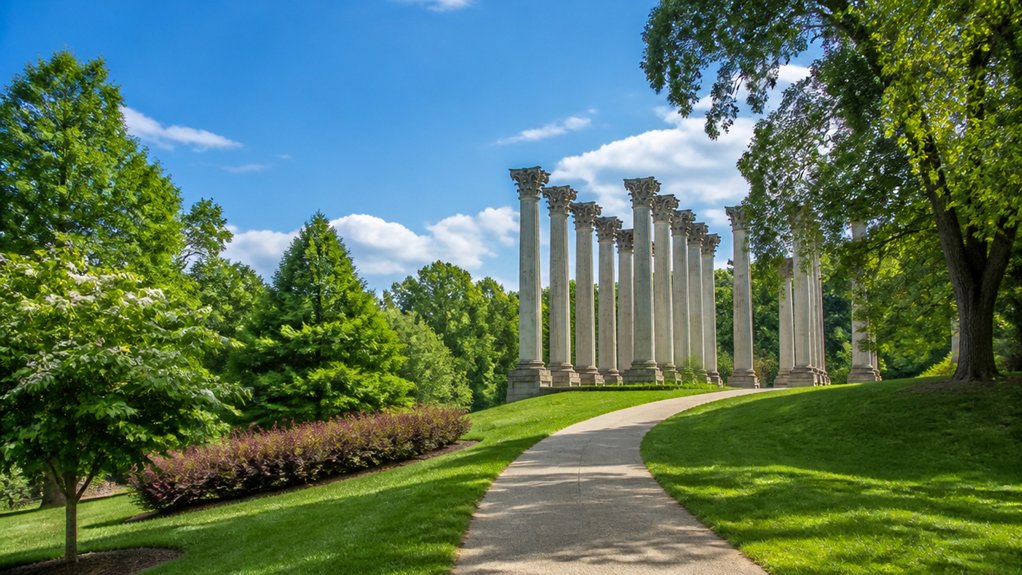
For a first visit, aim straight for the National Capitol Columns in Ellipse Meadow, where 22 restored Corinthian columns from the old U.S. Capitol frame photos and a broad lawn. Then duck into the National Bonsai & Penjing Museum for tiny ancient trees. Stroll the Gotelli Conifer Collection to spot Japanese maples near the gazebo. Breathe through the National Herb Garden and its themed beds. As part of a budget travel guide to Washington DC, this first loop packs in several highlights without costing a thing.
| Stop | Why |
|---|---|
| Columns | views |
| Bonsai museum | mini trees |
| Herb Garden | scents |
Time spring for spring cherry‑blossom–like displays and azaleas, or summer weekdays until 8:00 p.m. for softer light. Listen for cicadas, gravel crunch, and water nearby. It feels big, but your first loop stays easy and varied, with shade, scent, and a few benches when your feet start negotiating.
Why Visit the Capitol Columns?
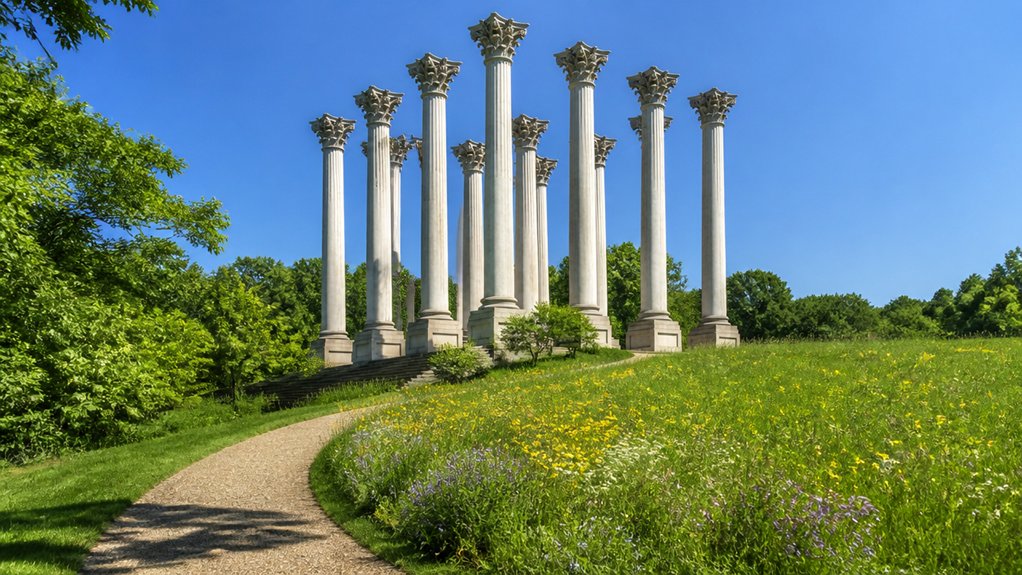
Among the Arboretum’s many stops, the Capitol Columns earn their fame fast. You reach the National Capitol Columns easily, with nearby parking and accessible paths that make a quick detour feel effortless. Set in Ellipse Meadow, the 22 restored Corinthian columns rise above a reflecting pool and scattered stone fragments. The scene feels grand yet open, with azaleas and seasonal plantings softening the stone.
What makes the stop stick with you is the mix of beauty and story. This is architectural salvage at its most vivid. Interpretive signage shows how the columns moved from the U.S. Capitol’s 1828 East Portico to this photogenic overlook in the 1980s. Like the Thomas Jefferson Memorial, the site rewards visitors who notice monumental design and the way architecture can shape memory. You’ll leave with better photos, fresh context, and maybe a tiny urge to stand a little taller.
What’s Inside the Bonsai Museum?
Step inside the National Bonsai & Penjing Museum and you’ll find a quieter kind of drama, where tiny trees carry the weight of centuries. Inside, you can study hundreds of bonsai and penjing specimens, including centuries-old examples shaped through Japanese and Chinese traditions. The exhibits explain styling techniques, cultural roots, and the careful conservation that keeps these living artworks thriving.
Like the Smithsonian’s broader work in conservation science, the museum also reflects a deep commitment to preserving living collections for future generations. You’ll also notice how the displays shift with the seasons. Fresh blooms, bright new leaves, and fiery fall color give each visit a slightly different mood. It’s calm, focused, and surprisingly moving. The National Bonsai & Penjing Museum is open daily from 10:00 a.m. to 4:00 p.m., with federal holiday closures from November through February. Best of all, admission free means you can linger without watching the clock too closely.
What Else Should You Explore?
Where should you wander next? Start at the National Capitol Columns, where 22 Corinthian giants frame big-sky photos on Ellipse Meadow. Then circle back to the National Bonsai & Penjing Museum if you want another close look at tiny masterpieces. Head uphill to the Gotelli Conifer Collection and pause at the gazebo viewpoint. You’ll spot trees from Arctic and subtropical climates, plus Japanese maples and swaying grasses. After that, breathe in the National Herb Garden, with its knot garden, rose garden, and themed beds packed with useful plants. If you’re exploring with kids, add the Washington Youth Garden. Then roam Fern Valley and the Asian Collections for varied habitats, quiet paths, and that satisfying sense that the Arboretum keeps unfolding around every bend there. If you’re planning more green-space adventures in the city, Rock Creek Park offers another expansive escape with wooded trails and a distinctly local feel.
What’s Blooming This Season?
In spring, you’ll catch azaleas, cherry blossoms, and Japanese maples lighting up the paths, often with peak color stretching from late March into April. In summer, you can wander past bright mixed beds and ornamental grasses in the long evening light, with weekday hours sometimes giving you until 8 p.m. to look around. In fall, you’ll see magnolias, hollies, and maples turn the 451-acre landscape into a crisp patchwork of color, and the trails make it easy to find your favorite view. Like the Tidal Basin in Washington DC, these seasonal displays draw visitors looking for iconic blossoms and peaceful walking routes.
Spring Blossoms Peak
Catch the National Arboretum in late March through April and you’ll find spring at full volume, with azaleas and dogwoods lighting up the walking paths and the Flowering Tree Walk in waves of pink, white, and bright green.
At the National Arboretum, you can chase spring blooms beyond the Tidal Basin rush. Follow trails to cherry blossoms and Japanese maples near the Capitol Columns, then stop at the Gotelli Conifer Collection for daffodils around the gazebo. The bonsai museum adds miniature color and opens daily 10 a.m. to 4 p.m. If you’re planning a broader D.C. spring day, a first-time visit guide can help you compare bloom timing with other iconic memorial stops. In late March and April, use the map or app, and arrive early. The grounds open 8 a.m. to 5 p.m., with last admittance at 4:30. You’ll hear birds and skip some parking stress.
Summer Garden Color
By the time spring’s confetti settles, the National Arboretum shifts into a richer summer palette. You’ll spot summer blooms across the grounds, from the Azalea Collections to the Flowering Tree Walk, where bright beds and shaded paths make easy photo stops near the National Capitol Columns. Like many stops in a first-timer’s guide, the Arboretum rewards a loose plan so you can see the highlights without rushing.
For a different texture, head to the Gotelli Conifer Collection, where Japanese maples, ornamental grasses, and a gazebo frame the view. Then step into the National Bonsai & Penjing Museum, open daily 10 a.m. to 4 p.m., and look for tiny trees surrounded by seasonal color. If you stay late, extended summer hours keep the grounds open until 8 p.m. in summer, with last admittance at 7:30. Use the Arboretum app so you don’t wander gloriously off course.

Arlington Cemetery Small-Group Tour & Changing of the Guards
Witness the solemn Changing of the Guard ceremony from a prime viewing spot on this guided walking tour of Arlington...

Ghosts of Georgetown & The Exorcist Steps Walking Tour
Deep, dark secrets about a forgotten past lie among the manicured gardens and Victorian row houses of DC’s finest...

Washington DC Monuments Tour by Electric Cart – Day & Night
Experience a whole different side of Washington, DC during our Monuments tour! Climb into our all-electric Red Roads...
Fall Foliage Highlights
Come fall, the National Arboretum lights up in layers of copper, gold, and deep red across its 451 acres. You’ll catch peak fall foliage from late September into October, with Japanese maples glowing along the Flowering Tree Walk and rich color in the Gotelli Conifer Collection.
Like Federal Triangle in Washington DC, this area rewards slow exploring and scenic pauses between landmarks.
| Spot | What you’ll see |
|---|---|
| Capitol Columns | Crimson leaves framing history |
| Ellipse Meadow | Wide golden photo views |
| Japanese maples | Late, fiery color |
| Gotelli Conifer Collection | Texture, cones, and contrast |
You can wander trails or drive between overlooks, then stop at the Capitol Columns for sunset. The National Arboretum rewards curiosity. Listen for dry leaves underfoot, admire grasses and herb garden textures, and bring your camera. Mid-October often still looks showy for patient leaf-peepers after city trees start fading too.
Can You See Cherry Blossoms Here?
Yes, you can see cherry blossoms here, and the National Arboretum gives you a calmer way to enjoy them. In spring, you can follow walking paths past flowering collections, find soft pink canopies near the Capitol Columns, and catch quieter views than downtown. Peak bloom often lands from late March into April, sometimes a bit after the Tidal Basin, so check seasonal updates before you go. Compared with the Tidal Basin, the Arboretum usually feels less crowded while still offering beautiful spring color. The National Arboretum opens daily from 8:00 AM to 5:00 PM, with later summer evenings, which makes morning light and easy parking especially appealing. You can also stop by the National Bonsai & Penjing Museum from 10:00 AM to 4:00 PM for more floral detail. Bring your camera. The petals, breezes, and birdsong do the rest for you.
Are Dogs and Picnics Allowed?
You can bring your dog to the Arboretum, but you‘ll need to keep it leashed at all times and out of the garden beds. You also can’t take dogs into the Administration Building or the National Bonsai & Penjing Museum, so plan for an outdoor visit and bring cleanup bags. If you’re packing lunch, head to the Grove of State Trees, where picnicking is allowed during standard grounds hours. It’s one of the more hidden gems for a relaxed outdoor afternoon in Washington DC.
Dog Policy
Happily, dogs can join your visit to the National Arboretum as long as they stay on a leash the whole time. Bring your curiosity and your walking shoes, because the grounds feel roomy, leafy, and easy to explore with pets.
- Dogs are welcome across most outdoor areas.
- Pets can’t enter the Administration Building.
- Pets also can’t go inside the National Bonsai & Penjing Museum.
- Keep them out of garden beds and clean up discreetly.
If you’d like a snack break, you can picnic in places like the Grove of State Trees. Bring water for everyone, especially on warm afternoons. Check Visitor Center hours before you arrive, too. Restrooms and other facilities may close around 4:00 to 4:30 PM, and some amenities follow seasonal schedules.
Leash And Cleanup Rules
Usually, a dog can tag along for your walk through the National Arboretum, but the leash stays on the whole time.
That’s the baseline for pets across the 451-acre grounds, where open lawns and winding roads can tempt even calm noses. Pet owners need to steer clear of garden beds and handle cleanup right away.
You’ll also want to remember that dogs are prohibited inside the Administration Building and the National Bonsai & Penjing Museum. These simple rules protect rare plant collections and keep paths pleasant for everyone. If you’re heading toward the Grove of State Trees, keep your leash short and your eyes open for squirrels, joggers, and low branches around every bend ahead while you wander past quiet meadows and shrubs.

DC Monuments by Night: 10+ Landmarks & Open-Top Luxury Bus
Experience the stunning beauty of the architecture and memorials of Washington, D.C. lit up after dark.You’ll b...

Hop-On Hop-Off Double Decker Tour & Arlington Cemetery Audio Tour
As the Official Tour Provider of the National Mall, Big Bus gets you closer than anyone else to the monuments and me...

Washington DC Night Tour: ICONIC Landmarks, Monuments SMALL GROUP
Experience Washington DC at its most striking; after dark! This guided night tour showcases the city’s most iconic...
Picnic Areas Allowed
Settle in at the Grove of State Trees, and the Arboretum suddenly feels made for a slow lunch under rustling branches. Here, picnicking is welcome, so you can claim a blanket, unpack sandwiches, and enjoy one of the picnic areas on the grounds.
- Bring food to the Grove of State Trees for a relaxed outdoor meal.
- Keep leashed pets with you, but out of garden beds and picnic areas.
- Remember cleanup required means bagging waste and keeping pets from bothering guests.
- The grounds open daily from 8:00 AM to 5:00 PM, with extended summer hours on weekdays.
You can’t bring pets inside the Administration Building or the National Bonsai & Penjing Museum, so plan to eat outside. Even your dog will appreciate shade.
What Amenities, Apps, and Permits Matter?
Before you set out across the Arboretum’s wide lawns and garden roads, it helps to know where the practical stops are. You’ll find restrooms and water fountains at the Visitor Center, Arbor House, the Grove parking lot, and the Asian Collections parking area. The Visitor Center closes around 4:00 to 4:30 PM, but some later-access facilities remain open. Vending machines wait at the Visitor Center and Arbor House, and the Grove is your picnic-friendly zone.
Download the official mobile app for maps, plant notes, and self-guided tours. Families can add the Agents of Discovery app for playful augmented reality. Check accessibility details on garden pages before you go. If you’re planning portraits or styled shoots, ask about a Photography Permit first. Metro and bikeshare tools make arrival easier too.
Frequently Asked Questions
Is the National Arboretum Wheelchair Accessible?
Yes, you can’t miss the wheelchair accessibilities: paved pathways, accessible parking, mobility scooters, ADA restrooms, braille signage, and service animals are supported, so you’ll navigate comfortably throughout the arboretum with ease and confidence today there.
Are Guided Tours Available at the Arboretum?
Yes—you’ll find tours blooming like spring: guided audio, seasonal tours, private tours, botanical workshops, group excursions, volunteer led walks, and behind scenes options, though availability varies, so you’ll want to check schedules before visiting online.
How Much Time Should You Plan for a Visit?
Plan 2–4 hours for a visit; you’ll cover walking routes, photo spots, restroom stops, and shade options comfortably. For best times, meal breaks, and smarter time budgeting, give yourself half a day there if you’re lingering.
What Should You Wear for an Arboretum Visit?
Like packing for a mini adventure, you’ll wear comfortable shoes, layered clothing, and breathable fabrics. Add sturdy socks, sun protection, insect repellent, and rain gear, so you’re ready for changing paths, weather, and bugs outside.
Is the Arboretum Worth Visiting With Kids?
Yes, you’ll find it worth visiting with kids: stroller friendly paths support family picnics, a nature scavenger hunt, interactive exhibits, seasonal events, kid workshops, and wildlife spotting, so you’ll keep everyone engaged, curious, and happy.
Conclusion
You come to Washington expecting marble, traffic, and hurry. Then the National Arboretum hands you quiet gravel paths, cedar shade, and the Capitol Columns standing in a meadow like history took a wrong turn and improved. You can wander in free through the R Street gate, check what’s blooming, and linger by bonsai smaller than your backpack. Oddly enough, one of DC’s grandest sights feels least like a capital. It feels like breathing room there.
Washington DC Night Tour: ICONIC Landmarks, Monuments SMALL GROUP
Experience Washington DC at its most striking; after dark! This guided night tour showcases the city’s most iconic landmarks beautifully illuminated...

Washington DC Hop-On Hop-off Trolley Tour with 15 Stops
Enjoy a 90-minute Hop-on Hop-off panoramic trolley tour of Washington, DC. The tour route will maximize your time an...

Washington DC Monuments &Landmark Guided Small Group Trolley Tour
This tour is a great alternative to see DC's Monuments by a stylish American Cart and knowledgeable guide. This tour...

Washington, DC: Sunset & After-Dark Monuments Tour by E-Cart
Please Note: The 6:00 PM tour may not be fully dark depending on the season. The 8:30 PM tour offers a fully after-d...