
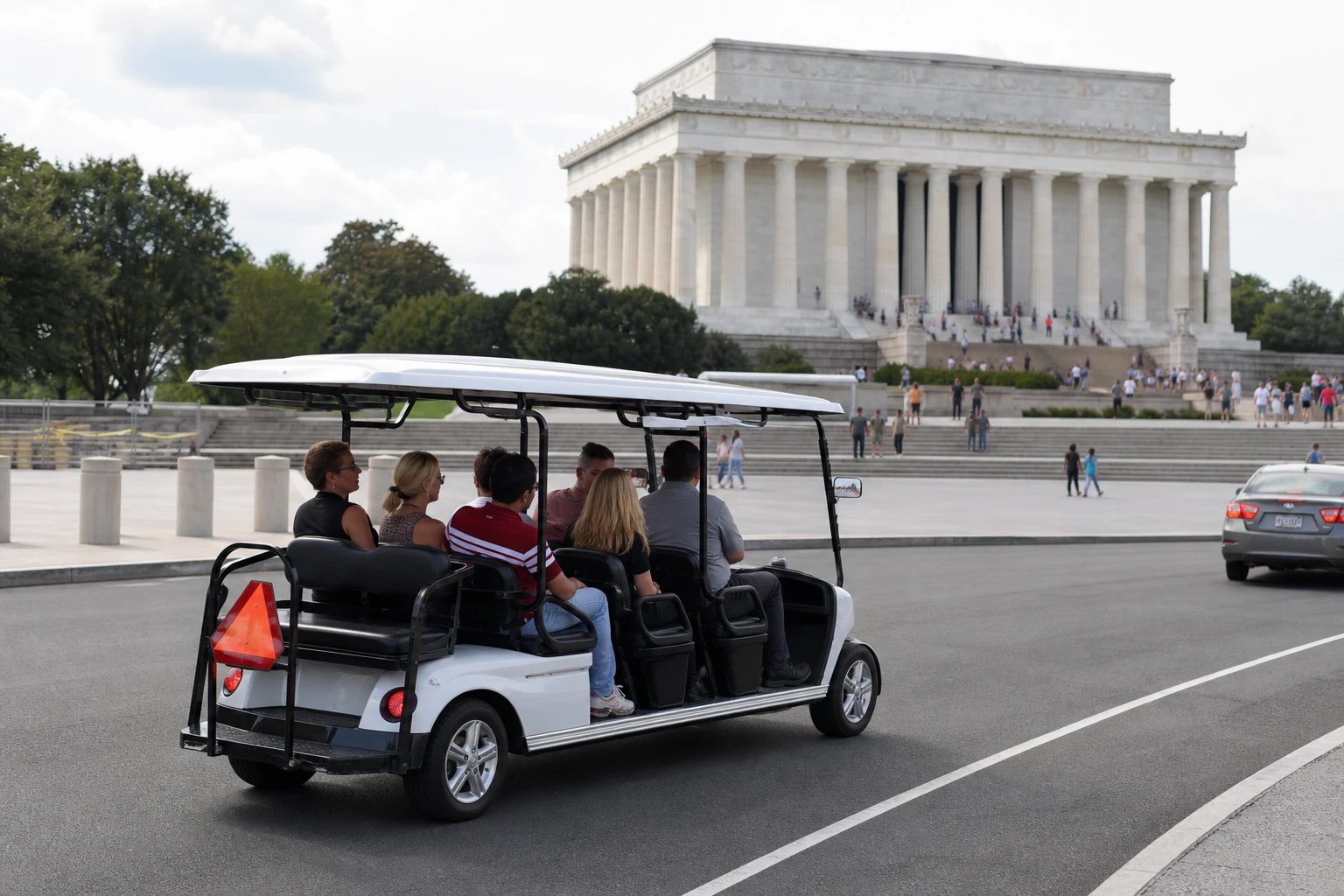
A Washington DC memorials golf cart tour reduces the long stretches between major sights while preserving time to step out and explore. The National Mall covers a large area, so point-to-point transportation can make a focused visit more manageable. The cart handles much of the travel between stops, but the memorials themselves still reward short walks, close viewing, and time away from the vehicle.
- Think of the cart as transportation between memorials, not a seat for the entire tour.
- Confirm the itinerary, duration, passenger limit, meeting point, and inclusions before paying.
- Choose daytime for the best chance of finding park rangers or evening for illuminated memorial views.
- Expect some walking, ramps, steps, or paved approaches after leaving the vehicle.
- Check same-day National Mall alerts because events, security measures, weather, and road controls can alter routes.
This style of tour is especially useful for visitors who want to cover several memorials without committing to a long walking route. It can also suit families, mixed-age groups, travelers with limited time, and anyone who values private narration. Its main limitation is simple: reduced walking does not mean no walking, and the exact route remains subject to vehicle access and street conditions.

Washington DC's Monuments & US History Guided E-Cart Tour
This tour offers a detailed introduction to U.S. history and Washington D.C.’s famous monuments, guided by expert Washingtonian storytellers. We lov...

Washington DC: Easy Sightseeing Guided Monuments Tour by E-Cart
Explore Washington, DC’s iconic monuments and memorials on a relaxed, open-air electric cart tour. Enjoy a small-g...

DC's Monuments & Landmark Guided Small Group E-Cart Tour
This tour is a great alternative to see DC's Monuments by a E-Cart and knowledgeable guide. This tour offers a detai...

Washington, DC: Sunset & After-Dark Monuments Tour by E-Cart
Please Note: The 6:00 PM tour may not be fully dark depending on the season. The 8:30 PM tour offers a fully after-d...
How a memorials golf-cart tour works
Destination DC lists private golf-cart sightseeing among the ways to tour Washington's monuments and memorials, including an offering through Adventure DC Tricycle Tours. The basic advantage is efficient movement across the large National Mall area. Instead of spending most of a short visit walking between distant sites, your group can travel between selected stops and reserve more energy for the memorial spaces.
A good itinerary includes time outside the cart. Roads and loading areas do not extend into every memorial, and visitors should expect to approach individual sites on foot. National Park Service guidance prohibits riding bicycles and scooters within memorials. Although that rule does not directly define commercial golf-cart operations, it illustrates why vehicle transport should not be mistaken for entrance-level access throughout each site.
Private touring can support narration and a route shaped around group priorities. However, traffic, loading restrictions, pedestrian-only spaces, security controls, and temporary road changes can affect where the cart stops. A route description should therefore be treated as a plan rather than a guarantee that the vehicle will pull directly beside every memorial.
Memorials to consider for your route
Core National Mall memorials that can shape a sightseeing plan include the Lincoln Memorial, Vietnam Veterans Memorial, World War II Memorial, Martin Luther King Jr. Memorial, Franklin Delano Roosevelt Memorial, and Jefferson Memorial. Do not assume that one golf-cart product visits all of them. Compare the named stops on the booking page with the places that matter most to your group.
- Lincoln Memorial for one of the route's major presidential memorial stops
- Vietnam Veterans Memorial for a visit that benefits from unhurried time on foot
- World War II Memorial as a possible central National Mall stop
- Martin Luther King Jr. and Franklin Delano Roosevelt memorials when the route reaches the Tidal Basin area
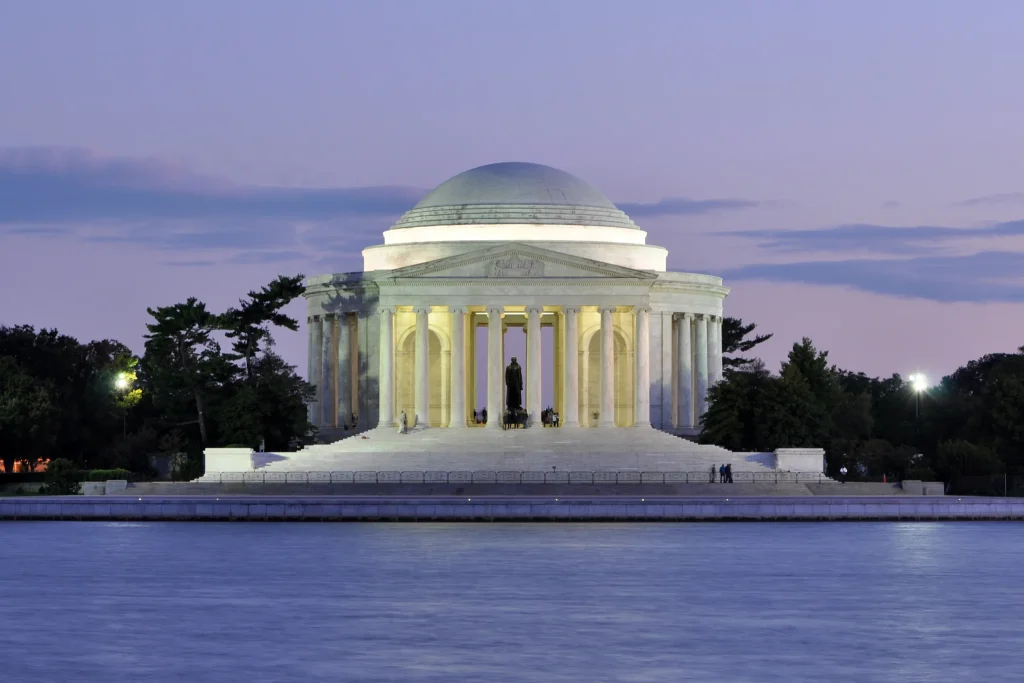
- Jefferson Memorial for travelers prioritizing the southern side of the Tidal Basin
If the Lincoln Memorial is a priority, the Lincoln Memorial Guide for First Timers can help you plan what to notice after leaving the cart. The National Mall Guide for First Timers provides broader orientation, while the Tidal Basin Washington DC Guide is useful when building a route around the Jefferson, Martin Luther King Jr., and Franklin Delano Roosevelt memorial area.
General access to these memorials should not be confused with ticketed attractions. Many major memorials are open around the clock and generally require no reservation, but a tour's included stops and services depend on the product selected. Never assume that Washington Monument tickets, admission to another timed attraction, gratuity, or hotel pickup are bundled into the golf-cart booking.
Set priorities before the tour begins
Choose two or three must-see memorials and treat the rest as desirable additions. This gives the guide a clear sense of where your group wants more time. If one traveler wants historical interpretation while another wants photographs, say so at the start. A private format is most valuable when the route reflects the group's interests rather than becoming a hurried checklist.
Daytime or evening: choosing the right atmosphere
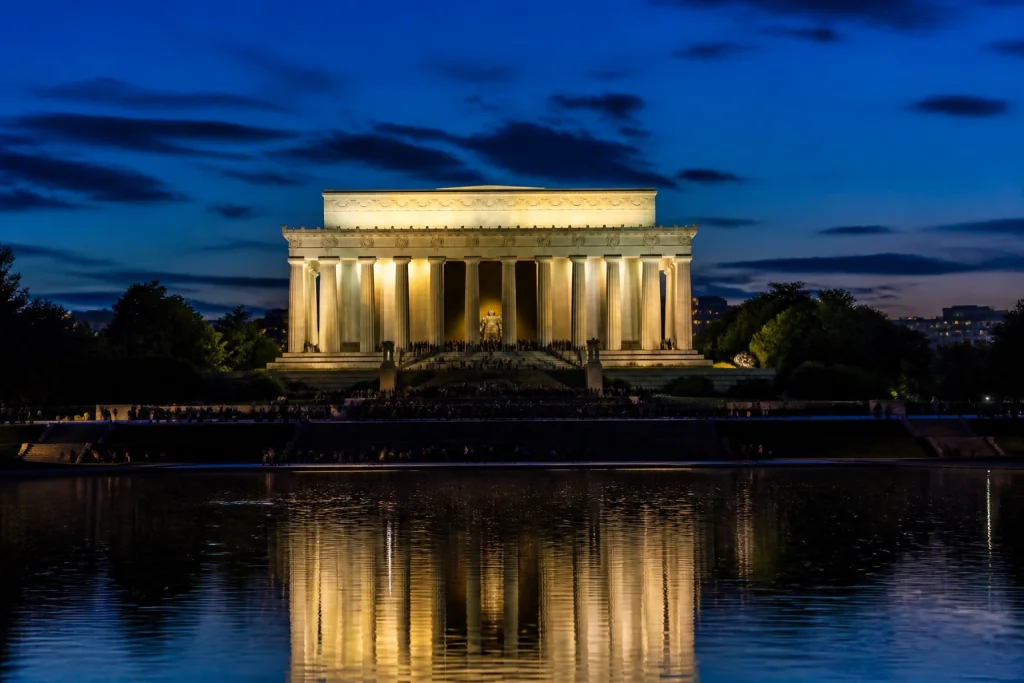
Day and evening tours offer different advantages. National Park Service rangers are usually available at major memorials between 9:30 a.m. and 10 p.m., making daytime and earlier evening visits better for travelers who hope to speak with a ranger. Many core memorials remain open 24 hours, so later tours can concentrate on illuminated views after ranger availability winds down.
| Timing | Best for | Main consideration |
|---|---|---|
| Daytime | Ranger access, reading details, and fitting the tour into a full sightseeing day | Road traffic, events, and crowds can influence the route |
| Early evening | A balance of possible ranger availability and changing light | Confirm the tour's actual start and finish times |
| Later evening | Illuminated memorial views and a strong nighttime atmosphere | Rangers may no longer be available, and transportation after the tour needs planning |
Travelers drawn to floodlit columns, reflections, and the after-dark character of the Mall can use the Washington DC Monuments by Night Guide to plan the rest of the evening. Check when the golf-cart tour finishes and how you will return to your hotel, especially if the meeting point differs from the final drop-off location.

DC Monuments & Capitol Hill Highlights Tour by Electric Cart
Experience a whole different side of Washington, DC during our Monuments by day tour! Climb into our all-electric Re...

Washington DC Monuments Tour by Electric Cart – Day & Night
Experience a whole different side of Washington, DC during our Monuments tour! Climb into our all-electric Red Roads...

Washington DC Monuments and Memorials Night Tour
See Washington, DC in ways large bus tours can’t—especially after dark. This small‑group night tour (12 guests...
What to verify before booking
Tour prices, durations, capacity limits, cancellation terms, and inclusions vary by product. Use the live booking description rather than assuming that similarly named tours provide the same service. A lower price can represent a shorter route, a shared experience, or fewer inclusions, while a private rate can be structured around the vehicle or group. The booking page should make the pricing unit clear.
| Booking detail | What to look for |
|---|---|
| Duration | Whether the stated time includes check-in, loading, and return travel |
| Route | Named memorial stops rather than a general promise to see the National Mall |
| Stop format | Which places include time outside the cart and which are drive-by views |
| Passenger limit | The maximum group size and whether young children count toward capacity |
| Pickup and drop-off | Exact locations and whether they are the same |
| Inclusions | Any tickets, pickup service, gratuity, or other extras specifically named |
| Cancellation terms | The deadline, refund conditions, and weather policy attached to your booking |
Read the confirmation once it arrives and save the meeting instructions where everyone in the group can reach them. If an essential detail is missing, clarify that point before the tour date. Focus on matters that could change the booking decision, such as transfer requirements, route priorities, passenger capacity, or a pickup location that is difficult for your group to reach.
Meeting points, parking, and arrival planning
Leave extra time to find the designated meeting place. The National Mall is expansive, and a location described only by a landmark can still cover a broad area. Confirm the street side, entrance, corner, or other precise instruction provided by the operator. Do not assume the cart can wait in any convenient place if you arrive at the wrong side of a memorial or avenue.
Driving is possible, but parking around the Mall is constrained. The National Park Service identifies 150 accessible metered public parking spaces distributed near memorials and other points of interest. Public transportation or rideshare can reduce dependence on finding a space, while drivers should allow additional time. The guide to How to Get Around Washington DC Without a Car can help with the wider transportation plan.
Keep the rest of the day flexible around the tour. A tightly scheduled museum entry immediately after an outdoor sightseeing route leaves little room for a delayed pickup or changed traffic pattern. If you must connect to another reservation, tell the guide about the fixed deadline and build a reasonable buffer into your plans.
Accessibility requires two separate checks
The National Park Service states that all major National Mall monuments and memorials are wheelchair accessible. It also offers free braille brochures, large-print copies of the Gettysburg Address at the Lincoln Memorial, and no-cost American Sign Language interpretation when requested at least three weeks in advance. Visitors need to bring or rent their own wheelchair because the park does not provide them.
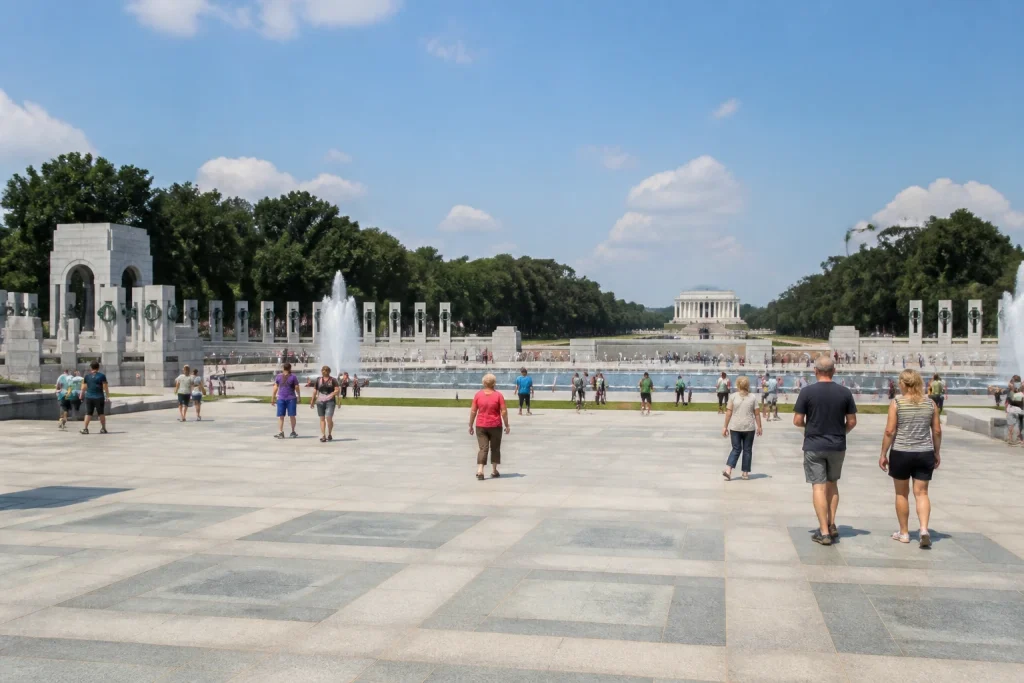
Accessible memorial grounds do not automatically make the tour vehicle accessible. A golf cart should not be presumed to have a wheelchair lift, securement system, step-free boarding, or storage for a mobility device. Before booking, confirm the exact vehicle configuration, whether a transfer into the cart is required, how equipment will be carried, and whether the planned route works for the traveler's needs.
Washington DC's Monuments & US History Guided E-Cart Tour
This tour offers a detailed introduction to U.S. history and Washington D.C.’s famous monuments, guided by expert Washingtonian storytellers. We lov...
Washington, DC: Sunset & After-Dark Monuments Tour by E-Cart
Please Note: The 6:00 PM tour may not be fully dark depending on the season. The 8:30 PM tour offers a fully after-d...
Washington DC: Easy Sightseeing Guided Monuments Tour by E-Cart
Explore Washington, DC’s iconic monuments and memorials on a relaxed, open-air electric cart tour. Enjoy a small-g...
DC's Monuments & Landmark Guided Small Group E-Cart Tour
This tour is a great alternative to see DC's Monuments by a E-Cart and knowledgeable guide. This tour offers a detai...
The accessibility of the memorial and the accessibility of the golf cart are separate parts of the same trip.
Travelers who cannot transfer from a wheelchair should compare the cart with other private transportation formats rather than relying on a general accessibility label. A customized pedicab service is described by Destination DC as mobility-impaired-friendly, but individual boarding, seating, transfer, and equipment needs still deserve specific attention before a reservation is made.
Still comparing Washington DC Memorials Golf Cart Tour?
Ask for tour ideas, hotel suggestions, or a simple trip plan that combines both.
Trip Helper
Check route conditions on the day of the tour
National Mall roads and park areas can be affected by special events, demonstrations, security measures, construction, weather, and temporary closures. Published restrictions can change or be followed by new controls. Check current National Park Service alerts and messages from the tour operator shortly before departure rather than relying on an older route description.
A route change does not necessarily ruin the experience, but it can alter stop order, walking distance, or the number of memorials reached. Keep your priority list short and tell the guide which sites matter most. That makes it easier to adapt if a preferred loading area or road is unavailable.
Check the forecast and dress for the conditions because much of the experience takes place outdoors, including the time spent exploring after leaving the cart. Comfortable shoes remain important on a low-walking tour. Bring only what you can manage during short stops, and keep essential medication, water, and weather protection within easy reach.
How to make short memorial stops feel meaningful
- Tell the guide your two or three highest-priority memorials before the route begins.
- Ask how much time is planned outside the cart at each major stop.
- Listen to the introduction before taking photographs so you understand the site's context.
- Keep the group together when returning to the vehicle, especially at busy pickup areas.
- Save deeper exploration of one favorite memorial for after the tour if your schedule allows.
The best use of a private guide is often context rather than a stream of dates. Ask why sites occupy particular parts of the Mall, how memorials relate to one another, or which details deserve attention during a brief stop. If you already know the broad history, tell the guide so the conversation can move toward architecture, symbolism, or the changing use of the surrounding landscape.
Avoid trying to photograph every memorial through the vehicle. Windowless carts can provide open views, but the strongest visit still comes from stepping into the designated public spaces. Build in a few moments to look closely without watching the clock. The cart's job is to save time between places, not eliminate the experience of being in them.
Golf cart, walking tour, pedicab, or bus
| Tour style | Main strength | Main tradeoff |
|---|---|---|
| Private golf cart | Efficient point-to-point travel with narration and possible route customization | Some walking remains, and vehicle access depends on roads and loading rules |
| Walking tour | More continuous immersion in the Mall and its memorial landscape | Requires greater time and physical effort between distant sites |
| Pedicab | A smaller vehicle that can offer close-range sightseeing on a customized outing | Capacity, weather exposure, and accessibility need checking |
| Hop-on, hop-off bus | Broader independent flexibility across multiple stops | Less private and tied to the operator's route and service pattern |
| Self-guided visit | Maximum control over pace and time at each memorial | The traveler handles navigation and all movement between sites |
A cart is strongest when the group wants private transportation, guided context, and several memorials in one outing. A walking tour offers closer continuity with the landscape. A pedicab can be useful for a small customized trip, while a hop-on, hop-off bus gives independent flexibility over a broader network. The Washington DC Walking Tours Guide can help travelers compare a more active alternative.
There is no single best format for every visitor. Base the decision on how far the group can comfortably walk, how much privacy it values, which sites are essential, and whether anyone needs a specific vehicle configuration. A mixed plan also works well: use the cart for broad coverage, then return independently to one memorial for a slower visit.

Arlington Cemetery Small-Group Tour & Changing of the Guards
Witness the solemn Changing of the Guard ceremony from a prime viewing spot on this guided walking tour of Arlington...

DC in a Day: 10+ Monuments, Boat Cruise, National Mall, Tickets
Explore Washington DC’s top landmarks and monuments on a 6-hour tour by deluxe touring coach with full narration f...

Small-Group Guided Tour inside US Capitol & Library of Congress
Join an expert local guide on this small-group guided tour of Capitol Hill, one of the top things to do in DC! Expl...
Is a Washington DC memorials golf cart tour worth it?
A golf-cart tour is worth considering when limited time or stamina makes a full walking circuit unrealistic. The distances between major memorials are the core problem it solves. Private narration and possible route customization add value for groups that want historical context without navigating every segment themselves.
The experience is less suitable for someone expecting door-to-door access inside every memorial or a completely walking-free outing. Vehicle routes stop where roads and loading conditions permit, while individual memorial spaces still require exploration on foot. Travelers who prefer long, reflective visits at only one or two sites may get more value from independent transportation and a self-guided plan.
Choose the cart if your group values
- Reduced walking between widely separated memorials
- Private narration and the possibility of a customized route
- Broad National Mall coverage within a limited sightseeing window
- A shared experience for a family or small group
- The option to emphasize daytime interpretation or evening illumination
Consider another format if you need
- A verified lift-equipped vehicle or wheelchair securement
- A guaranteed zero-walking experience
- Long, unhurried visits inside only one or two memorials
- Complete freedom to change the schedule without coordinating with a guide
- A fixed route that cannot be affected by road or security controls
A practical final decision
Book a Washington DC memorials golf cart tour when efficient coverage, guided interpretation, and reduced distance between sights matter more than complete independence. Confirm the named stops, walking expectations, meeting point, vehicle setup, and live cancellation terms before paying. Then check route alerts on the day and arrive with two or three clear priorities. The cart saves energy between landmarks, leaving more attention for the memorials themselves.
Frequently asked questions
Does a Washington DC memorials golf cart tour involve walking?
Yes. The cart reduces the distance traveled between memorials, but visitors should expect to get out and walk into individual sites. Roads and loading areas do not provide vehicle access throughout every memorial space.
Which memorials can a golf-cart tour visit?
Routes can focus on major sites such as the Lincoln, Vietnam Veterans, World War II, Martin Luther King Jr., Franklin Delano Roosevelt, and Jefferson memorials. Exact stops vary, so compare the named itinerary with your priority list before booking.
Are the Washington DC memorials open at night?
Many core memorials are open 24 hours daily. Park rangers are usually available from 9:30 a.m. to 10 p.m., so a later visit can offer illuminated views but less opportunity for ranger contact.
How much does a Washington DC memorials golf cart tour cost?
Prices vary by product, date, duration, and group arrangement. Check whether the displayed amount is per person or per vehicle, and review the live listing for included stops, pickup, gratuity, tickets, and cancellation terms.
Are golf-cart memorial tours wheelchair accessible?
Do not assume the vehicle is wheelchair accessible. Major National Mall memorials are wheelchair accessible, but travelers should confirm the cart's boarding height, transfer requirements, mobility-device storage, lift equipment, and securement system before booking.
Is a day or evening golf-cart tour better?
Choose daytime or early evening for the best chance of ranger availability, and choose later evening for illuminated memorial views. Your transportation plan after the tour and the operator's actual departure time should also guide the decision.
Where do Washington DC golf-cart tours meet?
The meeting point depends on the tour selected. Check the confirmation for the exact street side, corner, entrance, pickup time, and whether the tour returns to the same location.
Can road closures change a memorial golf-cart route?
Yes. Events, security measures, demonstrations, weather, and temporary road controls can affect access and stop order. Check current National Park Service alerts and operator messages shortly before departure.
DC's Monuments & Landmark Guided Small Group E-Cart Tour
This tour is a great alternative to see DC's Monuments by a E-Cart and knowledgeable guide. This tour offers a detailed introduction to U.S. history a...
Washington, DC: Sunset & After-Dark Monuments Tour by E-Cart
Please Note: The 6:00 PM tour may not be fully dark depending on the season. The 8:30 PM tour offers a fully after-d...

Washington DC Night Tour: ICONIC Landmarks, Monuments SMALL GROUP
Experience Washington DC at its most striking; after dark! This guided night tour showcases the city’s most iconic...

Washington DC's Monuments & US History Guided E-Cart Tour
This tour offers a detailed introduction to U.S. history and Washington D.C.’s famous monuments, guided by expert...


One Comment
[…] does not remain on the National Mall. It combines the Martin Luther King, Jr. Memorial and Lincoln Memorial with the National Museum of African American History and Culture, U Street, and selected historic […]