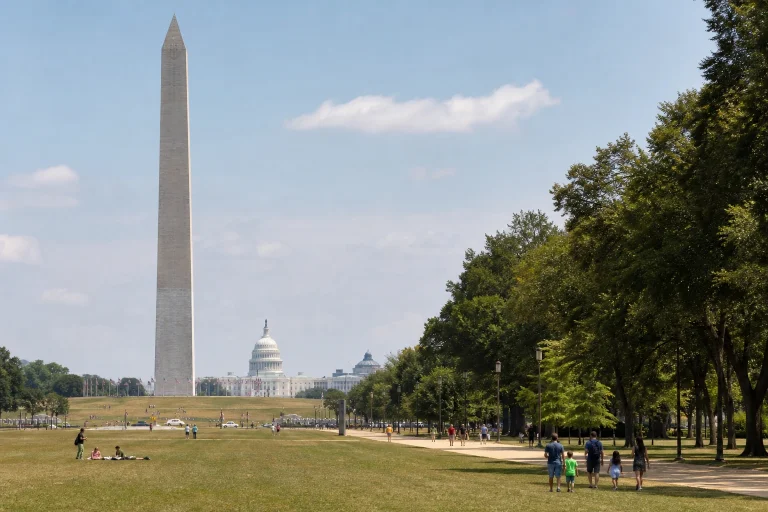

Washington DC rewards travelers who approach presidential history as a sequence of well-timed encounters rather than a list to race through. A strong day pairs a requested White House public tour with the U.S. Capitol’s grand interior spaces and a timed elevator visit at the Washington Monument. The core experiences are remarkably affordable, but reservation windows, security screening, and fixed entry times shape every practical decision.
Plan the Washington DC presidential history tour around reservations
- Request a White House public tour first. Requests go through a U.S. Representative or Senator and can be submitted 7 to 90 days before the preferred date.
- Build in security time at every indoor stop. The Capitol asks visitors to arrive at least 60 minutes before a reserved tour.
- Reserve a Capitol tour even though same-day availability can occur. The guided route includes the Crypt, Rotunda, and National Statuary Hall.
- Secure a timed Washington Monument ticket if the observation level matters to you. Everyone age 2 and older needs one.
- Use Metrorail for the Capitol when possible, since parking nearby is extremely limited.
Think of this itinerary as a chain of commitments. The White House request is the least flexible piece, the Monument uses timed admission, and the Capitol needs a substantial early-arrival allowance. Start reservation work before mapping meals or adding museums. That order gives the day breathing room if a requested time is unavailable or screening takes longer than expected.

Presidential DC: Capitol Hill + DC Bus Tour, US Capitol Entry
Join our expert live guide on this 3-Hour Washington DC Guided Bus & Walking Tour with Grounds Access to US Capitol, Supreme Court, and Library of Con...
Make the White House your first booking priority
The White House should set the calendar for this tour. Public-tour requests are made through a visitor’s U.S. Representative or Senator, with a request window of 7 to 90 days before the date sought. Because a confirmed entry time limits how easily the rest of the day can be rearranged, wait for that result before locking in tightly timed follow-on plans.
Public White House tours are free and generally operate Tuesday through Thursday from 7:30 to 11:30 a.m., and Friday through Saturday from 7:30 a.m. to 1:30 p.m. Federal holidays and White House scheduling can alter or cancel tours with little notice, so keep the hours around a confirmed visit uncluttered.
A confirmed White House time is the day’s anchor, not an invitation to overpack the hours around it. Leave room before and after the visit for the day-of security process and changing plans. The White House Visitor Guide is useful for travelers who want more detail on arranging this essential stop.
Use the U.S. Capitol to see the nation’s civic stage
The U.S. Capitol offers the most substantial indoor counterpart to the White House. Its no-cost guided tour visits the Crypt, Rotunda, and National Statuary Hall, three spaces that turn textbook civics into marble, sculpture, and enormous painted ceilings. The historic Capitol is visited by guided tour only, so independent wandering inside is not an option.
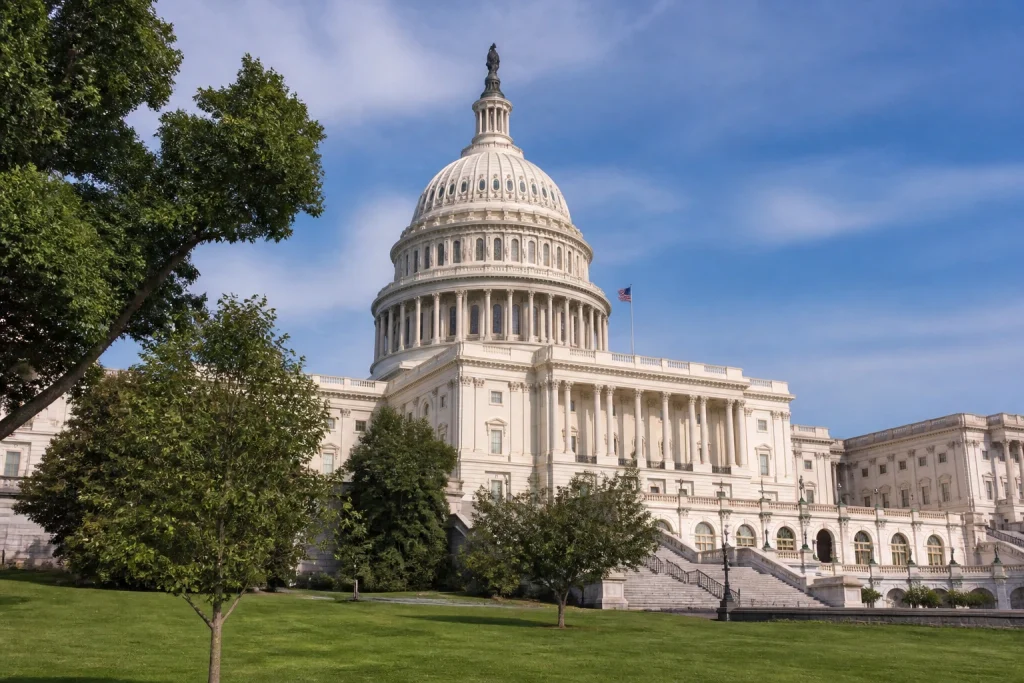
Reserve ahead when possible. A typical Capitol tour lasts about one hour, and the Capitol Visitor Center is open Monday through Saturday from 8:30 a.m. to 4:30 p.m. Visitors should arrive at least 60 minutes before their reservation for security. That early-arrival rule matters as much as the tour’s stated length when building a same-day schedule.
Enter through the underground Capitol Visitor Center on the east side of the building. Nearby parking is extremely limited, and the Visitor Center recommends public transportation, with Capitol South and Union Station identified as convenient Metrorail stops. The United States Capitol Tour Guide can help visitors get more value from this landmark after the timed tour is secured.
Leave a real buffer between the White House and Capitol
A morning White House visit can pair well with a Capitol tour later in the day, provided the confirmed entry time leaves enough room for travel, wayfinding, and mandatory screening. Avoid booking the Capitol immediately after the White House. A calm gap is more useful than a perfect-looking schedule that collapses at the first security queue.
Add the Washington Monument for George Washington and citywide views
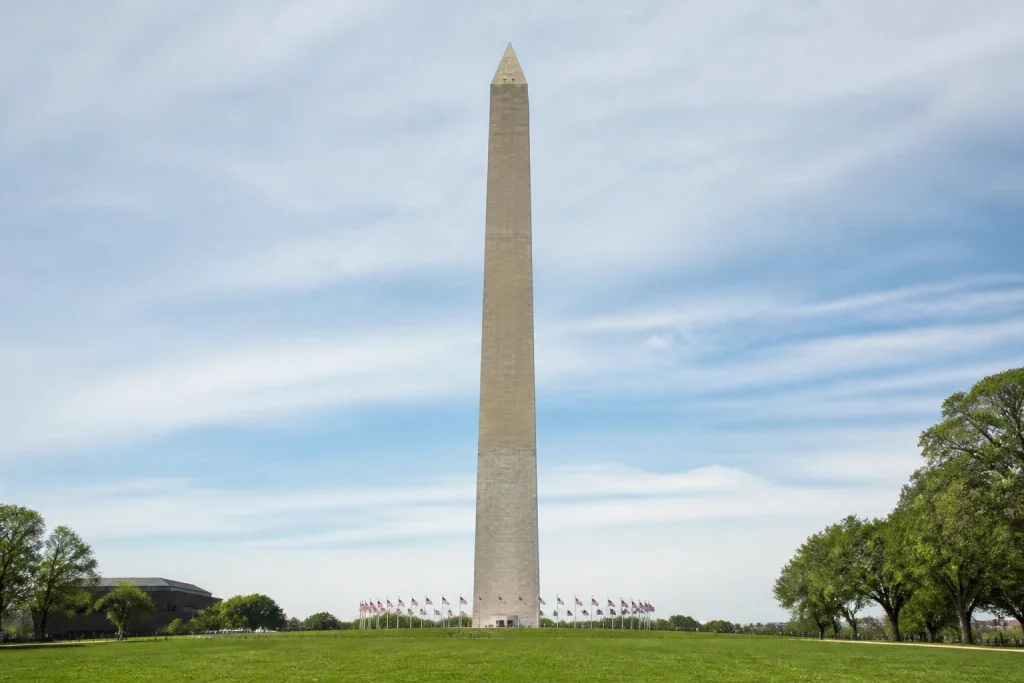
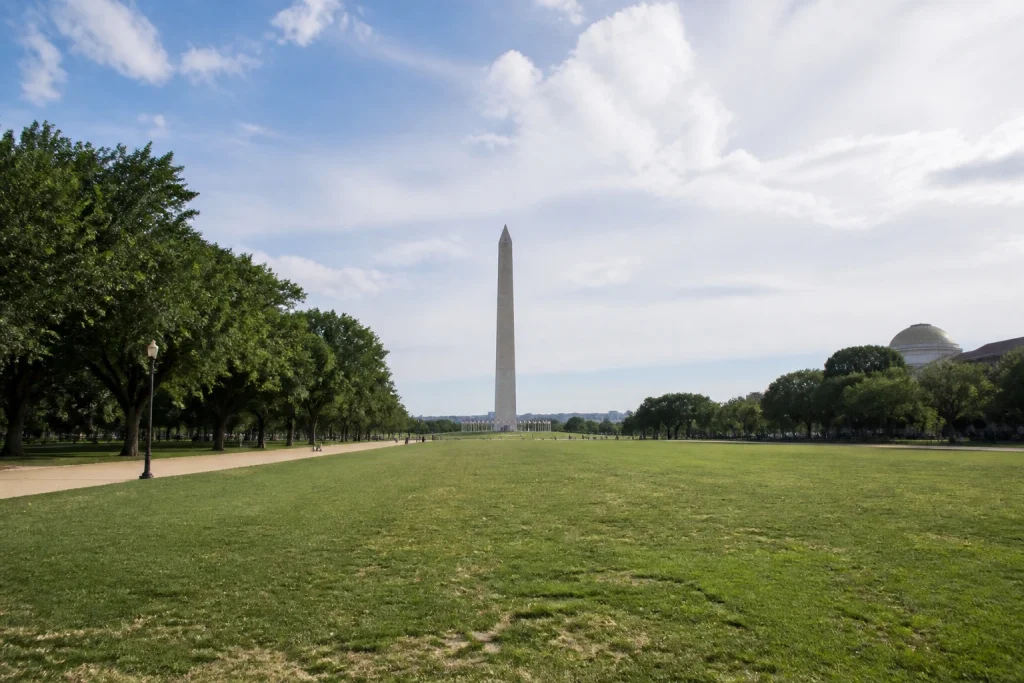
The Washington Monument is the natural George Washington-focused stop on this route. Elevator entry requires a timed ticket for every visitor age 2 and older. There is no admission charge, but online advance reservations carry a nonrefundable $1 service charge per ticket. Advance tickets are released daily at 10 a.m. for dates 30 days ahead, with additional tickets released one day before a visit.
The visit itself typically takes 45 to 60 minutes, plus a recommended 15-minute early arrival for screening. Free same-day tickets are distributed while supplies last, but they are better treated as a bonus than the foundation of a tightly planned day. For more Monument-specific timing help, use the Washington Monument Tickets and Visitor Guide.
Pack lightly for this stop. Large backpacks, food, beverages, strollers, weapons, and bulky items are prohibited at the Monument. Dangerous weather can close the site and void affected tickets, a practical reason to avoid placing a nonrefundable activity immediately after the scheduled entry.

Assassinations Capital: Presidential Crime Scenes Walking Tour
This tour is recommended for ages 13+.Some of the most notorious crime scenes in DC are hidden in plain sight. Str...

The Best of Washington DC: Private Full-Day Walking Tour
Explore the Presidential city of Washington D.C. on a private full-day walking tour.You'll see the city's iconic...

Evening Guided Tour of Washington DC's Most Inspiring Memorials
As the sun goes down, some of America's most cherished monuments and memorials are transformed by lights that make t...
A booking-led order for one full day
- Submit the White House request 7 to 90 days ahead. Do not assume a particular time until the visit is confirmed.
- Once the White House time is known, reserve a Washington Monument entry that leaves room for screening and travel. Travelers who prioritize the observation level should act when the ticket window opens.
- Reserve the Capitol tour for the part of the day with the clearest buffer. Factor in the required early arrival, not merely the one-hour tour time.
- Use Metrorail rather than trying to park at the Capitol, and allow extra time for the walk to the Visitor Center entrance on the east side.
- If the White House is unavailable, build the day around a Capitol reservation and National Mall exterior stops. This preserves the civic focus without forcing the schedule around an uncertain request.
This order works because it respects the day’s real constraints. The White House is hard to secure, the Monument has a narrow ticketing system, and the Capitol is dependable but screening-heavy. Plan the fixed stops first, then use unscheduled time for meals, outdoor pauses, or a slower walk through the National Mall.
Handle security rules before leaving your hotel
Security is part of the experience at all three core sites. At the Capitol, visitors pass through U.S. Capitol Police screening. Food and beverages are not allowed inside, and the Visitor Center does not provide bag storage. Keep only what you can carry through the day and leave unnecessary items behind before heading to the Hill.
- Arrive at the Capitol at least 60 minutes before the reserved tour, even if the day’s earlier stop ran smoothly.
- Do not bring food or beverages into the Capitol Visitor Center.
- Do not depend on the Capitol Visitor Center to store a bag.
- Keep large backpacks, strollers, food, beverages, weapons, and bulky belongings out of a Washington Monument plan.
- Check White House tour communications close to the visit, because scheduling changes can occur with little notice.
Accessibility and car-free logistics
The Capitol’s guided tours are accessible. The Visitor Center provides accessible and family restrooms, designated ADA vehicle pickup and drop-off zones, an on-demand mobility-assistance shuttle, captioned films, assisted-listening devices, and advance-bookable ASL interpretation. The Washington Monument reaches its observation level by elevator and is accessible to wheelchair users.
For a White House tour, travelers who need accommodations should contact the White House or their congressional office before submitting a request. For the Capitol portion, public transportation avoids the area’s limited parking. Capitol South and Union Station are the recommended nearby Metrorail stations, and How to Get Around Washington DC Without a Car is a useful companion for shaping the wider route.
Keep the cost low without treating the day as effortless
The value of this tour is unusually strong. White House public tours and Capitol tours are free. Washington Monument admission is also free, although an online advance reservation has a $1-per-ticket, nonrefundable service charge. The true cost is time and flexibility: timed entry, security rules, and reservation availability matter more than admission fees.
Have a question about this guide?
Ask for tour ideas, hotel suggestions, or a simple trip plan that combines both.
Trip Helper
Extend the story only after the core stops are set
Once the three anchors are in place, expand at a relaxed pace rather than squeezing more timed attractions between security appointments. A National Mall Guide for First Timers can help shape the outdoor portion of the day. Travelers with more time can also continue their civic-history exploration with the Smithsonian National Museum of American History Guide.
Is this tour worth planning around?
Yes, for travelers who want the institutions of the American presidency and government to feel immediate rather than abstract. The White House request is the main limitation, and a spontaneous schedule will not work well. Submit that request early, reserve the Monument if its views matter to you, and give the Capitol the security buffer it requires. The result is a focused Washington day with real narrative weight.
Presidential DC: Capitol Hill + DC Bus Tour, US Capitol Entry
Join our expert live guide on this 3-Hour Washington DC Guided Bus & Walking Tour with Grounds Access to US Capitol, Supreme Court, and Library of Con...
Frequently asked questions
What should I book first for a Washington DC presidential history tour?
Request the White House tour first, because it must be submitted through a U.S. Representative or Senator 7 to 90 days before the requested date. Build the Capitol and Washington Monument reservations around the confirmed White House time.
Can I do this itinerary without a White House tour?
Yes. A reserved Capitol tour can anchor the day, with Washington Monument tickets or National Mall exterior stops filling the remaining time. This is the most flexible backup when a White House request is unavailable.
How much does a Washington DC presidential history tour cost?
The White House and U.S. Capitol tours are free. Washington Monument entry is free as well, though online advance reservations have a nonrefundable $1 service charge per ticket.
How much time should I allow for the Capitol and Washington Monument?
Allow at least 60 minutes before a Capitol reservation for security, plus roughly one hour for the guided tour. A Washington Monument visit typically takes 45 to 60 minutes, with a recommended 15-minute early arrival for screening.
Do I need reservations for the U.S. Capitol?
Reservations are recommended for the free guided Capitol tour, although same-day availability may be offered. The historic Capitol cannot be visited independently, so a guided entry is essential for seeing the Crypt, Rotunda, and National Statuary Hall.
Are the Capitol and Washington Monument accessible?
Yes. Capitol guided tours are accessible and the Visitor Center offers several services, including an on-demand mobility shuttle and advance-bookable ASL interpretation. The Washington Monument uses an elevator and is accessible to wheelchair users.

Ghosts of D.C. - Walking Tour
Uncover the haunted history of Washington, D.C. on this ghost walking tour through Capitol Hill. Perfect for all ages, this experience blends real his...

National Archives + National Portrait Gallery Tour 6ppl Max
This 5.5 hour Semi-Private (8 Guest Max.) guided combo tour welcomes guests to skip-the-line and experience two esse...
Presidential DC: Capitol Hill + DC Bus Tour, US Capitol Entry
Join our expert live guide on this 3-Hour Washington DC Guided Bus & Walking Tour with Grounds Access to US Capitol...

DC National Archives + National Portrait Gallery - Exclusive Tour
Discover the United States’ turbulent history through works preserved in the National Archives before exploring th...
Experiences to explore
 Explore experience ↗
Pennsylvania Avenue from the White House to the U.S. Capitol
◷ 2 hr–3 hr
Private walk from the White House to the Capitol, uncovering hidden stories along Pennsylvania Avenue. These are stories that are often
See dates for Current pricing
View dates Explore experience ↗
Hidden Halls of Power: Secret History of the White House & DC
◷ 2 hr
Washington, DC, has not always served as the federal government's headquarters. Following the Revolutionary War, the Residency Act of 1
See dates for Current pricing
View dates Explore experience ↗
Washington DC Private Tour from White House
◷ 4 hr–5 hr
Personalized tour of Washington DC , either we choose itinerary or you customize within city limit. At Sappy Tours, we believe travel i
See dates for Current pricing
View dates