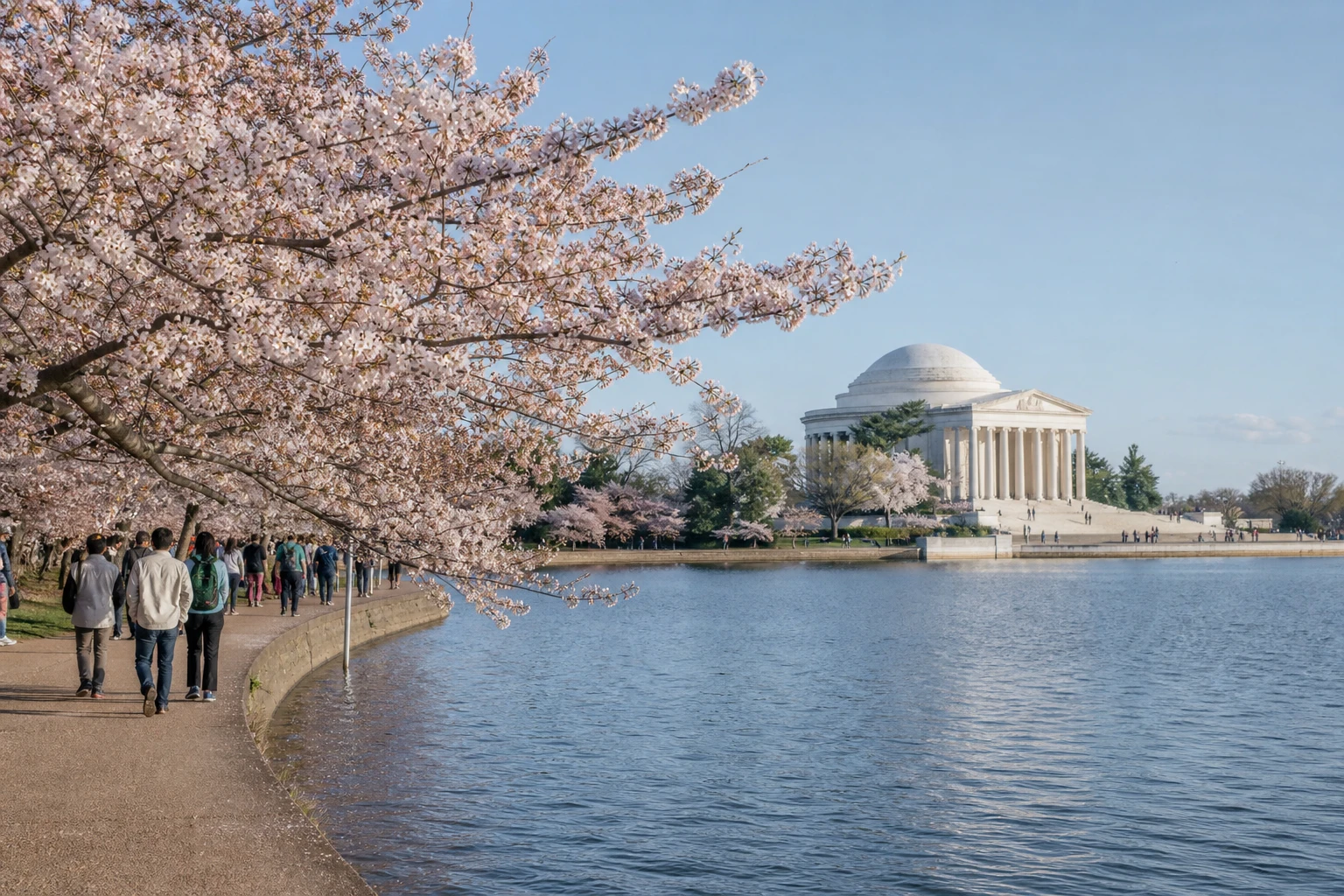
Washington DC in April is shaped by a moving spring bloom. A trip can coincide with Yoshino cherry trees around the Tidal Basin, or arrive after peak and find tulips, Kwanzan cherries and dogwoods taking their turn. The city still suits a later-April getaway, but travelers coming primarily for cherry blossoms should plan around a weather-sensitive window. Yoshino peak usually falls from late March into early April rather than reliably spanning the whole month.
- Treat early April as the strongest possibility for Yoshino cherries, not a guarantee for every day of the month.
- Follow the current blossom forecast, which is updated close to peak bloom.
- Expect larger crowds on weekends and around peak bloom, then favor an early-day or weekday visit.
- Use public transportation for the Tidal Basin, where parking is scarce and congestion can be severe.
- Budget-minded travelers can enjoy free blossom viewing and many free spring activities.
- If mobility is a concern, plan an accessible route before arrival instead of depending on limited nearby parking.
Is April a good time to visit Washington DC?
April is a rewarding time for visitors who want spring scenery and can keep their plans flexible. The key tradeoff is simple: the famous blossom display draws crowds, yet its timing cannot be pinned to a fixed April weekend. Free blossom viewing and a wide choice of free spring activities make the season appealing for a low-cost trip as well. Visitors who value easier sightseeing over peak cherry trees should lean toward weekdays, early in the day, or later April.

Washington DC: Cherry Blossoms by Bike Tour
Experience the beauty of Washington DC in its spring glory on this 2-hour bike tour created specifically for the famous National Cherry Blossom Festiv...

Cherry Blossoms at Dawn Private Washington DC Sunrise Tour
Experience Washington’s cherry blossoms in the quieter early-morning hours, before the Tidal Basin reaches its hea...

DC Cherry Blossoms Insiders Tour
Discover the beauty and significance of Washington DC's cherry blossoms on this insightful 2.5-hour walking tour led...

The DC Cherry Blossom Bus Tour with Tidal Basin Guided Walk
Enjoy the fragrant, fluffy blooms of the famous Washington cherry blossom with this short springtime tour, which inc...
Choose early April for the best chance of Yoshino cherries
Choose early April if seeing Yoshino cherries is your main goal, but avoid building the whole trip around one predicted day. Once peak bloom begins, blossoms typically remain for seven to 10 days. A forecast issued close to peak is far more useful than an old calendar. Check the current outlook shortly before traveling, then keep your blossom walk flexible enough to move within your stay.
Mid-to-late April still brings spring color
A mid-to-late April visit can still feel distinctly springlike after the Yoshinos have faded. Tulips commonly arrive in early April. Kwanzan cherries generally follow Yoshinos by roughly one to three weeks, while dogwoods typically bloom from mid-April into early June. These are useful seasonal patterns, not appointments on the calendar, so see later April as a flower-rich visit with less reliance on one iconic bloom.
Keep festival dates separate from bloom timing
Festival programming can add energy to an April trip, but it should be an optional layer rather than the only reason for choosing dates. Annual event calendars, traffic controls and road configurations change. Before an event-focused weekend, check the current National Cherry Blossom Festival calendar along with National Park Service directions for the Tidal Basin. That quick check helps keep transit, walking routes and ticketed plans in sync.
Plan the Tidal Basin: transit, walking and accessibility
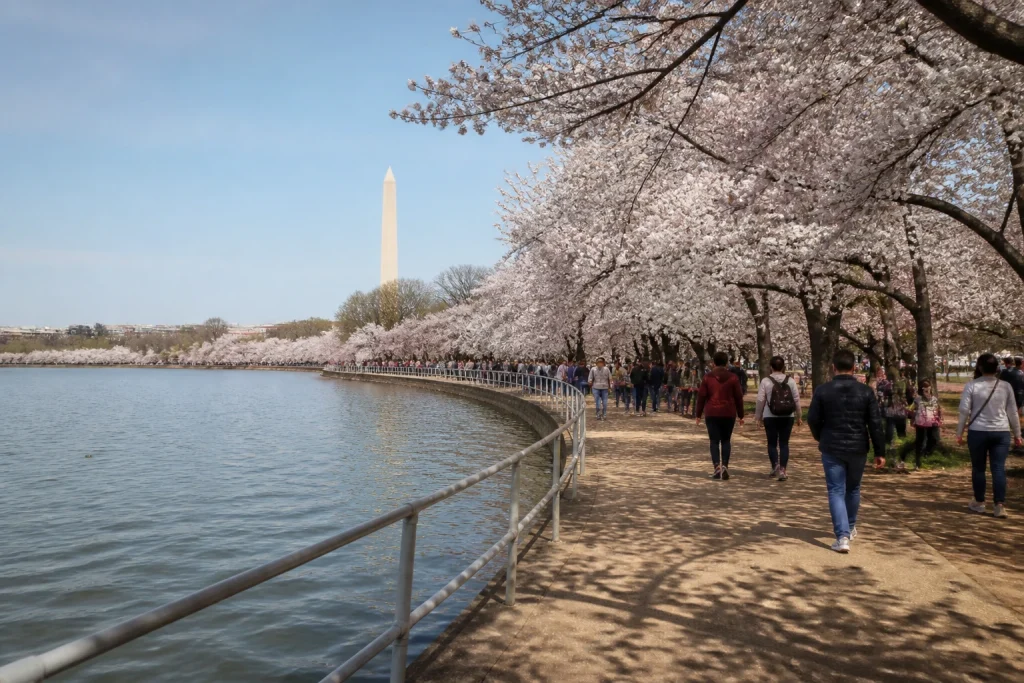
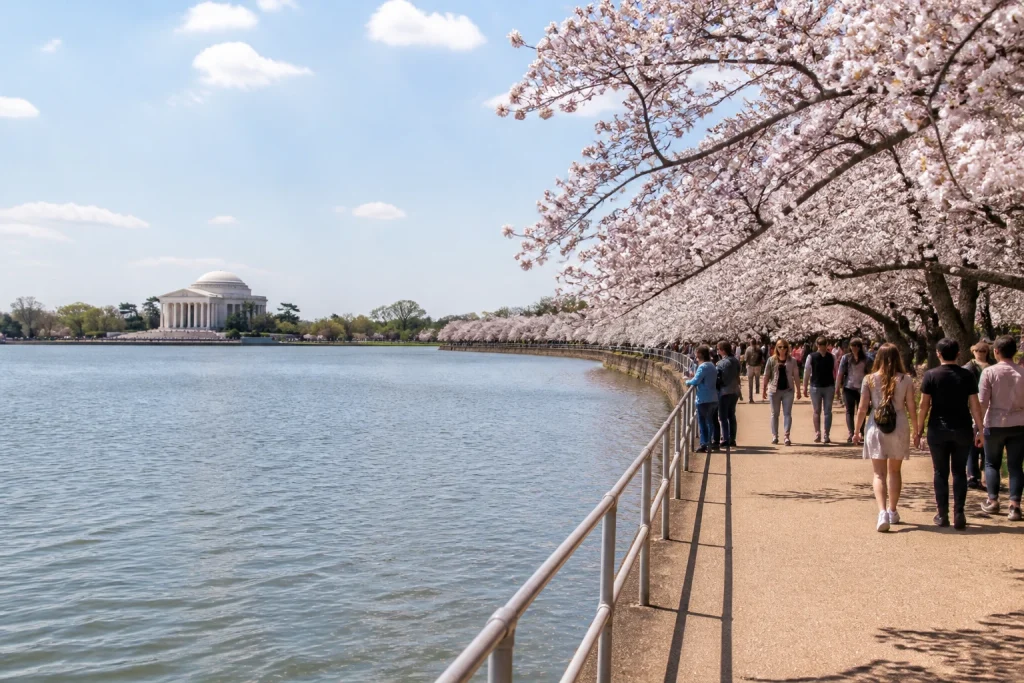
The Tidal Basin is the focal point for many April blossom visits, and it rewards a slower pace. Its loop is 1.8 miles, so it is more than a brief photo stop. Comfortable shoes and room in the schedule matter, particularly when blossoms or festival events bring larger numbers of visitors. Build in time to walk, pause and reach your next stop without racing the clock.
Take public transit instead of driving
Public transportation is the practical choice for a Tidal Basin visit. The National Park Service warns of severe congestion, altered traffic patterns and extremely scarce parking during blossom season. Smithsonian/National Mall Metro is about one mile from the Tidal Basin Welcome Area, so transit reduces driving stress but does not eliminate walking. Account for that approach walk as well as the 1.8-mile basin loop when shaping the day.
Make an accessibility plan before you arrive
The Tidal Basin is wheelchair accessible and has accessible restrooms, family restrooms, a bus or shuttle stop, public transit access and a water-bottle filling station. Still, accessible parking near the memorials is limited and fills quickly during busy periods. Travelers who need a step-free or low-walking route should plan the arrival route and a backup option before setting out, especially on a popular weekend.
Build a flexible April sightseeing day
Use an anchor-and-flexible approach. Make the blossom walk the fixed part of the day when the forecast looks promising, then leave the rest of the schedule open enough to adapt to crowds, an event timetable or a longer-than-expected walk from transit. This approach works especially well in a city where the most popular spring area can require patience before the day has fully begun.
- Check the current blossom forecast and event calendar before deciding which day will be your Tidal Basin day.
- Travel to the basin by public transportation and allow time for the walk from Smithsonian/National Mall Metro.
- Walk all or part of the 1.8-mile loop at a pace that suits your group.
- Add other landmarks only after allowing for transit, crowds and the basin walk.
- Keep any ticketed festival event as a separate appointment rather than squeezing it into an already tight route.
For a route focused on the waterfront, the Tidal Basin Washington DC guide is a useful companion to this seasonal plan. If the memorial is on your list, consult the Jefferson Memorial guide for first timers for a dedicated visit. A National Mall guide for first timers can help turn open time into a wider landmark route, while How to Get Around Washington DC Without a Car offers extra planning help for a transit-led stay.

DC in Spring: Cherry Blossom & Tidal Basin Memorials Walking Tour
This guided walking tour explores Washington, DC’s cherry blossom history while visiting some of the most meaningf...

Washington D.C. Cherry Blossom Day Tour from New York
Travel from New York to Washington D.C. for a seasonal day trip centered on the city's spring cherry blossoms. Visit...

Private Guided Tidal Basin Walking Tour in DC
Discover the rich history and beauty of Washington, DC with the Tidal Basin Walking Tour. This self-guided audio exp...
Find spring flowers beyond the Yoshino cherry peak
Spring color in Washington shifts through the month rather than ending with Yoshino cherries. That makes a later-April trip a sound choice for visitors whose priorities include gardens, outdoor walks and a less blossom-centered schedule. Keep your expectations broad: a successful April visit need not depend on a single pale-pink canopy around the Tidal Basin.
Match your dates to the flowers you hope to see
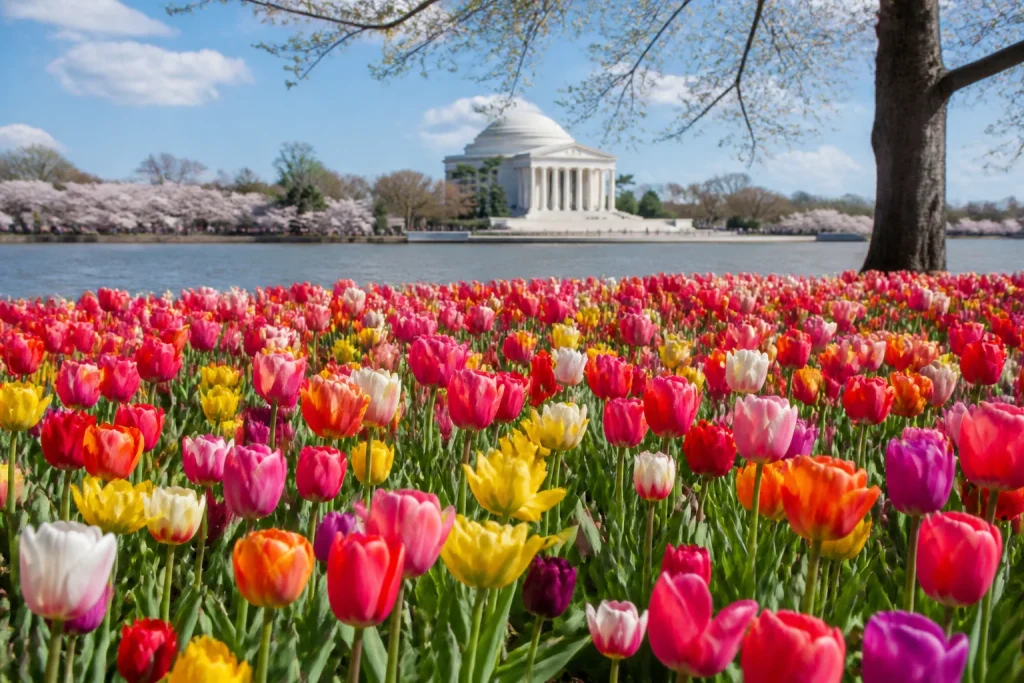
For early April, look for tulips as well as any remaining Yoshino blossoms. In the weeks after Yoshino peak, Kwanzan cherries become the logical cherry-focused alternative. From mid-April onward, dogwoods extend the spring display into early summer in a typical year. Use these windows to guide your expectations, then follow current local updates for the most accurate picture during your travel week.
Handle crowds without losing the joy of the season
Crowds are part of the experience when peak blossoms and major events overlap. Weekends and peak bloom draw more visitors, so a weekday or early-day visit is the clearest strategy for travelers who value breathing room. If photography or festival atmosphere matters most, accept that the busiest moments can also be the most visually memorable. Pick your priority before you choose your dates.
| Your April priority | Best approach | Main tradeoff |
|---|---|---|
| See Yoshino blossoms | Choose flexible early-April dates and follow the current forecast. | Peak is weather-dependent and blossoms usually last seven to 10 days after peak begins. |
| Avoid the densest crowds | Visit early in the day or on a weekday, or choose later April. | You could miss the Yoshino display. |
| Enjoy a broader spring visit | Look beyond Yoshinos to tulips, Kwanzan cherries and dogwoods. | The iconic Tidal Basin peak may no longer be the centerpiece. |
Keep an April trip affordable and event-ready
Washington DC offers a solid low-cost April framework. Blossom viewing is free, and many spring and festival activities are free as well. Some major festival events have optional paid elements, so review the current event description before committing. Start with a no-cost outdoor plan, then add paid experiences only where they improve the trip for your group. The Free Things to Do in Washington DC guide can provide more ideas for keeping the rest of the itinerary lean.
Check event-day logistics shortly before travel
On festival weekends, current logistics matter as much as the event itself. Review the latest festival calendar, National Park Service directions and local traffic controls before departure. This is particularly important for drivers, visitors using accessible parking and anyone trying to combine the Tidal Basin with a timed activity. Build the day around one or two priorities rather than a checklist that leaves no margin for detours.
What to bring for a Tidal Basin day
- Comfortable walking shoes for the 1.8-mile Tidal Basin loop and the approach from transit.
- A refillable water bottle, since the Tidal Basin lists a water-bottle filling station among its amenities.
- A charged phone with the current blossom forecast, festival calendar and directions saved for easy reference.
- Your transit payment method, with enough flexibility in the schedule for the walk from Smithsonian/National Mall Metro.
- An accessibility route plan and backup arrival option if walking distance or limited parking could affect your visit.
Respect the blossoms and plan with care
The blossom season is brief, and the trees deserve the same patience that the crowds require. Do not pick blossoms. Picking them is against the law. A better approach is simple: admire the branches where they are, give yourself enough time to walk the basin, and leave the day flexible enough to enjoy what is actually blooming. That mindset makes April feel far less like a race against a forecast.
Have a question about this guide?
Ask for tour ideas, hotel suggestions, or a simple trip plan that combines both.
Trip Helper
Make Washington DC in April work for your travel style
Washington DC in April is best for travelers who enjoy seasonal scenery and can work with a variable schedule. Blossom-first visitors should monitor the forecast and use transit for the Tidal Basin. Travelers arriving later in the month can shift their attention to tulips, Kwanzan cherries and dogwoods, with a better chance of making sightseeing the main event. Pick your priority, plan walking time generously and let the season set the pace.
Washington DC: Cherry Blossoms by Bike Tour
Experience the beauty of Washington DC in its spring glory on this 2-hour bike tour created specifically for the famous National Cherry Blossom Festiv...
Washington DC Cherry Blossom Small Group Half-Day Tour
See Washington and nearby Maryland dressed in spring color on a seasonal small group cherry blossom tour. Visit the...

Discover Washington: A Self-Guided Tour
Discover Washington DC's monumental grandeur and democratic ideals with your self-guided audio tour, allowing you to...

DC Monuments Night Tour with 10+ Stops, National Mall, Tickets
Experience Washington DC lit up at night during this 3-Hour Guided Night Tour of the National Mall and Monuments. Ma...
Frequently asked questions
Is April a good month to visit Washington DC?
Yes, April is a strong choice for spring flowers, free outdoor sightseeing and seasonal festival energy. Cherry blossom timing varies, so travelers focused on Yoshino cherries should keep their dates and daily plans flexible.
Will I see cherry blossoms in Washington DC throughout April?
No, Yoshino cherry blossoms are not guaranteed throughout April. Their typical peak falls from late March into early April, and the exact timing depends on the year's weather.
What flowers can I see if I miss Yoshino cherry blossom peak?
Later April can still bring tulips, Kwanzan cherries and dogwoods. Kwanzan cherries generally follow Yoshinos by one to three weeks, while dogwoods typically bloom from mid-April into early June.
How much walking is involved at the Tidal Basin?
The Tidal Basin loop is 1.8 miles. Smithsonian/National Mall Metro is also about one mile from the Tidal Basin Welcome Area, so allow substantial time for walking.
Should I drive to the Tidal Basin during cherry blossom season?
Public transportation is the better choice for most blossom visits. Severe congestion, altered traffic patterns and extremely scarce parking can affect the area during the season.
Is the Tidal Basin accessible for wheelchair users?
Yes, the Tidal Basin is wheelchair accessible and offers accessible restrooms and public-transit access. Nearby accessible parking is limited and can fill quickly, so plan the route before arrival.
Experiences to explore
 Explore experience ↗
Washington DC: Cherry Blossoms by Bike Tour
◷ 2 hr
Experience the beauty of Washington DC in its spring glory on this 2-hour bike tour created specifically for the famous National Cherry
From $65.00 USD
View dates Explore experience ↗
The DC Cherry Blossom Bus Tour with Tidal Basin Guided Walk
◷ 4 hr
Enjoy the fragrant, fluffy blooms of the famous Washington cherry blossom with this short springtime tour, which includes a guided walk
See dates for Current pricing
View dates Explore experience ↗
DC in Spring: Cherry Blossom & Tidal Basin Memorials Walking Tour
◷ 1 hr 45 min
This guided walking tour explores Washington, DC’s cherry blossom history while visiting some of the most meaningful memorials along th
See dates for Current pricing
View dates