Washington DC rewards tourists who treat a car as a useful tool, not an all-day sightseeing companion. Driving can make arrival with luggage, hotel check-in, and trips beyond the compact center easier. Once you are near the major monuments and museums, a plan that combines one legal parking stop with walking or another transport option is usually less stressful than moving the car from sight to sight.
Decide if a car fits your Washington DC trip
A car makes the most sense when it has a clear purpose. It can simplify your arrival, give you a place for suitcases between hotels, support travelers who need vehicle-based mobility, or help with plans outside the central visitor area. It is less useful as a default shuttle between National Mall monuments, where legal parking, event restrictions, and rerouting can consume time you hoped to spend exploring.

Self Guided Driving Audio Tour Washington D.C.
Download GuideAlong’s self-guided driving audio tour of Washington, D.C. Marble monuments, world-class museums, and hidden tales of war and patrioti...
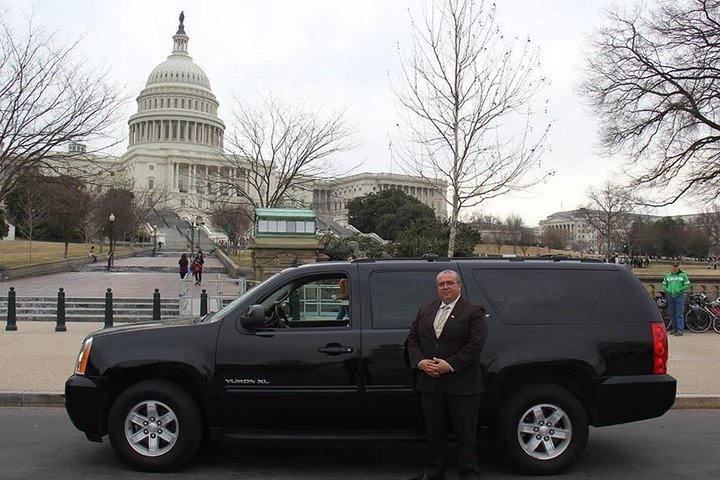
Private Multilingual DC City Tour (Spanish, Portuguese, English)
Discover Washington, DC on a private 4-hour city tour with a dedicated driver. You'll visit all the major monuments...

Washington, DC: Sunset & After-Dark Monuments Tour by E-Cart
Please Note: The 6:00 PM tour may not be fully dark depending on the season. The 8:30 PM tour offers a fully after-d...

Washington DC Monuments and Memorials Night Tour
See Washington, DC in ways large bus tours can’t—especially after dark. This small‑group night tour (12 guests...
- Choose your hotel and overnight parking plan before you enter the city.
- Treat every curbside space as location-specific: read its posted restrictions and payment instructions.
- Do not assume a residential visitor permit is available just because you are staying overnight in DC.
- Park once for a cluster of central sights instead of driving between every monument.
- Check National Mall conditions and event notices on the day you plan to drive nearby.
Build a car-light plan before you arrive
The smoothest driving days start with a simple division of labor. Use the car for the part of the day where it solves a real problem, then let it rest. A visitor arriving at a hotel can handle bags, complete check-in, secure the vehicle, and set out on foot. This approach removes the repeated search for curb space and helps keep a change in traffic conditions from disrupting every stop on your list.
Give the car one job at a time
- Set a precise first destination, such as your hotel, a reserved facility, or a chosen parking area.
- Complete the arrival task before adding sightseeing stops to your route.
- Keep your parking location and return route saved on your phone.
- Explore nearby attractions on foot or with another transportation option.
- Return to the vehicle only when you are ready to change areas or leave the city.
Overnight parking deserves the same attention as the hotel itself. Before committing to a neighborhood base, ask your accommodation about its parking arrangements, any entry instructions, and the practical timing for arrival and departure. Our guide to where to stay in Washington DC for first timers can help you compare neighborhood bases, then you can narrow the choice according to the parking plan that works for your trip.
A hybrid day also gives you more freedom to enjoy the city at a human pace. After the vehicle is parked, walking can connect a sequence of nearby sights without another round of navigation and parking decisions. For the wider car-free side of the equation, our guide to getting around Washington DC without a car is a useful companion once your vehicle is settled for the day.
Understand parking before you turn off the engine
Parking is the part of driving in Washington DC that needs the most patience. Do not treat a vacant curb space as an invitation by itself. Read the sign at the exact space, follow the payment instructions that apply there, and make sure the restrictions fit the time you plan to be away. Meter rules, garage charges, event pricing, and enforcement conditions vary by location, so avoid budgeting around one assumed citywide amount.
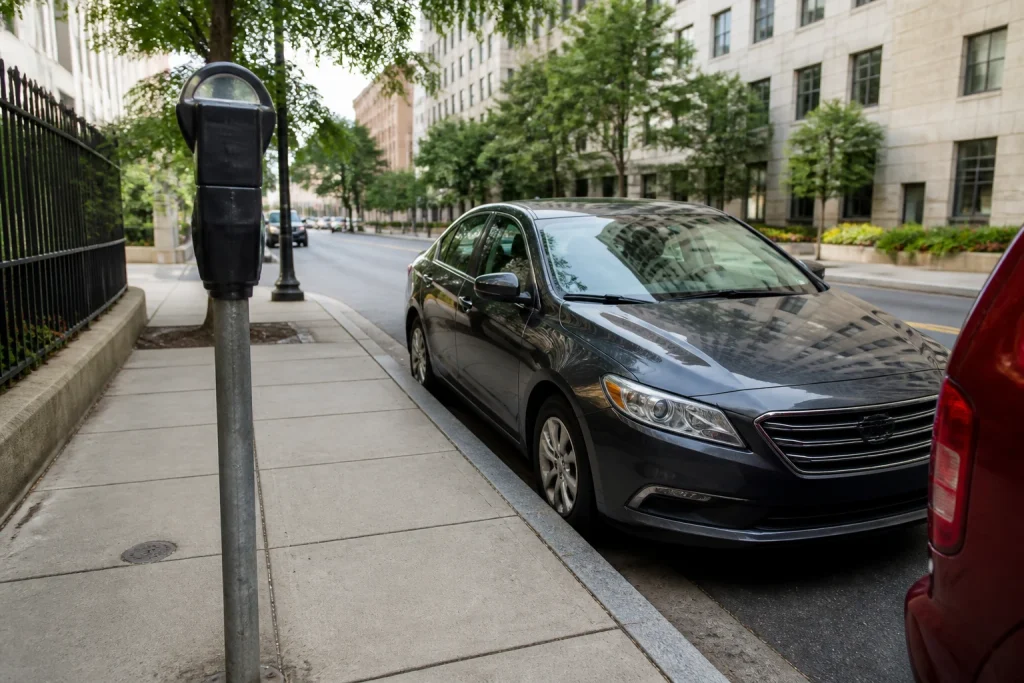
For a sightseeing day, decide in advance what matters most: a facility close to your first stop, a place that is convenient for your hotel, or a legal curb space with terms that suit a shorter visit. A little advance choice is better than circling while passengers search on separate phones. Once parked, take a photo of the location and the posted conditions while you are safely stopped.
| Situation | Practical move | Reason |
|---|---|---|
| Hotel arrival | Confirm the property's parking arrangements and entry instructions before driving in. | Hotel guests should not assume that residential visitor parking is available to them. |
| Visiting a DC resident | Ask the host or DDOT about eligibility before relying on a visitor permit. | The ParkDC visitor-parking program is intended for visits to DC residents and is plate-specific. |
| National Mall sightseeing | Choose one legal place to leave the car, then cover nearby sights without moving it. | Temporary closures and no-parking restrictions can affect access during events. |
| Major event day | Check live conditions before departure and allow extra time for a changed route. | Event operations can bring rerouting, security perimeters, and temporary vehicle restrictions. |

Washington DC Monuments Self Guided Driving Audio Tour
Discover the rich history and drama of the nation’s capital. This self-guided driving tour covers all the iconic s...
Self Guided Driving Audio Tour Washington D.C.
Download GuideAlong’s self-guided driving audio tour of Washington, D.C. Marble monuments, world-class museums, an...
Do not count on a visitor permit for a hotel stay
DC's ParkDC visitor-parking program is for people visiting DC residents, rather than a general tourist parking pass. If a permit is issued, it is tied to a specific license plate and must be used in the correct Advisory Neighborhood Commission area. Since August 1, 2025, it no longer needs to be displayed on the dashboard. If you are staying at a hotel, confirm eligibility before depending on residential curb parking.
Drive near the National Mall with a backup plan
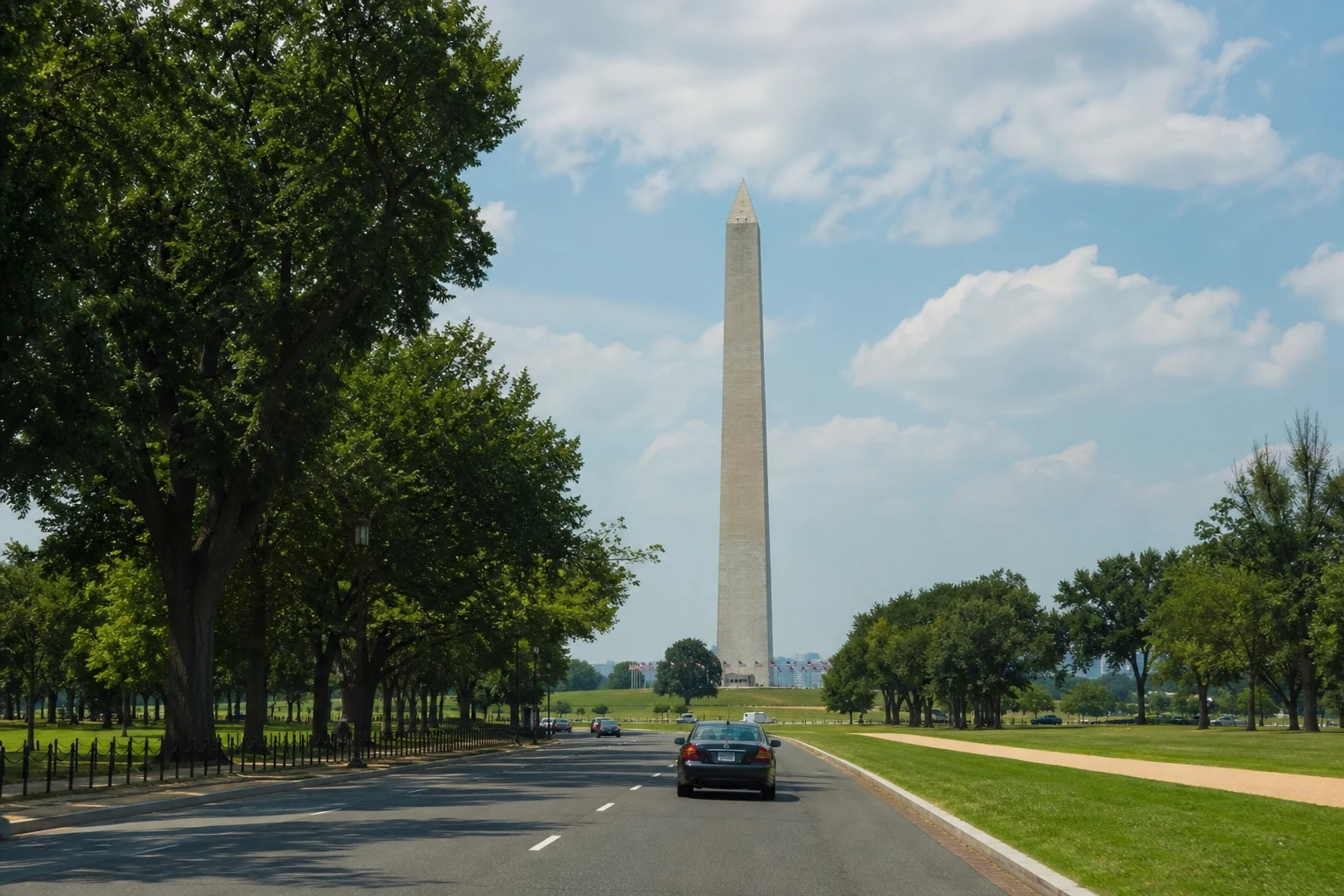
The National Mall is the place where a car can feel least efficient. The landmarks are spread across a broad ceremonial landscape, yet driving directly between them can expose you to parking uncertainty and temporary restrictions. Think of the vehicle as a way to arrive near the area, not as the thread that stitches every memorial visit together. Walking lets you absorb the scale of the space without restarting the parking search.
Special events can change National Mall driving access quickly. Recent National Park Service notices have included temporary vehicle closures around the Mall, Memorial Bridge, Constitution Avenue, Independence Avenue, 23rd Street, Ohio Drive, and nearby park roads. Do not assume a past notice means a road is closed today. Instead, check live National Mall conditions and event notices before leaving, especially for weekends and major public events.
A practical Mall driving strategy
- Choose the first landmark or museum you want to see, rather than navigating to the entire Mall.
- Identify a legal parking option or hotel-based plan before departure.
- Leave extra time for detours, restricted streets, and a longer walk than expected.
- Park once, then group nearby memorials, museums, and viewpoints into one walking stretch.
- Check conditions again before returning to the car if an event is underway nearby.
Plan the order of your landmark stops before you set out. A National Mall guide for first timers is helpful for shaping a logical walking route after you park, so the day feels like a connected exploration rather than a series of short drives. Carry water, comfortable footwear, and a fully charged phone, then give yourself room to linger at the places that catch your attention.
Navigate with precise destinations and flexible expectations
Use the most precise destination you have. A hotel entrance, confirmed garage, or specific street address is more useful to a navigation app than a broad landmark name. Save your lodging address, parking location, and next planned stop before setting off. That small bit of preparation reduces last-second turns and makes it easier for a passenger to help when the route changes.
Let the route change without changing the whole day
A detour need not become a disaster. If a street is restricted or a parking plan falls through, shift to the next legal option rather than trying to force the original route. Keep a second parking idea near your day’s first major area, and avoid scheduling central attractions so tightly that one reroute derails lunch, a timed entry, or an evening plan.
Give the driver one clear task at a time. Let a passenger handle route updates where possible, or pull over legally before making changes. Keep tickets, hotel information, medical essentials, and a charging cable easy to reach. The goal is not to drive every block perfectly. It is to arrive calmly, park legally, and spend the larger share of the day experiencing Washington rather than managing the vehicle.
Have a question about this guide?
Ask for tour ideas, hotel suggestions, or a simple trip plan that combines both.
Trip Helper
Build time around events, not through them
For days involving a parade, large gathering, fireworks, major sporting event, or public ceremony, simplify the plan. Arrive earlier than your first reservation requires, choose a parking approach that does not depend on the closest possible curb, and be prepared to walk from farther away. Temporary restrictions can include road closures, security perimeters, and emergency no-parking zones, all of which make a flexible itinerary valuable.
Know when to park the car and change modes
After you have reached the central visitor area, changing modes is often the sensible move. Parking once and continuing on foot avoids repeating the hardest parts of the driving day. It also gives you a better chance to notice the details between major sights: a memorial inscription, a tree-lined path, a museum façade, or the shift in light across an open lawn. Save the car for the point where it genuinely expands your itinerary.
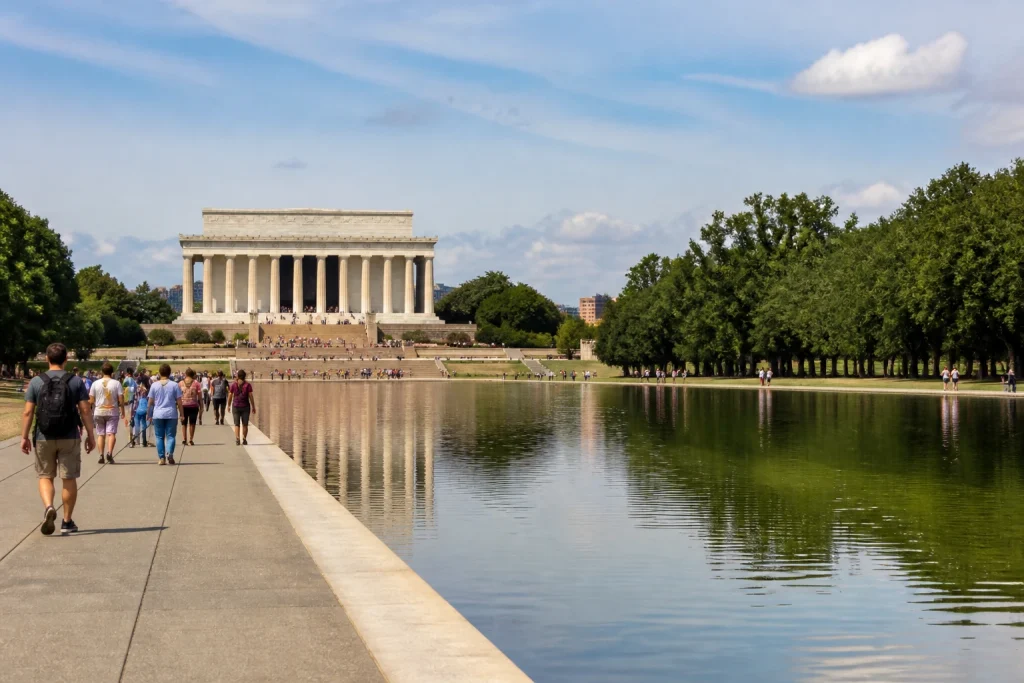
This does not mean every tourist should leave the car behind for the entire trip. A vehicle can remain the right choice for luggage, a multi-stop schedule outside the core, or personal mobility needs. The useful question is simple: does the next drive solve a problem that walking or another option cannot? If the answer is no, hold on to the parking space and continue exploring.
Compare driving with Metro and other options carefully
Metro and other transportation options can be worth comparing when your day is focused on the central city. Make the comparison using the live information for your travel date, not an old fare chart or a remembered station condition. Current fares, station parking availability, elevator service, and accessible routing can change, so check WMATA's current rider information before you build a time-sensitive plan around it.
A mixed approach works well for many itineraries: drive in for the part of the trip that benefits from a vehicle, then use walking or public transportation for the dense sightseeing portion. This also provides a fallback if an event changes road access around the National Mall. Keep your return journey in mind before you park, especially if your schedule includes an evening activity or a long walk back.
Plan accessibility around the exact attraction
For travelers with mobility needs, a private vehicle can be an important part of a successful Washington DC visit. Plan the day around the exact attraction, not a vague promise to park nearby. Accessible spaces, curbside drop-off arrangements, walking distances, and station elevator conditions need to be checked for the particular place and date. Confirm the arrangement directly before travel, then allow extra time for arrival and departure.
If one member of your group needs a shorter route, make that need the anchor for the day’s parking decision. Choose the first destination accordingly, limit unnecessary vehicle moves, and avoid making a tightly timed sequence of attractions dependent on one curb space. A calmer itinerary leaves room for a drop-off, a longer return route, or a change in access conditions without sacrificing the whole visit.
Use this departure checklist for a smoother driving day
Take five minutes before departure to check the details that can change. This is particularly useful for a National Mall day, a weekend with large events, or any itinerary where a timed museum entry follows your drive. A prepared first stop makes the rest of the day more forgiving.
- Confirm the hotel, garage, or legal curbside plan for your first stop.
- Review the parking restrictions and payment requirements at the exact place you intend to leave the car.
- Save the parking location, hotel address, and next destination before you begin driving.
- Check live National Mall conditions and event notices if your route passes through the monument area.
- For Metro or accessible plans, check current WMATA and attraction-specific service information.
- Keep the day flexible enough to handle a detour, a longer walk, or a different parking choice.
Self Guided Driving Audio Tour Washington D.C.
Download GuideAlong’s self-guided driving audio tour of Washington, D.C. Marble monuments, world-class museums, an...
Washington DC Monuments Self Guided Driving Audio Tour
Discover the rich history and drama of the nation’s capital. This self-guided driving tour covers all the iconic s...
The practical verdict on driving in Washington DC
Driving in Washington DC suits travelers who need help with arrival, luggage, mobility, or destinations beyond the compact center. Its main limitation is that central sightseeing can become slower when parking rules, costs, or event restrictions intervene. Make one solid parking plan, treat the National Mall as a walkable experience, and check changing conditions before you go. With that approach, the car supports the trip instead of running it.
Self Guided Driving Audio Tour Washington D.C.
Download GuideAlong’s self-guided driving audio tour of Washington, D.C. Marble monuments, world-class museums, and hidden tales of war and patrioti...

Washington DC Hop-On Hop-off Trolley Tour with 15 Stops
Enjoy a 90-minute Hop-on Hop-off panoramic trolley tour of Washington, DC. The tour route will maximize your time an...
Frequently asked questions
Is driving in Washington DC difficult for tourists?
Driving in Washington DC is manageable when you give the car a specific role, such as hotel arrival, luggage, or travel beyond the central visitor area. It becomes less efficient when you try to drive between major National Mall sights, where parking and temporary restrictions can complicate the day.
Can tourists use DC visitor parking permits?
Tourists should not assume they can use a DC visitor parking permit. The ParkDC program is intended for people visiting DC residents, and any permit is tied to a specific plate and Advisory Neighborhood Commission area; hotel guests should confirm eligibility before relying on it.
How much does parking cost in Washington DC?
Parking costs vary by the specific meter zone, garage, event, and time of use. Check the posted rules and payment information at the exact space or facility instead of relying on one citywide estimate.
Can I drive directly between National Mall monuments?
You can drive near the National Mall, but it is better not to build a sightseeing day around moving the car from monument to monument. Temporary closures, security perimeters, and no-parking restrictions can affect access during special events, so park once and walk a cluster of sights when possible.
Should I use Metro instead of driving in Washington DC?
Metro or another transportation option can be a practical choice for central sightseeing after you park or instead of bringing a car. Check current WMATA information for fares, station parking, elevator status, and accessible routing before making a time-sensitive plan.
How should travelers with mobility needs plan parking in Washington DC?
Travelers with mobility needs should plan parking or drop-off around the exact attraction they will visit. Confirm attraction-specific accessible spaces, curb access, walking distances, and transit conditions before travel rather than relying on general advice to park nearby.
Washington DC Monuments Self Guided Driving Audio Tour
Discover the rich history and drama of the nation’s capital. This self-guided driving tour covers all the iconic sights, like the Washington Monumen...
Self Guided Driving Audio Tour Washington D.C.
Download GuideAlong’s self-guided driving audio tour of Washington, D.C. Marble monuments, world-class museums, an...
Experiences to explore
 Explore experience ↗
Pedicab Sightseeing Tour on the National Mall
◷ 1 hr–1 hr 5 min
Kick back, relax and enjoy a guided private tour of the memorials on the National Mall in Washington, DC from an uncommon open-air conv
From $142.00 USD
View dates Explore experience ↗
Arrival Private Transfer: National Airport DCA to Washington in Luxury Car
◷ 20 min
Your safety is our crew’s biggest priority. Before your journey even begins, your driver completely disinfects the vehicle and places f
See dates for Current pricing
View dates Explore experience ↗
Arrival Private Transfer: National Airport DCA to Washington in Business Car
◷ 20 min
Your safety is our crew’s biggest priority. Before your journey even begins, your driver completely disinfects the vehicle and places f
See dates for Current pricing
View dates