
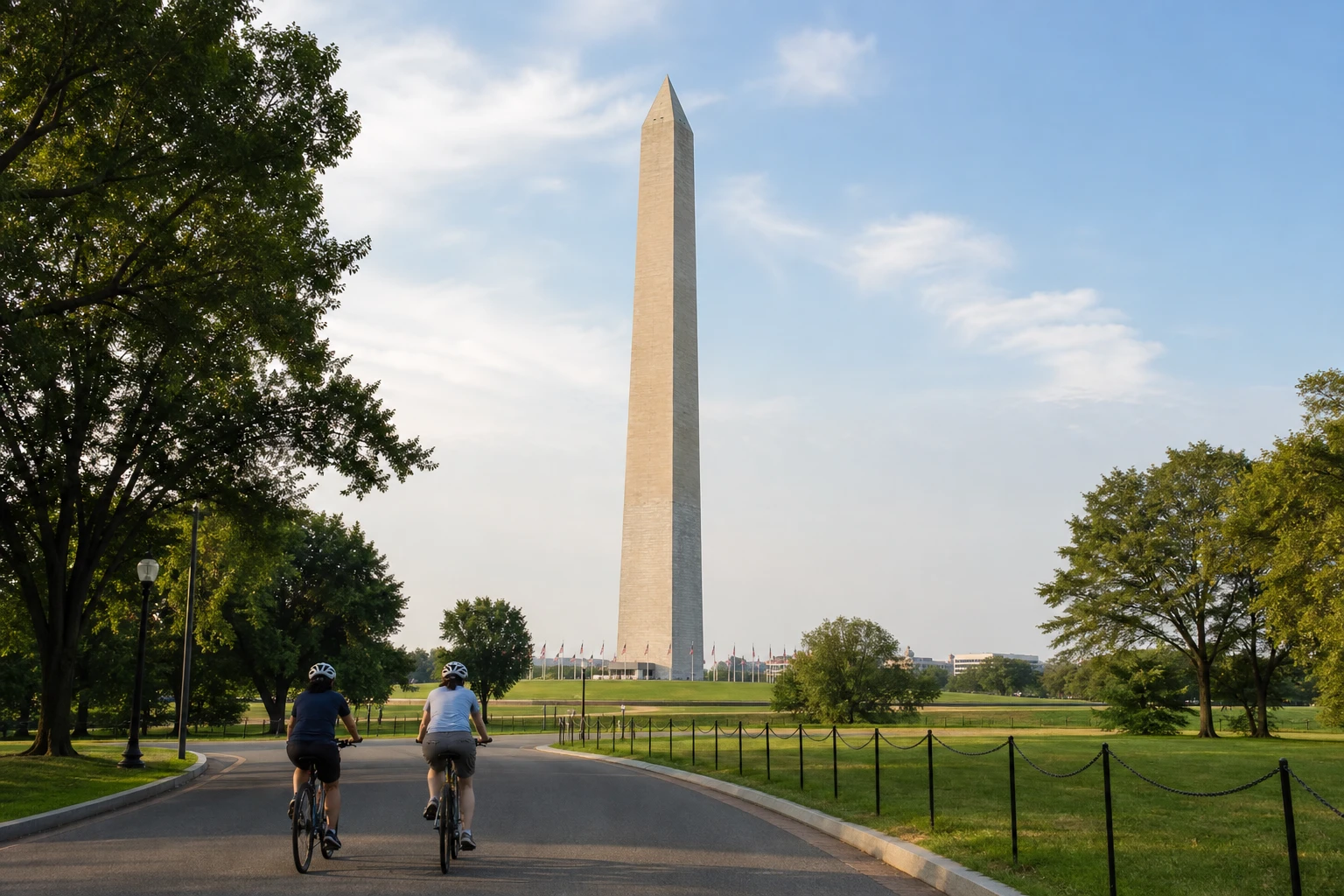
A National Mall bike tour turns Washington’s broad ceremonial landscape into a manageable, flexible outing. Cycling is most useful between the major memorials, where long sightlines and open park roads link one stop to the next. The key is to treat the bike as transportation, not as a way to roll through every memorial. Plan to lock up often, walk through the places that deserve time, and ride again when you are ready for the next landmark.
National Mall bike tour essentials
- Ride on park roads and permitted sidewalks or trails, then walk your bicycle through memorials and along Tidal Basin walks.
- Use the 2026 DC Bike Map to choose current protected lanes, trails, and Capital Bikeshare connections.
- Bicycle racks at memorials make a ride-and-walk itinerary far more practical than trying to cycle to each entrance.
- Most outdoor areas are open around the clock, but indoor sites, nearby parks, events, and temporary restrictions follow their own schedules.
- E-bikes are permitted wherever conventional bicycles are permitted, but riders still need to dismount at memorial stops.
- General National Mall visits do not require reservations, while Washington Monument entry is separately ticketed.
The experience has a steady rhythm: pedal across the open grounds, pause at a rack, then continue on foot through a memorial’s formal spaces. That rhythm keeps the day orderly and respects the park rules. It also leaves room for the small decisions that make a self-guided ride satisfying, such as lingering at a memorial or choosing a different return route when conditions change.
This guide is designed for riders who want a practical framework rather than a rigid timed circuit. A successful route depends on your starting point, the bike you have, weather, event activity, and which memorials you want to explore on foot. Check current park conditions before setting out, especially on days with demonstrations, ceremonies, road restrictions, or severe weather.
Follow the rules that shape your ride
Ride between sites, then dismount
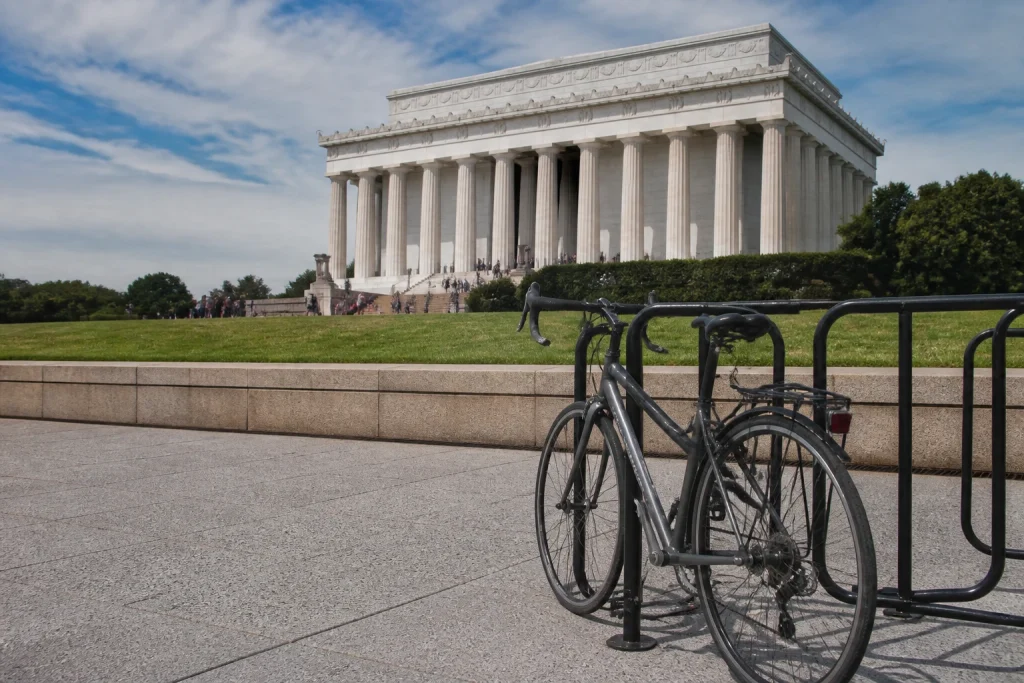
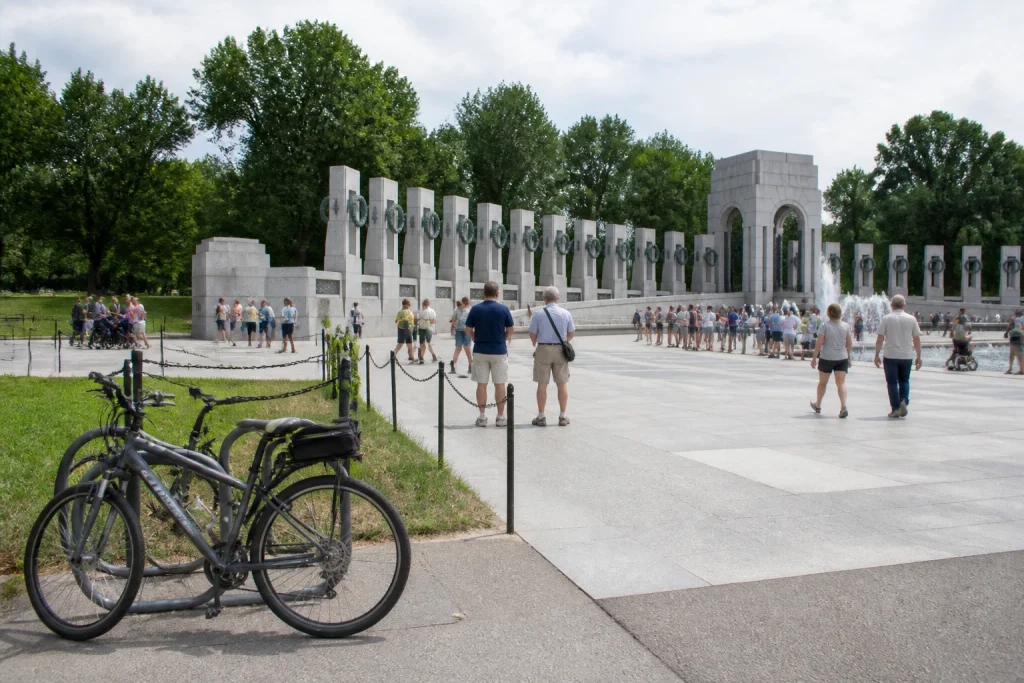
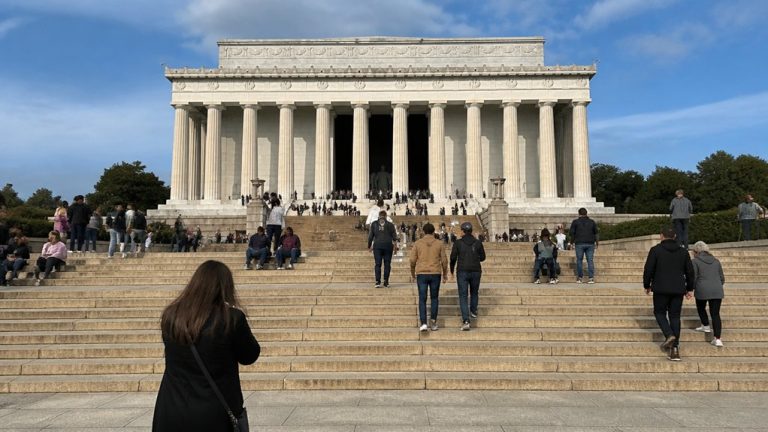
Use park roads and the permitted sidewalks or trails that fit your route. At the memorials, get off and walk your bike. Cycling is not allowed on the steps, colonnades, or inside the chambers of the Lincoln Memorial, Jefferson Memorial, and DC War Memorial. Bikes are also prohibited inside the Washington Monument. These boundaries are easy to work into a stop-by-stop plan once you expect them.
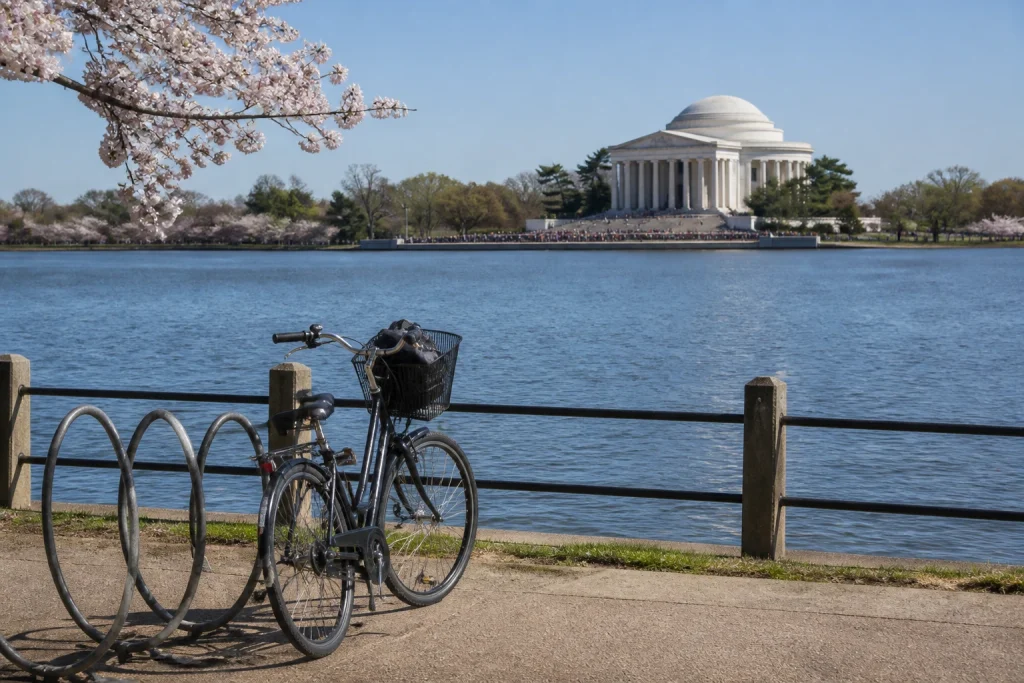
The Tidal Basin needs special attention. Its waterside walks are for walking your bike, not riding it. Use an allowed route to reach the area, park at a rack, and make the basin portion of the outing a pedestrian stop. This approach is more relaxed than trying to force a continuous cycling loop through places where bicycles do not belong.
Use racks as your trailheads
Bicycle racks are provided at the memorials, so build your route around short walking visits. Bring a lock and avoid leaving the bike where it blocks paths, ramps, or gathering areas. A rack-and-walk approach also lets everyone in your group explore at a different pace without creating a scramble at each stop.

Washington DC Night Tour: ICONIC Landmarks, Monuments SMALL GROUP
Experience Washington DC at its most striking; after dark! This guided night tour showcases the city’s most iconic...

Washington, DC: Sunset & After-Dark Monuments Tour by E-Cart
Please Note: The 6:00 PM tour may not be fully dark depending on the season. The 8:30 PM tour offers a fully after-d...

Washington DC Monuments and Memorials Night Tour
See Washington, DC in ways large bus tours can’t—especially after dark. This small‑group night tour (12 guests...
Guided groups have route limits too
A commercial or guided bicycle group has less freedom to improvise than an independent rider. Guided groups are not permitted in certain federally restricted areas and listed closure locations, while large organized bicycle events can require an NPS permit. If you book a group experience, expect the leader to select a compliant route and keep the ride moving between walking stops.
Choose self-guided, guided, or e-bike travel
A self-guided National Mall bike tour suits travelers who want to decide how long to spend at each memorial. It works well with a personal bicycle, a rented bike, or a bike-share option, provided you check live availability and current pricing before committing. The DC Bike Map is the best starting tool for connecting your arrival route to the Mall’s legal cycling infrastructure.
A guided ride makes sense for visitors who prefer a planned sequence and commentary over route decisions. It is also useful when a group wants a shared pace. For a broader comparison of formats beyond the Mall, a Washington DC bike tours guide can help you decide if an organized ride fits the rest of your trip.
E-bikes can make the transport portions easier, particularly when the day includes several memorial stops. Current park rules allow e-bikes wherever regular bicycles are allowed. They do not change the dismount rules, so an e-bike is best viewed as a comfortable way to cover the gaps between landmarks rather than a shortcut through the memorials themselves.
Build a flexible monument-to-memorial route
Rather than chasing a fixed distance or a strict finish time, organize your National Mall ride around a few anchor stops. The Washington Monument area is a natural central reference point, while the Lincoln Memorial, World War II Memorial, Tidal Basin, Jefferson Memorial, and nearby memorials can become walking segments. A National Mall guide for first-time visitors is useful for deciding which stops deserve the most time.
- Start near the Washington Monument and identify a bicycle rack before you explore on foot. If you have a timed monument entry, shape the rest of the route around it. A Washington Monument tickets and visitor guide can help with that separate visit.
- Ride west on an allowed route toward the Lincoln Memorial area. Park and walk through the memorial rather than attempting to ride into its steps, colonnades, or chamber.
- Use permitted routes to move between the central memorials and the Tidal Basin area. Once you reach the basin walks, park the bike and continue on foot. A Tidal Basin Washington DC guide can help you plan this pedestrian portion.
- Make the Jefferson Memorial another rack-and-walk stop. A Jefferson Memorial guide for first timers adds context for travelers who want to slow down here rather than treating it as a quick photo break.
Keep the official DC Bike Map open before and during the ride. It identifies protected bike lanes, trails, and Capital Bikeshare connections that can help you approach or leave the Mall. Use it as a routing tool, not merely as a souvenir map: streets, facilities, construction, and event controls can change the practical path between two landmarks.
Still comparing National Mall Bike Tour?
Ask for tour ideas, hotel suggestions, or a simple trip plan that combines both.
Trip Helper
Pick a time that matches your priorities
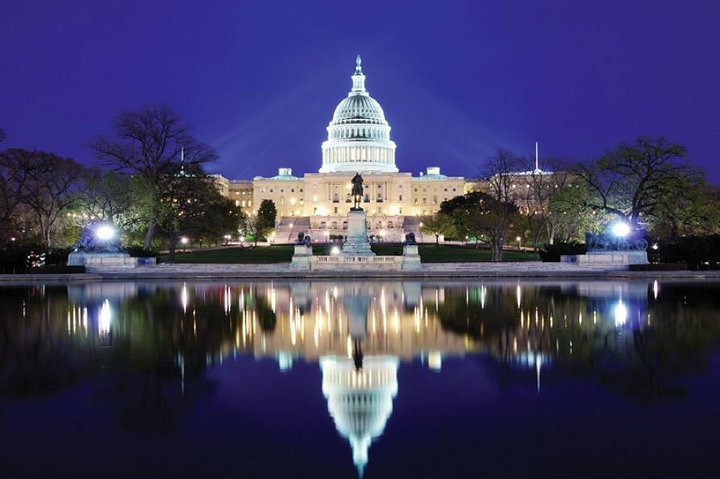
Most outdoor areas in National Mall and Memorial Parks are open 24 hours a day, seven days a week. That gives riders flexibility for an early start or an evening view of the illuminated memorial landscape. Still, a late ride should focus on outdoor spaces. Do not assume that every path, adjacent park area, or indoor attraction follows the same round-the-clock schedule.
Schedule the Washington Monument as a daylight stop if it is on your list. Regular entry is listed from 9:00 a.m. to 5:00 p.m. daily, except July 4 and December 25, and tickets are required. It also has one routine-maintenance closure day each month. Rangers at National Mall sites are listed from 9:30 a.m. to 10:00 p.m. daily, which is a helpful window for questions during the main part of the day.
Budget for transportation, not general admission
There is no general reservation requirement to visit National Mall and Memorial Parks. The Washington Monument is the notable exception, with its own timed-entry ticket requirement. Bike-share passes, rentals, and guided-tour prices vary, so check the current operator details on the day you plan to book instead of relying on an old price list.
If you drive to the ride, factor NPS parking into the budget. Metered parking is listed at $2.30 per hour and is generally enforced from 7:00 a.m. to 8:00 p.m. daily, except December 25. Depending on the location, stays are limited to either three or six hours. Check the posted limit where you park, especially if you expect a long day of memorial visits.
Make the route work for different mobility needs
Cycling can reduce the distance between major stops, but it is not a substitute for checking each memorial’s access conditions. NPS prioritizes accessibility while noting that historic facilities are not always ideally accessible. Treat a bicycle as optional transport between sites, and plan enough time for the walking portions, ramps, surface changes, and the pace that works best for your group.
Personal mobility devices are permitted subject to District rules and park restrictions, with an 8 mph maximum in the park. They must be parked beside bicycle racks and cannot be used in the same restricted memorial areas, on specified steps or colonnades, or inside designated chambers. These rules help keep busy visitor spaces navigable for everyone.
Pack and prepare for a smoother ride
- Use the current DC Bike Map to plan the approach and identify a legal cycling route between stops.
- Bring a secure lock because the itinerary depends on parking at memorial racks.
- Carry water, sun protection, and a light layer suited to the day’s forecast.
- Keep a charged phone for live mapping and park-condition updates.
- Allow extra time for dismounting, locking up, security procedures, and walking through memorials.
- Check NPS conditions and event impacts on the morning of your ride.
Is a National Mall bike tour worth it?
A National Mall bike tour is a strong choice for travelers who want to cover a large landmark district without turning the day into one long walk. It works best for patient riders who are happy to alternate between pedaling and exploring on foot. The main limitation is clear: bicycles cannot travel through many of the spaces visitors most want to see. Plan around the dismounts, use the current bike map, and let the memorial stops set the pace.
Frequently asked questions
Can you ride a bike around the National Mall?
Yes, you can ride on park roads and permitted sidewalks or trails, then park at a rack to explore memorials on foot. Bikes must be walked through memorials and along Tidal Basin walks.
Do you need a reservation for a National Mall bike tour?
No general reservation is required to visit National Mall and Memorial Parks. Washington Monument entry is separate, requires a ticket, and follows its own schedule.
Are e-bikes allowed on the National Mall?
Yes, e-bikes are allowed wherever conventional bicycles are allowed in National Mall and Memorial Parks. Riders still need to dismount and walk at memorials and along Tidal Basin walks.
Can I bike around the Tidal Basin?
You can reach the Tidal Basin area using allowed routes, but you must walk your bicycle along the Tidal Basin walks. Park at a bicycle rack before making the waterside section a walking visit.
What is the best time for a National Mall bike ride?
Outdoor sites are generally open 24 hours, so an early or evening ride can work well for outdoor monuments. Plan indoor stops during their operating hours, and note that Washington Monument entry is listed from 9:00 a.m. to 5:00 p.m. with tickets required.
Where can I park my bike at the memorials?
Bicycle racks are provided at the memorials. Use them as the base for each walking stop and keep bikes out of paths, steps, and restricted memorial spaces.
DC Monuments Night Tour with 10+ Stops, National Mall, Tickets
Experience Washington DC lit up at night during this 3-Hour Guided Night Tour of the National Mall and Monuments. Make your way through the city at ni...

DC Monuments & Capitol Hill Highlights Tour by Electric Cart
Experience a whole different side of Washington, DC during our Monuments by day tour! Climb into our all-electric Re...

Washington DC Monuments Tour by Electric Cart Day and Night
Experience a whole different side of Washington, DC during our Monuments tour! Climb into our all-electric Red Roads...
Experiences to explore
 Explore experience ↗
Reflections on a Nation Self-Guided National Mall Highlights Tour
◷ 1 hr 30 min–2 hr
Discover the essence of American ideals on the self-paced National Mall Highlights tour in Washington, D.C. This journey goes beyond me
See dates for Current pricing
View dates Explore experience ↗
National Mall Washington DC Self Guided Audio Walking Tour
◷ 8 hr–9 hr
Walk through the heart of Washington DC with a tour that plays right from your phone. Explore famous memorials, monuments, and museums
See dates for Current pricing
View dates Explore experience ↗
Washington DC Mall Self Guided Audio Walking Tour
◷ 1 hr 15 min–1 hr 30 min
On our location aware smart phone guided walking tour you will see D.C.’s best-known monuments and museums with a few hidden gems in be
See dates for Current pricing
View dates
5 Comments
[…] the Washington Monument only if you already have a timed ticket and a generous airport buffer. Admission is free, but the […]
[…] outdoor areas of National Mall and Memorial Parks are generally open 24 hours daily. Rangers are listed as being on duty from 9:30 […]
[…] are not required for a basic exterior walk through the generally open National Mall memorial landscape. Timed entry and security screening apply to the Washington Monument interior and the […]
[…] with limited stamina can replace a long memorial loop with the Washington Monument elevator experience or one substantial museum visit. Build in water, indoor breaks and seated rest. […]
[…] is not required to experience many of Washington’s memorials after dark. The outdoor areas of National Mall and Memorial Parks are generally open 24 hours a day, seven days a week, unless otherwise noted. […]