The National Museum of Asian Art offers a free, ticketless museum experience on the National Mall. Its two connected spaces, the Freer Gallery of Art and Arthur M. Sackler Gallery, make up a single museum reached through separate buildings and an underground connection. This guide explains how to choose an entrance, arrive by Metro, handle security, navigate accessibility services, and build the museum into a larger Washington DC day.
- Admission is free, and ordinary visitors do not need an entry ticket.
- The museum is generally open daily from 10 a.m. to 5:30 p.m. and closed December 25.
- The Freer Gallery and Sackler Gallery connect underground.
- Smithsonian Metro station is a short walk away on the Blue, Orange, and Silver lines.
- Every entrance has security screening, so pack lightly.
- Step-free entrances and extensive accessibility services are available.
This museum particularly suits travelers who want a slower cultural stop between larger National Mall sights. The generally quiet environment can also appeal to visitors who prefer lower stimulation. Because admission requires no ticket, the museum works well as a flexible part of the day rather than an appointment that controls the entire itinerary.

Smithsonian "Big 3" Highlights Tour (Air & Space Entry Included)
See the best of the Smithsonian Museums on a 3-hour guided tour of the highlights of the American History, Natural History, and Air and Space Museums...

Smithsonian Museum of Natural History - Exclusive Guided Tour
Join a 2 hour exclusive guided tour of the National Museum of Natural History, featuring rare marvels from around the world. The tour will lead you th...
Quick planning facts for your visit
| Planning point | What to know |
|---|---|
| Location | On the National Mall in Washington DC |
| Museum layout | Freer Gallery West Building and Sackler Gallery East Building, connected underground |
| General hours | Daily, 10 a.m. to 5:30 p.m.; closed December 25 |
| Admission | Always free; no entry ticket required |
| Nearest recommended Metro | Smithsonian station on the Blue, Orange, and Silver lines |
| Entry procedure | Security screening at every entrance |
Before leaving for the museum, review the current exhibition listings and day-of notices. Exhibition schedules, building access, transit service, and operating conditions can change. Holiday visitors should pay particular attention to the calendar because the museum is closed on December 25.
Understand the two-building museum layout
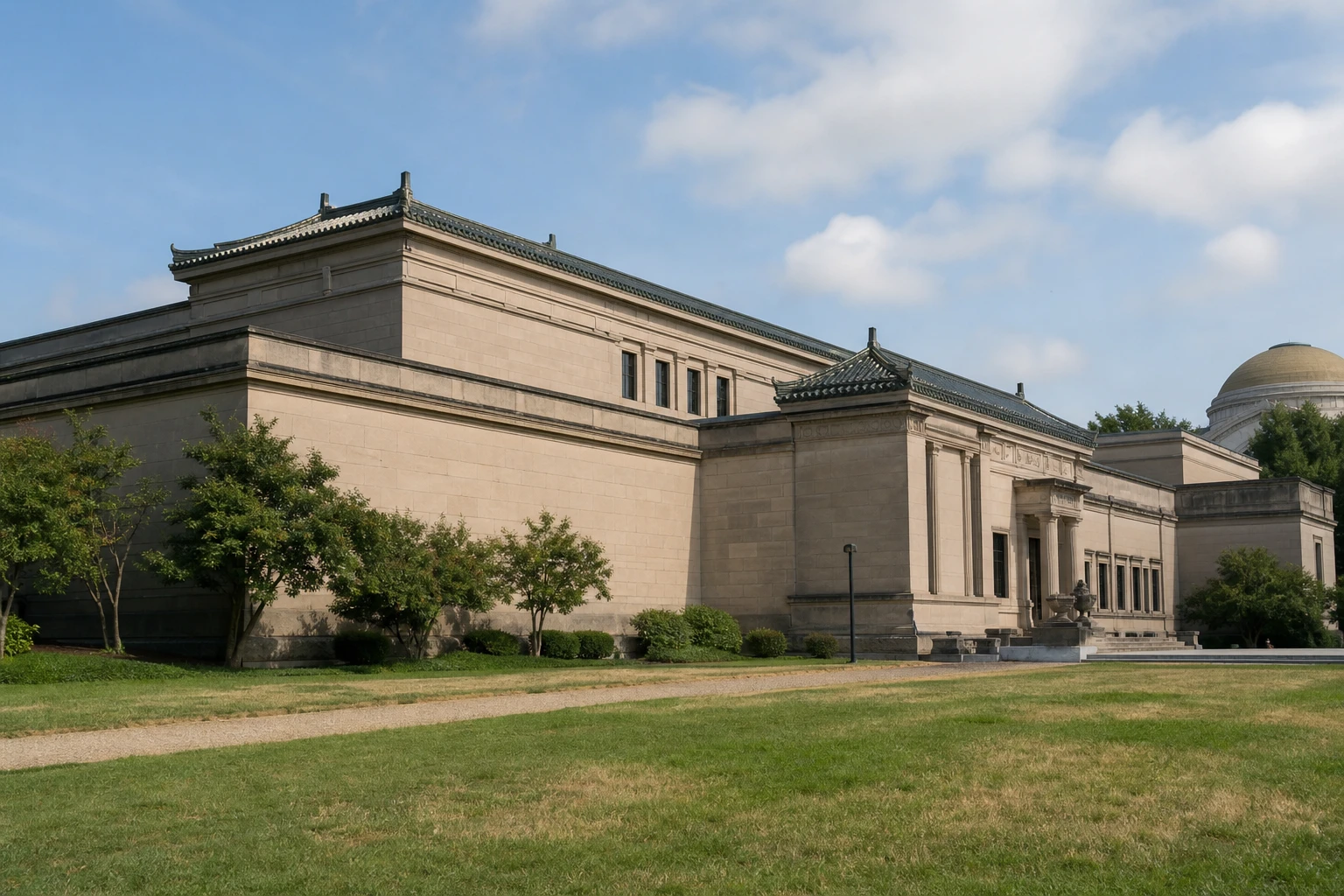
The museum consists of the Freer Gallery of Art, called the West Building, and the Arthur M. Sackler Gallery, called the East Building. The two buildings connect underground, so visitors can move between them without returning outside. This arrangement is useful in hot, cold, or wet weather, but the separate entrances can be confusing if members of a group arrive independently.
Treat the museum as one visit rather than two unrelated attractions. Review the current exhibition list first, choose the building containing your highest-priority display, and begin there. If your schedule becomes tight, concentrating on one building is more satisfying than rushing through every gallery simply to complete a circuit.
A simple route through the museum
- Check the current exhibitions and select one or two priorities.
- Choose the entrance that best suits your route or accessibility needs.
- Begin in the building containing your main exhibition choice.
- Use the underground connection to explore the second building if time allows.
- Finish in the East Building if you plan to stop at the Moongate Cafe.
Hours, free admission, and when to visit
The National Museum of Asian Art is generally open daily from 10 a.m. to 5:30 p.m., except December 25. Admission is always free, and no entry ticket is required for an ordinary visit. Those simple entry rules make it easy to adjust your plans around weather, energy levels, or another National Mall attraction.

There is no official crowd forecast to rely on, although the museum describes its environment as generally quiet. Visitors who want an unhurried experience should leave enough time to clear security and explore without watching the closing clock. If low stimulation is important, review the museum’s sensory guide before arriving and choose a route around your priority galleries.
A short stop works best when you choose one building or exhibition in advance. A more expansive visit can include both buildings, the underground connection, and a cafe break. The right duration depends on the current exhibitions and how closely you like to examine art, so build the schedule around your interests rather than an arbitrary completion time.
Getting there by Metro or car
Metro is the simplest option for many visitors. The museum directs riders to Smithsonian station, served by the Blue, Orange, and Silver lines, and the museum is a short walk from the station. Check current transit conditions before departure, especially if elevators or uninterrupted service are important to your trip.
| Option | Main advantage | Main drawback |
|---|---|---|
| Metro | A short walk from Smithsonian station and no parking search | Service conditions can change |
| Car | Useful for some mobility needs or tightly timed plans | No Smithsonian public parking facility on the National Mall |
| Metered parking | Potentially convenient when a space is available | Spaces are limited, and rates and availability vary |
| Parking garage | More predictable than searching only for curb space | Paid and best planned before arrival |
Driving requires more preparation. The Smithsonian does not operate a public parking facility on the National Mall. Limited city-operated metered spaces, including accessible spaces, can be available, while nearby garages and advance parking reservations are paid alternatives. Do not build a tight arrival plan around finding a curbside space.
For a wider transit plan, the guide to how to get around Washington DC without a car can help connect the museum with other neighborhoods and attractions. It is especially useful when deciding whether Metro, walking, or a combination of both makes sense for the rest of the day.

Washington DC Night Tour: ICONIC Landmarks, Monuments SMALL GROUP
Experience Washington DC at its most striking; after dark! This guided night tour showcases the city’s most iconic...

Washington DC: Easy Sightseeing Guided Monuments Tour by E-Cart
Explore Washington, DC’s iconic monuments and memorials on a relaxed, open-air electric cart tour. Enjoy a small-g...

Arlington Cemetery Small-Group Tour & Changing of the Guards
Witness the solemn Changing of the Guard ceremony from a prime viewing spot on this guided walking tour of Arlington...
Choose the right entrance before you arrive
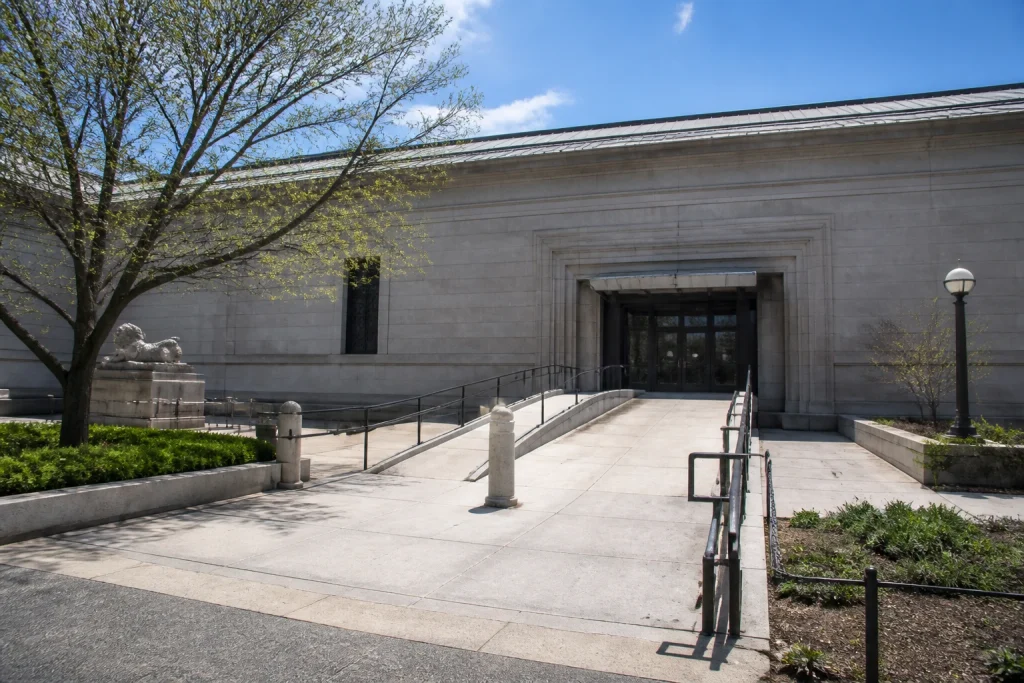
Visitors who need step-free access should use one of two designated entrances. The West Building’s accessible entrance is on Independence Avenue at 12th Street SW. The East Building’s step-free entrance is in the Enid A. Haupt Garden near Independence Avenue. Once inside, elevators connect all public levels, exhibition spaces, restrooms, and water fountains.
If several people are meeting at the museum, agree on both the building and entrance rather than saying only “the museum.” That small detail prevents one person from waiting near the garden while another stands by Independence Avenue. Groups should also allow enough room in the plan for everyone to pass through security.
Security, bag, food, and photography rules
Security screening takes place at every entrance. A compact day bag will make the process easier and reduce what you need to manage in the galleries. The museum publishes specific limits for large and wheeled bags, so travelers arriving with luggage should plan carefully.
- Bags larger than 17 by 26 inches are not permitted.
- Oversized bags may be left in the locker room at the owner’s risk.
- Wheeled bags cannot be used inside the galleries.
- Food and beverages can be carried only in sealed containers and cannot be consumed in the museum.
- Non-flash photography is generally allowed unless gallery signage says otherwise.
- Tripods and selfie sticks are prohibited.
Bring only what you expect to carry comfortably for the entire visit. Keep drinks sealed, and check signs before photographing any display. Some objects or exhibitions can have stricter rules than the museum-wide policy, so gallery-level notices take precedence.
Accessibility services throughout the museum
All public levels, exhibition spaces, restrooms, and water fountains are accessible by elevator. Manual wheelchairs can be borrowed free of charge on a first-come, first-served basis at the designated entrances. Visitors who depend on a museum wheelchair should keep the limited, first-come arrangement in mind when choosing an arrival time.
Available tools include tactile maps, a sensory map and guide, captioned exhibition videos, and T-coil loops at information desks. Assistive listening devices for talks and tours are available upon request. The museum also provides access to Aira visual assistance through its Wi-Fi, giving blind and low-vision visitors another way to navigate and interpret their surroundings.
Service dogs are welcome, but emotional-support animals are not permitted. Visitors planning around mobility, sensory, hearing, or visual needs should review the relevant museum guidance before traveling. Choosing the correct step-free entrance at the outset can save unnecessary backtracking outside.
Food and rest breaks inside the museum
The Moongate Cafe is in the East Building and operates as a casual, walk-in option for light fare and drinks. Its listed schedule is generally 10 a.m. to 4 p.m., which ends before the museum’s general closing time. Check the day’s details if the cafe is central to your meal plan.
A cafe stop can provide a natural pause between the two buildings. If you bring your own snack or drink, keep it sealed inside the museum and wait until you are in a permitted location before consuming it. The galleries are not a place for food or beverages.
Still comparing National Museum Of Asian Art?
Ask for tour ideas, hotel suggestions, or a simple trip plan that combines both.
Trip Helper
Planning visits for schools and larger groups
Groups of 10 or more are encouraged to register in advance for a self-guided visit. The museum’s group guidance asks for requests at least one week ahead. This advance step applies to organized groups and should not be confused with an entry-ticket requirement for individuals or small parties.

Group leaders should choose a specific meeting entrance, explain the security process, and identify the first building before arrival. A simple head count after screening is useful because entrances can become a natural separation point. Review current exhibitions before selecting the group’s route.
Build the museum into a National Mall day
Because the museum is free and does not require a ticket, it can anchor a flexible National Mall itinerary. A National Mall guide for first-time visitors can help organize the wider area, while a roundup of free things to do in Washington DC can extend the day without adding admission costs. Leave breathing room between stops rather than treating every museum as a box to check.
A practical museum-day sequence
- Check current museum notices and transit conditions before leaving.
- Arrive with a compact bag and pass through security.
- Start in the building containing your priority exhibition.
- Use the underground connection if you want to continue into the second building.
- Take a cafe break or continue into the wider National Mall when ready.
This flexible sequence is more resilient than a minute-by-minute plan. It accounts for security, changing exhibitions, and the possibility that one gallery captures your attention longer than expected. It also makes it easy to shorten or extend the museum visit without wasting a timed admission reservation, since none is required.
Who will get the most from a visit
- Travelers seeking a free cultural experience on the National Mall
- Visitors who prefer a generally calm museum environment
- People who value step-free entrances and detailed accessibility tools
- Art-focused travelers comfortable choosing among current exhibitions
- Car-free visitors using Smithsonian Metro station
- Flexible planners who do not want another timed entry reservation
The main limitations are practical rather than artistic. Drivers face limited and potentially paid parking, all visitors pass through security, and the split-building layout requires a little orientation. None is difficult to manage when planned in advance. Metro users and lightly packed visitors will usually have the simplest arrival.
The practical verdict
The National Museum of Asian Art is a strong choice for travelers who want an accessible, flexible, and admission-free museum visit on the National Mall. Its two-building layout rewards a little preparation, particularly when choosing an entrance or prioritizing current exhibitions. Check the day’s notices, travel by Metro when practical, pack lightly, and let the art determine the pace once you are inside.
Frequently asked questions
Is the National Museum of Asian Art free?
Yes. Admission is always free, and ordinary visitors do not need an entry ticket. Security screening still applies at every entrance.
What are the National Museum of Asian Art hours?
The museum is generally open daily from 10 a.m. to 5:30 p.m. It is closed on December 25, and visitors should check current notices before a holiday trip.
Which Metro station is closest to the National Museum of Asian Art?
The museum directs visitors to Smithsonian station on the Blue, Orange, and Silver lines. It is a short walk from the station, but current service conditions should be checked before departure.
Is the National Museum of Asian Art accessible?
Yes. Step-free entrances are available for both buildings, and elevators serve all public levels, galleries, restrooms, and water fountains. The museum also provides wheelchairs, sensory resources, hearing assistance, tactile maps, captions, and visual-assistance tools.
Can I bring food or take photographs inside?
Food and beverages can be carried only in sealed containers and cannot be consumed in the museum. Non-flash photography is generally allowed unless signs prohibit it, while tripods and selfie sticks are not permitted.
Do groups need to register before visiting?
Groups of 10 or more are encouraged to register for a self-guided visit at least one week ahead. Individuals and smaller parties do not need an entry ticket.
Is there parking at the National Museum of Asian Art?
There is no Smithsonian public parking facility on the National Mall. Limited metered street spaces and paid garages can be available, but rates and availability vary.
Are the Freer and Sackler galleries connected?
Yes. The Freer Gallery of Art and Arthur M. Sackler Gallery connect underground, allowing visitors to move between the West and East Buildings without going back outside.
Smithsonian Museum of Natural History - Exclusive Guided Tour
Join a 2 hour exclusive guided tour of the National Museum of Natural History, featuring rare marvels from around the world. The tour will lead you th...
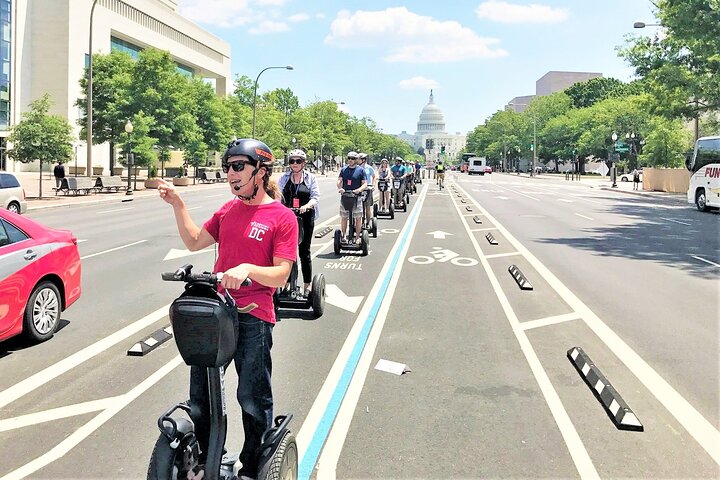
Washington DC "See the City" Guided Sightseeing Segway Tour
Experience Washington DC on a 2-Hour Guided Sightseeing Segway Tour through the nation's capital and experience all...
Smithsonian "Big 3" Highlights Tour (Air & Space Entry Included)
See the best of the Smithsonian Museums on a 3-hour guided tour of the highlights of the American History, Natural H...