
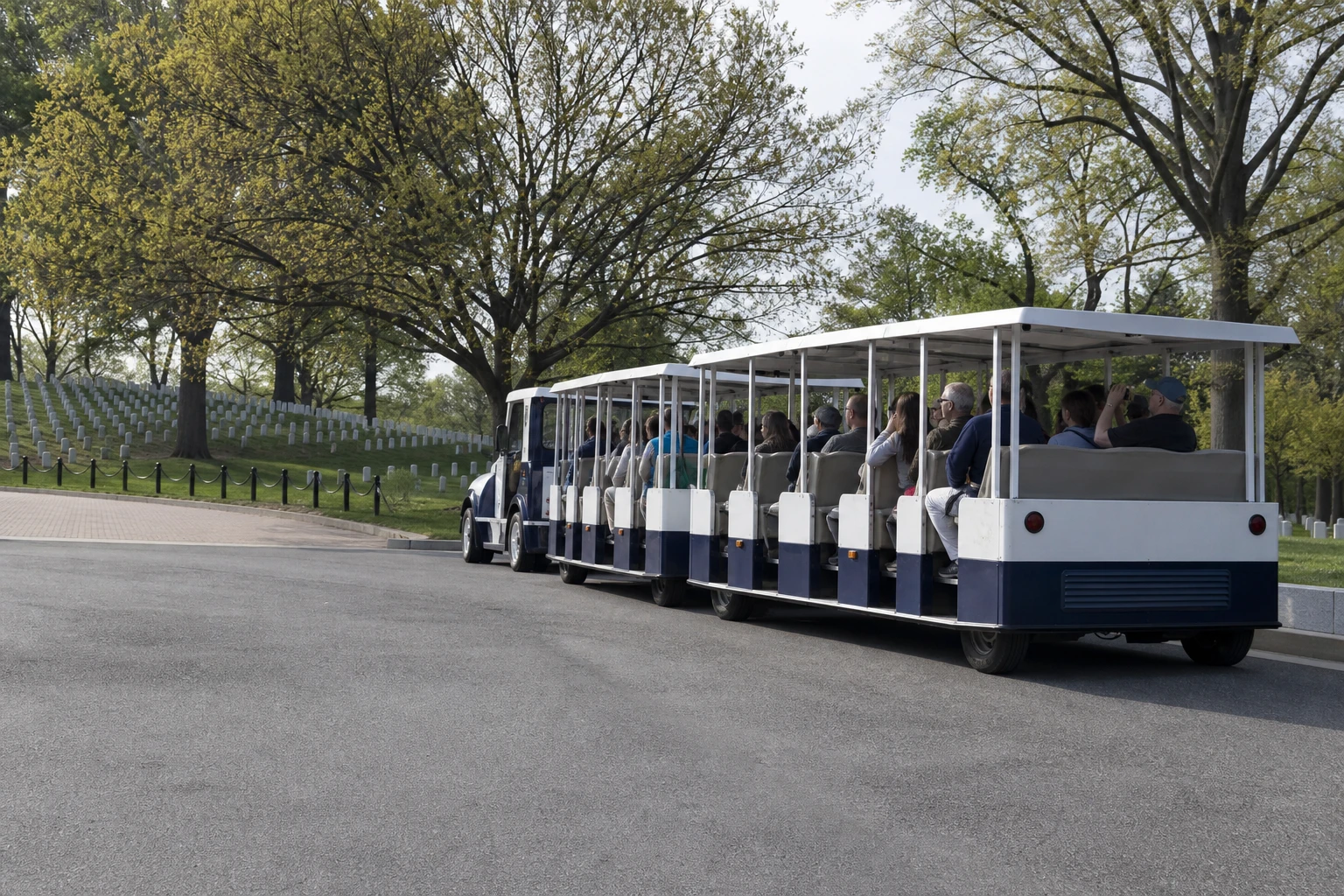
An Arlington National Cemetery tram tour offers a practical way to navigate a vast, hilly landscape without spending the entire visit on foot. The narrated route serves major sites such as the John F. Kennedy gravesite and the Tomb of the Unknown Soldier, while the option to get off lets visitors spend more time at places that matter most to them.
The tram begins at the Welcome Center and is especially useful for first-time visitors, travelers with limited mobility, and anyone visiting during hot, cold, or wet weather. Planning still matters. Security screening, ceremony schedules, construction, and service changes can affect the day.
- Start at the Welcome Center, where tram tours depart and tickets are available.
- Allow about 45 minutes for a continuous loop without stops, and substantially longer if you get off to explore.
- The cemetery is currently listed as open daily from 8:00 a.m. to 5:00 p.m.; published tram departures run from 8:30 a.m. to 4:00 p.m.
- Use Metro when convenient. Arlington Cemetery station is about a five-minute walk from the main entrance.
- Check official day-of updates because ceremonies, security, weather, construction, and special events can alter tram service.
This is a national cemetery rather than a conventional sightseeing attraction. Keep conversations low, give ceremonies and mourners space, and build an unhurried schedule. The tram reduces the physical strain of the visit, but passengers should still expect some walking on hills and uneven surfaces after getting off.
Is the Arlington Cemetery tram tour worth taking?
The tram is most valuable when you want to reach major memorial sites while limiting long walks. Arlington National Cemetery covers 639 acres, and cemetery guidance warns that its hills and walking distances require moderate exertion. Riding between stops preserves energy for the places where you choose to disembark.
A walking visit offers more freedom to linger between destinations, but it demands more time and stamina. Ordinary visitor vehicles and buses generally cannot drive through the cemetery, so walking and the interpretive tram are the practical sightseeing choices once inside. The best approach for many visitors is a combination: ride the longer sections and walk around selected stops.
| Visitor priority | Best approach | Main tradeoff |
|---|---|---|
| See major sites with less exertion | Ride the tram and select a few stops | Less time exploring areas between stops |
| Spend time at the Kennedy gravesite and Tomb | Get off at both major sites | The visit takes substantially longer than the continuous loop |
| Keep a tight schedule | Remain aboard for the loop | Limited time for close viewing |
| Manage mobility limitations | Use the accessible tram and arrange assistance as needed | Some walking and uneven ground can remain |
| Explore independently | Walk all or part of the cemetery | Hills, distance, and weather require more preparation |
How the tram route and timing work
The tour operates as a narrated loop with opportunities to disembark and explore. The operator’s April 2026 brochure describes the continuous loop as approximately 45 minutes. Treat that as the ride time when you remain aboard rather than the duration of a complete visit with stops.
Operator materials also promote a narrated experience lasting about 2.5 hours. The practical difference is how much exploring you add. A rider who stays aboard can finish much sooner than someone who gets off at major sites, watches the Changing of the Guard, and waits for another tram.
Avoid scheduling another timed attraction immediately after the cemetery. Security screening and stop length can stretch the visit, while weather, ceremonies, or special events can alter tram operations. If the rest of your day is tightly planned, decide in advance which one or two stops receive priority.
A simple way to budget your time
- Use the approximately 45-minute continuous loop as the minimum tram time, not as a complete cemetery visit.
- Add time for security screening, buying or collecting tickets, and orienting yourself at the Welcome Center.
- Allow substantially more time if you plan to leave the tram at the Kennedy gravesite or Tomb of the Unknown Soldier.
- Keep the rest of the day flexible when a ceremony or special event is scheduled.
Still comparing Sightseeing?
Ask for tour ideas, hotel suggestions, or a simple trip plan that combines both.
Trip Helper
Major tram stops to prioritize
The interpretive tram serves the John F. Kennedy gravesite, the Tomb of the Unknown Soldier, and other notable locations within the cemetery. Route details can respond to operational conditions, so use the schedule and stop information provided when you arrive rather than building a minute-by-minute plan in advance.

John F. Kennedy gravesite
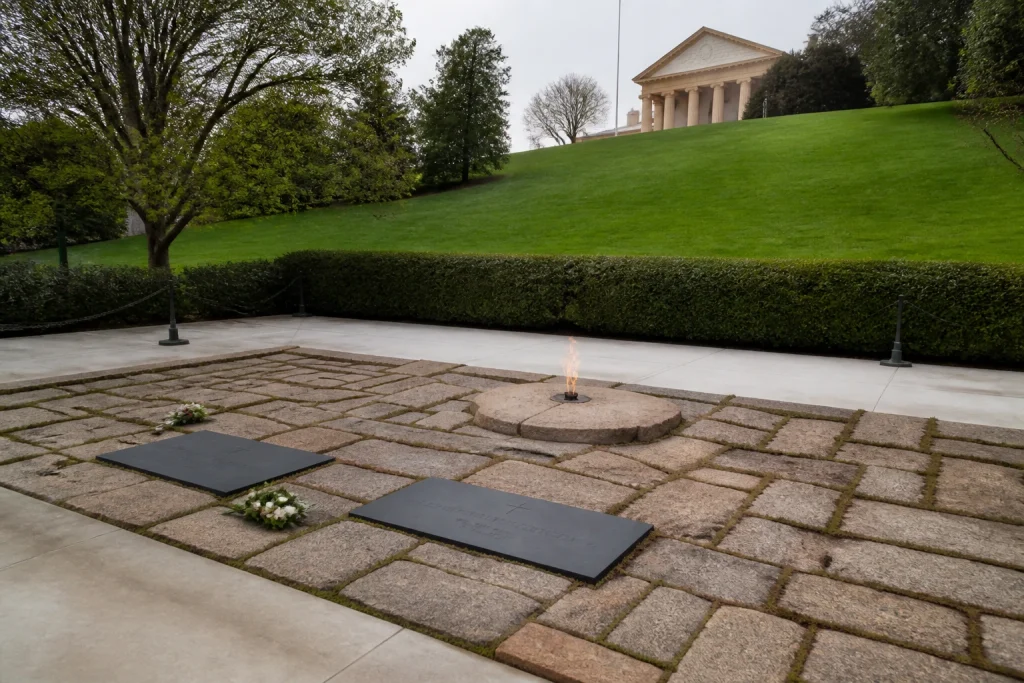
The John F. Kennedy gravesite is one of the tram’s principal stops. Get off here if it is central to your visit rather than trying to see every listed destination. A focused plan makes the tram more useful and leaves enough time to walk carefully on the cemetery’s sloping and sometimes uneven ground.
Tomb of the Unknown Soldier
The Tomb of the Unknown Soldier is the other essential stop for many visitors. The published Changing of the Guard schedule lists ceremonies every 30 minutes from April 1 through September 30 and hourly from October 1 through March 31. That cadence can change with operations or special events, so confirm the day’s timing on arrival.
Plan to arrive before the intended ceremony rather than counting on a last-minute connection. Getting off the tram, walking into position, and finding an appropriate viewing place all take time. Maintain a respectful distance, silence phones, and follow directions given at the site.
Current hours, departures, and ticket planning
Arlington National Cemetery’s current visitor information lists daily hours from 8:00 a.m. to 5:00 p.m. The authorized tour operator lists tram departures from 8:30 a.m. until 4:00 p.m., with the final departure at 4:00 p.m. These times can change because of weather, ceremonies, security requirements, or special events.
Tram tickets can be purchased online, at Old Town Trolley DC ticket locations, or at the Welcome Center. Check the authorized operator’s current booking information or ask at the Welcome Center ticket desk for the latest price. Ticket costs are not quoted here because the current amount can change and should be checked for the visit date.
An early arrival gives you the broadest choice of departure times and more room for major stops. Late-afternoon visitors face a firm practical limit because the last published tram departure is earlier than cemetery closing time. Do not assume arriving before the gates close guarantees enough time for the tour.
Getting to the Welcome Center
Use 1 Memorial Avenue, Arlington, Virginia, for driving and rideshare drop-off or pickup. The Welcome Center is the starting point for tram tours and the location visitors use for orientation, tickets, and standard security screening.
Arriving by Metro
Arlington Cemetery Metrorail station is about a five-minute walk from the main entrance. This direct connection makes Metro one of the simplest options for visitors staying in Washington. For planning transportation beyond the cemetery, a guide to how to get around Washington DC without a car can help connect the visit with the rest of your itinerary.
Driving, parking, and rideshare arrival
Drivers should use the Memorial Avenue address and follow current signs for the Welcome Center garage. Visitors who park there enter through the Welcome Center screening area. Rideshare passengers should also use the main address for drop-off and pickup rather than selecting a point inside the cemetery.
Ordinary visitor vehicles and tour buses generally cannot enter the cemetery roads. A car therefore does not replace the tram or the need to walk. It only changes how you reach the Welcome Center.
Security screening and identification
Visitors arriving on foot, by Metro, by rideshare, or through the Welcome Center garage undergo standard physical security screening. Adults need REAL ID-compliant identification when entering in an authorized vehicle, but that requirement does not apply to people parking in the Welcome Center garage or arriving by foot, Metro, or rideshare.
Wheelchair access and mobility assistance
The Arlington Cemetery Metro station is wheelchair accessible and has elevators on both platforms. The tram operator states that its vehicles accommodate wheelchairs and electric scooters. Assisted-listening devices are also available on request.
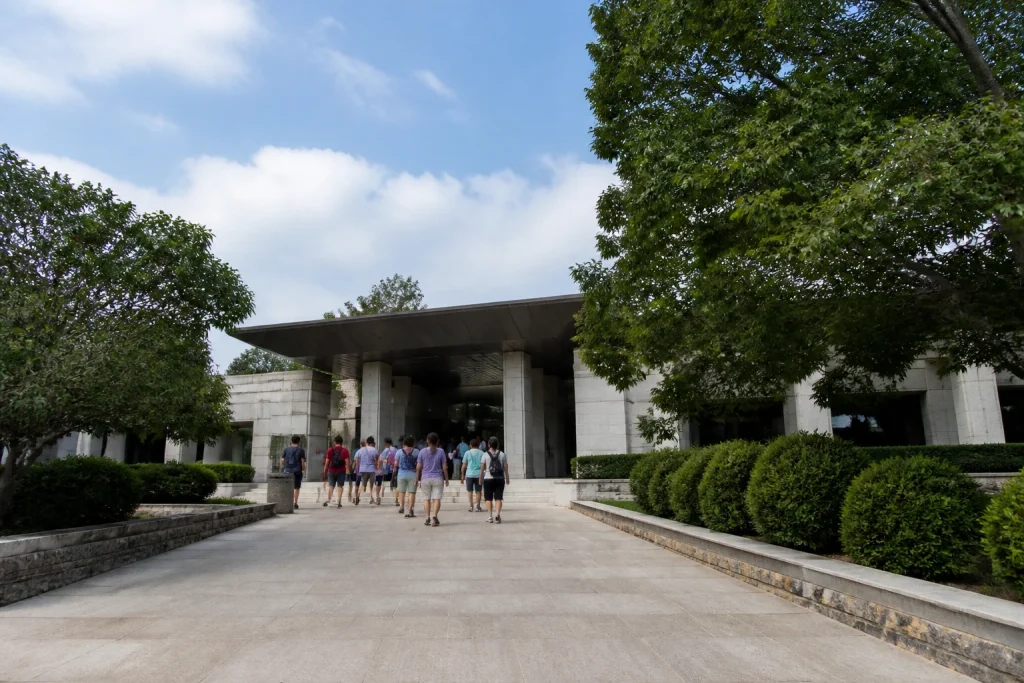
Visitors with a valid disability placard or qualifying proof of disability can ride the concessionaire tram at no charge with one companion. The Welcome Center ticket window can also arrange a free shuttle to a specific gravesite. Bring the documentation needed for the applicable service and discuss the request at the ticket window.
The cemetery does not rent wheelchairs and recommends that wheelchair users bring an assistant. This is practical advice in a landscape with hills, longer walking distances, and uneven surfaces. Tram access reduces exertion, but it does not remove every mobility challenge at individual stops.
Sign-language interpretation should be requested at least four weeks in advance under the cemetery’s accessibility guidance. Use that longer planning window even when making arrangements through the tour operator.
What to wear and bring on the open-air tram
The tram vehicles are open-air rather than climate controlled. Roofs provide some cover from sun and rain, but temperatures, wind, and humidity remain part of the ride. Dress for the full day’s forecast rather than assuming the vehicle will offer heated or air-conditioned comfort.
- Water in a secure, reusable bottle
- Sturdy shoes with skid-resistant soles
- A light rain layer when showers are possible
- Seasonal sun or cold-weather protection
- Only the belongings you need, to keep security screening simple
Rain and snow make marble, stone, and uneven ground more slippery. Walk slowly after leaving the tram and use handrails where provided. Footwear matters more here than it does on a ride-only city tour because the most important stops still require some walking.
Food and alcohol are prohibited in the Welcome Center and on cemetery grounds. Water is encouraged and is sold at the Welcome Center bookstore. Eat before arrival or after leaving rather than packing a meal for the tour.
Respectful conduct during the visit
Use the tram as transportation through a place of remembrance, not as a race between photo stops. Speak softly, keep devices silent, and avoid blocking paths while taking pictures. At ceremonies, follow instructions and give other visitors a clear view.
A restrained pace also improves safety. Hills, wet stone, and uneven terrain deserve attention, especially when a group is moving between a tram stop and a memorial site. Pause away from the boarding area when checking a camera or phone.
If limited time forces a choice, prioritize one meaningful stop rather than hurrying through several. The narration and broad loop still provide context, while a carefully chosen stop allows space for reflection.
Construction, ceremonies, and dates that affect service
A major road-construction project is affecting vehicle and pedestrian traffic through March 2027. Conditions can change within the cemetery, so allow extra time and follow current routing signs. The project is another reason to avoid placing a tightly timed reservation immediately after the tram tour.
Special events can delay, suspend, or alter tram service and increase security activity. The operator currently lists no tram tours on December 19, 2026, for Wreaths Across America wreath-in day or January 9, 2027, for wreath-out day. It also lists 2:00 p.m. starts on Memorial Day and Veterans Day.
Check cemetery and tram-operator updates on the morning of the visit, especially around national observances, winter weather, or major ceremonies. One quick check can prevent arriving during a delayed opening or suspension.
Three practical ways to plan the tour
| Plan | Suggested focus | Best suited to |
|---|---|---|
| Continuous-loop visit | Stay aboard for the approximately 45-minute circuit | Travelers with limited time or those seeking an introduction |
| Two-stop visit | Prioritize the Kennedy gravesite and Tomb of the Unknown Soldier | First-time visitors who can allow substantially more than the loop time |
| Accessibility-focused visit | Use the accessible tram and arrange a gravesite shuttle or assistance when applicable | Visitors limiting walking or traveling with mobility equipment |
The two-stop approach offers the clearest balance for many first-time visitors, but it should not be treated as a fixed-duration package. Waiting for a tram, watching a ceremony, and exploring each site all affect the finish time. Keep the plan flexible and let the day’s operations set the pace.
Fitting Arlington into a Washington DC itinerary
Arlington National Cemetery works best as a major block in the day rather than a brief gap between timed attractions. A plan for spending 3 days in Washington DC can help balance the cemetery with museums and monuments without crowding the schedule. On a shorter trip, a first-timer’s National Mall guide can help identify which memorials deserve the remaining time.
When combining several major sites, place the least flexible reservation first and leave breathing room around the cemetery. Its tram departures follow a published window, but ceremonies, screening, weather, and service changes introduce variables that an indoor museum visit may not have.
The best choice for a thoughtful, lower-exertion visit
The Arlington National Cemetery tram tour is a strong choice for first-time visitors who want narration, major stops, and relief from the cemetery’s long distances and hills. Its main limitation is timing: a 45-minute continuous loop can become a much longer visit once you begin getting off to explore.
Arrive with a short list of priorities, suitable shoes, water, and enough schedule flexibility for security or service changes. Confirm the current hours, departure window, ticket price, and ceremony timing before setting out. Then let the tram handle the distance while you reserve your attention for the sites themselves.
Frequently asked questions
How long is the Arlington National Cemetery tram tour?
The continuous loop takes approximately 45 minutes when you remain aboard. Allow substantially more time if you get off at major sites, watch the Changing of the Guard, or wait to continue the route.
Where does the Arlington Cemetery tram tour begin?
The tram tour begins at the Welcome Center. Use 1 Memorial Avenue, Arlington, Virginia, for driving or rideshare arrival, and complete security screening before beginning the visit.
How much does the Arlington National Cemetery tram cost?
Check the authorized operator’s current booking information or the Welcome Center ticket desk for the latest price. Tickets are sold online, at Old Town Trolley DC ticket locations, and at the Welcome Center.
Does the tram stop at the Tomb of the Unknown Soldier?
Yes, the Tomb of the Unknown Soldier is one of the major sites served by the interpretive tram. The published Changing of the Guard schedule is every 30 minutes from April through September and hourly from October through March, subject to operational changes.
Is the Arlington Cemetery tram wheelchair accessible?
Yes, the operator states that its vehicles accommodate wheelchairs and electric scooters. The cemetery does not rent wheelchairs, and wheelchair users are encouraged to bring an assistant because hills and uneven ground remain part of the visit.
Can visitors with disabilities ride the tram for free?
Visitors with a valid disability placard or qualifying proof of disability can ride the concessionaire tram free with one companion. Ask at the Welcome Center ticket window about eligibility and the free shuttle available for travel to a specific gravesite.
Can visitors drive through Arlington National Cemetery?
Ordinary visitor vehicles and buses generally cannot drive through the cemetery. Most visitors explore by tram, on foot, or with a combination of both after entering through the Welcome Center.
What should I wear for the tram tour?
Wear weather-appropriate layers and sturdy shoes with skid-resistant soles. The trams are open-air with roofs, and rain or snow can make marble, stone, and uneven surfaces slippery.
Do I need REAL ID to visit Arlington National Cemetery?
REAL ID-compliant identification is required for adults entering in an authorized vehicle. It is not required for visitors who park in the Welcome Center garage or arrive by foot, Metro, or rideshare, although everyone completes standard security screening.


