
Like a civics book that suddenly comes to life, Washington, DC pulls you from marble memorials to food trucks in a few blocks. If it’s your first trip, you’ll want smart timing, early tour bookings, and shoes that can handle long museum miles. Take the Metro, carry water, and save the monuments for night when the city softens and glows. A few simple moves can make DC feel much easier than it looks.
Key Takeaways
- Start with the National Mall and consider a guided highlights tour to orient yourself and cluster major museums, monuments, and memorials efficiently.
- Use Metro instead of driving; stay near a station in Rosslyn, Crystal City, or Dupont Circle for cheaper, convenient access.
- Book timed-entry tickets early for the Capitol and other popular sites; White House tours require requests through Congress 21–90 days ahead.
- Arrive early on weekdays or visit monuments at night for cooler temperatures, fewer crowds, and especially peaceful National Mall views.
- Expect airport-style security at major attractions, allow extra screening time, pack light, and wear comfortable shoes for lots of walking.

Washington DC in One Day: Guided Sightseeing Tour + boat cruise
Board your glamourous, climate-controlled panoramic bus at the U.S. Navy Memorial for one of the best bus tours in Washington DC!Expanding on our p...

DC in a Day: 10+ Monuments, Boat Cruise, National Mall, Tickets
Explore Washington DC’s top landmarks and monuments on a 6-hour tour by deluxe touring coach with full narration f...

Washington DC Hop-On Hop-off Trolley Tour with 15 Stops
Enjoy a 90-minute Hop-on Hop-off panoramic trolley tour of Washington, DC. The tour route will maximize your time an...
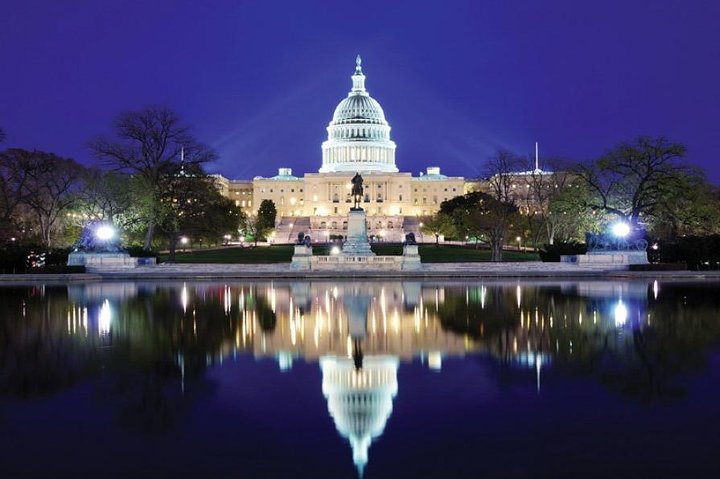
DC Monuments Night Tour with 10+ Stops, National Mall, Tickets
Experience Washington DC lit up at night during this 3-Hour Guided Night Tour of the National Mall and Monuments. Ma...
Pick the Best Time to Visit DC

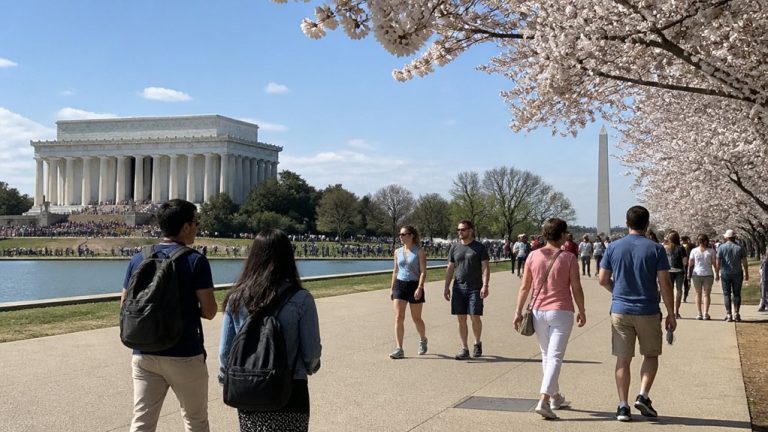
When should you go to Washington, DC? If you want the city at its prettiest, choose spring (March–May). You’ll catch cherry blossoms around late March to early April, when the Tidal Basin turns soft pink and the National Cherry Blossom Festival fills the city with parades, petals, and camera clicks. The Tidal Basin is one of the best places to experience peak blossom season in Washington, DC. Fall is also lovely, with crisp air and colorful trees.
summer (June–August) brings long days, sticky humidity, and bigger crowds, so save outdoor walks for mornings and duck into museums at midday. winter feels quieter and cheaper, with holiday lights, the National Christmas Tree, and occasional snow. For the calmest monument views, go on weekdays early morning. In June and July, late-evening sightseeing is a treat, with dusky skies and fewer people after dinner.
Book White House and Capitol Tours Early
Once you’ve picked your season, put the White House and Capitol at the top of your planning list, because these tours reward people who book early. White House public tours are free, but you’ll request them through your Member of Congress, or your embassy, 21 to 90 days ahead. Ask for several dates. White House tours typically run on select mornings Tuesday through Saturday, with free of charge admission for all public tours.
| Place | Smart move |
|---|---|
| White House | Reserve in advance through your Member of Congress |
| Capitol Visitor Center | Book free public tours or timed entry passes online |
Capitol Visitor Center slots also go fast. Keep backup plans handy, since the Secret Service can change White House schedules. If interior tours don’t work out, grab timed entry passes for the People’s House Visitor Center instead. It still gives you White House history and context too.
Know the White House Entry Rules
Because White House tours feel almost ceremonial from the moment you line up, it helps to know the entry rules before you go. White House public tours are free, but you’ll request them through your Member of Congress or an embassy, and slots can change fast. Pack light because security metal detectors and bag size limits are strict, so leave big backpacks behind. Inside, you’ll move through grand public rooms with Secret Service staff nearby.
If you miss out, the People’s House Visitor Center gives you a smart backup. It offers free timed tickets and an interactive Oval Office replica, which still lets you sample the White House story without the formal route. It feels polished, and honestly, a little delightfully surreal in person. The nearby White House Visitor Center is also a place to learn about the White House and engage with ranger staff.
Plan Extra Time for Security Checks
Even if your day looks perfectly mapped out, security lines can quietly eat a surprising chunk of it. At major stops, you’ll face security screening with metal detectors and bag X‑rays, so arrive early, especially if you have timed entry. A ticket helps, but it won’t whisk you past the line at the Capitol Visitor Center, the National Archives, or Smithsonian museums. The Capitol Tour Guide notes that screening is part of the standard visitor process at the United States Capitol. Give yourself 30 to 60 extra minutes, and more on weekends and during peak seasons, when waits can stretch past 45 minutes. Pack light because many sites limit bag size. Keep snacks and liquids separate, and bring water bottles empty for the Capitol unless medically necessary. Wear less metal too. Belts, hats, and jackets often come off, and wand scans sometimes follow. Security has its own timetable, and DC rarely argues.

Washington DC Monuments by Moonlight Tour by Trolley
You haven't seen Washington DC until you've seen it at night! On this evening 100% live narrated tour, you'll enjoy...

DC Monuments by Night: 10+ Landmarks | Open-Top Upgrade Available
See a different side of Washington DC after dark on a guided night tour of the city's floodlit monuments. This tour...
DC Monuments Night Tour with 10+ Stops, National Mall, Tickets
Experience Washington DC lit up at night during this 3-Hour Guided Night Tour of the National Mall and Monuments. Ma...
Start Your Trip With a DC Tour

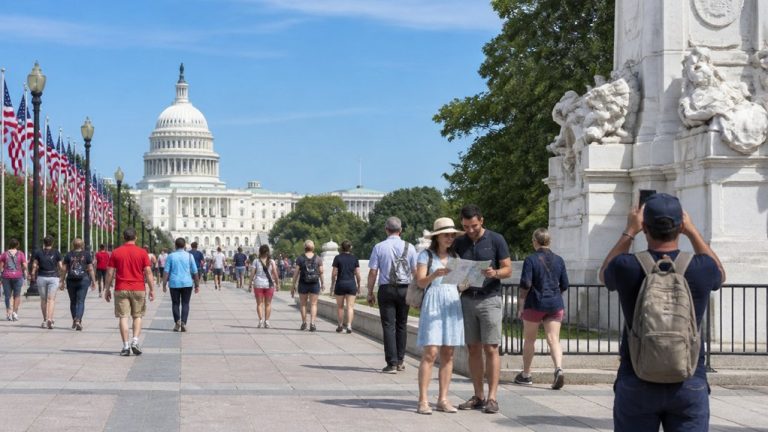
If you want the city to make sense fast, start day one with a guided DC highlights tour. Choose a guided tour that matches your energy, whether it’s a bus, trolley, or hop‑on/hop‑off loop. You’ll get your bearings around the National Mall, the White House, and the Capitol, then decide what deserves a return visit. Book ahead because popular passes, timed‑entry tickets, and some options sell out fast. Guides also explain security lines, bag rules, and smart reservation timing for Smithsonian museums and Arlington. For a different mood, try a night tour when monuments glow and crowds thin. You can also use one day itinerary ideas to prioritize the biggest sights without wasting time crisscrossing the city. Expect miles of comfortable walking, so wear good shoes, carry water, and don’t cram in every museum on day one. Your feet will file a complaint.
Use the Metro and Tap-to-Pay
For getting around fast, the Metro does most of the heavy lifting, and now you can simply tap your contactless credit card, debit card, Apple Pay, or Google Pay at the faregate and ride without buying a SmarTrip card.
In DCs Metro system, every Metro Station feels like a launch pad for museums and monuments.
- Prefer a SmarTrip card? Buy one at a kiosk, load cash or card easily, and tap both entering and exiting.
- If your balance runs short, the turnstile won’t budge, which is a very DC way to learn math.
- Compare pay as you go costs with a one-day unlimited Metro pass, especially during peak period fares.
- Kids under five ride free with you, and contactless tap-to-pay keeps the whole routine quick.
Before heading out, check System Status for service changes or construction that could affect your trip.
Skip Driving and Parking in DC
Once you’ve seen how easy the Metro is, driving in DC starts to feel like volunteering for a headache. Driving in DC means traffic that crawls, sudden road closures near the National Mall, and parking that disappears just when you need it most.
You can skip the stress with public transit, bikes, scooters, or even hop-on trolleys when your feet need a break. Washington DC without a car is surprisingly easy thanks to the Metro, buses, and other transit-friendly ways to explore the city. On-street parking uses parkmobile, meters are enforced citywide, and downtown garages often charge steep hourly rates. If you must drive, expect cashless payments and regulated loading zones around museums, Arlington, and tour buses. Most days, tapping onto Metro feels faster, cheaper, and far more pleasant than circling blocks for a legal space while sirens, horns, and idling engines soundtrack your detour.
Stay Near Metro to Save on Hotels
You can cut your hotel bill fast when you stay near a Metro stop in places like Rosslyn, Crystal City, or Dupont Circle. You’ll still reach the National Mall with one easy ride, and you won’t get stuck wrestling with DC traffic or pricey parking. Book a spot within a short walk of the station, and your trip starts to feel smoother the moment you hear those train doors slide open. If you want quick sightseeing access, look for hotels near the National Mall to compare whether paying more for location beats saving with a Metro-connected neighborhood.
Still comparing Washington DC First Time Visitor Planning?
Ask for tour ideas, hotel suggestions, or a simple trip plan that combines both.
Trip Helper
Metro-Adjacent Budget Areas
A few smart Metro-side neighborhoods can cut your hotel bill without pushing the National Mall out of reach. Look along the Red Line or just across the river for budget lodging that still feels plugged into the city. You’ll hear station doors chime, grab coffee, and step off close enough to start sightseeing before your sneakers complain loudly. For first-time visitors, these Metro-adjacent areas make it easier to stay connected to the city’s top sights without paying peak downtown rates.
- Cleveland Park, Dupont Circle, and Silver Spring often put you 15 to 20 minutes from the Mall.
- Rosslyn and Crystal City offer cheaper rooms, quick rides, and sometimes free weekend parking.
- Courthouse and Ballston on the Orange/Blue/Silver Lines pair frequent trains with easy dinner options after museums.
- Near Metro Center, a one-day unlimited Metro pass keeps hops simple from Foggy Bottom, Columbia Heights, or Navy Yard.
Lower Costs, Easy Access
Look just beyond the district line, and hotel prices often drop fast while the Metro keeps the Mall close. Choose hotels just outside the district in Rosslyn,Crystal City/Arlington, or Alexandria and you can save 20–40% versus downtown. If your place sits within a 5–10-minute walk of a Metro station, you’ll skip rideshares and reach museums in about 10–20 minutes. Grab a SmarTrip card or tap your phone to cut fare costs and release passes. Many budget spots add free Wi‑Fi, breakfast, luggage storage, or a shuttle. Best of all, you dodge parking in central DC, and your wallet won’t groan before Congress does. Blue, Orange, and Silver lines make the trip simple, and quieter streets help you sleep after long monument days at night. You can also consider the Capitol Riverfront, a waterfront neighborhood with easy access to central DC and attractions.
Plan for Long Walks on the Mall
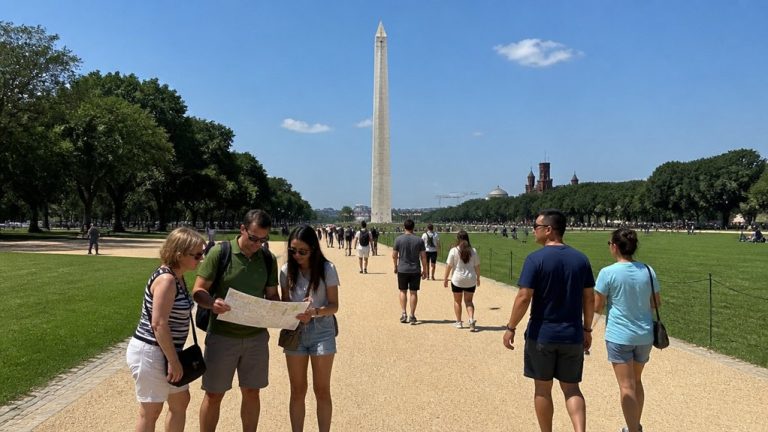
Across the National Mall, distances add up faster than they seem, so plan each day like a real walking day, not a casual stroll. You might walk around six or seven miles if you link the Capitol, memorials, and Smithsonian museums. The core stretch is about two miles, but side stops stretch it fast.
- East end sights cluster near the Capitol and Library of Congress.
- Center stops pull you toward Smithsonian museums and the Washington Monument.
- West end memorials reward long walks with grand views and echoing steps.
- Security lines can shuffle your timing, so leave breathing room.
Map your route by zone to avoid zigzagging. Bring a refillable water bottle, wear supportive shoes, and expect your legs to notice by sunset. Still, the scale feels thrilling, not punishing. For a National Mall guide, first-timers should remember that the area feels bigger in person than it looks on a map.
Bring Water and Wear Supportive Shoes
Pack your day like the Mall means business, because it does. You’ll cover serious ground on the National Mall, often six or seven miles, so wear supportive, broken-in walking shoes with real arch support. Sturdy sneakers work. Flimsy sandals don’t.
Bring water, preferably a refillable bottle, and use DC’s many free refill spots to stay ahead of dehydration. Some security lines may ask for an empty bottle, so plan for that. In summer, heat and humidity press down fast, and hydration stops feeling optional. Carry one to two liters per person, add sunscreen, and choose breathable shoes that won’t rub your feet raw. You can balance long walking days with free attractions around Washington DC that let you sightsee without adding to your budget. If you wander into Rock Creek Park, switch to trail-ready footwear and pack extra water. Trails there feel leafy, quiet, and longer than they look.

US Capitol with Library of Congress or Supreme Court Entry
Join an expert local guide on this small-group guided tour of Capitol Hill, one of the top things to do in DC! Expl...

Capitol Hill & Library of Congress Highlights Walking Tour (With Tickets)
A grand walking tour of Capitol Hill to explore the Supreme Court, Library of Congress, and US Capitol. Learn about...

Small Guided Tour Inside the Capitol and Library of Congress
Have the opportunity to discover the interiors of the most important and famous buildings of this Nation with a spec...
See DC Monuments at Night

You’ll see some of DC’s best monuments after dark, when the Lincoln Memorial, Jefferson Memorial, Washington Monument, and other National Mall icons glow against the night sky. Head to the Lincoln Memorial and Reflecting Pool after sunset for one of the city’s sharpest photo spots, with cooler air, softer light, and fewer people drifting through your frame. At the Lincoln Memorial, the seated statue honors a leader remembered for saving the Union and for the enduring ideals of unity, strength, and wisdom. If you want a quieter loop, you can start at the WWII Memorial and keep walking toward the Vietnam and Korean War memorials, then finish by the Tidal Basin where the views stay bright long after the sun clocks out.
Best Night Monuments
A nighttime walk on the National Mall gives the city a whole new personality. You can roam after the heat drops and the crowds thin, then watch stone and water glow around each memorial.
- At the Lincoln Memorial, the huge seated figure feels calmer and more commanding at night.
- The Washington Monument anchors the skyline while the reflecting pool carries long bands of light.
- Around the Tidal Basin, the Jefferson Memorial and World War II Memorial feel grand but surprisingly peaceful.
- The Vietnam Veterans Memorial draws you in with readable names and hushed footsteps.
The National Mall is open 24 hours a day, which makes early evening and morning visits especially beautiful and tranquil. Wear comfortable shoes, bring water, and expect extra time between stops. If you want an easy route, night bike and trolley tours usually leave from the Wharf after sunset there.
Evening Photo Spots
Once the monuments start to glow, DC turns into one of the easiest cities in America to photograph at night. Start at the Lincoln Memorial for that classic view over the Reflecting Pool to the Washington Monument. At blue hour, the Jefferson Memorial shines across the Tidal Basin, and the water doubles the dome like a neat trick. The Martin Luther King Jr. Memorial rewards low angles and close details. The WWII Memorial gives you glowing fountains and strong pillars. You will hear water and footsteps echo off stone softly. At the Vietnam Veterans Memorial, side lighting pulls engraved names into view. The Washington Monument, a 555-foot marble obelisk, becomes an especially striking focal point after dark. Bring a tripod and finish on the Lincoln steps for a sweeping skyline shot of the lit Mall all at once tonight.
Cooler Crowd-Free Visits
After dark, the Mall feels cooler, quieter, and far more generous with space. Night visits on the National Mall let you linger at the Lincoln Memorial and Jefferson Memorial under soft light, with fewer people after 9 p.m.
- The Vietnam Veterans Memorial turns hushed, so you can read names without shoulder bumps.
- A guided night tour from the Wharf covers major stops in about three hours.
- Bring water, wear good shoes, and expect a two mile walk around the Tidal Basin.
- Check Metro hours, load SmarTrip or tap to pay, or book a rideshare home.
Weeknights in winter feel especially open, crisp, calm, and cinematic. You’ll get cleaner photos, easier paths, and that rare DC feeling that the monuments are speaking just to you. The National Mall is part of National Mall and Memorial Parks, which includes more than 100 unique monuments and memorials.
Save Money With Free DC Attractions
Often, the smartest way to cut costs in Washington is to lean into the city’s best free sights. The Smithsonian Institution gives you free admission to more than 20 museums and the zoo, so you can roam from the National Museum of Natural History to Air and Space without paying a dime. Along the National Mall, memorials stay open day and night, and even a stroll feels rich with history and grandeur. For popular stops, grab timed-entry passes online early. They’re free and they save you from line purgatory. You can also join ranger talks or free walking tours for context. Bring a refillable bottle and top up through TapIt partners while you wander, since sightseeing is cheaper when your water budget is zero. Many first-time visitors build an itinerary around the National Mall because it clusters museums, monuments, and memorials within easy walking distance.
Eat Like a Local in DC
Dig into D.C.’s food scene and you’ll find that locals don’t live on power lunches alone. You can chase neighborhood flavors, from bagels to oyster happy hours, and eat well without trying too hard. It’s one of the city’s best low-key adventures for curious first timers.
- At Call Your Mother, grab a New York style bagel sandwich, then sip Nitro Cold Brew while the line shuffles forward.
- Wander Eastern Market for produce, baked goods, artisan stalls, and Market Lunch crab cakes on busy Capitol Hill weekends.
- Slide into Ted’s Bulletin for all day breakfast, boozy milkshakes, house made pop tarts, and endless coffee refills.
- Try Korean home-cooking at Manna Dosirak, then cap the day at Old Ebbitt Grill with seafood and early oyster deals.
- If you need a caffeine break between meals, explore best coffee shops around Washington DC for a local favorite stop.
Frequently Asked Questions
Which Airport Is Best for Visiting Washington DC?
Choose Reagan National for Washington visits: you’ll get best Airport proximity, easy Public transit, and lower Parking costs. In BWI vs DCA, Baltimore Airport works farther out, while IAD shuttle connections help, but they’re slower.
Is Washington DC Safe for Tourists at Night?
Yes—you’ll find DC can shine like a lighthouse at night if you use late night transit, stick to well lit neighborhoods, check neighborhood crime rates, note tourist police presence, and choose safe nighttime activities wisely.
Should I Tip at Restaurants and for Other Services?
Yes, you should tip: follow restaurant tipping and service etiquette, add bar gratuities, ride share tips, tour guide tips, hotel staff tips, and salon gratuities, because you’ll show respect and get smoother service everywhere today.
Do I Need Cash, or Are Cards Accepted Everywhere?
You won’t need much cash; cards and contactless payments work almost everywhere, though small vendors, street markets, and some taxi fares prefer bills. Know cash etiquette, expect cashless museums, and avoid unnecessary atm fees there.
How Many Days Do First-Time Visitors Usually Need in DC?
Plan 3–5 days; like diving into a history treasure chest, you’ll savor a long weekend or full week, whether it’s a weekend getaway, museum marathon, monument hopping, family itinerary, or romantic escape in DC for sure.
Conclusion
You’ll enjoy DC most when you plan ahead, lace up good shoes, and leave room to wander. Book the big tours early. Ride the Metro. Fill your bottle. Then let the city unfold like a living history book, from quiet memorial steps at sunrise to glowing monuments at night. The best part is simple: so much is free. You can spend the day chasing presidents, planes, and perfect half-smokes without draining your wallet too quickly.
Washington DC Monuments by Moonlight Tour by Trolley
You haven't seen Washington DC until you've seen it at night! On this evening 100% live narrated tour, you'll enjoy the sights and sounds of Washingto...
Washington DC in One Day: Guided Sightseeing Tour + boat cruise
Board your glamourous, climate-controlled panoramic bus at the U.S. Navy Memorial for one of the best bus tours in W...
DC Monuments Night Tour with 10+ Stops, National Mall, Tickets
Experience Washington DC lit up at night during this 3-Hour Guided Night Tour of the National Mall and Monuments. Ma...
US Capitol with Library of Congress or Supreme Court Entry
Join an expert local guide on this small-group guided tour of Capitol Hill, one of the top things to do in DC! Expl...