
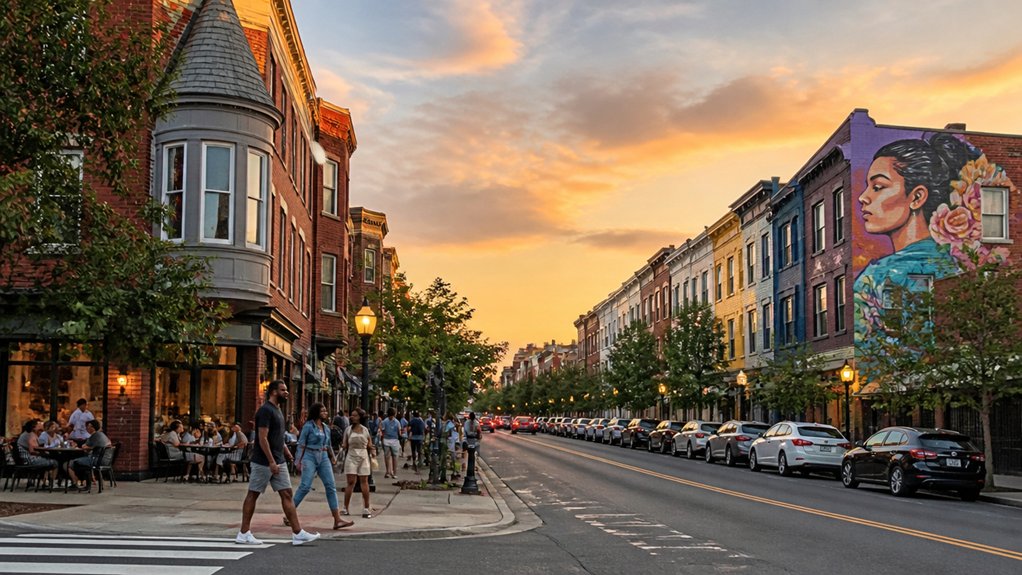
On U Street, you can trace DC’s Black Broadway past while stepping into a night that still hums with go-go, jazz, and club lines. You’ll pass the African American Civil War Memorial, spot murals and old theater facades, then decide between Ben’s Chili Bowl, Ethiopian spots, or a quick Metro hop. It’s compact, easy to walk, and full of stories that don’t sit quietly. The hard part is knowing where to start.
Key Takeaways
- U Street is a walkable historic corridor known as Black Broadway, central to DC’s African American music, nightlife, and cultural history.
- Start at the U Street/African American Civil War Memorial/Cardozo Metro for easy access to landmarks, murals, and the heritage trail.
- Catch live music at the Howard Theatre, Lincoln Theatre, 9:30 Club, or The Atlantis for jazz, indie, R&B, and comedy.
- Eat at Ben’s Chili Bowl, explore Ethiopian spots like Dukem, and find happy hour bars, rooftops, and late-night Jumbo Slice nearby.
- Follow the Greater U Street Heritage Trail, see murals, and detour to Meridian Hill Park before continuing toward Shaw or Adams Morgan.

Washington DC: Best of Capitol Hill Bike Tour
Get to know the seat of US power on this 2-hour guided bike tour through Capitol Hill and downtown Washington, DC. It's a lively, fast-paced way to se...

Private Washington DC Tour with Changing of the Guard Ceremony
DC is the Best Place to Celebrate America's 250th Anniversary...!A Nation’s Capital Experience, tailored to your...

Haunted DC Night-Time Walking Tour on Capitol Hill
Delve into a world of spooks, ghouls, and haunted souls on a 1.5-hour walking tour of Washington DC’s Capitol Hill...

Echoes of Early Washington DC, Penn Quarter and Chinatown Tour
Step into the past and see Washington, D.C. in a whole new way. Meet your guide near the iconic Friendship Arch and...
Why Visit U Street DC
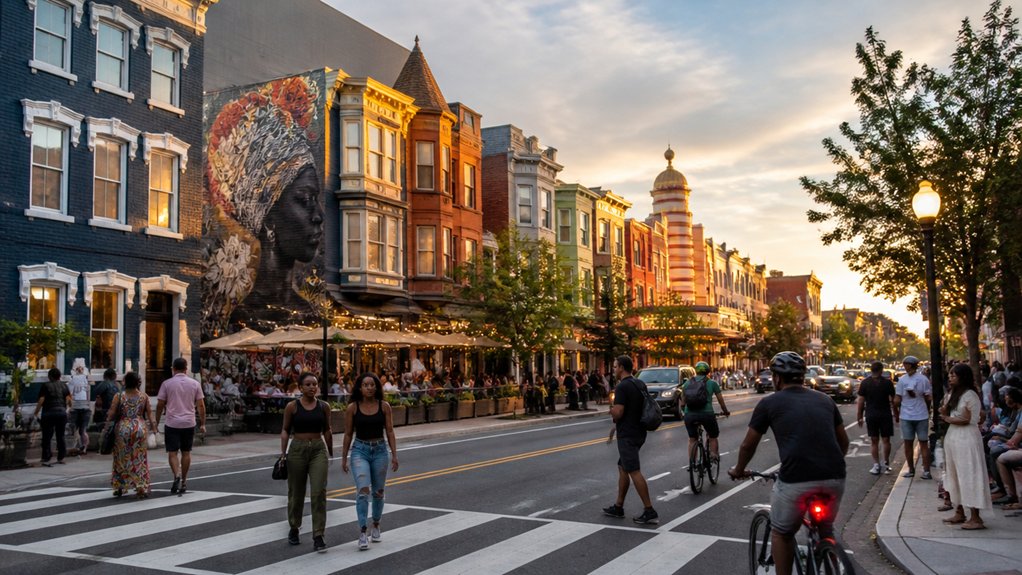
If you want a DC neighborhood that packs history, music, and great food into a walkable stretch, U Street delivers fast. You step into a corridor that once earned the name Black Broadway, where jazz greats like Duke Ellington and Billie Holiday got their start. That legacy still feels alive in the marquees, murals, and late-night hum.
You can catch that spirit at the restored Howard Theatre and along blocks lined with public art and landmarks. Ben’s Chili Bowl adds a classic local bite with its famous half-smoke, while nearby Ethiopian spots bring warm injera and fragrant spices to the table. At the Metro, the African American Civil War Memorial sets the tone right away. U Street makes it easy to mix culture, flavor, and real neighborhood character in one stroll. Like nearby Dupont Circle, U Street also rewards visitors with an easy, walkable neighborhood experience.
Best Things to Do on U Street
You can start at the African American Civil War Memorial and Museum, then step outside to the bronze memorial by the U Street Metro and get a vivid sense of the neighborhood’s history. When you’re ready for a different kind of energy, you can catch live music at the Howard Theatre, the Lincoln Theatre, or the 9:30 Club, where the sound shifts from jazz to indie rock to late-night DJ sets. U Street makes it easy to pair big stories with big speakers, so your night can move from historic landmarks to a ringing encore without much effort. If you want to keep exploring D.C. neighborhoods after U Street, a NoMa Washington DC guide can help you compare a more modern, fast-growing area with this historic corridor.
Historic Landmarks
Because U Street’s history still feels close at hand, its landmarks turn a simple walk into a tour of Black Broadway and the city’s wider story. Start at the Lincoln Theatre and nearby Howard Theatre, where legends like Duke Ellington once stepped into the spotlight and changed Washington’s cultural map.
At the Metro exit, the American African American Civil War Memorial honors more than 200,000 Black Union soldiers with a powerful bronze figure and museum exhibits. For a broader look at that history, the National Museum of African American History and Culture offers a deeper introduction to African American history through powerful exhibitions and storytelling. Then head to Ben’s Chili Bowl, where the 1958 building, mural, and old Formica counter still carry civil-rights-era character. If you want more context, follow the Greater U Street Heritage Trail signs and murals. For a greener detour, climb to Meridian Hill Park and watch the long cascading fountain do all the dramatic work for you.
Live Music Scene
Often, the best way to understand U Street is to hear it after dark. Step off the U Street Metro stop and follow the bass. At the 9:30 Club, you can catch national acts or surprise sets in a beloved room that has anchored the corridor for decades.
For history with fresh energy, book a show at Howard Theatre or the Lincoln Theatre. Their restored stages carry Black Broadway stories into jazz, R&B, comedy, and dance nights. If you want something smaller, try The Atlantis for indie sounds and rooftop atmosphere. Then stop by the Bohemian Caverns mural site and imagine Duke Ellington getting his start nearby.
You’ll hear jazz, ska, DJs, and indie rock across U Street. If you want to keep the energy going after a show, nearby neighborhoods like Adams Morgan offer more options for nightlife guide inspiration. Check venue calendars, the Heritage Trail app, or Sunday drum circles at Meridian Hill Park too.

DC Monuments by Night: 10+ Landmarks | Open-Top Upgrade Available
See a different side of Washington DC after dark on a guided night tour of the city's floodlit monuments. This tour...

Washington DC Monuments and Memorials Night Tour
See Washington, DC in ways large bus tours can’t—especially after dark. This small‑group night tour (12 guests...
DC Monuments Night Tour with 10+ Stops, National Mall, Tickets
Experience Washington DC lit up at night during this 3-Hour Guided Night Tour of the National Mall and Monuments. Ma...
U Street History and Black Broadway
Jazz lives in the bricks along U Street, where the corridor earned its “Black Broadway” name in the 1920s through the 1940s as the country’s top stage for Black music and nightlife. As you walk U Street today, you trace a past shaped by jazz legends like Duke Ellington, Billie Holiday, Louis Armstrong, Miles Davis, and Pearl Bailey.
You can still spot the grand facades of the Lincoln Theatre and Howard Theatre, both essential to Black performers and Harlem Renaissance culture. By the 1920s, this area had become the nation’s largest urban African American community, with thousands of speakeasies fueling a lively nightlife. Near the Metro, the African American Civil War Memorial adds deeper context. It honors more than 200,000 Black Union soldiers and reminds you that U Street’s story reaches far beyond its bright marquees. Washington, DC is also home to many Black history landmarks that place U Street within a wider story of African American culture and remembrance.
Best Live Music on U Street
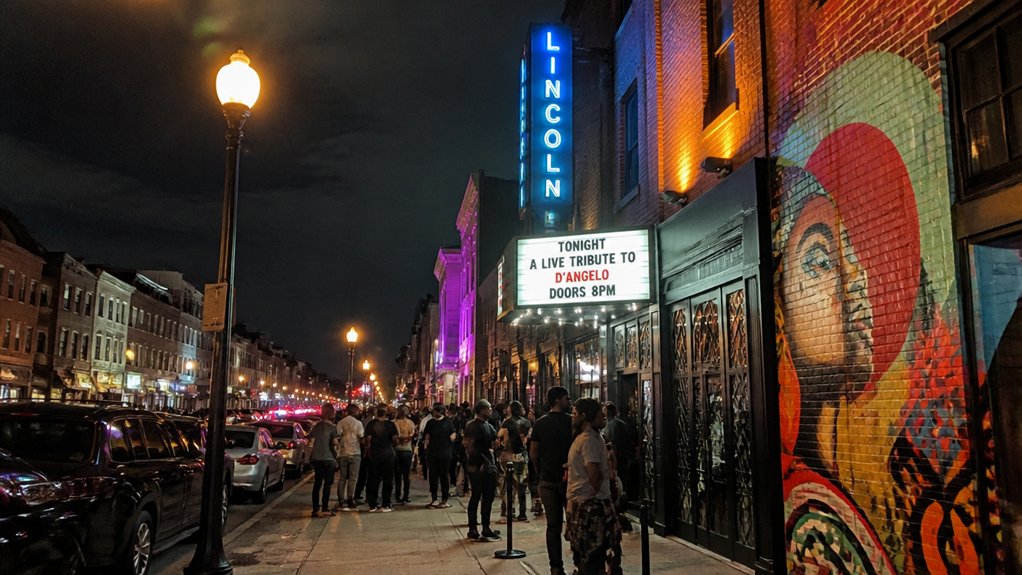
You can catch U Street’s musical range in one easy stretch, from the landmark 9:30 Club and the restored Howard Theatre to Lincoln Theatre, where the old Black Broadway spirit still feels close enough to hear. If you want something smaller, you’ll find indie sets at The Atlantis and echoes of jazz history around Bohemian Caverns, with murals and late-night energy adding texture to the walk. Bring your curiosity and comfortable shoes, because this corridor can take you from a packed concert hall to a intimate room in just a few blocks. For another side of the city’s nightlife and culture, the Capitol Riverfront offers a waterfront neighborhood experience in Washington DC.
Historic Music Venues
A walk along U Street doubles as a tour through DC music history, with old marquees, mural-covered walls, and club doors that still pull crowds in after dark. You can feel that legacy first at the Howard Theatre, a 1910 landmark on T Street that now mixes touring acts, comedy, and dance nights inside a polished restoration.
A few blocks away, the Lincoln Theatre carries its 1922 roots with confidence. You’re stepping into a place tied to Black Broadway and the Harlem Renaissance, yet its calendar stays current with major shows. Nearby murals keep Bohemian Caverns in view, hinting at the street’s deeper musical memory. Then there’s 9:30 Club, just off the corridor, where surprise sets and packed rooms have made it a modern DC institution. Historic here still feels very much alive. Across town, Ford’s Theatre offers another way to connect with Washington’s historic performance spaces through guided visits focused on its layered past.
Intimate Indie And Jazz
Chasing smaller rooms changes the mood on U Street fast. You trade marquee scale for shoulder-close sets, warm lights, and the thrill of hearing every riff land. The Atlantis nails that feeling with a 90s-style room and rooftop bar. Nearby, the Bohemian Caverns mural keeps jazz history visible while underground nights keep the spirit moving. Lincoln Theatre and Howard Theatre often shrink the distance too, booking intimate concerts, touring acts, and dance-ready sets. Even 9:30 Club can surprise you with low-key bills. Like Penn Quarter, U Street rewards wandering between venues to catch a different side of Washington’s live entertainment scene. It all feeds U Street’s unparalleled music and nightlife.
| Spot | What you’ll catch | Why go |
|---|---|---|
| Atlantis | indie, jazz | close stage |
| Bohemian Caverns mural area | underground jazz | historic echo |
| Lincoln Theatre | evening sets | intimate feel |
| Howard Theatre | indie plus parties | lively mix |
Still comparing U Street Washington DC Guide?
Ask for tour ideas, hotel suggestions, or a simple trip plan that combines both.
Trip Helper
Where to Eat on U Street
Start with the classics, then branch out, because U Street feeds every kind of appetite. At Ben’s Chili Bowl on U Street NW, you can slide into a Formica counter seat and order the famous half-smoke smothered in chili. Then wander toward Little Ethiopia and settle in at Dukem, where spiced stews and tangy injera make dinner feel communal and hands-on.
If you’re hungry after a show, grab a huge foldable slice at Jumbo Slice and keep moving. Near the 14th Street corridor, DC Noodles gives you affordable comfort in the form of pad thai, drunken noodles, and steamed buns. If you want something sleeker, head to Haikan for rich ramen, communal tables, and a patio that feels just tucked away enough. You really can eat around the world here tonight. For more neighborhood dining inspiration, the city’s broader scene also includes Georgetown dining known for savory stops and hidden gems.
U Street Bars and Happy Hour
Once dinner wraps up, U Street keeps the night moving with bars that make happy hour feel like part of the main event. You can start as early as 5 p.m., when discounted cocktails and $5 to $7 drafts pop up all along U Street. Around 14th & U, after-work crowds fill taverns and patios, especially on Thursdays. Near Ben’s Chili Bowl, late-night deals pair perfectly with a giant pizza slice after your first round. If you want something sleeker, bookend the evening with a hidden cocktail bar serving pre-show specials before the 9:30 Club. Like Foggy Bottom, U Street balances easygoing neighborhood hangouts with spots that draw people from across DC.
- You hear glasses clink and the block wakes up.
- You chase rooftop breezes and $6 cocktails.
- You slip into a speakeasy and feel in on it.
- You stretch happy hour into the night without trying too hard.
U Street Murals, Museums, and Monuments
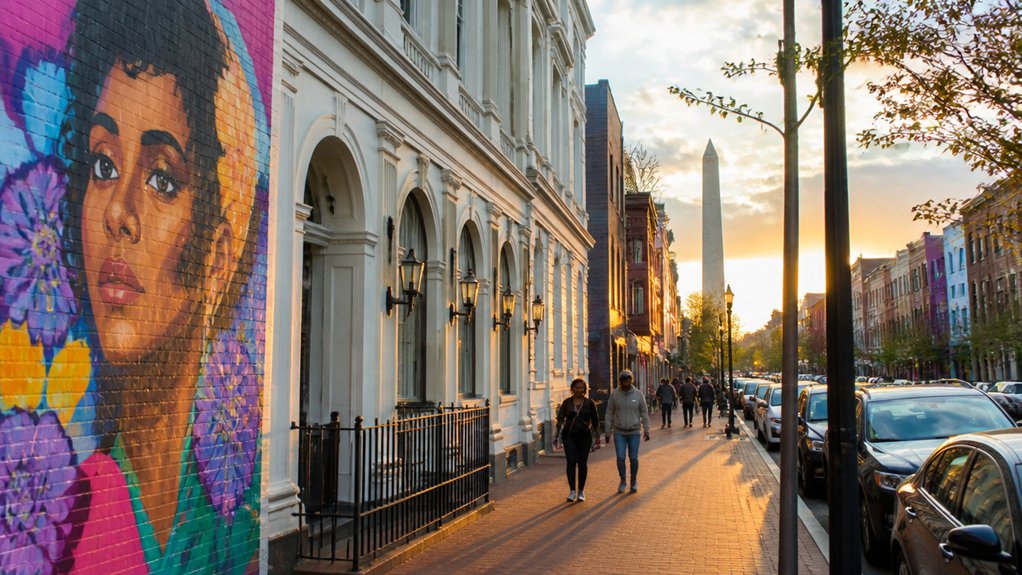
If you look up from the nightlife for a minute, U Street turns into an open-air history lesson with far better visuals. Step out by the Metro and you’re beside the African American Civil War Memorial, where bronze figures honor more than 200,000 Black Union soldiers. Inside the nearby museum, the story gets sharper and more human.
Then keep walking. Ben’s Chili Bowl wears a block-long mural like a family album, packed with faces and scenes from decades on U Street. The Black Broadway mural and the jazz tribute at Bohemian Caverns salute legends like Duke Ellington and Billie Holiday. More commissioned pieces, including James Bullough’s at 905 U Street NW, turn the corridor into a gallery. Follow the Greater U Street Heritage Trail signs if you want the cheat sheet and audio tour too. It also makes a strong stop on some Washington DC food tours, where the neighborhood’s history and flavor come together.
Shopping and Local Finds on U Street
History still lingers on U Street, but the next few blocks invite you to bring home a piece of the corridor too. Start at GoodWood, a Vintage shop that feels like an old general store, where you can browse curated womenswear, rugs, and mid-century furniture.
- You might find the lamp your apartment has been missing.
- Retro racks and record bins reward patient treasure hunters.
- The 14 & U Farmers’ Market adds weekend color with produce and crafts.
- The Ben’s Chili Bowl mural turns a photo stop into a souvenir of memory.
Like Eastern Market, U Street rewards browsers with a mix of local crafts, food finds, and neighborhood character. You can also duck into Velvet Lounge, where pop-ups and vinyl drops appear beside dive bar grit. Along U Street, secondhand boutiques keep the hunt lively, local, and a little unpredictable. That’s half the fun, honestly.

Washington DC Night Tour: ICONIC Landmarks, Monuments SMALL GROUP
Experience Washington DC at its most striking; after dark! This guided night tour showcases the city’s most iconic...

Monuments and Memorials Night Tour by Open-top Bus with Guide
Big Bus is the only official bus tour partner of the National Park Service; no one gets you closer to the best memor...

Lincoln Assassination Tour with Ford's Theatre, Petersen House
On the night of April 14, 1865, John Wilkes Booth shot Abraham Lincoln at Ford's Theatre and vanished into the Washi...
Getting Around U Street DC
For most visitors, the U Street/African American Civil War Memorial/Cardozo Metro station is the easiest way in, dropping you a short walk from Ben’s Chili Bowl, the memorial, and the corridor’s busiest blocks. Use the Metro first, then pick the right U Street Metro stop exit and start wandering. U Street feels pleasantly walkable, with murals, music venues, and late-night bites usually 10 to 20 minutes apart. Buses along U Street and 14th Street help when your feet want a break. Exploring without a car is often easiest because public transit connects U Street to the rest of Washington DC efficiently.
| Mode | What you notice |
|---|---|
| Metro | Fast arrival, station buzz |
| Walking | Brick facades, murals, music |
| Bus | Easy hops to Shaw |
| Rideshare | Handy late, pricier weekends |
| Driving | Tight parking, meters ticking |
At night, rideshares work well, but weekend traffic crawls. If you drive, garages near 14th save patience.
Frequently Asked Questions
Is U Street a Good Neighborhood to Live In?
Yes, you’ll likely enjoy living in U Street if you value a strong walkability score, vibrant nightlife vibe, rich community events, and transit access, but you’ll want to weigh higher costs and public safety block by block.
What Is the Average Rent Near U Street?
You’ll typically pay average rent of $2,200–$2,800 for a one-bedroom near U Street; imagine nearly $3,000 monthly. You’ll also see studio costs around $1,900+, price trends rising near hotspots, and lease terms often include amenity fees.
Are There Grocery Stores and Everyday Essentials on U Street?
Yes—you’ll find corner markets, specialty grocers, and pharmacy access on U Street for everyday needs. You can grab late night essentials nearby, and you’re also close to bigger supermarkets and the Saturday farmers’ market.
How Noisy Is U Street at Night for Residents?
How noisy is it? You’ll hear late night foot traffic, live music volume, and weekend crowds until 2 a.m. often. Street cleanup schedules add early noise, so you’ll want resident noise insulation if you’re sensitive.
What Types of Housing Are Available Around U Street?
You’ll find Historic rowhomes, Modern condos, Walk up apartments, and Co op buildings around U Street. You can also choose lofts, luxury rentals, and furnished short-term units, with prices usually higher near nightlife and Metro.
Conclusion
U Street pulls you in like a bass line drifting out of an open door. You can trace Black Broadway history by day, then catch a set under neon lights after dark. Grab half-smokes at Ben’s, spot murals between blocks, and hop on the Metro when your feet need a break. The whole corridor feels close enough to wander and layered enough to surprise you. Stay curious, and U Street will keep opening new doors.

Podcast Tour Washington Resilience and Renewal on U Street
Step onto Washington D.C.'s U Street corridor, once celebrated nationwide as 'Black Broadway.' Discover how segregation birthed a self-contained world...

Discover Washington: A Self-Guided Tour
Discover Washington DC's monumental grandeur and democratic ideals with your self-guided audio tour, allowing you to...

Private Half-Day Tour of Washington DC with a driver-guide
Enjoy this half day tour with your own private driver and official tour guide and explore the vibrant city of Washin...

Washington DC Murder Mystery: Self-Guided Detective Walk
A mysterious crime has shaken Washington DC. Put on your detective hat and solve the puzzle on this self-guided walk...
Experiences to explore
 Explore experience ↗
Washington DC in One Day: Guided Sightseeing Tour + Boat Cruise
◷ 6 hr
Board your glamourous, climate-controlled panoramic bus at the U.S. Navy Memorial for one of the best bus tours in Washington DC! Expan
From $89.00 USD
View dates Explore experience ↗
Podcast Tour Washington Resilience and Renewal on U Street
◷ 1 hr 15 min
Step onto Washington D.C.'s U Street corridor, once celebrated nationwide as 'Black Broadway.' Discover how segregation birthed a self-
See dates for Current pricing
View dates Explore experience ↗
Discover Washington: A Self-Guided Tour
◷ 8 hr 30 min
Discover Washington DC's monumental grandeur and democratic ideals with your self-guided audio tour, allowing you to explore America's
See dates for Current pricing
View dates
One Comment
[…] come hungry and wear good walking shoes, U Street rewards you fast. This stretch is often called Black Broadway, a nickname that reflects U Street’s deep cultural and musical legacy in […]