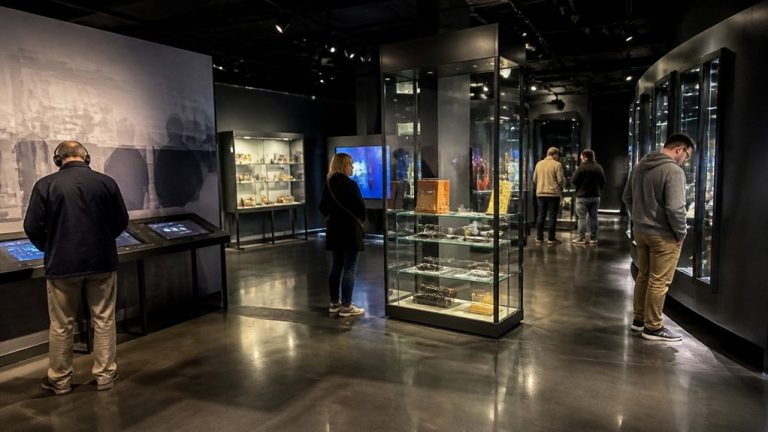
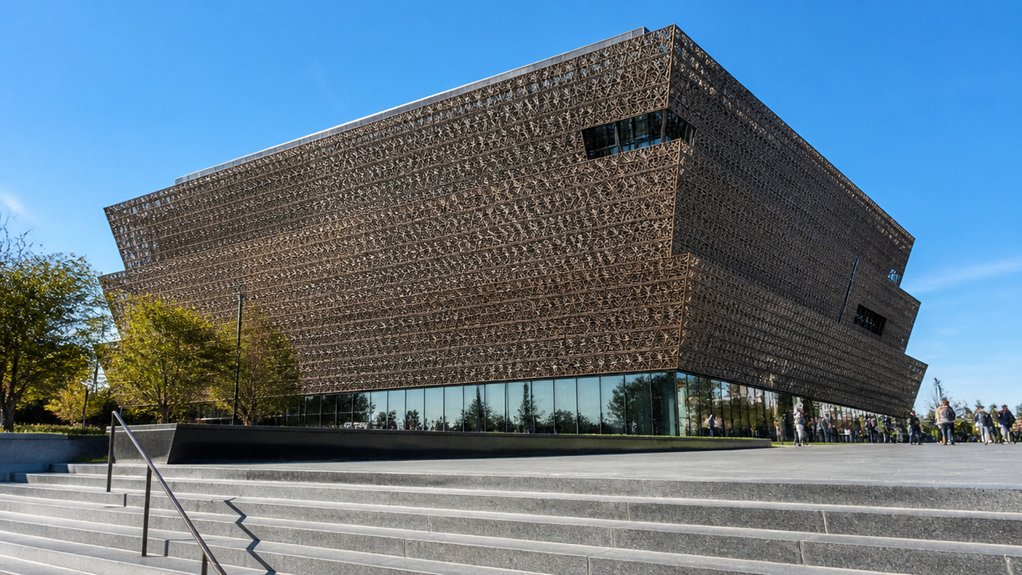
You can shape a powerful day at the National Museum of African American History and Culture with a little planning and a lot of curiosity. Grab a free timed-entry pass, step in from the Mall, and let the building pull you from quiet galleries on slavery and freedom to rooms alive with music, protest, and change. You’ll want comfy shoes, a charged phone, and a bit of patience, because the most memorable stop might not be the one you expect.
Key Takeaways
- Reserve a free timed-entry pass online up to 30 days ahead, or try same-day releases at 8:15 a.m. for entry.
- Visit Tuesday–Sunday 10:00–5:30, Monday 12:00–5:30, and arrive early for security at the National Mall entrance.
- Use Metro via Federal Triangle or Smithsonian, and expect accessible elevators, ramps, captioned media, and audio descriptions throughout.
- Prioritize signature galleries: Slavery and Freedom, Musical Crossroads, Defending Freedom, and A Changing America.
- Look for standout artifacts like Harriet Tubman’s shawl, Chuck Berry’s red Cadillac, and the Woolworth’s Lunch Counter recreation.

African American History Tour with Museum of African American History Ticket
KB Tours is a one of a kind African American Heritage tour operator in Washington DC that takes visitors to explore the historic African American neig...

250th: National Archives & American History Museum Guided Tour
Experience 250 years of American history on this 3-hour guided walking tour led by a local historian & professional...

Smithsonian "Big 3" Highlights Tour (Air & Space Entry Included)
See the best of the Smithsonian Museums on a 3-hour guided tour of the highlights of the American History, Natural H...
Plan Your NMAAHC Visit: Passes, Metro, Accessibility
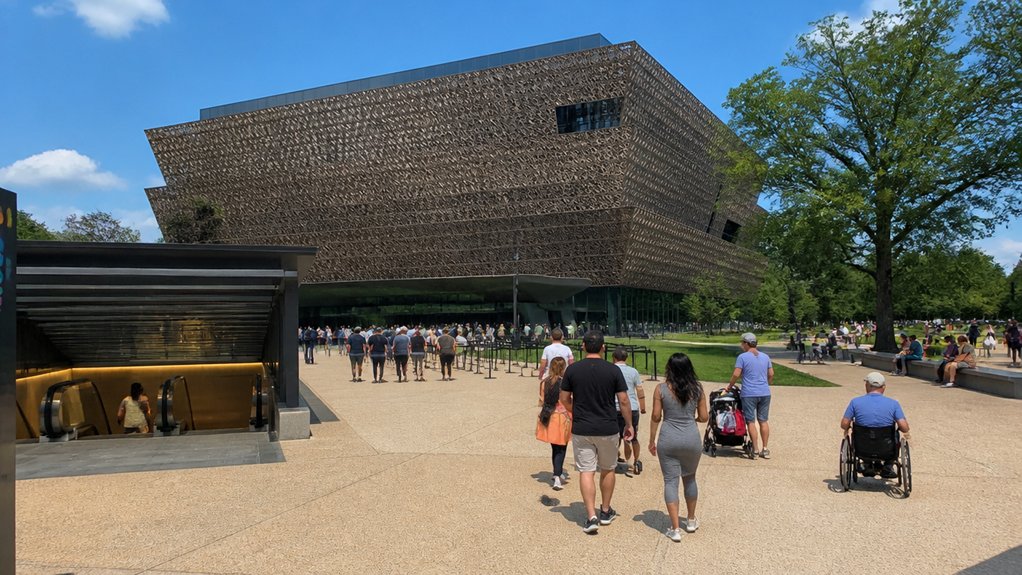
Before you step onto the Mall, lock in your timed-entry pass. At the National Museum of African American History and Culture, free timed-entry passes open online up to 30 days in advance, and same-day spots drop at 8:15 a.m. daily. Check hours of operation before you go: Tuesday-Sunday 10:00-5:30, Monday 12:00-5:30, or 10:00 on Federal Holidays.
Ride Metro to Metro stations (Federal Triangle,Smithsonian), then walk from Federal Triangle or the Smithsonian Mall exit to the National Mall entrance. Arrive early for security screening. The museum has accessible facilities, elevators, ramps, captioned media, and audio descriptions. If you want a smoother visit, pick a specific entry time and give yourself room to breathe, pause, and navigate comfortably. Those extra minutes save stress and your feet, too. Nearby, the National Archives features foundational documents in the Charters of Freedom, open daily from 10 a.m. to 5:30 p.m.
See Must-Visit Galleries and Iconic Artifacts
Start with the galleries that pull you straight into the museum’s story. At the National Museum of African American History and Culture, you’ll feel history sharpen fast.
| Gallery | What to notice |
|---|---|
| Slavery and Freedom | ship fragments, cabin, raw voices |
| Musical Crossroads | Chuck Berry’s red Cadillac sings style |
| Defending Freedom | Woolworths Lunch Counter puts you inside the Civil Rights movement |
The museum also highlights Memorial Day through objects like the 92nd Infantry Division shoulder patch and the burial flag of Lt. Louise Lomax. Then look for the Harriet Tubman shawl in the Smithsonian collection. It’s delicate, quiet, and unforgettable. Related Tuskegee aircraft material adds lift and grit. In A Changing America, BlackLivesMatter items and Obama campaign pieces bring the timeline close to your own life. You can move from pain to pride in one afternoon, so pace yourself and pause often. Your feet will notice, too, before your heart does.
Explore NMAAHC Digital Resources and Reading Lists
Once you’ve seen the headline artifacts in person, the museum keeps opening up on your screen. At the National Museum of African American History and Culture, Digital resources let you roam from Afrofuturism to vivid StoryMaps like the slave ship São José journey. You can stream Curator Chats, hear Oral histories on Jackie Robinson or Juneteenth, and grab Educational resources that actually fit real classrooms and family tables. Talking About Race gives you practical prompts for tougher conversations. Reading lists keep the momentum going, from grades 3–12 picks to Reconstruction, Juneteenth, and Hip-Hop themes. Download Joyful ABC booklets and Preservation guides too. They help you protect heirlooms, spark stories, and keep the visit alive at home long after your museum coffee has worn off. If you’re planning more museum research beyond NMAAHC, the United States Holocaust Memorial Museum guide can help you compare digital tools and visitor resources across major institutions.
Frequently Asked Questions
Who Designed the Museum’s Distinctive Corona-Shaped Building?
David Adjaye of Adjaye Associates designed it; you can see exterior inspiration, design symbolism, cultural references, material selection, facade patterning, structural engineering, lighting strategy, and urban context shaping the corona-shaped building’s form for visitors today.
How Long Should I Budget for a Full Museum Visit?
Budget 4–6 hours; your recommended duration shifts with peak hours, tour pacing, exhibit priority, rest breaks, mobility needs, age considerations, group timing, audio guide use, and a time buffer if you don’t want to rush.
Are Food and Drinks Available Inside the Museum?
Yes, you’ll find museum cafes, concession stands, snack kiosks, vending machines, and nearby food trucks; you can use picnic areas, water fountains, nursing rooms, and request dietary accommodations for food allergies, though options vary inside.
Can I Take Photographs Inside All Museum Galleries?
No—you can’t photograph in every gallery; irony, right? You must follow photography restrictions, flash policies, and tripod rules for artifact protection, visitor etiquette, and privacy concerns. Check accessible photography, educational use, media credentials, image reproduction.
Does the Museum Offer Guided Tours or Special Programs?
Yes, you’ll find docent tours, audio guides, family programs, school outreach, accessibility tours, thematic walks, evening events, community partnerships, volunteer opportunities, and docent training, so you can explore, connect, and participate meaningfully throughout your visit.
Conclusion
When you step back onto the Mall, you’ll likely feel what many visitors do after seeing Harriet Tubman’s silk shawl. A single cloth can carry a century. That’s the museum’s gift. It turns history into something you can almost hear in the galleries and feel under your shoes as you ride the Metro home. With free timed passes, clear access, and stories that stay with you, you won’t just visit NMAAHC. You’ll carry part of it with you.
African American History Tour with Museum of African American History Ticket
KB Tours is a one of a kind African American Heritage tour operator in Washington DC that takes visitors to explore the historic African American neig...
250th: National Archives & American History Museum Guided Tour
Experience 250 years of American history on this 3-hour guided walking tour led by a local historian & professional...
Smithsonian "Big 3" Highlights Tour (Air & Space Entry Included)
See the best of the Smithsonian Museums on a 3-hour guided tour of the highlights of the American History, Natural H...
Still comparing National Museum Of African American History And Culture?
Ask for tour ideas, hotel suggestions, or a simple trip plan that combines both.