
The first thing nobody tells you about Washington is how walkable the famous part actually is. From the Lincoln Memorial to the Capitol, end to end, you can do the entire National Mall on foot in a long afternoon. The trick is knowing which marble to slow down at, which museum to skip on a Saturday, and where to eat once the sun finally drops behind the Potomac.
I've lived a Metro ride from the Mall for most of a decade, and every spring I help friends, cousins, in-laws plan their first DC trip. The same questions come up every time. How many days do I need? Are the museums really free? Is it worth going to Arlington? Can we walk to Georgetown from the monuments? This guide answers those questions in the order they tend to come up.
How long you actually need in DC
Three full days is the comfortable minimum for a first visit. Two days will let you hit the headline monuments and one or two Smithsonians, but you'll spend a lot of it speed-walking. Four or five days lets the city breathe. You'll have time for a neighborhood dinner in Shaw, a relaxed morning at the National Gallery, and maybe a half-day in Georgetown without feeling like you're racing a clock.
If you're flying in for a single weekend, treat it as a sampler. Don't try to see every memorial. The city rewards a second trip almost more than a first.
Start at the Lincoln Memorial, not the Capitol
Most first-timers head straight for the U.S. Capitol because it's the easiest landmark to picture. Resist that. The Mall reads better when you start at Lincoln's quiet steps and walk east. The view from the top of those marble stairs — reflecting pool stretching toward the Washington Monument, Capitol dome small on the horizon — is the single best free moment in the city.
Stand there for a minute. Read the Gettysburg Address carved on the south wall. Then walk down. The whole Mall opens up in front of you, and every monument that follows feels like it's pulling you forward.
The walking order that works
- Lincoln Memorial → Korean War Veterans Memorial → Vietnam Veterans Memorial
- Across the reflecting pool to the World War II Memorial
- Washington Monument, the obelisk you've been walking toward
- Drift south to the Tidal Basin for Jefferson, FDR, and the MLK Memorial
- Back up to the Smithsonian museums on the central Mall
- End at the Capitol, which photographs best in late afternoon light
That's roughly three miles of walking, longer if you wander the Tidal Basin. Wear shoes you trust. The marble is unforgiving by hour four.
The Smithsonian question
There are 21 Smithsonian museums in the DC area, and they are all free. Free as in actually free. No tickets unless noted, no donation guilt, no hidden fees. This is genuinely one of the best deals in American travel, and it surprises first-time visitors every time.
You cannot do them all. Don't try. Pick two or three for a long visit and walk through one or two more for an hour each.
Which Smithsonian to choose
For most first-time visitors, the easy three are:
- National Air and Space Museum for the Wright brothers' plane, Apollo 11, and the kind of scale that makes kids stop talking.
- National Museum of Natural History for the Hope Diamond, the dinosaur hall, and the giant blue whale hanging in the ocean exhibit.
- National Museum of African American History and Culture for the most powerful, carefully built museum experience in the city. Free timed-entry passes are required and they go fast. Book online a few weeks ahead.
If you have an art bone, swap one of those for the National Gallery of Art. It isn't a Smithsonian, but it's free, and the West Building's Vermeer room is one of the great quiet rooms in American museum-going.
A small piece of advice
Museums close earlier than you think. Most Smithsonians shut at 5:30 p.m. Plan your Mall walk so you arrive at your chosen museum by 1 or 2 p.m. at the latest, with a coffee break in between.
Monuments at night are the city's best secret
The Lincoln, Jefferson, and World War II memorials are open 24 hours, lit beautifully, and almost empty after 9 p.m. A night walk around the Tidal Basin in summer is one of those experiences that quietly changes how you remember the trip. Bring a light jacket, even in July. The water keeps the air cooler than you expect.
If you'd rather have a guide, several outfits run small-group monument night tours by van or e-bike. Our tours guide has the ones we'd actually book.
The neighborhoods worth your evening
The Mall is the city's daytime stage. The neighborhoods are where DC actually lives. After a day of marble, get on the Metro or grab a Lyft and have dinner somewhere with brick.
Georgetown
Cobblestones, the C&O Canal, the Potomac waterfront, and the prettiest row houses in the city. Walk M Street for the storefronts, then duck down toward the canal for a quieter loop. Our Georgetown guide has the dinner spots that locals actually go to.
Shaw and U Street
Historic Black Broadway, now home to some of the best Ethiopian restaurants in the country and live jazz at venues that have been running since the 1930s. 9th Street between U and Florida is the spine of the Ethiopian scene. Order injera with a few stews to share.
The Wharf
A rebuilt waterfront that didn't exist in this form a decade ago. Oysters at The Municipal Fish Market, live music at Pearl Street Warehouse, and a long boardwalk that's perfect at sunset.
Capitol Hill
Pastel townhouses, Eastern Market on weekends, and small restaurants tucked into corner storefronts. Sundays here feel like a different city.
Cherry blossoms, and how to actually see them
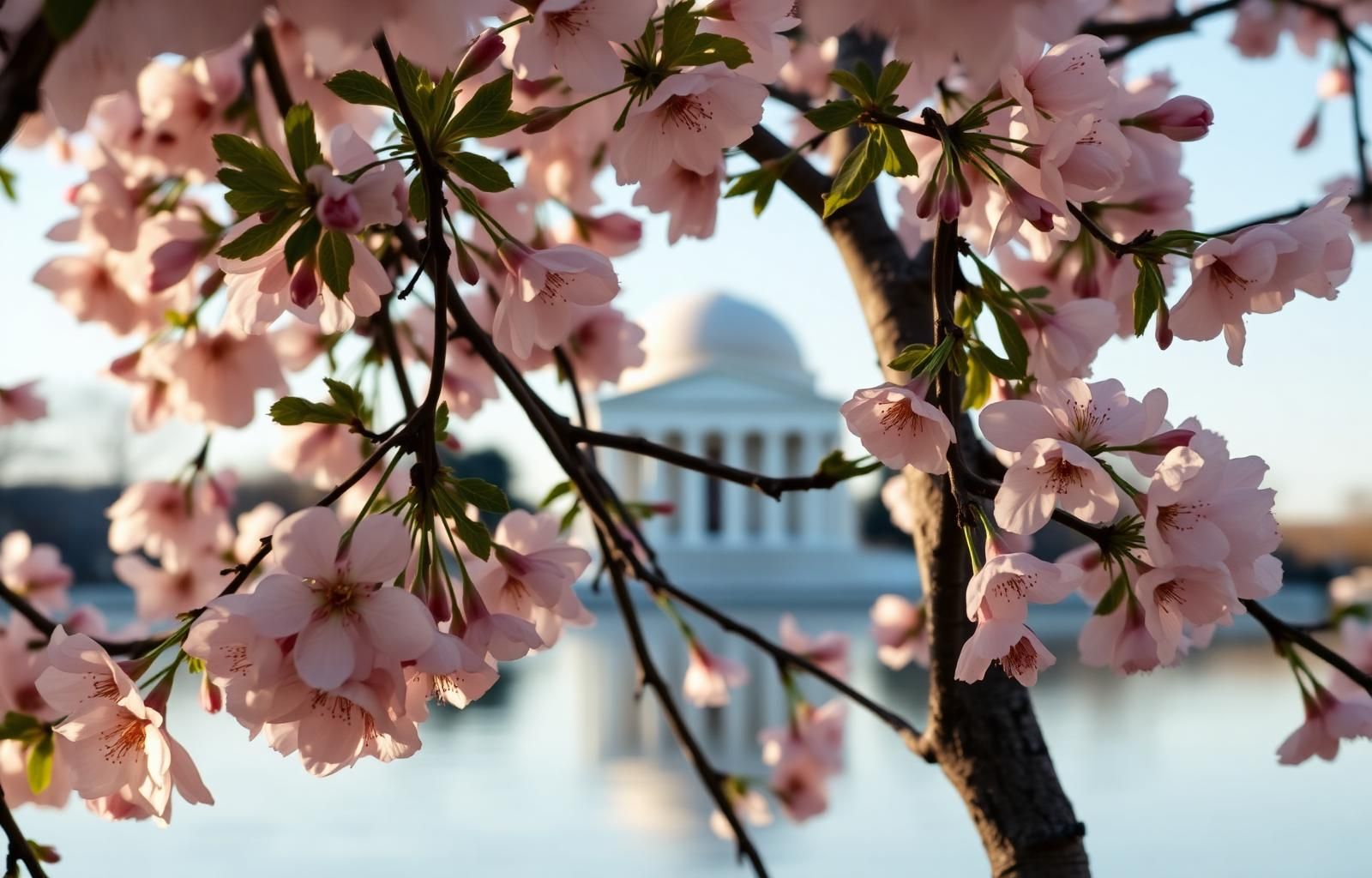
If you're visiting in late March or early April, the Tidal Basin's cherry blossoms are the headline. Peak bloom is short, usually four or five days, and it shifts every year based on weather. The National Park Service updates a peak bloom forecast in early March.
Two pieces of practical advice: go at sunrise, and skip the weekend if you can. The Tidal Basin is genuinely overwhelmed during peak bloom on a Saturday afternoon. At 6:45 a.m. on a Tuesday, with mist still on the water, it's one of the loveliest places in the country.
Getting around
The Metro is clean, safe, and easy. Get a SmarTrip card or use Apple/Google Pay at the gates. The Blue, Orange, and Silver lines run along the Mall and out to Arlington. The Red line covers Dupont, Woodley Park, and Union Station.
A few things first-timers get wrong: stand on the right on escalators, trains stop running around midnight on weekdays, and Capital Bikeshare is genuinely the fastest way around the Mall on a nice day.
What about Arlington?
Arlington National Cemetery is across the Potomac from the Lincoln Memorial, easy on the Blue line. It deserves a half-day. The Changing of the Guard at the Tomb of the Unknown Soldier happens every hour, every half hour in summer, and is worth timing your visit around. The Iwo Jima memorial is a short walk from the cemetery's north end.
Pair it with a quiet morning. It is not a place to rush.
Where to stay on a first trip
For first-timers, we usually point people at Penn Quarter or downtown near Metro Center. Both are within walking distance of the Mall, surrounded by restaurants, and well-connected for day trips. Dupont Circle is a great alternative if you want a more residential feel. Our full lodging guide breaks down each neighborhood honestly.
Skip the highway hotels in Crystal City unless price is the only factor. The 15 minutes you save on cost, you spend on transit.
A simple two-day plan
If you only have a weekend, this is the plan I send people:
Day one — the Mall
- 9 a.m. Lincoln Memorial, then walk east through the war memorials
- 11 a.m. Coffee break near the Washington Monument
- 11:30 a.m. Tidal Basin loop: Jefferson, FDR, MLK
- 1 p.m. Lunch at one of the Mall food trucks or the National Gallery cafeteria
- 2 p.m. Pick one Smithsonian: Air and Space, Natural History, or NMAAHC
- 5 p.m. Walk to the Capitol for late-afternoon photos
- 7 p.m. Dinner in Capitol Hill or Penn Quarter
- 9 p.m. Return to the Lincoln Memorial for the night view
Day two — the city beyond the Mall
- Morning at the National Gallery of Art
- Lunch in Georgetown, walk M Street and the canal
- Afternoon at Arlington National Cemetery, time the Changing of the Guard
- Evening at The Wharf for oysters and live music, or Shaw for Ethiopian
Frequently asked first-time questions
Are the Smithsonian museums really free?
Yes. All 21 Smithsonian museums in the DC area are free year-round. The National Museum of African American History and Culture requires free timed-entry passes; everything else is walk-in.
Do I need a car in DC?
No. Parking is hard, traffic is real, and the Metro covers almost everything you'll want to see. A car only makes sense if you're doing day trips to Mount Vernon or Shenandoah.
What's the best time of year to visit?
Late March through early April for cherry blossoms, or late September through October for clear skies and comfortable walking weather. Summer is humid, winter is grey but quiet.
Can I see the White House?
You can see the exterior any time from Pennsylvania Avenue or the Ellipse. Tours of the interior require a request through your member of Congress at least three weeks in advance, and slots are limited.
Is DC walkable?
The Mall and the central neighborhoods, yes. Between neighborhoods, the Metro or a quick rideshare is faster.
One last thing
The thing first-time visitors most often regret is not slowing down. The city has a particular kind of weight to it, and you only feel it when you stop trying to see everything. Sit on the Lincoln Memorial steps for ten minutes. Walk the Tidal Basin without a phone. Have a long dinner somewhere with brick. The monuments will still be there in the morning, lit and waiting.
Welcome to Washington.
Share this guide


